GeForce Now vs Xbox Cloud Gaming: €22 vs €21 [2026]


Four companies want the same ninety euro a year out of Irish gamers, and in 2026 none of them agree on how to earn it. NVIDIA raised its top GeForce NOW tier twice in twelve months. Microsoft is reportedly about to cap free-flowing Xbox Cloud Gaming sessions for the first time. Boosteroid pushed its Ultra Pro plan up by four euro overnight in September. Amazon Luna changed so much of its model that reviewers now warn against trusting any comparison written before this year. Picking the right cloud gaming service in Ireland used to mean checking a feature list. Now it means checking a pricing page the week you sign up, because the numbers keep moving.
This comparison puts GeForce NOW, Xbox Cloud Gaming, Boosteroid and Amazon Luna side by side using the latest tier pricing, measured latency from three separate test sources, and real monthly caps rather than marketing copy. It also covers the ROG Xbox Ally X20, the handheld gaming PC that ASUS confirmed as available on October 15, 2026, since cloud gaming and handheld hardware are now tangled together in a way they were not two years ago. By the end you will know which service fits a Dublin apartment with symmetric fibre, which fits a rural broadband connection that drops under 40 Mbps, and which one you should walk away from entirely in 2026.
Don't miss new tech stories on Google
Add TrendinTech Ireland once in the Google app and our stories appear in your news suggestions.
Cloud Gaming in Ireland: Why Four Services Are Fighting for Your Subscription
Cloud gaming splits into two business models, and almost every confusing pricing decision in 2026 traces back to which model a service uses. GeForce NOW and Boosteroid are bring-your-own-games services: you keep buying titles on Steam, Epic, GOG or Ubisoft Connect, and the service simply streams the game you already own from a data centre GPU instead of your own hardware. Xbox Cloud Gaming and, to a lesser extent, Amazon Luna work the opposite way, bundling a rotating subscription library into the monthly fee so you are paying for access rather than ownership.
That split explains why a direct GeForce Now vs Xbox Cloud Gaming comparison is messier than it looks. A GeForce NOW subscriber who owns forty Steam games effectively pays for GPU time on hardware they would otherwise have to buy themselves. An Xbox Cloud Gaming subscriber is paying for the Game Pass catalogue first and the streaming infrastructure second. Both are valid approaches, but they serve different kinds of player, and in 2026 both companies changed their terms in ways that shift the calculation further.
Three changes drove most of the 2026 search traffic around this topic. NVIDIA raised GeForce NOW Performance from €9.99 to €10.99 and Ultimate from €19.99 to €21.99 in November 2025. Boosteroid’s Ultra plan has remained €12.89 a month; it is the Ultra Pro tier, still sold monthly, that is priced at €16.89. And multiple 2026 trackers, including cloudplay.now, report that Xbox Cloud Gaming is moving toward a monthly hour cap of roughly 5 to 15 hours starting in November 2026, a sharp change from the effectively unlimited streaming Game Pass Ultimate subscribers have had until now. None of these three changes has been matched by a corresponding price cut or free-tier improvement, which is why so many Irish subscribers are actively comparing alternatives this month rather than simply renewing.
GeForce NOW in 2026: Tiers, Pricing and the RTX 5080 Upgrade
GeForce NOW remains the only major service built entirely around games you already own. NVIDIA’s free tier gives Irish users 1080p streaming at up to 60fps but limits each session to one hour, which is enough for a quick match but not a full gaming evening. The Performance tier, now €10.99 a month after the November 2025 increase, steps up to 1440p at 60fps and removes the hardest session limits. Ultimate, now €21.99 a month, is where the service differentiates itself: NVIDIA has moved its top-tier servers to RTX 5080-class hardware, supporting either 4K at 120fps or 1080p at a very high 360fps for competitive players with high refresh rate monitors.
The catch introduced in 2026 is a 100-hour monthly usage cap on even the Ultimate tier, according to iTechGuides. That sounds generous until you do the maths: 100 hours is a little over three hours a day, which a dedicated player can burn through on a long weekend. NVIDIA has not advertised the cap heavily, and most new sign-ups only discover it when they hit a usage warning mid-month.
What GeForce NOW still does better than anyone else is protect your existing game library. If you have spent a decade building a Steam collection, GeForce NOW lets you stream nearly all of it without buying anything twice, which is the single biggest reason it keeps winning head-to-head comparisons against subscription-first rivals despite the price increases.
Xbox Cloud Gaming in 2026: Game Pass Bundle and the New Hour Cap
Xbox Cloud Gaming is bundled entirely inside Game Pass, so there is no standalone price. Game Pass Essential runs at the equivalent of roughly 9.99 US dollars a month and streams at 720p, while Premium adds 1080p streaming for around 14.99 US dollars. Game Pass Ultimate, the tier most Irish players actually use, lists at €20.99 a month and pushes resolution up to 1440p on current Xbox Series X-class cloud hardware, a step below GeForce NOW Ultimate’s 4K ceiling but well above the lower Game Pass tiers.
The headline change for 2026 is the reported move to a monthly hour cap on cloud streaming, something Xbox Cloud Gaming has never had before. Industry trackers including cloudplay.now put the new limit at 5 to 15 hours a month starting in November 2026, though Microsoft has not issued its own matching public statement confirming the exact figure at the time of writing. If the cap lands at the low end of that range, it would turn Game Pass Ultimate’s cloud component from an all-you-can-stream perk into something closer to a trial, while the hundreds of included games you can still download and play locally on an Xbox console or PC remain unaffected.
For anyone who already set up Xbox Cloud Gaming in Ireland expecting unlimited streaming, this is the single most important update to track before your next billing cycle. The included library of hundreds of Game Pass titles is still the strongest selling point of the service, but the arithmetic around how many hours you can actually stream each month just got more complicated.
Boosteroid in 2026: The Budget Bring-Your-Own-Games Option
Boosteroid has always positioned itself as the budget alternative to GeForce NOW, using the same bring-your-own-games model but with a lower entry price and a far wider device compatibility list, covering Windows, macOS, Linux, iOS, Android, browsers, Android TV, webOS, Samsung Tizen and ChromeOS. That pitch remains largely intact: Boosteroid’s Ultra plan is still €12.89 a month, while Ultra Pro, still sold as a monthly option, is the tier priced at €16.89, according to Vagon’s GeForce NOW alternatives comparison. That single increase closes most of the price gap to GeForce NOW Performance, which now costs only €10.99 by comparison once you account for NVIDIA’s own tier structure, though Boosteroid’s Ultra plan does include 4K streaming where GeForce NOW Performance caps out at 1440p.
Boosteroid’s catalogue depends on the specific storefront version and license a player owns, but comparison trackers consistently cite a supported library above 2,000 titles across connected stores. The service has never matched GeForce NOW’s server footprint or NVIDIA’s marketing budget, which shows up in independent latency testing later But it remains the only service With no officially reported monthly hour cap as of October 2026, making it attractive to players who stream for long sessions and want to avoid the caps now affecting both GeForce NOW and Xbox Cloud Gaming.
Amazon Luna in 2026: Why It Keeps Losing Ground
Amazon Luna is the one service That genuinely cannot be judged by an older review. The service changed materially during 2026, and multiple current trackers explicitly warn readers not to rely on pre-2026 Luna comparisons. What is confirmed is that Amazon Prime members get access to more than 50 cloud-delivered games at no extra charge as part of their existing subscription, a model unlike any other service here since it rides on top of a membership most Irish households already pay for rather than a standalone fee. Luna Premium exists as a broader paid library above that free Prime tier, but no reliable October 2026 euro or Ireland-specific pricing for Luna Premium turned up in current reporting, which is itself a signal of how much less coverage and promotion the service gets compared to its three rivals.
Luna has also never published a fixed monthly hour cap the way GeForce NOW and, reportedly, Xbox Cloud Gaming now have. For an Irish subscriber who already pays for Amazon Prime, the free Luna games are a genuine bonus worth checking, but as a primary cloud gaming service to replace GeForce NOW or Xbox Cloud Gaming, Luna remains the weakest of the four options covered here on library size, regional availability and the amount of current, verifiable comparison data available.
Full Specs Comparison: All Four Services Side by Side
The table below lines up the specification that actually decides day-to-day usability rather than marketing claims: library model, resolution ceiling, monthly hour caps, and the hardware each service streams from.
| Spec | GeForce NOW | Xbox Cloud Gaming | Boosteroid | Amazon Luna |
|---|---|---|---|---|
| Library model | Bring your own games | Subscription catalogue (Game Pass) | Bring your own games | Subscription catalogue plus free Prime titles |
| Max resolution | 4K | 1440p | 4K | 1080p (typical) |
| Max frame rate | 120fps (4K) or 360fps (1080p) | 60fps | 60fps | 60fps |
| Entry price | €0 (1 hour sessions) | Essential, approx $9.99 | No free tier confirmed | Free with Amazon Prime |
| Top tier price | €21.99 (Ultimate) | €20.99 (Game Pass Ultimate) | €12.89 (Ultra) | Price not confirmed for Ireland |
| Monthly hour cap | 100 hours on Ultimate | Reportedly 5 to 15 hours from Nov 2026 | No published cap | No published cap |
| Server GPU class | RTX 5080-class (Ultimate) | Xbox Series X-class | Not publicly specified | Not publicly specified |
| Game library size | Depends on owned titles | Hundreds of titles via Game Pass | 2,000+ supported titles | 50+ free Prime titles, more on Luna Premium |
| Device support breadth | Wide (PC, mobile, TV, handhelds, browser) | Wide (Xbox, PC, mobile, browser) | Very wide (9+ platform types) | Moderate (Fire TV, PC, mobile) |
| 2026 price change | Raised twice since Nov 2025 | Hour cap added, price steady | Ultra Pro raised Sept 15, 2026 | Model changed materially in 2026 |
| Best suited for | Players with large existing libraries | Players who want an included catalogue | Budget bring-your-own-games users | Existing Amazon Prime members |
Two rows explain most reader questions on their own. GeForce NOW wins outright on raw resolution and frame rate ceiling, which matters most to players with high-end monitors or TVs who already own their games. Xbox Cloud Gaming wins on included library size, which matters most to players who do not want to buy anything new. Everything else Is really a discussion of how much each of those two advantages is worth against a rising monthly bill.
Pricing Table: What Each Tier Costs
Pricing is the area where currency and region create the most confusion. GeForce NOW and the Boosteroid Ultra tier have confirmed euro pricing for Ireland and the wider EU. Xbox Game Pass Ultimate also has a confirmed euro price, but the lower Essential and Premium Game Pass tiers are only confirmed in US dollars in current reporting, so Irish buyers should check the Xbox Store directly before assuming a like-for-like conversion. Amazon Luna Premium has no confirmed Ireland price at all as of October 2026.
| Service | Tier | Monthly price | Notes |
|---|---|---|---|
| GeForce NOW | Free | €0 | 1080p, 1-hour session cap |
| GeForce NOW | Performance | €10.99 | Raised from €9.99 in Nov 2025 |
| GeForce NOW | Ultimate | €21.99 | Raised from €19.99 in Nov 2025, 100-hour cap |
| Xbox Game Pass | Essential | Approx $9.99 | 720p streaming, US pricing reported |
| Xbox Game Pass | Premium | Approx $14.99 | 1080p streaming, US pricing reported |
| Xbox Game Pass | Ultimate | €20.99 | 1440p streaming, hour cap reportedly coming Nov 2026 |
| Boosteroid | Ultra | €12.89 | Unchanged; €16.89 is the Ultra Pro tier |
| Boosteroid | Ultra Pro | €16.89 | Still sold as a monthly option as of Oct 2026 |
| Amazon Luna | Free with Prime | €0 (with existing Prime membership) | 50+ games included |
| Amazon Luna | Premium | Not confirmed for Ireland | Broader paid library tier |
Line up the two true subscription flagships and the gap is tighter than most people expect. GeForce NOW Ultimate at €21.99 costs roughly one euro more than Xbox Game Pass Ultimate at €20.99, but the two services are not selling the same thing. One is renting you GPU time for a library you already own, the other is renting you both the games and the GPU time together, at least until the new hour cap takes effect.
Latency Benchmarks: Three Independent Tests Compared
Latency is what actually determines whether cloud gaming feels playable, and it is also the metric where independent testers disagree the most, because every test uses a different network, a different game and a different definition of where measurement starts and ends. Rather than pick one number, this comparison uses three separate 2026 tests side by side.
| Test source | GeForce NOW | Xbox Cloud Gaming | Boosteroid | Amazon Luna |
|---|---|---|---|---|
| Chromebook hands-on test, off-peak | 35 to 45 ms | 55 to 65 ms | 40 to 50 ms | 45 to 55 ms |
| Chromebook hands-on test, peak hours | 55 to 65 ms | Over 90 ms | 65 to 75 ms | Under 70 ms |
| iTechGuides direct latency comparison | 81.7 ms end to end | 85 ms end to end | Not reported | Not reported |
Two patterns hold across all three tests regardless of methodology. GeForce NOW consistently posts the lowest or near-lowest latency of the group, which lines up with NVIDIA’s heavier investment in dedicated streaming infrastructure and its newer RTX 5080-class servers on the Ultimate tier. And every service gets measurably worse during peak hours, with Xbox Cloud Gaming showing the steepest jump, climbing from the mid-50 millisecond range off-peak to over 90 milliseconds during busy evening windows in the Chromebook test. For competitive or twitch-reaction games, that peak-hour swing matters more than any single average number, because it is the worst case that will actually frustrate you on a Friday night.
Boosteroid lands in the middle of every test here, usually a little behind GeForce NOW but ahead of Xbox Cloud Gaming at peak times. For a service with a smaller publicly documented server footprint than NVIDIA’s, that is a reasonable result, and it supports Boosteroid’s positioning as a genuine budget alternative rather than a compromised one.
Resolution, Frame Rate and the Bandwidth You Actually Need
Resolution numbers on a spec sheet only matter if your home broadband can sustain the bitrate that resolution demands. GeForce NOW’s 4K at 120fps Ultimate streams need the most headroom of anything And independent testers report needing a stable gigabit-class wired connection to hold 4K at 60fps reliably during ray-traced games, let alone 120fps. Xbox Cloud Gaming’s 1440p ceiling and Boosteroid’s 4K tier both sit in between, generally playable on a strong broadband connection in the 50 to 100 Mbps range, though both degrade the same way GeForce NOW does once contention or peak-hour congestion enters the picture.
| Service | Entry tier resolution | Top tier resolution | Top tier frame rate |
|---|---|---|---|
| GeForce NOW | 1080p (Free) | 4K (Ultimate) | 120fps at 4K, or 360fps at 1080p |
| Xbox Cloud Gaming | 720p (Essential) | 1440p (Ultimate) | 60fps |
| Boosteroid | Not separately tiered | 4K (Ultra) | 60fps |
| Amazon Luna | 1080p (typical) | 1080p (typical) | 60fps |
For most Irish homes on a standard fibre connection between 100 and 500 Mbps, every service in this table will run at its advertised resolution under normal conditions. The practical difference shows up during peak evening hours and on shared household connections where a second device is also streaming video or downloading updates, which is exactly when the latency benchmarks above showed the biggest gaps opening up between services.
Real-World Examples: Five Irish Gamers and Which Service Fits Each One
Specs and pricing only mean something against an actual use case, so here are five realistic profiles and the service that fits each one based on the data above.
| Profile | Situation | Best fit | Why |
|---|---|---|---|
| Dublin apartment, gigabit fibre | Owns a large Steam library, wants 4K on a TV | GeForce NOW Ultimate | Only service offering 4K/120fps for owned games, bandwidth is not a constraint here |
| Family household with an Xbox Series S | Already pays for Game Pass Ultimate | Xbox Cloud Gaming | Included catalogue justifies the subscription even with the new hour cap looming |
| Student with an older laptop | Wants to play Steam games cheaply without upgrading hardware | Boosteroid Ultra | Lower entry cost than GeForce NOW Ultimate, no published hour cap |
| Rural broadband user, 40 to 60 Mbps | Inconsistent connection, needs resilience over peak resolution | Boosteroid or GeForce NOW Performance | Mid-tier resolution targets are more forgiving of variable bandwidth than 4K streaming |
| Existing Amazon Prime subscriber | Wants casual gaming without a new subscription | Amazon Luna (free Prime tier) | 50+ games included at no extra monthly cost on top of Prime |
Notice that three of these five profiles land on different services, which is the core argument against treating this as a single best cloud gaming service 2026 question with one universal answer. The right choice depends on whether you already own your games, whether you already pay for a bundled subscription like Prime or Game Pass, and how forgiving your home broadband is during peak hours.
The ROG Xbox Ally X20 and the Cloud-First Handheld Shift
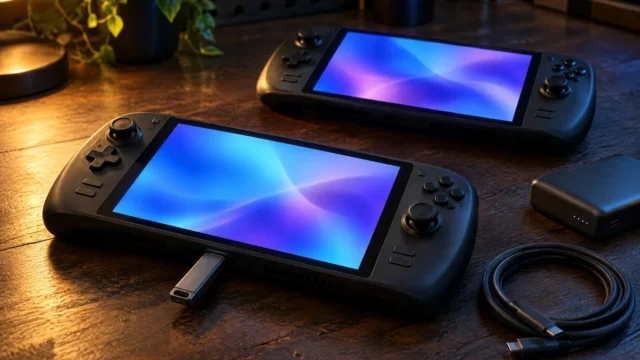
ASUS confirmed the ROG Xbox Ally X20 as available starting October 15, 2026, a handheld gaming PC built with Xbox branding and a 120Hz OLED display in a translucent shell, according to Ground News. Canadian pre-orders went live the same week, with the ASUS Store accepting orders for all configurations and Best Buy carrying the standalone device. Both Xbox’s own product page and ASUS’s listing confirm the device streams through Xbox Cloud Gaming, including selected games a player already owns or buys, provided they hold a Game Pass subscription.
What current official listings do not confirm is a complete app compatibility matrix for the Ally X20 beyond Xbox Cloud Gaming. Since the device is built on the same handheld gaming PC foundation as the earlier ROG Ally line covered in our ROG Xbox Ally X vs Steam Deck OLED comparison, it is reasonable to expect browser-based access to GeForce NOW and Boosteroid the same way any Windows-class handheld supports them, but neither ASUS nor NVIDIA has published a dedicated compatibility confirmation for this specific model at the time of writing, so treat that as an expectation rather than a verified spec.
The bigger pattern is that handhelds are increasingly sold as hybrid devices: strong enough to run demanding titles locally, but leaning on cloud streaming for games the hardware cannot handle natively or for titles outside a player’s existing library. That same hybrid logic is why players setting up alternative operating systems on handhelds, such as the Bazzite build covered in our ROG Ally Z1 Extreme guide, often keep a cloud gaming subscription active as a fallback for whichever games their local install cannot run well.
Account Security and Data Caps: What You Trade Away by Streaming
Streaming a game instead of installing it changes what is actually stored on your device, and that is worth understanding before you hand over a storefront login to a third-party streaming service. In every service covered here, the game itself runs entirely on a remote server, and only compressed video and audio travel back to your screen while your button presses travel the other way. Nothing playable is ever downloaded locally, which is good for storage space but means your access depends entirely on that service staying online and your account staying in good standing.
That dependency is exactly why the 2026 hour caps matter more than they first appear to. A cap is not just a usage limit, it is a reminder that you do not control the infrastructure your subscription relies on. GeForce NOW’s 100-hour Ultimate cap and the reportedly incoming 5 to 15 hour Xbox Cloud Gaming cap both shift risk toward the subscriber: hit the ceiling mid-session during a long weekend and you are locked out regardless of how much you have already paid that month. Boosteroid and Amazon Luna currently avoid this specific problem simply because neither has published a fixed cap, though that could change without much warning, exactly as Boosteroid’s own pricing did in September 2026.
On the account side, bring-your-own-games services like GeForce NOW and Boosteroid require you to link existing storefront logins such as Steam or Epic rather than creating a fresh account with no history attached. Treat that link the same way you would treat any third-party app permission: use a strong, unique password on the storefront account itself, turn on two-factor authentication where the storefront supports it, and periodically check which third-party services still have an active connection to your account from the storefront’s own security settings page.
Choosing Between Ownership and Access: The Decision Framework
Every comparison on this page eventually collapses into one underlying question: do you want to pay for games you own and keep forever, or pay for access to a rotating library you never actually own? A 2026 overview from The Canary frames this same split as the first filter any new subscriber should apply before comparing prices, resolution or latency at all, since the wrong library model will frustrate a player even if every other spec on the sheet is excellent.
Answer three questions honestly before picking a service. First, do you already own a meaningful library on Steam, Epic or another PC storefront? If yes, GeForce NOW or Boosteroid protect that investment, while Xbox Cloud Gaming largely ignores it in favour of its own catalogue. Second, do you already pay for Game Pass or Amazon Prime for reasons unrelated to cloud streaming? If yes, Xbox Cloud Gaming or Amazon Luna respectively are close to free additions rather than new costs. Third, how much does peak-hour reliability matter to you specifically? Competitive and twitch-reaction players should weight the latency benchmarks heavily and lean toward GeForce NOW, while casual single-player or turn-based gamers can comfortably prioritise price or included library instead, since an extra 20 to 30 milliseconds barely registers outside fast-paced genres.
Running through that framework against the data Is also how the use-case and real-world example tables further down were built, rather than from a single ranked list, because a ranked list cannot capture the fact that the right answer genuinely changes based on what you already own and already pay for.
Migration Guide: Switching Services Without Losing Your Library
Moving between a bring-your-own-games service and a subscription catalogue service is not a simple account swap, because the two models store your progress in completely different places. Follow this sequence to avoid losing saves, paying for two services at once, or discovering a game is missing only after you have already cancelled your old plan.
- Confirm which games you actually need before switching: list your most-played titles and check each one against the new service’s supported catalogue, since GeForce NOW and Boosteroid only stream games tied to a connected storefront account, not a universal library.
- Re-link your storefront accounts first: connect Steam, Epic, GOG, Ubisoft Connect or EA accounts to the new service before cancelling the old one, so you can verify streaming actually works for your specific titles.
- Check cloud save sync per platform, not per service: most save data lives with the game’s own storefront or publisher cloud save system, not with GeForce NOW, Xbox Cloud Gaming or Boosteroid directly, so saves usually transfer automatically once the same storefront account is linked.
- Run a short trial overlap: keep both subscriptions active for one billing cycle if the cost allows, test latency and resolution on your own connection during your normal play hours, and only then cancel the old service.
- Reconfigure controller pairing: Bluetooth and USB controller profiles are usually tied to the device or browser session rather than the account, so expect to re-pair hardware controllers on the new service even if nothing else changes.
- Check device app availability before committing: Boosteroid’s device list is the widest of the four services covered here, while Amazon Luna’s is the narrowest, so confirm your TV, phone or handheld is actually supported before cancelling anything.
- Watch the new hour caps: if you are moving to GeForce NOW Ultimate or staying on Xbox Cloud Gaming after November 2026, track your monthly streaming hours from day one so a cap does not cut off access mid-session during a busy week.
The single most common mistake in this process is cancelling the old service before confirming every important title streams correctly on the new one. A ten-minute overlap trial costs a fraction of a monthly subscription and avoids the far more common problem of discovering a favourite game is missing from the new catalogue after the old account is already gone.
Pros and Cons of Each Cloud Gaming Service
| Service | Pros | Cons |
|---|---|---|
| GeForce NOW | Highest resolution and frame rate ceiling, lowest latency in most tests, keeps your existing game library | Two price increases since Nov 2025, 100-hour monthly cap on Ultimate, no included games |
| Xbox Cloud Gaming | Large included Game Pass catalogue, confirmed euro Ultimate pricing, works across Xbox consoles, PC and mobile | Reportedly moving to a 5 to 15 hour monthly cap, highest peak-hour latency in Chromebook testing, lower resolution ceiling than GeForce NOW |
| Boosteroid | Widest device compatibility of the four, no published hour cap, mid-pack latency ahead of Xbox Cloud Gaming at peak times | Raised prices nearly 31 percent in September 2026, removed Ultra Pro as a monthly option, smaller public server footprint than GeForce NOW |
| Amazon Luna | Free games included for existing Amazon Prime members, no extra monthly fee for the base tier | No confirmed Ireland pricing for Luna Premium, narrowest device list, least current comparison data available |
Use-Case Recommendations: Matching the Service to the Player
Beyond the five profiles already covered, a few specific player types come up repeatedly in search traffic around this comparison, so it is worth addressing them directly.
| Use case | Recommended service | Runner up |
|---|---|---|
| Competitive shooter players needing lowest latency | GeForce NOW Ultimate | Boosteroid Ultra |
| Casual players who already pay for Game Pass | Xbox Cloud Gaming | GeForce NOW Performance |
| Budget-focused players building a first cloud setup | Boosteroid Ultra | GeForce NOW Performance |
| Existing Amazon Prime households | Amazon Luna free tier | Boosteroid Ultra |
| Handheld owners wanting a cloud fallback for unsupported titles | GeForce NOW Performance | Xbox Cloud Gaming |
| Households with an unreliable rural connection | Boosteroid Ultra | GeForce NOW Performance |
Notice that GeForce NOW Performance, not Ultimate, shows up as a recommendation twice here. The Performance tier’s 1440p ceiling is a better match for unreliable connections and handheld screens than paying extra for a 4K tier you cannot reliably sustain, which is a detail that pure spec-sheet comparisons usually miss.
The Verdict: Which Cloud Gaming Service Wins in 2026
There is no single winner across every category, which is why the specs table above matters more than any one-line recommendation. But the data does point to clear category leaders.
| Category | Winner | Based on |
|---|---|---|
| Lowest latency | GeForce NOW | Led in 2 of 3 independent test sources |
| Highest resolution and frame rate | GeForce NOW | 4K at 120fps, or 360fps at 1080p on Ultimate |
| Largest included game catalogue | Xbox Cloud Gaming | Hundreds of titles bundled into Game Pass |
| Lowest monthly cost for streaming your own games | Boosteroid | €16.89 Ultra vs €21.99 GeForce NOW Ultimate |
| Widest device support | Boosteroid | 9+ supported platform types |
| Best value for existing subscribers of another service | Amazon Luna | Free games bundled with Amazon Prime |
If forced to pick one default recommendation for a typical Irish household with a decent broadband connection and an existing PC game library, GeForce NOW Performance at €10.99 a month is the most balanced choice in this comparison: strong enough resolution for most screens, lower latency than Xbox Cloud Gaming in every test reviewed here, and no new catalogue to buy into. Players already locked into Game Pass should stay with Xbox Cloud Gaming until the hour cap details are officially confirmed, since the included library remains genuinely larger than anything GeForce NOW or Boosteroid offer. Budget-first players and anyone on a less reliable connection should look at Boosteroid Ultra before assuming GeForce NOW is the only serious alternative to Xbox.
Frequently Asked Questions
Is GeForce NOW cheaper than Xbox Cloud Gaming in Ireland?
At the top tier, GeForce NOW Ultimate costs €21.99 a month against €20.99 for Xbox Game Pass Ultimate, so Xbox is marginally cheaper at the highest level. But GeForce NOW Performance at €10.99 undercuts both significantly if you do not need 4K streaming, and it does not include a game catalogue the way Game Pass does, so the comparison depends on whether you are paying for games or just for streaming.
Does Boosteroid let you keep games you already own?
Yes. Boosteroid uses the same bring-your-own-games model as GeForce NOW, streaming titles you already own on connected storefronts like Steam, Epic or GOG rather than providing a bundled catalogue.
Why did Amazon Luna fall behind in 2026?
Luna’s service model changed materially during 2026, and current trackers warn against using older comparisons to judge it. It has no confirmed Ireland pricing for its Premium paid tier, a narrower device list than its three rivals, and far less current independent testing data available, which leaves the free Amazon Prime tier as its only clearly documented current advantage.
What internet speed do you need for 4K cloud gaming?
Testers recommend a stable, wired connection in the gigabit class to reliably sustain GeForce NOW’s 4K at 120fps Ultimate tier, particularly in ray-traced games. For Boosteroid’s 4K Ultra tier or Xbox Cloud Gaming’s 1440p Ultimate tier, a strong broadband connection in the 50 to 100 Mbps range is generally sufficient under normal, non-peak conditions.
Does the ROG Xbox Ally X20 support GeForce NOW as well as Xbox Cloud Gaming?
Official listings from Xbox and ASUS confirm Xbox Cloud Gaming support, requiring a Game Pass subscription. Neither company has published a dedicated confirmation for GeForce NOW or Boosteroid compatibility on this specific model, so treat that as expected but unverified rather than confirmed.
Will Xbox Cloud Gaming’s new hour cap affect existing subscribers?
Based on current 2026 industry tracking, the reported 5 to 15 hour monthly cap is expected to apply broadly from November 2026, though Microsoft had not issued its own matching official statement confirming the exact figure or exemptions at the time of writing. Existing subscribers should monitor official Xbox channels for the confirmed rollout details.
Can I switch between cloud gaming services without losing my save files?
In most cases yes, because save data is usually tied to the game’s storefront or publisher cloud save system rather than to GeForce NOW, Xbox Cloud Gaming or Boosteroid directly. Re-linking the same storefront account, such as Steam or Ubisoft Connect, to the new service typically restores saves automatically.
Which cloud gaming service has the lowest latency in Ireland?
Across all three independent test sources used GeForce NOW posted the lowest or near-lowest latency, ranging from roughly 35 to 65 milliseconds depending on time of day and test method, with its advantage widening during peak evening hours compared to Xbox Cloud Gaming in particular.
Related Coverage
Eoin Mulcahy
Eoin Mulcahy is the Hardware & Gaming Reporter at TrendinTech, where he tests graphics cards, processors, consoles and peripherals and follows the games industry, from major publishers to the independent studios of Dublin, Galway and Cork. He writes for readers who want to know whether a product is worth the money, not whether it won the spec sheet.
All stories by Eoin Mulcahy (14)Related Articles

Windows Handhelds Catch SteamOS: $1,299 Battery Test [2026]
Install SteamOS 3.8.28 on Third-Party Handhelds: 12 Steps [2026]