Apple’s iPhone Duo Gamble: Analysts Split on 6M-Unit Crunch [2026]

Apple pushed ahead with the October 23 launch of the iPhone Duo even though it knew, well in advance, that supply would fall far short of demand. That decision is now the center of a split verdict on Wall Street and among device reviewers: some call it a costly stumble, others call it the best problem Apple could ask for. Delivery estimates for the company’s first foldable iPhone slipped from launch day into November within minutes of pre-orders opening on October 16, then kept sliding toward late January 2027 as the week went on, according to CBS News and ExtremeTech.
The iPhone Duo, the name used across reporting from VOI.ID, Mashable, India News Network, Manila Bulletin and CNBC Tech for Apple’s foldable phone, is now backordered into 2027 in multiple markets. Apple has not detailed the exact scale of the shortfall. But the pattern across pre-order windows in the United States, Korea and elsewhere points to the same story: a product in high demand that Apple could not, or chose not to, build enough of before opening the doors.
Don't miss new tech stories on Google
Add TrendinTech once in the Google app and our stories appear in your news suggestions.
What actually happened when iPhone Duo pre-orders opened
Pre-orders opened October 16, 2026, at 5:00 a.m. Pacific Time in the United States, based on reporting cited by multiple outlets, while a separate account put the opening at 8:00 a.m. Eastern Time. Within minutes, delivery estimates on Apple’s own site moved past the October 23 launch date. By the end of the day, some orders placed in the first few minutes were already showing January delivery windows, and estimates in markets including Brazil reportedly pushed into early February.
Apple’s language on the shortage has been consistent and carefully worded. The company described demand as “extraordinary” in its public comments, and in a statement reported by outlets covering the launch, Apple said: “We are working hard to get this revolutionary new product into customers’ hands as quickly as possible, and we will continue accepting orders online.” That statement frames the shortage as a demand problem, not a production problem, a distinction that matters a great deal to how investors and analysts are now reading the launch.
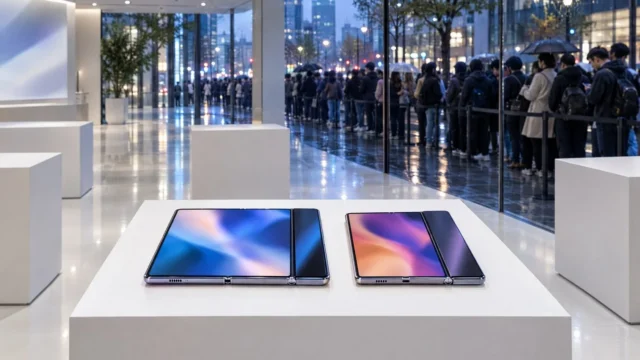
Retail stores were not spared either. Apple reportedly told staff to warn walk-in customers that the iPhone Duo likely would not be available for purchase without a pre-order, a move detailed by MacRumors. The outlet’s earlier reporting also indicated Apple was staging a large retail showcase for the device, including dedicated demo units at flagship locations, even as actual sellable inventory stayed thin. That combination, a big splashy in-store presence paired with almost nothing to sell walk-in customers, is unusual for a first-week Apple launch and is part of why this story has traveled so widely across tech outlets this week.
Why Apple is said to have launched anyway
The central question in coverage of the iPhone Duo rollout is not whether supply is tight. Every outlet tracking the launch agrees on that. The real debate is over why Apple chose to proceed on October 23 instead of delaying the launch until production caught up with expected demand, the way it has pushed back ship dates for other hard-to-manufacture products in the past.
Reporting attributed to Bloomberg’s Mark Gurman indicated that Apple was aware supply would be limited well before the October 23 date, and that the company assembled what inventory it could rather than waiting. Gurman has been publicly critical of the approach. As he put it: “Apple is making a big mistake here. The company knew there would be severe supply constraints, but it still went ahead with the launch.” That criticism, widely carried in Apple coverage this week, captures the core argument against Apple’s timing: the company had the information needed to delay and didn’t use it.
The counterargument, made by several outlets following the stock reaction, is that a hard launch with visible scarcity can work in Apple’s favor commercially, even if it frustrates individual buyers. 9to5mac described the situation as “annoying” for customers but potentially “a mixed blessing” for Apple, since a sold-out foldable generates the kind of headlines and social proof that a smoothly available one would not. For a company entering its first foldable phone category years after Samsung and a cluster of other first-generation Android foldable makers, visible scarcity doubles as a signal that the Duo is a hit rather than a niche experiment.
The production constraint behind the shortage
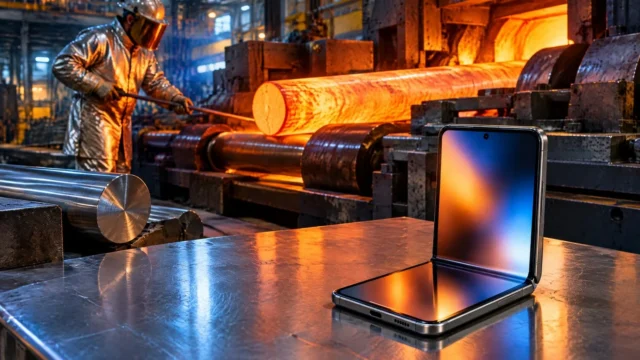
Multiple reports point to the foldable hinge as the bottleneck. Analyst Jeff Pu’s estimate, circulated in reporting aggregated by Ground News, suggested 2026 shipments of the iPhone Duo could land around six million units, well below what Apple would normally target for a flagship-tier launch, because of hinge-related production constraints. That figure is an analyst estimate, not a number Apple has confirmed, and it should be read with that caveat. Still, it lines up with the pattern of delivery dates slipping within minutes rather than days, which points to a shortage measured in the tens or hundreds of thousands of units rather than millions sitting in a warehouse waiting to ship.
Separate reporting described production running at only a few hundred units a day as recently as late August, though that figure, too, is attributed to media reporting rather than an Apple disclosure. If accurate even approximately, it would explain why Apple’s retail showcase strategy, built around demo units rather than sellable stock, made more sense internally than it might look from the outside: the company could show off the hardware at scale long before it could sell it at scale.
None of the production figures circulating this week come with an on-record Apple confirmation. The company’s public language has focused entirely on demand, not on acknowledging a shortfall in its own manufacturing output. That gap between what analysts estimate and what Apple says is itself a story, and it is one reason coverage of the iPhone Duo launch has split so clearly along the lines of “Apple got caught short” versus “Apple is managing scarcity on purpose.”
Wall Street’s reaction: catalyst or warning sign
CNBC’s Investing Club coverage framed the shortage in distinctly bullish terms for Apple shareholders. The network’s reporting tied the iPhone Duo’s sold-out status directly to a call previously made by Jim Cramer, describing the launch as the kind of catalyst that can move Apple’s stock over the following quarters, precisely because scarcity signals strong underlying demand for a brand-new product category rather than a refreshed existing one. That read treats the backorder headlines as marketing, not as a failure.
That is not the only read on the Street, though it is the most visible one this week. Supply-constrained launches carry real downside if they drag on: every week a customer waits for a phone they already paid for is a week in which a competitor’s device, including Samsung’s current foldable lineup or a flagship Android phone from a rival manufacturer, has a chance to win that same shopper’s attention and money instead. Apple has managed through supply constraints before, most notably with various Pro-tier iPhone models in past years, and those shortages tended to resolve within one to two quarters without lasting damage to sales. Whether the Duo follows that pattern depends on how quickly Apple can scale hinge production, a detail none of this week’s reporting has pinned down with a specific date.
How the iPhone Duo shortage compares with past Apple launches
Apple has shipped constrained products before, but the Duo’s rollout stands out for how quickly the shortage became visible. iPhone Pro Max models in recent years typically held same-week availability for walk-in customers for at least a few days before slipping into weeks-long backorders. The Duo skipped that grace period entirely: delivery dates moved past launch day within minutes of pre-orders opening, and Apple’s own retail staff were reportedly told to set expectations with walk-in shoppers before the doors even opened on October 23.
The table below lines up what is known about the iPhone Duo launch against the pattern Apple has followed with past constrained launches, drawing only on the specific figures reported this week.
| Launch detail | iPhone Duo (2026) | Typical prior constrained iPhone launch |
|---|---|---|
| Pre-order opening | October 16, 2026 (reported as 5 a.m. PT / 8 a.m. ET depending on outlet) | Friday morning, one week before ship date |
| Time to delivery slip past launch day | Within minutes | Typically hours to a day or two |
| Reported delivery estimates at peak | Into late January 2027, early February in some markets including Brazil | Usually 2 to 6 weeks out |
| Walk-in stock guidance to staff | Told to warn against walk-in purchases, per MacRumors | Walk-in stock usually available for a few days post-launch |
| Apple’s public framing | Demand described as “extraordinary”; no production shortfall confirmed | Similar demand-focused language in most cases |
| Estimated 2026 shipment volume | Around 6 million units, per analyst Jeff Pu (unconfirmed by Apple) | Varies by model generation and year |
Global demand signals: Korea, India and beyond
The shortage is not confined to the United States. Korean carriers opened iPhone Duo pre-orders with bundled trade-in and plan discounts, and pre-order activity there moved quickly once the device went live. In India, strong early interest pushed the device toward sellout status at higher price tiers, a pattern already tracked in detail as Indian retailers reported shipping dates sliding into 2027. Broader walk-in stock reporting across more than 70 countries found the same shortage pattern repeating almost everywhere the device went on sale, a situation this site has covered separately as the walk-in numbers came in market by market.
What stands out across every market tracked so far is the consistency of the pattern: nowhere has supply met the opening wave of pre-order demand, and nowhere has Apple offered a specific unit count or a firm date for when that will change. That consistency supports the view that the shortage is structural, tied to the hinge manufacturing bottleneck analysts have pointed to, rather than a market-by-market logistics issue Apple could fix with faster shipping.
The hardware behind the demand
Part of why the iPhone Duo is pulling this level of demand despite a $700 premium over the iPhone 18 Pro Max comes down to what is inside it. The device ships with Apple’s A20 Pro chip, built specifically to handle Siri’s newer on-device AI features at a scale roughly 50 percent larger than prior chip generations needed to support, according to reporting on the device’s internals. That combination, a first-generation foldable form factor paired with Apple’s newest silicon rather than a carried-over chip, is a meaningfully different strategy than how Apple has historically introduced new hardware categories, and it is part of why early demand has run well ahead of what analysts expected Apple to be able to supply.
That pairing also raises the stakes on the supply question. A foldable phone with last year’s chip inside would be a harder sell against Samsung’s established foldable lineup. A foldable phone with Apple’s current flagship silicon is a much stronger pitch, which likely explains some of the urgency buyers showed when pre-orders opened, and some of the pressure Apple is now under to get hinge production scaled up quickly.
What this means for Apple’s broader smartphone strategy
Apple enters the foldable category later than most of its direct competitors, and the company has historically preferred to enter new hardware categories only once it believes it can out-execute whatever already exists in the market. The iPhone Duo’s reception suggests that bet on execution, at least on the design and demand side, is paying off. The open question is whether Apple’s supply chain can catch up before that goodwill erodes into frustration, a dynamic that has played out differently across the company’s past constrained launches and that will likely determine how this specific launch is remembered a year from now.
For readers weighing whether to wait for a Duo or buy something available now, it is worth keeping an eye on how Apple’s broader lineup is pricing in response. The Pixel 10 Pro’s recent price cut and ongoing comparisons across this year’s flagship smartphone field show competitors are not waiting around for Apple’s supply to normalize before making their own pitch for the same shoppers currently stuck in a Duo backorder queue.
Five predictions for the iPhone Duo supply situation
- Delivery estimates will likely begin shortening by mid-November as Apple’s manufacturing partners scale hinge output, following the pattern of past constrained iPhone launches resolving within one to two quarters.
- Apple is unlikely to issue a specific unit-shipped figure before its next quarterly earnings call, continuing its practice of framing supply news in demand terms rather than production terms.
- Expect at least one additional analyst revision to the roughly six million unit 2026 shipment estimate as more supply chain checks come in over November and December.
- Competing foldable makers, including Samsung, are likely to use the Duo’s scarcity in their own marketing to push shoppers toward in-stock alternatives through the holiday season.
- Secondary market prices for in-stock iPhone Duo units will likely stay elevated above Apple’s list price through the end of 2026, mirroring past scarcity-driven resale patterns for constrained Apple launches.
What buyers should know before ordering
Anyone who has not yet placed an order should expect a January 2027 delivery estimate at minimum, based on the pattern reported across US, Korean and Indian pre-order windows this week. Walk-in purchases at Apple retail stores are not a reliable fallback; MacRumors’ reporting on staff guidance makes clear Apple does not expect meaningful walk-in stock to be available even at flagship locations like the Fifth Avenue store in New York. Shoppers who need a device sooner have two realistic paths: order now and accept the wait, or choose a different flagship phone that is in stock today.
| Market | Reported pre-order status as of October 20, 2026 | Source |
|---|---|---|
| United States | Delivery estimates slipped from Oct. 23 into January 2027 within minutes of opening | CBS News, ExtremeTech |
| Brazil | Estimated deliveries pushed into early February 2027 | 9to5mac |
| South Korea | Carrier pre-orders opened with trade-in and plan discounts | Reported carrier pre-order coverage |
| India | Higher price tiers reported sellout with 2027 shipping windows | Reported India retail coverage |
| Retail walk-in (global) | Staff told to warn against walk-in purchases at launch | MacRumors |
The bigger picture: scarcity as strategy or accident
The honest answer, based on everything reported so far, is that nobody outside Apple knows for certain whether this shortage is intentional scarcity marketing or a genuine production miss that Apple is now spinning as a demand story. Both readings fit the available facts. What is clear is that Apple chose to launch on October 23 rather than delay, that it knew ahead of time supply would be tight, and that the company’s public statements have stayed focused on demand language rather than acknowledging any shortfall on the manufacturing side.
That choice now sits at the center of a genuine disagreement among people who watch Apple closely. Gurman’s criticism represents the view that Apple should have protected its launch-week experience by waiting. The CNBC-aligned read represents the view that a sold-out foldable is worth more to Apple’s stock story than a smoothly available one would have been. Both can’t be fully right, and the next two to three months of delivery data, not this week’s headlines, will settle which view holds up.
Frequently asked questions
When did iPhone Duo pre-orders open?
Pre-orders opened October 16, 2026. Reports differ slightly on the exact time, with some citing 5 a.m. Pacific Time and others citing 8 a.m. Eastern Time.
What is the official iPhone Duo launch date?
October 23, 2026, is the date identified in reporting as the official launch date, though most new orders placed after the opening rush are not expected to arrive by then.
How late are iPhone Duo deliveries running?
Delivery estimates reported this week range from November 2026 for early pre-order customers to late January or early February 2027 for orders placed after the first rush, depending on market.
Can I buy an iPhone Duo at an Apple Store without a pre-order?
Reports indicate Apple told retail staff to warn walk-in customers that purchasing without a pre-order is unlikely to be possible at launch, even at flagship stores.
Why is the iPhone Duo in short supply?
Reporting points to production constraints tied to the device’s foldable hinge, with one analyst estimate suggesting 2026 shipments could land around six million units. Apple has not confirmed a specific production figure.
Did Apple know supply would be limited before launch?
Reporting attributed to Bloomberg’s Mark Gurman indicates Apple was aware of the supply constraint ahead of the October 23 launch date and proceeded regardless.
Is the iPhone Duo shortage good or bad for Apple’s stock?
Views differ. CNBC’s coverage tied the sellout to a bullish stock catalyst thesis, while critics argue a prolonged shortage risks pushing buyers toward competing foldable and flagship phones.
What chip powers the iPhone Duo?
The device uses Apple’s A20 Pro chip, built to support an expanded set of on-device Siri AI features compared to prior chip generations.
Related Coverage
Owen Castellanos
Owen Castellanos is the Hardware & Gaming Reporter at TrendinTech, where he tests graphics cards, processors, consoles and peripherals and follows the games industry, from the major publishers to independent studios. He writes for readers who want to know whether a product is worth the money, and he is not shy about saying when it is not.
All stories by Owen Castellanos (403)