Apple Commits $100M to US Titanium Maker Perryman [2026]

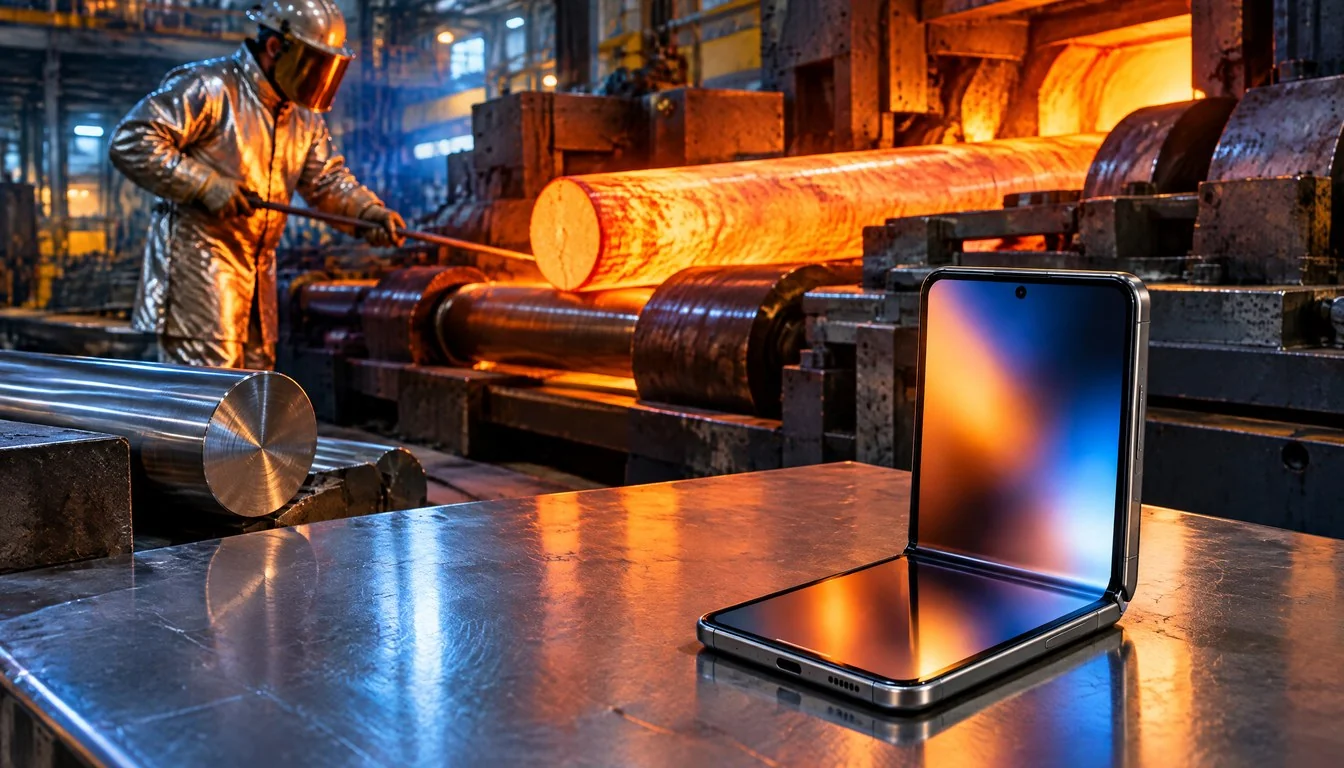
Apple said on October 20, 2026 that it will commit up to $100 million over three years to Perryman Company, a Pennsylvania titanium producer, as part of an expanded push to buy more of its raw materials from US suppliers. The announcement, confirmed by CNBC and AppleInsider, ties directly to the titanium enclosure on Apple’s new foldable phone, the iPhone Duo, and adds a second supplier update involving Qnity Electronics and camera components for the iPhone 18 Pro.
The deal lands at a sensitive moment for Apple. The company is racing to fill iPhone Duo orders after preorders opened October 16 and supply constraints forced a two-unit purchase cap in some markets, and it is doing so while under continued political pressure to show that its newest products carry more American-made content. The Perryman agreement is Apple’s answer on the materials side of that equation, and it is worth unpacking what the $100 million figure actually covers, what it does not cover, and how it fits into a manufacturing program that has already pulled in Broadcom, Bosch, Cirrus Logic, TDK and Qnity Electronics over the past year.
Don't miss new tech stories on Google
Add TrendinTech once in the Google app and our stories appear in your news suggestions.
What Apple actually announced on October 20
According to Apple’s own statement, cited by both CNBC and AppleInsider, the company will purchase up to $100 million of titanium from Perryman Company over the next three years. Apple said: “We’re proud to work with Perryman and Qnity Electronics to continue expanding our American Manufacturing Program and support U.S. jobs.” That is the full extent of the on-record language Apple has released, and two details in it matter more than they might first appear.
First, “up to $100 million” is a ceiling, not a confirmed spend. Apple has not said how much of that figure has already changed hands, and nothing in the announcement states that the full amount has been committed today. Second, the agreement covers titanium supply, not final assembly. Perryman melting, forging and rolling metal in Pennsylvania does not mean any iPhone is bolted together on US soil. Those two distinctions get blurred quickly in social media chatter, so it is worth being precise about them before anything else.
The announcement also confirmed that Apple is widening its existing relationship with Qnity Electronics, a Delaware-based, publicly traded semiconductor and materials company, for films used in the variable-aperture camera system on the iPhone 18 Pro. That part of the deal has nothing to do with titanium. It is a separate supply chain thread that happens to be bundled into the same press release because both suppliers fall under Apple’s American Manufacturing Program, or AMP.
Who is Perryman Company
Perryman Company is a privately held, family-owned titanium producer based in Pennsylvania. The work tied to Apple will happen at its facility in Houston, Pennsylvania, a small borough roughly 25 miles south of Pittsburgh, not to be confused with Houston, Texas, where Apple separately opened an Advanced Manufacturing Center in August. At that Pennsylvania site, Perryman will melt, forge and roll grade 5 titanium for Apple, with the supplied material containing a minimum of 80 percent recycled content.
Industry profiles describe Perryman’s broader product range as ingots, billets, bar, wire, additive wire, shaped products, blocks and slabs, serving aerospace, medical and defense customers in addition to any new consumer electronics work. Neither Apple nor Perryman has disclosed a production timeline, guaranteed volume, or confirmation that plant capacity has already expanded to meet the new order. A separate industry filing reportedly shows Pennsylvania’s Department of Environmental Protection granted a further plan-approval extension for Perryman’s Coal Center titanium melt shop in August 2026, with a related modification still under review at the time, though that detail comes from a single industry report rather than an Apple or Perryman statement.
Grade 5 titanium and the 80 percent recycled-content rule
Grade 5 titanium, also known as Ti-6Al-4V, is the titanium alloy most commonly used in aerospace and premium consumer hardware because it combines a high strength-to-weight ratio with corrosion resistance. Apple has already used grade 5 titanium in past Pro-tier iPhones and the Apple Watch Ultra line, so the metal itself is not new to Apple’s supply chain. What is new is the domestic sourcing commitment and the recycled-content floor.
The 80 percent recycled-content minimum applies specifically to the titanium Perryman supplies for the iPhone Duo enclosure, not to the phone as a whole. Apple’s own announcement for iPhone Duo states that the device overall contains 35 percent recycled content, and that its 3D-printed hinge cover is made from 100 percent recycled titanium. Those are three different numbers describing three different parts of the same product, and conflating them would misstate what Apple has actually confirmed.
Why the iPhone Duo is the center of this story
The iPhone Duo is Apple’s first foldable iPhone, unveiled on September 9, 2026. It has a 7.6-inch inner display for multitasking and content, a 5.4-inch outer display when closed, a polished grade 5 titanium frame and a 3D-printed titanium hinge cover. It comes in two finishes, star white and night sky, and starts at $1,999 in the United States for the 256GB model, with 512GB, 1TB and 2TB configurations also available, according to Apple’s official product page.
Preorders opened October 16 at 5 a.m. Pacific Time, and Apple has scheduled retail availability for October 23, three days after this titanium announcement. That timing is not a coincidence. Apple has a pattern of pairing supply chain news with launch weeks, using supplier announcements to reinforce the idea that a flagship product is backed by American manufacturing investment right as it reaches shelves. Several outlets reported that some iPhone Duo configurations saw delivery estimates stretch into January 2027 within days of preorders opening, which would track with earlier reporting on tight early supply for the device, though Apple has not confirmed specific delivery windows publicly.
Demand pressure has already shown up in retail policy. Apple capped purchases of the iPhone Duo at two units per customer in several markets after launch-week interest outpaced available stock, a restriction that TrendinTech covered in detail last week. A domestic titanium supplier does not fix that near-term shortage. Perryman’s output will not meaningfully move iPhone Duo availability for the current quarter. What it does is give Apple a US-based materials story to point to while the company works through demand that is clearly outstripping early production.
iPhone Duo versus iPhone 18 Pro: the titanium split
It is also worth separating the two phones Apple name-checked in Tuesday’s announcement, because they do not use the same materials strategy. The iPhone 18 Pro and iPhone 18 Pro Max, released September 18, use 40 percent recycled content overall, a battery with 100 percent recycled cobalt, and an enclosure built from 85 percent recycled aluminum, not titanium. Apple’s own materials language is explicit that grade 5 titanium applies to the iPhone Duo, not the iPhone 18 Pro. The iPhone 18 Pro’s connection to this week’s news is through Qnity’s camera film work, a separate supply chain entirely.
| Model | Announced | US starting price | Primary enclosure material | Recycled-content detail |
|---|---|---|---|---|
| iPhone Duo | Sept. 9, 2026 | $1,999 (256GB) | Grade 5 titanium | 35% recycled overall; hinge cover 100% recycled titanium |
| iPhone 18 Pro | Sept. 9, 2026 | $1,199 (256GB) | Aluminum | 40% recycled overall; 85% recycled aluminum enclosure; 100% recycled cobalt battery |
| iPhone 18 Pro Max | Sept. 9, 2026 | $1,299 (256GB) | Aluminum | Shares iPhone 18 Pro materials specification |
Qnity Electronics: the other half of the announcement
Qnity Electronics is a publicly traded semiconductor and materials technology company, formerly named Novus SpinCo 1, which took the Qnity name in April 2025 and now trades on the New York Stock Exchange under the ticker Q. It joined Apple’s American Manufacturing Program in March 2026, alongside Bosch, Cirrus Logic and TDK, and this week’s news expands that relationship specifically to advanced films used in the iPhone 18 Pro’s variable-aperture camera system, Apple’s first variable-aperture implementation on an iPhone.
Qnity has had an active few months on its own. The company opened a 385,000-square-foot facility in Newark, Delaware in March 2026, joined the PHLX Semiconductor Index on September 21, and named Ken Rizvi as chief financial officer in mid-October, with Jon D. Kemp continuing as chief executive and Sam Ponzo serving as interim president of the company’s Semiconductor Technologies segment. None of that detail was part of Apple’s titanium announcement, but it shows Qnity entering this expanded Apple relationship as a company that is actively building out leadership and manufacturing capacity rather than standing still.
Inside Apple’s American Manufacturing Program
The Perryman and Qnity news did not happen in isolation. Apple’s American Manufacturing Program dates back to August 2025, when the company framed it as part of a broader plan to put $600 billion into US investment and innovation over four years. Since then, Apple has added partners in stages rather than all at once, and Tuesday’s announcement is the latest entry in a program that has been building for more than a year.
In March 2026, Apple added Bosch, Cirrus Logic, TDK and Qnity Electronics to AMP, saying it planned to spend $400 million across those partnerships through 2030. In July, Apple said it would increase its spending with Broadcom to produce more chips domestically, a deal tied to a reported $1.5 billion Broadcom capital investment to modernize facilities in Fort Collins, Colorado. In August, Apple opened an Advanced Manufacturing Center connected to custom silicon, advanced components and cover glass work. The Perryman titanium deal and the expanded Qnity scope announced this week are the newest additions to that running list.
| Date | AMP partner or milestone | Stated commitment | Focus area |
|---|---|---|---|
| Aug. 2025 | Program established | $600 billion over four years (whole program) | Broad US manufacturing and innovation |
| March 26, 2026 | Bosch, Cirrus Logic, TDK, Qnity Electronics added | $400 million through 2030 | Components and materials |
| July 8, 2026 | Broadcom spending increase | Tied to a reported $1.5 billion Broadcom capex plan | US-made chips (Fort Collins, Colorado) |
| Aug. 13, 2026 | Advanced Manufacturing Center opens | Not separately disclosed | Custom silicon, components, cover glass |
| Oct. 20, 2026 | Perryman Company added; Qnity scope expanded | Up to $100 million over three years (Perryman) | Titanium (iPhone Duo); camera films (iPhone 18 Pro) |
Viewed across that timeline, the pattern is incremental: Apple adds one or two named suppliers roughly every one to three months, attaches a specific dollar figure to each, and lets the cumulative total build toward the $600 billion headline number without ever itemizing exactly how the full figure breaks down. That structure makes it hard to verify how much of the four-year commitment is actually new domestic spending versus existing supplier relationships being relabeled under the AMP banner, a criticism that has followed similar reshoring pledges from other US companies.
The bigger picture: why titanium, why now
Titanium is a small line item next to chips, displays and batteries in the overall cost of an iPhone, so a $100 million, three-year commitment is not going to move Apple’s margins in any measurable way. The more useful way to read this deal is as a materials-sourcing signal layered on top of a launch-week supply crunch, rather than a production fix. Apple is introducing its first foldable phone at the same time it is under scrutiny over how much of its hardware is built with US-made inputs, and titanium happens to be one of the more visually and symbolically loaded materials Apple uses, given its history in the Apple Watch Ultra and prior Pro-tier iPhones.
Reshoring metals supply also carries less execution risk than reshoring final assembly. Apple can point to a named Pennsylvania supplier, a specific recycled-content figure, and a three-year dollar ceiling without having to relocate iPhone assembly lines, which remain concentrated outside the United States. That makes deals like this one politically useful and operationally cheap relative to their visibility, a dynamic that shows up across the broader electronics industry whenever a company wants credit for “American manufacturing” without absorbing the cost of moving final assembly.
Competitive context: how this compares across the industry
Apple is not alone in using supplier-level domestic sourcing announcements to answer political pressure around manufacturing. Chipmakers, automakers and consumer electronics brands across the sector have leaned on similar language in recent years, pointing to specific plants, specific suppliers and multi-year dollar ceilings rather than full reshoring of final production. What sets Apple’s approach apart is the frequency and specificity of the announcements: naming an individual Pennsylvania titanium producer, down to its town, is a more granular disclosure than the vague “domestic investment” language many competitors use.
That specificity cuts both ways. It gives Apple credit for transparency, but it also makes the gaps easier to spot, including the fact that this agreement says nothing about where the iPhone Duo itself is assembled. Readers comparing Apple’s foldable debut against other premium hardware launches, including the pricing gap Apple itself highlighted between the iPhone Duo and the iPhone 18 Pro Max, should keep that distinction in mind: a domestic materials deal is not the same claim as a domestic assembly deal, even when both get folded into the same manufacturing narrative.
Historical context: Apple’s manufacturing pledges over time
Apple’s US manufacturing commitments did not start with AMP in 2025. The company has periodically announced domestic investment figures for more than a decade, often timed to coincide with new product launches or periods of political attention on trade policy. What distinguishes the current program is its structure: rather than one lump-sum pledge, Apple is building AMP as a running list of named suppliers, each with its own dollar figure and product tie-in, which makes it easier to track incrementally but harder to evaluate as a single consolidated commitment.
This also lands in a year when Apple’s broader hardware cadence has been unusually dense. Beyond the iPhone Duo and iPhone 18 Pro line, Apple shipped new Mac mini and Mac Studio configurations on September 22, introduced HomePod mini 2, a fourth-generation Apple TV 4K and the $299 Apple HomeView smart display in mid-October, and is reportedly preparing a separate event for a touch-enabled MacBook and OLED iPad mini later this month. Each of those launches adds more surface area for Apple to attach supplier announcements to, and the Perryman deal fits a pattern of pairing hardware news with materials-sourcing news in the same news cycle.
Market impact and what investors are watching
For Apple’s stock, a $100 million supplier commitment spread over three years is immaterial on its own; it is a rounding error against Apple’s quarterly revenue. The more relevant market signal is what it says about iPhone Duo demand. Apple would not be publicizing a domestic titanium supply deal for a product experiencing soft early sales. The purchase caps, the reported delivery slippage into 2027 for some configurations, and now a supply chain announcement explicitly tied to the device all point toward a launch that is selling faster than Apple’s current production can match, which is a stronger demand signal than the dollar figure in Tuesday’s release.
For Qnity, the news carries more direct relevance. The company has been actively expanding its semiconductor materials business through 2026, including new thermal-management products for AI data centers and new leadership appointments, and a confirmed, expanded role supplying camera films for one of Apple’s highest-volume Pro iPhone lines adds a visible, named customer relationship to that growth story. Perryman, as a private company, does not have a public stock price to react, but the deal is a meaningful reference customer for a specialty metals producer whose other markets are aerospace, medical and defense.
What remains unconfirmed
Several details that would normally accompany a supplier announcement this size have not been disclosed. Apple has not said how much of the $100 million ceiling has actually been spent to date, what volume of titanium that figure is expected to buy, or whether Perryman’s production capacity has already expanded to meet it. Apple also has not confirmed that any part of iPhone Duo final assembly happens in the United States; the agreement covers raw titanium processing only. Perryman’s current ownership structure, executive leadership, and official product pricing are not disclosed in any public Apple or Perryman materials reviewed for this story. Readers should treat any claim beyond what Apple has stated, including specific production volumes or assembly locations, as unconfirmed until either company says otherwise.
Predictions: where this goes next
- Expect Apple to announce at least one more AMP supplier before its next quarterly earnings call, continuing the roughly one-to-three-month cadence seen since March 2026.
- Perryman’s Pennsylvania facility is likely to see incremental capacity investment over the next 12 to 18 months if Apple’s titanium order volume grows, though neither company has committed to a public capacity-expansion timeline.
- Qnity’s camera-film work for the iPhone 18 Pro could extend to future iPhone generations given the company’s stated push into advanced packaging and materials research through 2026.
- Iphone Duo supply constraints are likely to persist into early 2027 given reported delivery slippage, regardless of this week’s materials announcement, since titanium supply is not the bottleneck limiting current shipments.
- Recycled-content minimums, now appearing at 35, 40, 80, 85 and 100 percent across different iPhone Duo and iPhone 18 Pro components, are likely to tighten further across future AMP contracts as Apple leans on sustainability figures alongside domestic-sourcing figures.
What this means for the broader electronics supply chain
Beyond Apple, the Perryman deal is a useful data point for anyone tracking how specialty metals producers are positioning themselves around reshoring demand. A privately held Pennsylvania titanium shop landing a named, public commitment from the world’s most valuable consumer electronics company is the kind of reference deal that other metals producers will likely cite when pitching their own domestic-sourcing credentials to other device makers. Expect smaller titanium, aluminum and specialty-alloy suppliers to use this announcement as a benchmark in their own marketing over the coming months, even if the dollar figures involved are modest by big-tech standards.
It also reinforces a trend already visible in this year’s broader smartphone supply chain data, where component shortages and sourcing pressure have been recurring themes across the industry, not just at Apple. Titanium, memory chips and camera components have each had their own supply moments in 2026, and Tuesday’s announcement folds titanium into that same running story of manufacturers trying to lock down materials access ahead of demand spikes rather than reacting to them after the fact.
Frequently asked questions
How much money is Apple actually committing to Perryman Company?
Apple says it will purchase up to $100 million of titanium from Perryman over three years. That is a spending ceiling for the three-year period, not confirmation that the full amount has already been paid.
Does this mean the iPhone Duo is assembled in the United States?
No. The agreement covers titanium melting, forging and rolling at Perryman’s facility in Houston, Pennsylvania. Apple has not confirmed that final iPhone Duo assembly happens domestically.
What is grade 5 titanium?
Grade 5 titanium, also called Ti-6Al-4V, is a titanium alloy valued for its strength-to-weight ratio and corrosion resistance. Apple has used it previously in Apple Watch Ultra models and now uses it for the iPhone Duo enclosure.
Is Qnity Electronics supplying titanium too?
No. Qnity’s expanded role covers advanced films for the iPhone 18 Pro’s variable-aperture camera system. The titanium commitment is specifically with Perryman Company.
How does the iPhone Duo’s materials specification compare to the iPhone 18 Pro?
The iPhone Duo uses a grade 5 titanium enclosure with 35 percent recycled content overall and a 100 percent recycled titanium hinge cover. The iPhone 18 Pro uses an 85 percent recycled aluminum enclosure, a 100 percent recycled cobalt battery, and 40 percent recycled content overall. They are different materials strategies for different products.
When does the iPhone Duo go on sale?
Apple unveiled the iPhone Duo on September 9, 2026, opened preorders October 16, and scheduled retail availability for October 23, 2026.
What else has Apple added to its American Manufacturing Program this year?
Apple added Bosch, Cirrus Logic, TDK and Qnity Electronics in March 2026 with a combined $400 million planned through 2030, increased its spending with Broadcom in July 2026 for domestic chip production, and opened an Advanced Manufacturing Center in August 2026 before this week’s Perryman and Qnity announcements.
Is Perryman Company owned by Apple?
No. Perryman Company is an independent, privately held, family-owned business. Apple’s announcement describes a supply agreement, not an acquisition.
Related Coverage
Owen Castellanos
Owen Castellanos is the Hardware & Gaming Reporter at TrendinTech, where he tests graphics cards, processors, consoles and peripherals and follows the games industry, from the major publishers to independent studios. He writes for readers who want to know whether a product is worth the money, and he is not shy about saying when it is not.
All stories by Owen Castellanos (401)