Siemens Digital Twin Cuts Amazon Oil Pressure 50% [2026]

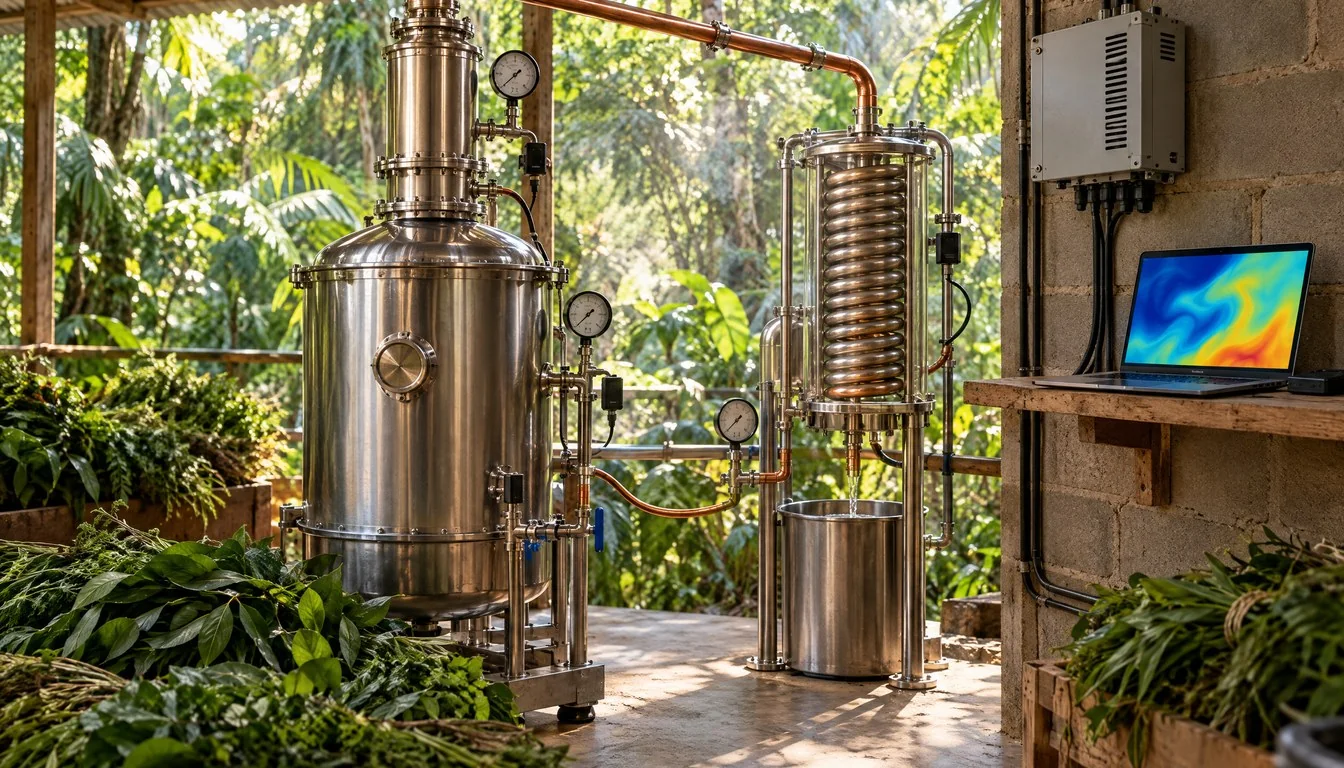
Siemens has put a digital twin to work in one of the least likely places for an industrial software rollout: a small essential oil cooperative deep in Brazil’s Amazon rainforest. The project, called Moiru, pairs computational fluid dynamics simulation with sensors and local edge computing to rethink how plant material is steamed down into aromatic oils, and early findings suggest the process could run at pressures up to 50 percent lower than before, according to Siemens.
The news, first detailed by Interesting Engineering on October 20, 2026, has drawn attention because it is an unusually concrete example of heavy industrial software, the kind normally reserved for car plants and chip fabs, being pointed at a cooperative-scale operation in a rainforest with limited connectivity. For a company whose digital twin business usually makes headlines around hydrogen plants or electronics factories, Moiru is a smaller, stranger showcase.
Don't miss new tech stories on Google
Add TrendinTech once in the Google app and our stories appear in your news suggestions.
What the Moiru Project Actually Is
Moiru is a joint initiative between Siemens, the cosmetics company Natura, and the Campo Limpo Cooperative, also referred to in Siemens materials as APROCAMP, based in Santo Antônio do Tauá, in the Brazilian state of Pará. Siemens has said the name comes from a Tupi word reported to mean “mutual help,” and the project sits under the company’s broader Tech4Amazonia initiative. The partnership between Siemens and Natura was established in 2024, and the project was first publicly announced in November 2025 before being updated and expanded through 2026.
The cooperative itself is not new to this work. Campo Limpo has supplied aromatic plants to Natura since 2003, and began distilling those plants into essential oils in 2024, the same year the digital twin partnership began. What Moiru adds is a layer of simulation, sensing, and automation on top of a process that had previously run on experience and manual adjustment.
No, This Is Not About Petroleum
It is worth being precise about terminology here, because “oil extraction in the Amazon” reads very differently depending on what kind of oil is involved. Moiru has nothing to do with petroleum or fossil fuel drilling. It concerns the extraction of essential oils from plant material, specifically pataqueira, storax (also written estoraque), priprioca, and capitiu, four aromatic plants used in cosmetics and fragrance production. The extraction method is steam distillation, a centuries-old technique in which plant material is packed into a vessel and exposed to steam that carries volatile aromatic compounds out of the plant and into a collection system.
That distinction matters for how the story should be read. This is not a tale of industrial encroachment into a protected ecosystem. It is a story about digitizing a small-scale, already-existing agro-industrial process that Natura has run with Amazonian cooperatives for more than two decades.
Inside the Digital Twin: Simcenter STAR-CCM+ and CFD
The technical core of Moiru is a digital twin of the extraction vat built using Simcenter STAR-CCM+, Siemens’ computational fluid dynamics software. The current version of that software, Simcenter STAR-CCM+ 2606, was released on July 1, 2026, and added capabilities including multi-GPU training for its PhysicsAI features and GPU-native complex chemistry simulation, according to Siemens’ Simcenter engineering blog.
For Moiru specifically, engineers used the software to model how steam moves through the packed plant material inside the extraction vessel. The simulation tracks steam channels, pressure drops, and heat distribution across the vat, essentially building a virtual version of a process that had previously been tuned by feel. That kind of fluid dynamics modeling is standard practice in sectors like aerospace and automotive, where Siemens’ Simcenter tools are also used for combustion and turbomachinery simulation. Applying the same CFD approach to a cooperative’s steam distillation vat is a considerably smaller and more unusual use case.
Modeling Steam, Pressure, and Heat
The simulation’s main output was a pressure recommendation. By modeling how steam actually behaves inside the vessel rather than relying on historical rule-of-thumb settings, the digital twin indicated that the extraction could be run at pressures as much as 50 percent below what the cooperative had used previously. Siemens frames this as a simulation finding tied to the proof of concept, not yet as an independently audited production result, which is an important caveat for anyone citing the figure.
The Sensors and Control Hardware on the Ground
A simulation is only useful if the physical process can actually follow its recommendations, so Siemens paired the digital twin with real instrumentation. The deployment includes a pressure sensor installed upstream of the extractor, a proportional valve fitted into the steam line, and additional mass-flow and temperature sensors. Control runs through a single programmable logic controller (PLC) and a single human-machine interface (HMI), with supervisory controls layered on top. It is a modest hardware footprint by industrial standards, which fits a cooperative-scale deployment rather than a full plant retrofit.
A Simplified Look at the Control Loop
Siemens has not published the underlying control code, but the described behavior, reading sensor values and adjusting a proportional valve toward a target derived from the digital twin, maps to a familiar industrial control pattern. A simplified illustration of that kind of loop, not actual Siemens code, looks like this:
// Illustrative control loop concept, not Siemens source code
pressure = read_sensor(pressure_sensor)
flow = read_sensor(mass_flow_sensor)
temp = read_sensor(temperature_sensor)

if pressure > target_pressure_from_digital_twin:
    adjust(proportional_valve, direction = "close")
else:
    adjust(proportional_valve, direction = "hold")

log_batch(pressure, flow, temp, to = "industrial_edge")
For software and automation engineers, this is the part of the story that resembles familiar edge computing patterns: a small, cheap control loop running close to the equipment, with the heavier modeling work done offline and fed back in as target values.
Industrial Edge: Computing Where the Internet Doesn’t Reach
Connectivity in rural Pará is not comparable to a European or North American factory floor, so Siemens used its Industrial Edge platform to record each extraction batch locally rather than depending on a constant cloud connection. Industrial Edge has had an active year beyond Moiru: Siemens issued security updates for its Device Kit, App Publisher, and Cloud Device components in mid October 2026, and on October 15 announced a technology partnership with HighByte to combine local data contextualization on Industrial Edge with AI execution in Siemens’ Intelligence Center X. None of that is Moiru-specific, but it shows the platform Moiru relies on is still being actively developed rather than treated as a legacy product.
This kind of edge-first architecture, where AI and automation tooling increasingly gets pushed down to chips and local controllers rather than kept entirely in the cloud, is becoming a recurring theme across industrial software vendors, not just Siemens.
The Headline Number: Up to 50 Percent Lower Pressure
The 50 percent figure is the clearest quantified claim in the whole story, and it is worth sitting with for a moment. Siemens says the simulation results indicated that extraction could use pressure levels up to 50 percent lower than those originally applied at the cooperative. Lower pressure, in a steam distillation setup, generally means the boiler has to work less hard, which Siemens says can translate into reduced boiler energy use, lower biomass and water consumption, lower operating costs, and a smaller carbon footprint.
What the current reporting does not provide is an audited figure for how much energy, water, or cost was actually saved once the lower-pressure setting was implemented in production, rather than modeled. That distinction between “the simulation says this should work” and “the cooperative has verified this is working” is the single most important caveat in the entire Moiru story.
From Simulation to the Factory Floor: What Changed Already
Separately from the 50 percent simulation finding, Siemens reported in September 2026 that the project had already produced a concrete operational change: boiler pressure at the cooperative was reduced from 4.3 bar to 2 bar, which Siemens said improved safety for workers handling the equipment. That same update described the project establishing what Siemens called the operation’s first structured data foundation, meaning the cooperative now has a running record of process data it never had before the sensors went in.
That earlier, already-implemented pressure cut (4.3 bar down to 2 bar) is a different number from the simulation’s “up to 50 percent lower” projection, and readers should not conflate the two. One is a change Siemens has described as already made on the ground. The other is a modeled ceiling on how much further the process could theoretically go.
Why Siemens and Natura Are Doing This
José Borges Frias, Head of Strategic Innovation at Siemens Brazil, framed the project in sustainability and regional development terms rather than purely as an engineering exercise. “The Moiru project is a clear example of innovation with regional impact, reinforcing technology’s role as an ally of the bioeconomy,” he said in the companies’ joint announcement of the initiative.
Natura has a separate, parallel set of sustainability moves underway that give some context for its interest. On October 20, 2026, the same day Moiru’s technical details circulated, Natura launched what it calls its Nature Transition Plan, covering efforts to reduce its operational impact on natural resources and support biodiversity recovery, according to Brazilian financial outlet Valor International. Days earlier, on October 16 and 17, Natura said it had expanded its NaturaRecicla recycling program to all of its more than 1,000 stores across Brazil, a detail first reported alongside its broader Amazon sustainability push by Valor International following Siemens’ COP30 presentation. Moiru fits a pattern of the company publicizing Amazon-linked sustainability work at a moment when that kind of story carries real brand value.
On the Siemens side, two named executives, Judith Wiese, a member of the Siemens AG Managing Board, and Charmian Love, Natura’s Executive Director of International Advocacy, presented the project at Hannover Messe in April 2026, highlighting that this is a story Siemens has chosen to tell at its largest industrial trade show, not a minor internal pilot buried in a blog post.
The Moiru Project at a Glance
The table below pulls together the confirmed technical and organizational details of the project as they stand on October 20, 2026.
| Detail | Reported fact |
|---|---|
| Project name | Moiru, under Siemens’ Tech4Amazonia initiative |
| Location | Santo Antônio do Tauá, Pará, Brazil |
| Partners | Siemens, Natura, Campo Limpo Cooperative (APROCAMP) |
| Partnership established | 2024, first announced publicly in November 2025 |
| Core simulation software | Simcenter STAR-CCM+ (version 2606, released July 1, 2026) |
| Control hardware | One PLC, one HMI, pressure sensor, proportional steam valve, mass-flow and temperature sensors |
| Local data layer | Siemens Industrial Edge, used for low-connectivity batch recording |
| Simulation finding | Extraction pressure could run up to 50% lower than previously used |
| Already-implemented change | Boiler pressure reduced from 4.3 bar to 2 bar (reported September 2026) |
| Essential oils covered | Pataqueira, storax, priprioca, capitiu |
| Commercial status | Completed proof of concept; no official price or commercial launch confirmed |
Siemens’ Wider Digital Twin Push in 2026
Moiru did not happen in isolation. It landed in the middle of a year where Siemens has been pushing digital twin and AI-driven manufacturing stories across very different sectors, from rainforest cooperatives to hydrogen plants to consumer appliance factories. Seeing those side by side helps explain why a project this small got a full write-up.
| Deployment | Sector | Reported result | Date |
|---|---|---|---|
| Moiru, Pará, Brazil | Agro-industry, essential oils | Simulated pressures up to 50% lower; prior cut from 4.3 to 2 bar | Reported through October 20, 2026 |
| Sines renewable hydrogen plant, Portugal | Energy, hydrogen production | Plant-wide digitalization with a Digital Process Twin and Hydrogen Performance Suite | October 8, 2026 |
| BSH Home Appliances | Consumer appliance manufacturing | Up to 30% higher engineering productivity, time to market cut in half | Reported October 12 to 14, 2026 |
| Erlangen electronics factory, with NVIDIA | Electronics manufacturing | AI-adaptive manufacturing demonstration | October 19, 2026 |
| Skeleton Technologies | Energy storage for data centers and AI factories | Strategic investment and exclusive partnership announced | October 15, 2026 |
The pattern across these announcements is consistent: Siemens is repeatedly pairing simulation software with AI and edge computing, then publicizing a specific, quotable efficiency number for each deployment. Moiru’s pressure figure fits that template exactly, which is part of why it reads as a PR-ready case study as much as a pure engineering story.
How the Digital Twin Market Is Growing
Siemens is not alone in betting on digital twins, and the broader numbers explain why so many vendors are chasing this category. McKinsey & Company projected in 2023 that the global digital twin technology market would grow by about 60 percent annually over five years, reaching $73.5 billion by 2027. A year earlier, in 2022, McKinsey reported that 70 percent of C-suite technology executives at large enterprises were already exploring or investing in digital twins. Those figures predate Moiru by several years, but they describe the growth curve the project is riding. That growth is also reshaping how industrial software gets priced and sold in the first place, a shift TechRadar has tied to AI features pushing vendors away from flat per-seat licenses and toward usage or outcome-based models.
Siemens’ own commercial activity this year lines up with that trajectory. On October 19, 2026, the company announced a partnership with NVIDIA aimed at AI-driven autonomous factories, including virtual production ramp-up and agent-based production planning, extending the digital twin concept from physics simulation into live AI decision-making on the factory floor. Readers following the broader industrial AI buildout may recognize the pattern from NVIDIA’s parallel push to open source parts of its AI factory tooling earlier this year.
Competing Visions for Industrial Digital Twins
Siemens is far from the only company selling digital twin and CFD software. Dassault Systèmes, PTC, and Ansys all compete in overlapping segments of simulation and industrial digital twin tooling, though none of the available reporting on Moiru ties a rival vendor’s product to this specific project. What sets Siemens’ pitch apart in the Moiru case is less the software itself, Simcenter STAR-CCM+ is a mature, broadly used CFD tool, and more the choice of where to point it: a cooperative-scale operation rather than a flagship factory.
That positioning also plays into a wider industry argument about who actually benefits from AI-driven automation. A recent look at how engineering firms like AECOM are already seeing bids hit roughly 70 percent automation in competitive tenders shows the same underlying pressure: industrial and engineering software vendors are racing to prove their AI and simulation tools scale down to smaller operators, not just enterprise clients. Moiru is Siemens making that case with the smallest possible customer it could plausibly point to.
What Engineers and Developers Should Take From Moiru
For software and automation engineers, Moiru is a useful reminder that CFD modeling, sensor integration, and edge data recording are converging into a single skill set that industrial vendors increasingly expect their customers’ technical staff to have, even at small scale. The project’s control architecture, a single PLC and HMI feeding into a local Industrial Edge instance, is deliberately lightweight compared to a full factory SCADA deployment.
That lightweight pattern echoes a broader shift toward treating software, not just hardware, as the thing that scales a factory’s output. Satya Nadella’s framing of the PC itself as a kind of software factory powered by large AI models is aimed at a very different market, office productivity rather than steam distillation, but the underlying idea, that software and simulation do the heavy lifting while hardware stays simple and cheap, is the same one running through Moiru.
What Comes Next: Predictions for Moiru and Tech4Amazonia
A few things seem reasonably likely to follow from here, based on how Siemens has described its intentions for the project.
- Siemens has already described Moiru as intended to create a replicable model for partner agro-industries, so expect the company to pitch the same digital twin and sensor package to other cooperatives working with Natura or similar consumer goods companies in the Amazon basin.
- The Siemens-NVIDIA partnership on AI-driven autonomous factories, announced October 19, 2026, makes it plausible that future versions of Moiru-style projects add live AI monitoring on top of the current CFD simulation and basic PLC control, rather than stopping at a one-time pressure recommendation.
- Given McKinsey’s projected growth curve for the digital twin market, expect more industrial software vendors to specifically target small-scale and cooperative-level producers as a new customer segment, rather than only competing for large factory contracts.
- Expect continued scrutiny of the gap between simulated findings and audited production results. Siemens has been careful so far to describe the 50 percent figure as a simulation output, and independent verification of real-world energy, water, and cost savings at the cooperative has not yet been published.
- With COP30 exposure already generating coverage in late 2025 and Hannover Messe coverage in April 2026, expect Siemens to keep featuring Moiru and Tech4Amazonia in its sustainability messaging well into 2027, regardless of whether a formal commercial product ever emerges from it.
The Limits of What Is Confirmed So Far
It is worth closing on what has not been confirmed, since the gaps are as telling as the figures Siemens has released. No specific project cost, implementation timeline for a full rollout, or named production-yield increase has been published. No official price, subscription plan, or licensing structure for a “Moiru” product exists, because Moiru is a proof of concept built from Siemens’ existing software and hardware catalog, not a standalone product with its own price tag. Readers should treat it as a case study rather than a commercial offering, at least for now.
Siemens’ own broader digital twin strategy for extraction industries, laid out in a 2025 strategy document on boosting return on investment from AI and the industrial metaverse in oil and gas companies, gives a sense of the playbook Moiru borrows from, even though the Amazon project itself sits far outside the oil and gas sector that document was written for.
Frequently Asked Questions
What is Siemens’ Moiru project?
Moiru is a Siemens, Natura, and Campo Limpo Cooperative initiative that uses a digital twin, sensors, and automation to modernize essential oil extraction from Amazonian plants at a cooperative in Santo Antônio do Tauá, Pará, Brazil.
Does the Siemens digital twin project involve petroleum?
No. The process concerns steam distillation of essential oils from plant material, including pataqueira, storax, priprioca, and capitiu, not petroleum or fossil fuel extraction.
What software did Siemens use to build the digital twin?
Siemens used Simcenter STAR-CCM+, its computational fluid dynamics software, to model steam movement, pressure drops, and temperature distribution inside the extraction vat. The current release, version 2606, shipped on July 1, 2026.
How much lower could the extraction pressure go?
Siemens’ simulation indicated that extraction could run at pressures up to 50 percent lower than those originally used. Separately, Siemens reported that boiler pressure had already been reduced from 4.3 bar to 2 bar as of September 2026.
Who are Siemens’ partners in the Moiru project?
Siemens is working with Natura and the Campo Limpo Cooperative, also referred to as APROCAMP, in Santo Antônio do Tauá, Pará. The partnership was established in 2024.
Is Moiru a product people can buy?
No. Moiru is a completed proof of concept built from existing Siemens software and hardware, including Simcenter STAR-CCM+, Industrial Edge, and standard PLC and HMI controls. No official commercial price or product launch has been confirmed.
How does Industrial Edge fit into the project?
Siemens Industrial Edge records each extraction batch locally at the cooperative, which matters in a region where continuous internet connectivity cannot be assumed.
Why is Siemens publicizing a project this small?
The project supports sustainability and bioeconomy messaging for both Siemens and Natura, and Siemens has described Moiru as a potential replicable model for other partner agro-industries, which gives the proof of concept value beyond the single cooperative it currently serves.
Related Coverage
Yusuf Demir
Yusuf Demir is the Cloud & Software Reporter at TrendinTech, where he covers cloud infrastructure, enterprise platforms, developer tools and the digital transformation of businesses in the UK and the United States. He is most interested in the gap between vendor roadmaps and the systems engineers actually run, and in what the cloud bill looks like once the free credits expire.
All stories by Yusuf Demir (392)