Apple Sets Oct. 28 Event for Touch MacBook, iPad Mini [2026]

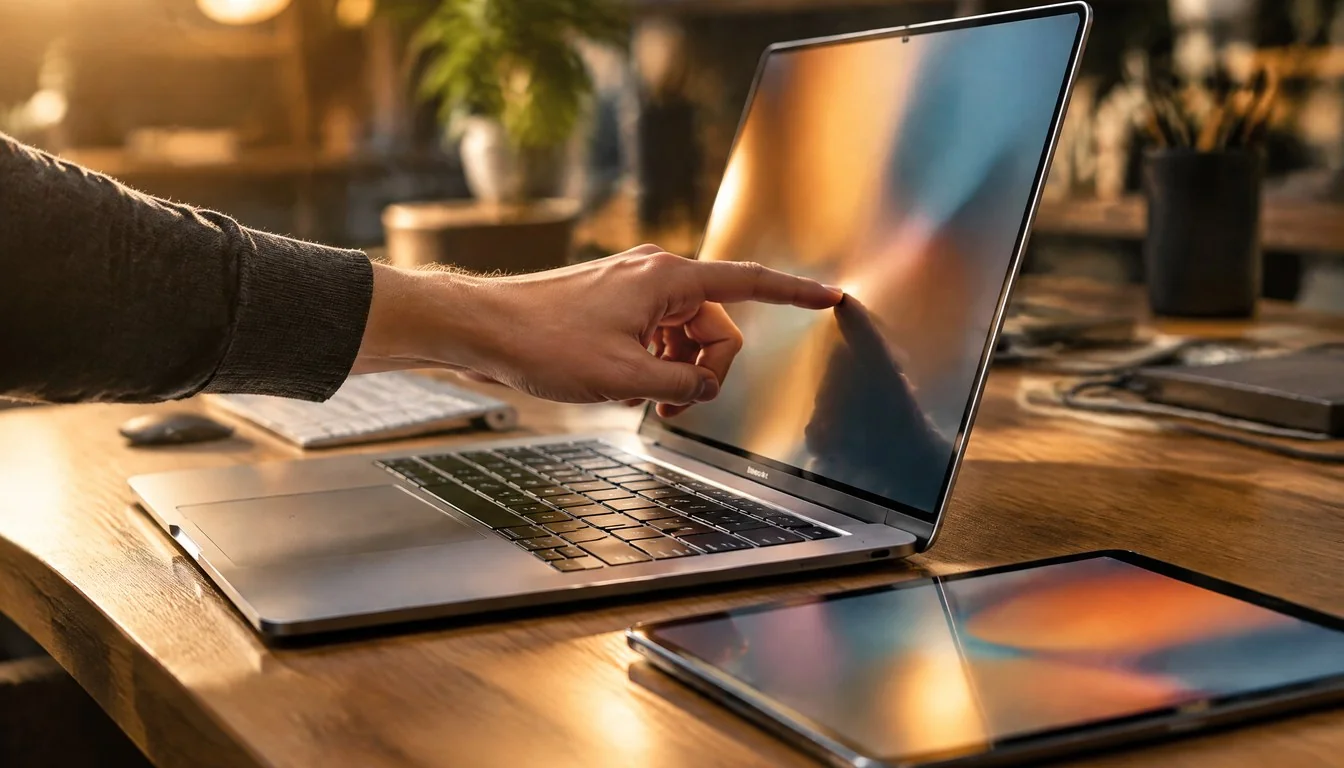
Apple has started inviting members of the press to an all day product experience in Los Angeles on October 28, 2026, and the two devices at the center of that event are already reshaping conversations inside software teams well before anyone has touched the hardware. Bloomberg’s Mark Gurman wrote on X that “Apple is now inviting some media to an all-day product launch experience on Oct. 28 in Los Angeles. This is for the touch-screen MacBooks, iPad mini, M6 Macs,” a line that outlets including MacDailyNews and The Apple Post both picked up within hours.
The story, first aggregated widely by 36Kr and picked up by Notebookcheck and Mashable India, centers on two claims: a high refresh rate display coming to the iPad mini, and touch interaction support arriving on the MacBook line for the first time. Neither claim has been confirmed by Apple in an official statement. What has been confirmed, through the media invitation itself and matching reports from AppleInsider and Bloomberg, is the date and the location. For a company that has resisted touchscreen Macs for nearly two decades, even an unconfirmed report carries weight across the software industry, because the engineering teams that build apps, IDEs, and developer frameworks need months of lead time to retool their interfaces for a new input method.
Don't miss new tech stories on Google
Add TrendinTech once in the Google app and our stories appear in your news suggestions.
What Apple has actually confirmed about the October 28 event
Strip away the speculation and the confirmed facts are narrow. Apple has reportedly invited selected media to an all-day product experience in Los Angeles on October 28, 2026, a detail reported consistently by Gurman and relayed by The Verge. That is a second major October event for the company, arriving on the heels of an earlier smart home showcase. Apple itself has not issued a newsroom post describing a touch-screen MacBook, an iPad mini refresh, or any ProMotion display change. Every spec, every price, and every name attached to these rumored products remains unconfirmed by the company.
That gap between “media invited to an event” and “product specs confirmed” matters for anyone writing code against these devices. Developers cannot build touch-optimized interfaces against specifications that do not yet exist. What they can do, and what many teams are reportedly already doing, is prepare their codebases for the possibility of touch input landing on macOS for real, a possibility that has circulated in rumor form since at least 2018 and resurfaced hard in 2026 reporting.
The iPad mini refresh rate question: 60Hz or ProMotion
The headline claim driving search interest is that the iPad mini will finally get a high refresh rate display. Reporting on this point is split. Some coverage describes Apple testing both a standard 60Hz panel and a 120Hz ProMotion panel for the device, while other reporting asserts the shipping configuration will land at a plain 60Hz. Neither figure should be treated as final. The iPad mini has lagged behind the iPad Pro on display technology for years, and 9to5Mac’s ongoing device history notes that the smallest iPad in Apple’s lineup has consistently received feature parity last, if at all.
For software teams, the refresh rate question is not cosmetic. ProMotion’s variable refresh rate, ranging up to 120Hz, changes how scroll physics, animation timing, and touch latency get tuned in an app. A developer building a drawing app, a note-taking tool, or a game expects different input lag budgets on a 60Hz panel than on a 120Hz one. If Apple does bring ProMotion to the mini, every app that currently assumes 60Hz as the baseline on that form factor will need testing against the faster refresh path, the same adjustment developers made when ProMotion first arrived on the iPad Pro and iPhone Pro lines.
Touch on the Mac: the feature Apple has spent 15 years avoiding
Late Apple co-founder Steve Jobs mocked touchscreen laptops at the original iPad’s 2010 unveiling, arguing that touch targets on a vertical laptop screen fatigue the arm in ways a tablet held flat does not. That design philosophy held for sixteen years. Reporting ahead of the October 28 event describes Apple now preparing a touch-screen MacBook, though the exact official product name, model number, specifications, price, and release date remain, per every outlet covering the story, unconfirmed.
If the reports hold up, the shift would be the most consequential change to Mac hardware interaction since Apple introduced the trackpad Force Touch system in 2015. macOS has never shipped with first party touch input as a core interaction model. Windows, by contrast, has supported touch since Windows 8 in 2012, and Microsoft’s Surface Laptop Ultra line has built an entire category around pen and touch input on a convertible laptop chassis. A touch-capable MacBook would be Apple playing catch-up to a feature Microsoft has iterated on for over a decade, not pioneering new ground.
Why this is a software story, not just a hardware one
The reason a hardware rumor belongs in a conversation about coding tools is straightforward: macOS apps that have never needed to handle touch events now potentially need to. Every Electron app, every native AppKit app, every cross platform framework targeting the Mac, from Tauri to Flutter to Qt, encodes assumptions about pointer precision, hover states, and click targets that touch input breaks in subtle ways. A button sized for a precise trackpad click can be too small for a fingertip. Hover-triggered tooltips, a staple of desktop software since the 1990s, have no clean equivalent on a touch surface.
Code editors and IDEs face a particular version of this problem. Tools like Visual Studio Code, JetBrains products, and newer entrants built around AI assistance have spent the last two years optimizing dense, keyboard and mouse driven interfaces packed with panels, gutters, and small interactive elements. The VS Code 1.142 release added agent host policies and new sandboxing controls, changes aimed squarely at keyboard driven workflows rather than touch. If a touch-capable MacBook ships, every one of these tools inherits a design question it has not had to answer before: do dense developer interfaces get a touch mode, or do they simply ignore the capability and let users fall back to trackpad and keyboard, as iPad Pro keyboard cases already do for iPadOS.
How coding tool makers have already started hedging on touch
Some of the groundwork is already visible in products that shipped well before this event leaked. Cursor’s iOS app launch, paired with its 90 second Bugbot review feature, shows one AI coding tool already betting that code review and lightweight editing will happen on touch surfaces, even if full authoring stays on desktop. The GitHub Copilot versus Cursor race has largely played out on desktop and keyboard terms so far, but a touch capable MacBook changes the competitive calculus: the editor that adapts its UI gracefully to touch first gets a feature advantage the others have to scramble to match.
The broader editor market has also been reshuffling around new entrants. The Zed versus VS Code versus JetBrains Air comparison highlighted a market where share gaps between editors already run wide, and a touch interaction layer is exactly the kind of differentiator that can widen or narrow that gap again depending on which vendor executes first. None of these products have announced touch specific features tied to the rumored MacBook, because none of them can, given that Apple has not confirmed the hardware exists. But the pattern of AI coding tools extending to mobile and touch surfaces independently of this rumor suggests the direction the market was already heading before Apple’s invitation went out.
M6 Macs and what a new chip generation means for build times
Reporting on the October 28 event also points to M6-powered Macs as part of the prospective lineup, though, as with the touch display, the exact chips, core counts, and performance figures remain unconfirmed by Apple. For developers, a new Apple Silicon generation historically brings compile time and local AI inference improvements that matter more than most consumer facing features. The jump from M1 to M2 cut Xcode build times measurably for large projects, and M3 brought hardware accelerated ray tracing that mattered to a narrow set of graphics developers. An M6 generation arriving alongside new MacBook hardware would continue that cadence, and any local large language model workloads developers run for code completion or agentic coding tools stand to benefit from whatever memory bandwidth and neural engine gains Apple has made since the M5 generation.
| Claim | Status as of October 20, 2026 | Source |
|---|---|---|
| October 28 LA media event | Reported, consistent across outlets | Bloomberg’s Mark Gurman |
| Touch-screen MacBook Pro | Unconfirmed by Apple | Bloomberg, AppleInsider, MacDailyNews |
| iPad mini refresh | Unconfirmed by Apple | 36Kr, Mashable India, Notebookcheck |
| High refresh rate / ProMotion on iPad mini | Unconfirmed, conflicting reports (60Hz vs 120Hz) | Mixed outlet reporting |
| OLED iPad mini panel | Unconfirmed, reported as expected | MacDailyNews |
| M6-powered Macs | Unconfirmed, reported as part of lineup | MacDailyNews, Bloomberg |
| Pricing and availability | Unconfirmed | No outlet has published figures |
Historical context: Apple’s long resistance to touch on the Mac
Apple’s public position on touch laptops has been consistent since the launch of the first iPad in 2010. The company’s argument, repeated by executives across multiple product cycles, was that vertical touch surfaces cause arm fatigue and that the Mac’s trackpad already delivers precision touch input does not match. That stance survived the entire rise of Windows touchscreen convertibles, survived the 2015 introduction of Force Touch trackpads, and survived the 2021 introduction of Apple Silicon Macs, which rebuilt the entire Mac hardware platform without adding a touch layer.
What changed, based on the pattern of reporting across 2026, appears to be competitive pressure from two directions at once. On one side, Windows touch laptops and 2-in-1 convertibles have had fifteen years to mature their software ecosystems around touch and pen input. On the other, Apple’s own iPad Pro line, especially after gaining full trackpad and keyboard support, has blurred the line between tablet and laptop so thoroughly that the remaining distinction, touch input on the display itself, started to look like an arbitrary one to maintain. The iPhone Duo launch earlier in October already showed Apple willing to ship unconventional hardware forms this cycle, which makes a touch MacBook rumor land as more plausible than it might have a year earlier.
Competitive comparison: how Apple’s rumored move stacks up
Microsoft, Google, and Apple have each taken different paths to merging tablet and laptop computing, and the rumored touch MacBook would be Apple’s latest and most direct entry into that fight. Microsoft’s Surface line has supported touch and pen input since 2012 and extended it into the AI era with the Surface Laptop Ultra reviewed by this outlet, which pairs an RTX Spark chip with the ability to run 120 billion parameter AI models locally. Chromebooks have offered touch variants for years at lower price points, trading raw performance for accessibility. Apple’s iPad, meanwhile, has slowly absorbed laptop-grade productivity features, including a trackpad, a keyboard case, and multitasking windows, without ever adding the reverse: laptop hardware with a touch display.
A touch-capable MacBook would collapse that last distinction. It would also put pressure on the development community that targets Apple platforms, because unlike Microsoft’s ecosystem, where touch support has been baked into the Windows API surface for over a decade, Apple’s AppKit framework, the toolkit underlying most native Mac apps, was not designed with touch targets in mind. Any transition would likely require Apple to extend the newer SwiftUI framework’s touch handling, already present on iOS and iPadOS, across to the Mac in a way that is far more involved than simply adding a touch sensitive panel to existing hardware.
| Platform | Touch support history | Primary dev framework | Notes |
|---|---|---|---|
| Windows (Surface, convertibles) | Since 2012 (Windows 8) | WinUI, UWP, Win32 | Mature touch APIs, pen input standard on Surface line |
| Chrome OS | Touch variants widely available | Android runtime, web apps | Lower price tier, mixed touch quality across devices |
| iPadOS | Native since 2010 (iPad debut) | UIKit, SwiftUI | Added trackpad and keyboard support in 2020 |
| macOS (current) | No native touch display support | AppKit, SwiftUI (partial) | Precision trackpad and Force Touch instead of touch display |
| macOS (rumored, unconfirmed) | Reported in development for Oct. 28 event | Unknown, likely SwiftUI extension | No official confirmation of framework support from Apple |
Market impact: what app makers and IT buyers are watching
For enterprise software vendors, the practical question is simpler than the engineering one: will a touch-capable MacBook change procurement decisions for the business laptops companies buy their engineering and design teams. The Mac has held a strong position inside software companies and design studios for years, in part because of consistent, predictable hardware behavior. If Apple introduces touch as a new input layer, IT departments will need updated guidance on which internal tools and web apps behave correctly under touch input before issuing new hardware broadly, a process that typically takes quarters, not weeks, in large organizations.
There is also a pricing angle that will only resolve once Apple confirms real specifications. Historically, Apple has used new display and input technology to justify tiered pricing, as it did when ProMotion first arrived on the iPhone 13 Pro in 2021 and stayed exclusive to Pro models for years afterward. If the October 28 event follows that pattern, a touch display and any ProMotion upgrade on the iPad mini would likely appear first on higher priced configurations, keeping the base models unchanged, consistent with how Apple has staged most of its recent hardware upgrades.
What developers should actually do before October 28
Given how much of this story remains unconfirmed, the practical advice for software teams is restraint rather than urgency. Rebuilding an app’s interaction model around rumored hardware that has no confirmed specification is a wasted sprint if the final product differs from the leaks, as Apple hardware rumors frequently do between initial reports and shipping configuration. The more durable move is auditing existing apps for touch readiness generally: checking button and tap target sizes against platform guidelines, verifying that hover-dependent features have a non-hover fallback, and confirming that any custom gesture handling degrades gracefully on unfamiliar input hardware.
Teams building with cross platform frameworks have an easier path here than teams with deeply native AppKit codebases. Frameworks like Flutter and the web-based Electron and Tauri already abstract pointer and touch events into common gesture handlers designed for multiple input types, which means apps built on them may need little more than a testing pass once real touch hardware exists. Native Mac apps built directly on AppKit face more work, because AppKit’s control set, from NSButton to NSTableView, was never designed against Apple’s own Human Interface Guidelines for touch targets, the same 44 point minimum tap size rule that has governed iOS design since 2010.
Predictions for the October 28 event and its aftermath
- Apple will confirm at least one of the two headline claims, the touch-screen MacBook or the iPad mini refresh, but is unlikely to confirm every rumored spec at once given the company’s pattern of staggered announcements across its product lines.
- If a touch MacBook ships, Apple will frame it as a trackpad and touch hybrid rather than a touch-first redesign, preserving existing keyboard and trackpad workflows to avoid alienating its existing developer and creative professional base.
- Coding tool vendors, including the makers of VS Code extensions, JetBrains products, and AI-assisted editors like Cursor, will issue touch-compatibility statements within weeks of any confirmed hardware, mirroring how quickly the ecosystem adapted after Apple Silicon’s 2020 debut.
- Pricing for any OLED or high refresh rate iPad mini variant will land at a premium over the current base model, following the same tiered strategy Apple used for ProMotion on iPhone and iPad Pro.
- Expect a second wave of reporting between October 20 and October 28 as more outlets attempt to confirm specifications ahead of the event, with some claims shifting as Apple’s PR machine manages the narrative before the all day press briefing.
The bigger pattern: Apple’s hardware cadence in late 2026
This event does not stand alone. Apple has run an unusually dense hardware calendar through the back half of 2026, following a smart home showcase earlier in October and the ongoing rollout tied to the iPhone Duo. Running two major hardware events within the same month is a departure from Apple’s more typical single fall keynote cadence, and it suggests the company is deliberately separating its product categories, mobile and smart home in one event, Mac and iPad in another, rather than bundling everything into one mega announcement the way it often has in past Septembers.
For the developer community specifically, that separation is useful. A dedicated Mac and iPad event signals that whatever ships on October 28 is meant to be taken seriously as a platform shift rather than a minor spec bump buried among phone and smart home news. Companies that build for macOS and iPadOS professionally would be wise to treat October 28 as the actual date worth clearing calendar time for, rather than relying on secondhand summaries that may compress important framework level details.
Frequently asked questions
Is the touch-screen MacBook officially confirmed by Apple?
No. Apple has not issued any newsroom statement confirming a touch-screen MacBook. The claim comes from Bloomberg’s Mark Gurman and has been repeated by outlets including AppleInsider and MacDailyNews, but Apple itself has only confirmed a media event for October 28, 2026, in Los Angeles.
Will the iPad mini get a 120Hz ProMotion display?
Reports conflict. Some coverage describes Apple testing both 60Hz and 120Hz ProMotion configurations, while other reporting says the shipping version will be 60Hz. No outlet has confirmed a final specification as of October 20, 2026.
When exactly is Apple’s event?
Multiple outlets report an all-day product experience in Los Angeles on October 28, 2026, following media invitations that went out in mid-October. Some regional reports mention briefings spanning October 27 and 28, though the confirmed detail across the most sourced reporting is the October 28 date.
Will existing Mac apps need to be rewritten for touch?
Not necessarily right away. Apps built on cross platform frameworks that already handle pointer and touch events, such as Flutter, Electron, and Tauri, would likely need only testing passes. Native AppKit apps built specifically for mouse and trackpad input would require more significant interface work if touch becomes a first class input method.
Are M6 Macs part of this announcement?
Reports describe M6-powered Macs as part of the prospective October 28 lineup, but Apple has not confirmed chip names, core counts, or performance figures. Treat any specific M6 benchmark claims circulating online as unverified until Apple publishes official specifications.
Has Apple ever made a touchscreen Mac before?
No. Apple has never shipped a Mac with a touch-sensitive display. The company has relied on precision trackpads, including the Force Touch trackpad introduced in 2015, as its primary gesture input method on laptops, while keeping touch exclusive to iPhone and iPad.
What should developers do right now, before the event?
Audit existing apps for touch readiness generally, including tap target sizing and hover-state fallbacks, rather than building features against unconfirmed rumored hardware. Wait for Apple’s official specifications on October 28 before committing engineering resources to touch-specific redesigns.
Will pricing increase significantly for these new devices?
No official pricing has been announced. Based on Apple’s historical pattern of introducing new display technology at a premium tier first, as it did with ProMotion on iPhone and iPad Pro, any high refresh rate or OLED iPad mini variant would likely carry a premium over the current base configuration, though exact figures remain unconfirmed.
Related Coverage
Yusuf Demir
Yusuf Demir is the Cloud & Software Reporter at TrendinTech, where he covers cloud infrastructure, enterprise platforms, developer tools and the digital transformation of businesses in the UK and the United States. He is most interested in the gap between vendor roadmaps and the systems engineers actually run, and in what the cloud bill looks like once the free credits expire.
All stories by Yusuf Demir (388)