Surface Laptop Ultra Review: RTX Spark Runs 120B AI Models [2026]

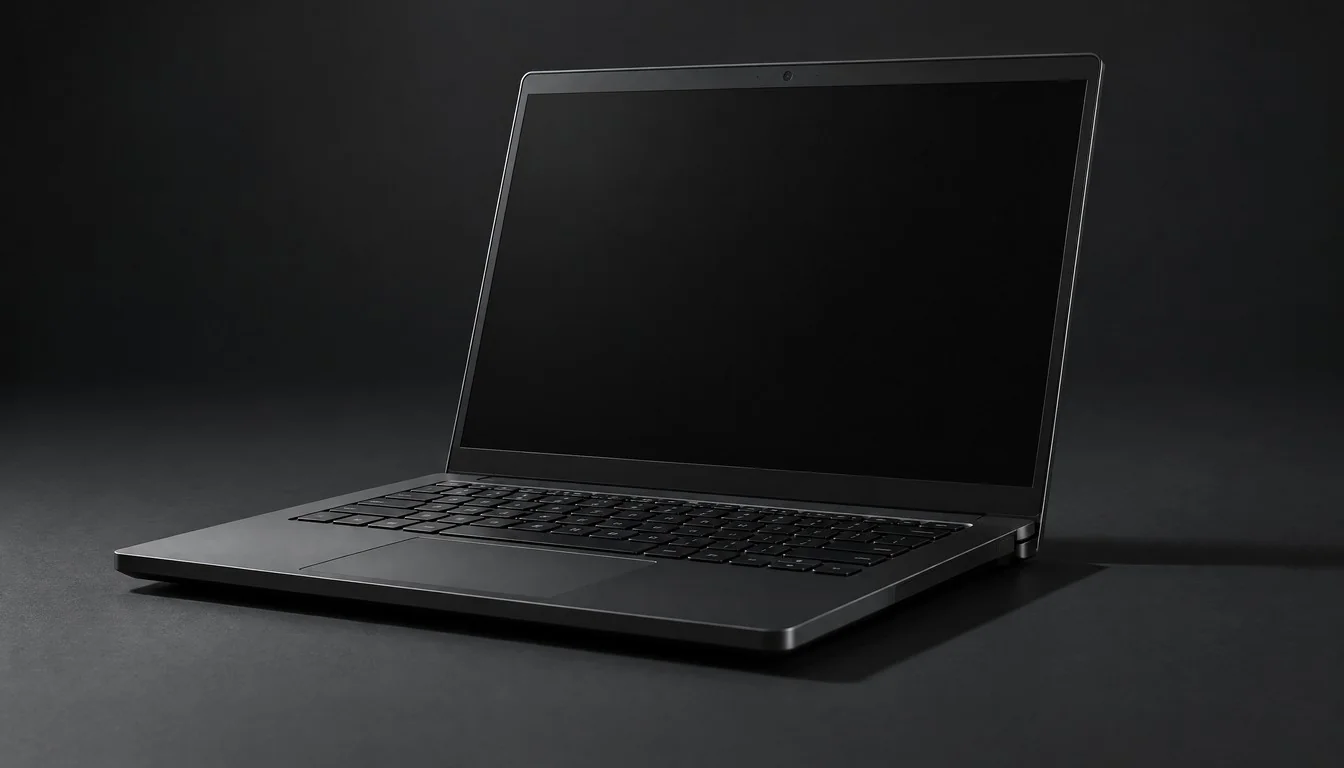
Microsoft’s first laptop built around NVIDIA RTX Spark is now in reviewers’ hands, and the early verdict lands somewhere between awe and a warning label. TechRadar’s review, headlined “It’s a beast, but not at everything,” captures the split reaction that is showing up across tech media this week: the Surface Laptop Ultra can do things no other laptop on the market can do, provided you actually need to run large AI models on your own hardware instead of in the cloud.
Microsoft confirmed the Surface Laptop Ultra lineup on May 31, 2026, then opened pre-orders on October 7, 2026, positioning the machine as the first mainstream Windows laptop to pair an NVIDIA Blackwell RTX GPU with an NVIDIA Grace CPU in a single chip package called RTX Spark. That combination, according to NVIDIA’s own announcement, is designed to let a laptop do AI inference and model development work that previously required a desktop tower or a cloud account. Reviewers at Tom’s Hardware, Tom’s Guide, PCWorld and The Verge all published hands-on tests within days of each other, giving the market its first real comparison point since Microsoft and NVIDIA teased RTX Spark earlier this year. We previously tracked RTX Spark pricing when NVIDIA’s own reference desktop units hit $2,599 at launch, and laptop-specific configurations that split at $2,399 versus $2,599 price points.
Don't miss new tech stories on Google
Add TrendinTech once in the Google app and our stories appear in your news suggestions.
What the Surface Laptop Ultra actually packs inside
The headline spec is unified memory. Configurations of RTX Spark inside the Surface Laptop Ultra scale up to 6,144 CUDA cores, up to 20 CPU cores, and up to 128GB of unified memory shared between the GPU and CPU. Microsoft says that combination delivers up to 1 petaflop of AI compute and lets the laptop run models with as many as 120 billion parameters locally, without routing a single token through a cloud API. That is the number that separates this machine from every other Windows laptop on shelves right now, including machines built around Qualcomm’s Snapdragon X2 or Intel’s Core Ultra Series 3, both of which we compared on raw CPU throughput in our earlier benchmark roundup, neither of which claims anything close to 120B-parameter local inference.
Unified memory matters here because large language models are usually bottlenecked by how much fast memory sits next to the processor doing the math, not by raw core count. A model with 120 billion parameters, even compressed, needs well over 100GB of addressable memory to load and run at reasonable speed. Desktop GPUs solve this by stacking dedicated VRAM, but consumer cards rarely clear 32GB. RTX Spark’s unified memory pool sidesteps that ceiling by letting the Grace CPU and Blackwell GPU share the same 128GB block, the same architectural idea NVIDIA has used in its data center Grace Hopper systems, just shrunk into a laptop chassis.
Pavan Davuluri, the Microsoft executive overseeing Windows and Surface hardware, framed the project bluntly when the laptop was unveiled: “We built Surface Laptop Ultra around NVIDIA RTX Spark.” He went further on the memory point specifically, saying “with up to 128 gigs of unified memory and up to a petaflop of AI compute, you can run models on this laptop that simply don’t fit on a traditional machine.” That quote, carried in Microsoft’s own Devices Blog post from May 31, 2026, is the clearest statement yet of what Microsoft thinks the laptop is actually for: not general productivity, but local AI model work that would otherwise require a rack in a data center.
The review configurations: what reviewers actually tested
Not every review unit was configured the same way, which matters because RTX Spark scales across several tiers. Tom’s Hardware tested a top-end configuration carrying a 20-core CPU, 6,144 CUDA cores, 32GB of unified memory, and 1TB of storage, reporting a battery life result of 10 hours and 43 minutes on that build during its testing cycle. A separate configuration reviewed elsewhere carried the full 128GB of unified memory alongside a 1TB Gen 5 SSD, the tier Microsoft’s own marketing leans on when it cites the 120B-parameter local inference claim.
That spread matters for anyone actually shopping. The 32GB configuration gets you the same CPU core count and CUDA core count as the flagship, but it will not run the largest models Microsoft is advertising. A 120-billion-parameter model simply will not fit in 32GB of unified memory regardless of how fast the GPU inside is. Shoppers chasing the local-AI headline need to specifically configure toward the 128GB tier, which reviewers consistently note carries a steep price premium over the entry configuration.
| Spec | Entry-level tier (as tested) | Flagship tier (as tested) |
|---|---|---|
| CPU cores | Up to 20 | Up to 20 |
| CUDA cores | 6,144 | 6,144 |
| Unified memory | 32GB | 128GB |
| Storage | 1TB | 1TB Gen 5 SSD |
| Battery life (reported test result) | 10 hours, 43 minutes | Not separately reported |
| Local model capacity | Limited by 32GB pool | Up to 120B parameters, per Microsoft |
The CPU and CUDA core counts stay flat across the tiers reviewers tested, which tells you the real differentiator between configurations is memory capacity, not raw compute. That is an unusual pricing structure for a laptop. Most premium Windows machines charge extra for faster processors or discrete GPU upgrades; here, the premium buys headroom for models that would otherwise refuse to load at all.
Why “a beast, but not at everything” is the right framing
TechRadar’s phrase captures something reviewers across the board are converging on: the Surface Laptop Ultra is not pitched as a better everyday laptop than a MacBook Pro or a ThinkPad. It is pitched as a specialized tool. The Verge’s review draws a direct comparison to Apple’s workstation-class laptop, describing the Surface Laptop Ultra as “a different kind of MacBook Pro,” language that signals this machine competes less on battery life or trackpad feel and more on what kind of specialized work it can do that a general-purpose laptop cannot.
That framing lines up with how Microsoft and NVIDIA talked about RTX Spark from the start. The chip was never pitched as a gaming part or a general productivity accelerator. It was pitched, in NVIDIA’s own words at the Windows event announcement, as the hardware behind “a new beginning for Windows PCs” built specifically around local AI agents and model development, not spreadsheet work or video calls. Developers who already build on CUDA get a laptop that can run the same toolchain they would use on an NVIDIA data center GPU, just without the cloud bill. Everyone else gets an expensive, heavy machine whose standout feature they may never touch.
PCWorld’s headline put it almost as directly as TechRadar: “Incredible RTX Spark AI power, painful price.” That pairing, power paired with pain, shows up in nearly every review published so far. None of the outlets that have tested the machine are disputing that RTX Spark does what Microsoft claims. The disagreement, if there is one, is about who should actually buy it.
The local AI angle: why running models on-device matters now
The timing of this launch is not incidental. Through 2026, the AI industry has had a running argument about where inference should happen, in a hyperscale data center billed by the token, or on the device sitting in front of the user. Running a model locally means no per-token API charges, no data leaving the machine, and no dependency on a provider’s uptime. It also means the hardware has to be powerful enough to actually hold the model in memory and push tokens at a usable speed, which is exactly the gap RTX Spark is built to close.
We have already covered how NVIDIA’s own RTX Spark desktop reference units use a bundled Nemotro model to cut cloud API calls for agentic workloads, a pattern detailed in our look at how RTX Spark’s Nemotron 74B setup reduces cloud dependency. The Surface Laptop Ultra extends that same philosophy into a laptop chassis, which is a meaningfully different engineering problem: desktop reference units have active cooling and a power supply with no battery constraint, while a laptop has to manage thermals and battery life while still pushing enough power to a Blackwell GPU and Grace CPU pair to make local inference worthwhile.
That tension explains the battery test result reviewers reported. 10 hours and 43 minutes is a respectable number for a premium Windows laptop doing typical productivity work, but it says nothing about battery drain during an actual local inference session, which is a far heavier draw on the GPU than browsing or document editing. None of the reviews published so far break out a separate battery figure specifically for sustained AI workloads, which is itself a signal that the review cycle is still in its early, surface-level stage.
How RTX Spark compares to the rest of NVIDIA’s 2026 lineup
RTX Spark is not NVIDIA’s only move in the consumer and prosumer GPU market this year. The company has been reshaping its lineup around AI demand broadly, a trend we tracked when NVIDIA shifted its GB202 silicon away from the consumer RTX 5090 and toward its RTX Pro line, detailed in our earlier report on how NVIDIA discontinued the RTX 5090 to redirect GB202 production. RTX Spark fits into that same pattern: NVIDIA is increasingly steering its highest-memory, AI-capable silicon toward professional and prosumer buyers willing to pay for local model capacity, rather than toward traditional gaming SKUs.
That shift also plays out against a backdrop of NVIDIA losing share in China, where Huawei has been closing the gap, a dynamic we covered when Nvidia’s China AI chip share slipped as Huawei’s share climbed to 28 percent. RTX Spark and the Surface Laptop Ultra are, in effect, NVIDIA’s answer in the markets where it still holds dominant share: building hardware so specialized that no competitor currently fields an equivalent part, rather than competing purely on price or raw unit volume.
| Platform | Local model capacity claim | Target buyer | Primary tradeoff |
|---|---|---|---|
| Surface Laptop Ultra (RTX Spark) | Up to 120B parameters locally | AI developers, model builders | Price and weight for non-AI use |
| Snapdragon X2 Windows laptops | Smaller on-device models only | General productivity, battery life | No CUDA, limited AI headroom |
| Intel Core Ultra Series 3 laptops | Smaller on-device models only | General productivity, compatibility | No CUDA, limited AI headroom |
| Cloud-based inference (API) | Effectively unlimited, provider-side | Teams without local hardware budget | Per-token cost, data leaves device |
The price-to-value question reviewers keep circling back to
No review published so far has cited a single confirmed retail price for every Surface Laptop Ultra configuration, but the consistent language across outlets, PCWorld’s “painful price,” TechRadar’s qualifier that buyers need to be “a big fan of local AI” to justify the purchase, points to a machine priced well above a typical premium Windows laptop. That lines up with what we already know about RTX Spark pricing at the desktop and entry-laptop tier, where reference units landed at $2,599 and laptop-specific builds split between $2,399 and $2,599 depending on configuration. A Surface-branded machine with Microsoft’s industrial design and support layered on top of that silicon is unlikely to undercut those numbers, and the 128GB unified memory tier that unlocks the 120B-parameter claim is almost certainly priced well above the entry configuration reviewers tested.
That pricing reality is the practical core of “a beast, but not at everything.” A buyer evaluating the Surface Laptop Ultra purely as a laptop, judging it on keyboard feel, display quality, and everyday battery life, is paying a premium for hardware capability they are not using. A buyer who actually needs to prototype, fine-tune, or run inference on a 70B-to-120B-parameter model without a cloud bill is paying for exactly the thing they need, and for that buyer the laptop may be the first machine in its category that can do the job at all without a desktop tower and a dedicated power circuit.
Historical context: how we got to a laptop that runs 120B models
Local AI hardware has moved fast even by the standards of the AI boom. Two years ago, running a model with tens of billions of parameters on consumer hardware meant either heavy quantization that degraded output quality, or a multi-GPU desktop rig that cost as much as a used car. NVIDIA’s Grace Hopper architecture, originally built for data centers, demonstrated that pairing an ARM-based CPU with a GPU over a shared, high-bandwidth memory pool could eliminate the data-transfer bottleneck that slows down conventional CPU-GPU pairings. RTX Spark is the first time that architectural idea has been packaged for a laptop rather than a server rack.
Microsoft’s own framing at the May 31, 2026 unveiling, that the Surface Laptop Ultra was “made for world makers,” leaned into this history explicitly: the pitch was never that this is an incremental laptop refresh, but that it represents a new hardware category sitting between a workstation and a conventional ultraportable. Whether that category sticks or turns out to be a one-generation experiment depends heavily on how software catches up to the hardware over the next year, and on whether NVIDIA brings RTX Spark-class memory capacity down to less expensive tiers the way it has with previous architecture generations.
What developers should actually check before buying
For engineers and AI builders evaluating the Surface Laptop Ultra as a work machine, the practical checklist starts with memory tier, not CPU or CUDA core count, since those stay flat across configurations reviewers have tested so far. The questions that matter: does your target model actually need 128GB of unified memory, or does it comfortably run in a smaller footprint? Teams already standardized on CUDA toolchains, similar to what we outlined when comparing code editors built for Windows 11 in our Windows 11 development environment setup guide, will find the transition to RTX Spark’s CUDA support far smoother than teams built around other accelerator ecosystems.
Battery life is the other variable worth real scrutiny. The 10-hour-43-minute figure reported by Tom’s Hardware reflects a specific test configuration and workload, not necessarily a sustained local-inference session, which draws far more power than typical productivity use. Buyers planning to run the laptop untethered while doing actual model work should expect that number to drop meaningfully once the GPU is under sustained load.
Market impact: what this means for the AI PC category
The Surface Laptop Ultra lands at a moment when “AI PC” has become a marketing label stretched across machines with wildly different actual capability, from laptops that can barely run a small on-device assistant to this one, which Microsoft says can hold a 120-billion-parameter model in memory. That gap matters for the broader PC market because it sets a new high-water mark for what “local AI” is allowed to mean. Vendors building on Snapdragon X2 or Intel’s Core Ultra Series 3 platforms are not currently competing on the same axis, since neither platform offers CUDA support or unified memory pools anywhere close to 128GB.
That creates a bifurcated market rather than a single competitive tier. Most buyers shopping for a Windows laptop in late 2026 are not evaluating local-AI capacity at all, and for them, RTX Spark’s advantages are irrelevant. But for the smaller, growing slice of buyers, independent developers, small AI labs, researchers without data center access, who specifically need to run large models without a cloud subscription, the Surface Laptop Ultra is now the reference point other vendors will be measured against.
Predictions: where RTX Spark and the Surface Laptop Ultra go next
Based on the pattern of reviews published so far and NVIDIA’s broader 2026 product strategy, a few directions look likely over the coming months.
- Expect NVIDIA to push RTX Spark-class unified memory down into lower-priced tiers over the next one to two product cycles, following the same pattern it has used with previous GPU generations once initial flagship demand is satisfied.
- Expect competing PC makers building on Windows to pursue their own CUDA-adjacent or unified-memory answers, since Microsoft’s exclusive-feeling partnership with NVIDIA on RTX Spark leaves rivals without a direct answer unless they strike similar silicon deals.
- Expect the pricing conversation that PCWorld and TechRadar are already having to intensify once full configuration pricing is confirmed across every Surface Laptop Ultra tier, particularly once buyers start comparing the 128GB flagship price against building an equivalent desktop rig.
- Expect enterprise and developer-focused marketing to lean harder into the 120B-parameter local inference claim as the primary differentiator, since it is the one capability competing Windows laptops genuinely cannot match today.
- Expect battery-life-under-AI-load to become a standard benchmark in laptop reviews going forward, since the current 10-hour-43-minute figure measures a different workload than the one the machine is actually being sold on.
The bottom line on Microsoft’s local AI laptop bet
Microsoft and NVIDIA built something genuinely new with RTX Spark inside the Surface Laptop Ultra, and the first wave of independent reviews confirms the core claim holds up: this laptop can run AI models that no other mainstream Windows machine can touch. What the reviews also confirm, consistently and from multiple outlets using different language to say the same thing, is that this capability comes bundled with a price and a specialization that make the Surface Laptop Ultra a poor fit for anyone who is not actually doing local AI work. “A beast, but not at everything” turns out to be a fair, almost understated way to describe a laptop that is less a general-purpose machine with AI features bolted on, and more a specialized AI workstation that happens to look like a laptop.
Frequently asked questions
What is NVIDIA RTX Spark?
RTX Spark is a chip platform from NVIDIA that pairs a Blackwell RTX GPU with a Grace CPU, sharing a single unified memory pool. Microsoft uses it inside the Surface Laptop Ultra, and NVIDIA also ships it in standalone desktop reference units.
How much unified memory does the Surface Laptop Ultra support?
Configurations scale up to 128GB of unified memory, shared between the Grace CPU and the Blackwell RTX GPU, according to Microsoft.
Can the Surface Laptop Ultra really run a 120 billion parameter AI model?
Microsoft states that the top-tier configuration, with up to 1 petaflop of AI compute and 128GB of unified memory, can run models with as many as 120 billion parameters locally. That claim comes directly from Microsoft’s own product announcement.
How long does the battery last?
Tom’s Hardware reported a battery test result of 10 hours and 43 minutes on the configuration it reviewed, which carried 32GB of unified memory. That figure reflects the specific test workload used and is not a guaranteed result under sustained AI inference load.
How much does the Surface Laptop Ultra cost?
No single confirmed price covers every configuration. Reviewers including PCWorld describe the pricing as steep relative to the hardware’s everyday laptop value, while NVIDIA’s own RTX Spark desktop and laptop reference pricing has previously landed between $2,399 and $2,599 depending on configuration.
Who is the Surface Laptop Ultra actually for?
Reviews consistently frame it as a machine for developers and AI builders who need to run large models locally rather than through a cloud API. TechRadar’s framing, that buyers need to be a big fan of local AI to get full value from the machine, captures the general reviewer consensus.
Does the Surface Laptop Ultra support CUDA?
Yes. RTX Spark is built around NVIDIA’s Blackwell RTX GPU architecture, which supports CUDA, the same toolchain developers use on NVIDIA’s data center and desktop GPUs.
How does RTX Spark compare to Snapdragon X2 or Intel Core Ultra Series 3 laptops?
Neither Snapdragon X2 nor Intel Core Ultra Series 3 platforms offer CUDA support or anything close to a 128GB unified memory pool, so they are not built for the same large-scale local inference workloads RTX Spark targets.
Related Coverage
Daniel Okafor
Daniel Okafor is the Senior AI Reporter at TrendinTech, where he covers large language models, machine learning research and the practical use of artificial intelligence across business and government. He has a particular interest in evaluation: how models are benchmarked, where those benchmarks fail and what that means for the companies betting on them.
All stories by Daniel Okafor (389)