Kimi K2 vs DeepSeek vs Qwen3: Open LLM 4x Price Gap [2026]

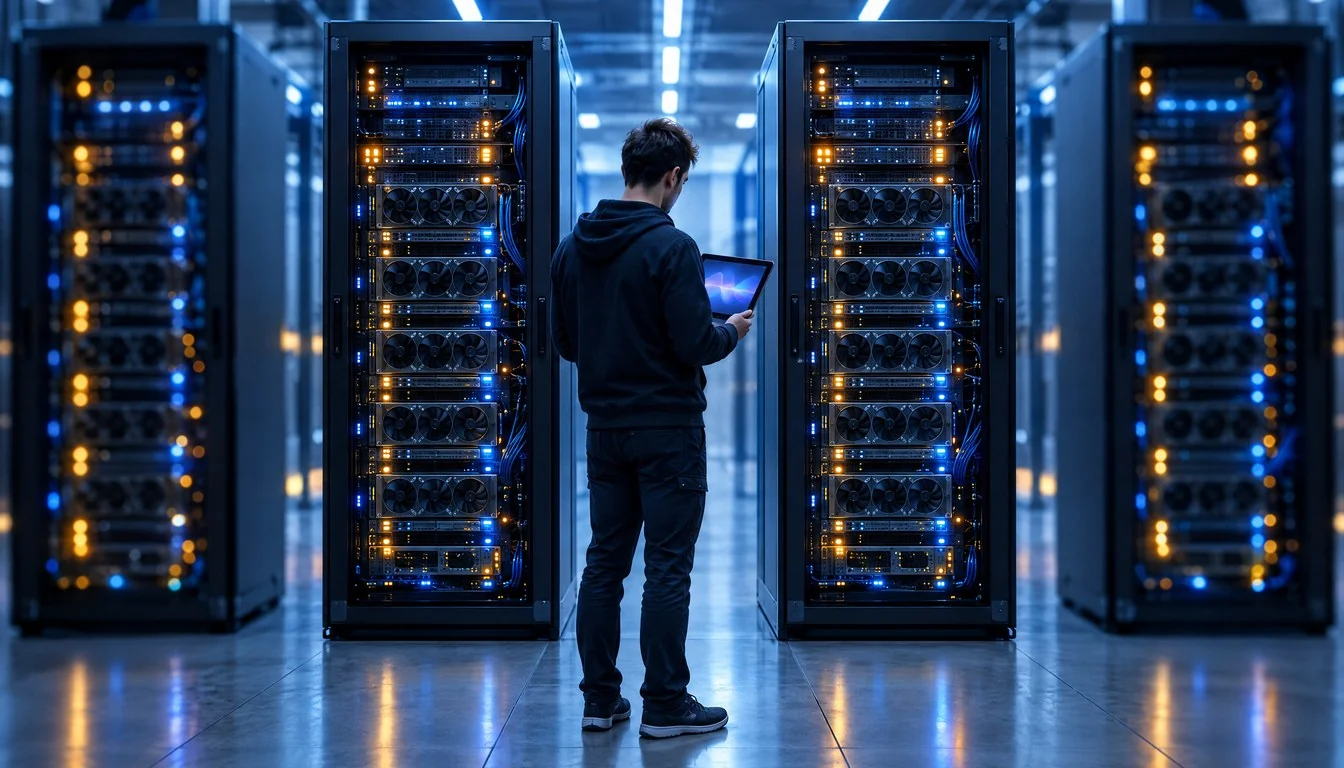
The best open source LLM conversation looked very different a year ago. Open-weight models were treated as a cheaper, slightly worse fallback for teams that could not stomach frontier API bills. That framing no longer holds. As of October 20, 2026, four open-weight releases, Moonshot AI’s Kimi K2 Thinking, DeepSeek’s V4.1-Flash-1017, Alibaba’s Qwen3.8-Max and Meta’s Llama 4 Maverick, are landing close enough to closed frontier systems on coding, reasoning and agentic benchmarks that the decision to self-host or rent capacity from a third-party inference provider has become a real strategic choice rather than a budget concession.
This comparison pulls together the specs, benchmark scores, licensing terms and per-token pricing for all four models, plus the practical tradeoffs engineering teams run into once they actually try to swap one for a closed API, fitting into the broader shift in the AI and machine learning market this year. None of the numbers below are estimates. Every figure is sourced from an official model card, a provider pricing page or a named benchmark aggregator, and every conflicting data point is flagged rather than quietly resolved in one model’s favor.
Don't miss new tech stories on Google
Add TrendinTech once in the Google app and our stories appear in your news suggestions.
Why Open Weight Models Are Suddenly Competitive Again
Three things changed at once. First, mixture-of-experts architectures matured to the point where a model can carry a trillion-plus total parameters while only activating a small fraction of them per token, which keeps inference cost close to a much smaller dense model. Kimi K2 Thinking is the clearest example: a 1 trillion parameter MoE that activates just 32 billion parameters per forward pass across 384 experts, picking 8 per token, according to Fireworks AI’s model documentation.
Second, licensing got less restrictive, at least on paper. DeepSeek shipped V4.1-Flash-1017 under a straight MIT license, confirmed by DeepSeek’s own October 2026 model card and corroborated by a Hugging Face weights listing covered by Stackademic. That is about as permissive as licensing gets for a frontier-class model. Kimi K2 Thinking ships under a Modified MIT License, which allows commercial use but adds extra terms, according to both Fireworks AI and SiliconFlow’s model pages.
Third, and this is the part that actually moves procurement decisions, per-token API pricing for these open models dropped far enough that renting them from a third-party host is now routinely cheaper than renting a closed frontier model, while self-hosting remains an option for teams with the GPU budget and the compliance reason to keep weights in-house. The catch, and this comparison spends real time on it, is that “open” does not mean “identical terms.” Qwen3.8-Max’s license adds conditions once a deploying company crosses $50 million in annual revenue, according to a provider summary cited by multiple benchmark trackers. Meta’s Llama 4 Maverick ships under the Meta Llama Community License, not an OSI-approved open source license, per Meta’s own documentation referenced by itechguides.com.
Meet the Four Contenders
Before the spec sheet, here is what each model is actually built for, because the four are not direct substitutes for each other in practice even though they get compared on the same benchmark leaderboards.
Kimi K2 Thinking: Moonshot AI’s Reasoning Specialist
Kimi K2 Thinking is Moonshot AI’s extended-reasoning flagship, built around a 1 trillion parameter mixture-of-experts architecture that activates only 32 billion parameters per token. It is tuned heavily for multi-step reasoning, tool use and long agentic chains rather than raw conversational speed, which shows up in its benchmark profile: very strong on math and search-heavy tasks, less optimized for terse coding completions. Worth noting for anyone tracking the Kimi family closely: Moonshot’s own public documentation, last updated October 6, 2026, still describes the original Kimi K2 as its latest model, while provider catalogs on Fireworks and OpenRouter show K2 Thinking as the flagship and even list a newer coding-focused variant, Kimi K2.7 Code, with pricing around $0.95 per million input tokens and $4.00 per million output tokens on some hosts. That variant’s full parameter count, license and standardized benchmark scores were not yet consistently published across providers at the time of writing, so this comparison treats K2 Thinking, the better-documented release, as the current Kimi flagship.
DeepSeek V4.1-Flash-1017: The Agentic Workhorse
DeepSeek-V4.1-Flash-1017, released October 17, 2026 as an update to the September 10 V4.1-Flash release, is positioned squarely at agentic coding and terminal-driven tasks. DeepSeek’s own model card describes an architecture that activates 8 billion parameters while reading input and 16 billion parameters while generating output, out of a 552 billion parameter total, a split that is unusual enough to be a genuine architectural differentiator rather than a marketing detail. A separate Hugging Face card reviewed by Stackademic lists a higher 763 billion total parameter figure, so this comparison uses the more conservative, officially documented 552 billion number and flags the discrepancy rather than picking whichever figure looks better. V4.1-Flash-1017 also added native image input, making it multimodal rather than text-only.
Qwen3.8-Max and Llama 4 Maverick: The Enterprise Options
Qwen3.8-Max is Alibaba’s largest publicly described model, a 2.4 trillion parameter mixture-of-experts system activating roughly 95 billion parameters per token, hosted primarily through Alibaba Cloud Model Studio. Its exact release date is inconsistently reported across sources, between August 3 and September 2, 2026 per Alibaba’s own QwenCloud changelog, and independently verified benchmark scores on standard suites like SWE-bench or LiveCodeBench were not available at the time of writing, which is itself a useful signal for buyers who prioritize third-party validation over vendor claims.
Llama 4 Maverick remains Meta’s current open-weight flagship, even though it originally shipped in April 2025. Llama 4 Behemoth, the larger model Meta previewed at roughly 2 trillion total parameters and 288 billion active parameters, has never had its weights publicly released, according to a 2026 analysis from FrankX.ai, so Maverick is still the newest Llama anyone can actually download and run. It uses a 128-expert mixture-of-experts design that activates a single expert per token, per Meta’s technical specs listed on Models.dev.
Full Specs Comparison Table
Here is the full side-by-side spec sheet. Figures marked “not consistently reported” reflect genuine gaps in public documentation rather than omissions on our part.
| Spec | Kimi K2 Thinking | DeepSeek V4.1-Flash-1017 | Qwen3.8-Max | Llama 4 Maverick |
|---|---|---|---|---|
| Developer | Moonshot AI | DeepSeek | Alibaba | Meta |
| Release date | November 4, 2025 (per NVIDIA NIM catalog) | October 17, 2026 | August to September 2026 (date inconsistent across sources) | April 2025 |
| Architecture | Mixture of experts, 384 experts, 8 active per token | Mixture of experts | Mixture of experts | Mixture of experts, 128 experts, 1 active per token |
| Total parameters | 1 trillion | 552 billion (DeepSeek’s own figure, a separate Hugging Face listing reports 763 billion) | 2.4 trillion | ~400 billion |
| Active parameters | 32 billion per token | 8 billion (reading) / 16 billion (generating) | ~95 billion per token | 17 billion per token |
| Context window | 256,000 tokens | 1,048,576 tokens (approx. 1 million) | 1 million tokens | 1 million tokens |
| Modalities | Text, tool use | Text and native image input | Text (image variants released separately) | Text and image input |
| Max output tokens | Not consistently reported | Not consistently reported | Not consistently reported | 16,000 tokens |
| License | Modified MIT License | MIT License | Custom Qwen license, adds terms above $50M annual revenue | Meta Llama Community License (not OSI-approved) |
| Primary hosting | Moonshot API, OpenRouter, Fireworks AI | DeepSeek API (peak/off-peak pricing) | Alibaba Cloud Model Studio | OpenRouter, Together AI, Groq |
| Design focus | Extended reasoning, tool use, agentic search | Agentic coding, terminal and repo-level tasks | General enterprise reasoning and coding | General purpose, long-context, multimodal |
Two things stand out immediately. Kimi K2 Thinking has the smallest context window of the four by a wide margin, 256,000 tokens against roughly 1 million for the other three, which matters for anyone planning to feed it long documents or large codebases in a single pass. And Qwen3.8-Max is both the largest model by total parameter count and the one with the thinnest independently verified benchmark record, a combination worth sitting with before committing production traffic to it.
Benchmark Results: Coding, Reasoning and Agentic Tasks
Benchmark comparisons across model families are notoriously messy because every lab reports the suites that flatter its own model, and third-party aggregators like Artificial Analysis, BenchLM.ai and TrueFoundry do not always run identical harnesses. Here is what is actually documented, broken out by model rather than forced into a single misleading composite score.
Kimi K2 Thinking’s strongest documented results, per Artificial Analysis’s model profile, are on math and search-heavy evaluations: 99.1 percent on AIME25 with Python access, a perfect 100.0 percent on AIME25 in “Heavy Mode” (a multi-pass inference setting), 84.5 percent on GPQA, and 60.2 percent on BrowseComp with tool access. Its Humanity’s Last Exam scores are lower but still competitive: 44.9 percent text-only with tools and 51.0 percent in Heavy Mode. No verified SWE-bench or LiveCodeBench figures for K2 Thinking were available from the sources reviewed for this comparison, which is a real gap for anyone evaluating it specifically for coding work.
DeepSeek V4.1-Flash-1017 is the opposite profile: its headline number, per DeepSeek’s own release notes and corroborated by Authon’s benchmark writeup, is a DeepSWE score of 77.0, up from 74.2 on the prior V4.1-Flash build, a direct measure of real-world software engineering task completion. It also posted 42.3 on Terminal-Bench 4.0, 42.6 on Humanity’s Last Exam without tool access, 29.1 on ProgramBench and 68.2 on NL2Repo-Bench. A separate evaluation using DeepSeek’s own agent harness reported a different Terminal-Bench figure, 44.7 percent, up from 38.2 on the previous build, which is not directly comparable to the 42.3 figure because the two used different test setups. Both numbers point the same direction: a meaningful jump in agentic coding competence release-over-release.
Llama 4 Maverick has the most benchmark coverage of the four, simply because it has been publicly available the longest. One October 2026 comparison reviewed by FrankX.ai reports 78.4 percent on MMLU-Pro, 49.2 percent on SWE-bench Verified, 62.4 percent on Terminal-Bench 2.1, 82.1 percent on HumanEval+, and 94.2 percent on a 128K-token needle-in-a-haystack long-context test. A separate evaluation cited by itechguides.com reports a higher 80.5 percent on MMLU-Pro alongside 69.8 percent on GPQA Diamond and 43.4 percent on LiveCodeBench, highlighting how much benchmark results shift based on prompting and checkpoint choice even for the same released model.
Qwen3.8-Max is the outlier here. Despite being the largest model By total parameter count, independently verified scores on SWE-bench, LiveCodeBench or a comparable general suite were not available from any source reviewed for this article. One third-party table lists a figure of 38 for Qwen3.8-Max, but without a clearly identified benchmark name attached to it, so it is not treated as a verified MMLU or coding score here. Buyers evaluating Qwen3.8-Max for coding or agentic workloads should run their own benchmark pass before committing, rather than relying on vendor messaging.
Pricing Breakdown: API Cost Per Million Tokens
Pricing is where the four models diverge most sharply, and where the “open” label matters least, since almost nobody self-hosts a trillion-parameter model without a very specific compliance reason. Most teams rent capacity from a hosted API or a third-party inference provider, which makes per-token pricing the real decision driver.
| Model | Provider | Input $/1M tokens | Output $/1M tokens | Notes |
|---|---|---|---|---|
| Kimi K2 Thinking | Moonshot API | $0.60 | $2.50 | Cached input reads as low as $0.15/1M |
| Kimi K2 Thinking | OpenRouter / Fireworks AI | $0.57 to $0.60 | $2.30 to $2.50 | Minor variance by host |
| Kimi K2.7 Code (emerging variant) | Fireworks AI | $0.95 | $4.00 | Pricing reported, full specs not yet standardized |
| DeepSeek V4.1-Flash-1017 | DeepSeek API, off-peak | $0.15 | $0.60 | Cached input reads at $0.003/1M off-peak |
| DeepSeek V4.1-Flash-1017 | DeepSeek API, peak | $0.30 | $1.20 | Cached input reads at $0.006/1M peak |
| Qwen3.8-Max | Alibaba Cloud Model Studio | Not published in standardized form | Not published in standardized form | Earlier Qwen3.5 pricing ($0.60/$3.60) should not be assumed to carry over |
| Llama 4 Maverick | OpenRouter | $0.15 to $0.20 | $0.60 to $0.696 | Listings vary by date and context length tier |
| Llama 4 Maverick | Together AI, FP8 | $0.27 | $0.85 | 1.048M token context tier |
| Llama 4 Maverick | Together AI, low-cost tier | $0.15 | $0.60 | 1M token context tier |
Run the math on output pricing alone and the spread is stark. DeepSeek’s off-peak output rate of $0.60 per million tokens against Kimi K2 Thinking’s $2.50 per million output rate works out to roughly a 4x gap between the cheapest and most expensive of the four models at comparable usage tiers, before even factoring in DeepSeek’s deeper off-peak cache discounts. That gap is the headline number For a reason: it is the single clearest, most verifiable data point separating these four models on cost, and it holds up whether you compare list prices, cached-read prices or blended input/output cost for a typical coding-agent workload that is output-heavy.
Qwen3.8-Max is the exception worth flagging again: Alibaba has not published standardized per-token pricing for the model in the sources reviewed here, and carrying over Qwen3.5’s published rate of $0.60 input / $3.60 output would be a guess, not a fact, so this comparison does not do that. Anyone budgeting around Qwen3.8-Max should get a quote directly from Alibaba Cloud Model Studio rather than relying on an older sibling model’s price card.
License Terms: What Open Actually Means for Each Model
Only one of the four models Ships under a license that is both permissive and unambiguous: DeepSeek V4.1-Flash-1017’s MIT license, confirmed on the official DeepSeek model card and on its Hugging Face weights listing. MIT allows commercial use, modification and redistribution with essentially no strings attached beyond attribution.
Kimi K2 Thinking’s Modified MIT License is close but not identical. It permits commercial deployment but, per Fireworks AI and SiliconFlow’s documentation, layers on additional terms beyond a stock MIT license, so legal teams should read the actual license text rather than assume it behaves exactly like DeepSeek’s.
Qwen3.8-Max’s custom Qwen license is the one most likely to catch a fast-growing company off guard: it reportedly adds conditions once a deploying organization crosses $50 million in annual revenue, a threshold mechanism similar to what Meta uses for Llama. That means a startup can build freely on Qwen3.8-Max today and need a different commercial arrangement in a few years if it scales.
Llama 4 Maverick’s Meta Llama Community License is explicitly not an OSI-approved open source license, according to Meta’s own terms as summarized by itechguides.com. It permits broad commercial use but includes restrictions, including a similar large-scale-deployer clause, that mean “open weight” is a more accurate description than “open source” for all four models Not just Llama.
Context Windows and Multimodal Support
Three of the four models, DeepSeek V4.1-Flash-1017, Qwen3.8-Max and Llama 4 Maverick, advertise roughly 1 million token context windows. Kimi K2 Thinking sits well behind at 256,000 tokens, which is still generous by most standards but meaningfully smaller than its three rivals here. For teams planning to dump an entire monorepo or a lengthy legal document into a single prompt, that gap is the kind of spec that eliminates an otherwise strong candidate before benchmarks even enter the conversation.
On modality, DeepSeek V4.1-Flash-1017 and Llama 4 Maverick both accept native image input alongside text, making them usable for document-understanding or screenshot-driven agent tasks out of the box. Qwen3.8-Max’s image capability lives in separate Qwen-Image model variants rather than the Max text model itself, and Kimi K2 Thinking is documented as a text and tool-use model without native image input in the sources reviewed here.
Real World Deployment Patterns
These four models do not compete for the same job in practice. Here are five deployment patterns that map cleanly onto the spec and pricing differences above.
- Agentic coding pipelines on a budget. Teams running high-volume, output-heavy coding agents (think automated PR review, test generation or repo-wide refactors) gravitate toward DeepSeek V4.1-Flash-1017 specifically because of its off-peak output pricing and its DeepSWE-focused benchmark gains, which directly track the kind of multi-step coding task these pipelines run constantly.
- Research and search-heavy reasoning agents. Workloads built around multi-hop research, web browsing agents or math-heavy analysis lean toward Kimi K2 Thinking, given its AIME25 and BrowseComp scores, even at a higher per-token cost, because the task itself is low-volume and accuracy-sensitive rather than throughput-sensitive.
- Large-context document processing. Legal review, contract analysis and codebase-wide audits that need to ingest very long inputs in one pass favor the three 1-million-token-context models, DeepSeek, Qwen3.8-Max or Llama 4 Maverick, over Kimi K2 Thinking’s smaller window.
- Multimodal support and triage tools. Products that need to read screenshots, scanned documents or user-submitted images alongside text default to DeepSeek V4.1-Flash-1017 or Llama 4 Maverick, since both accept native image input without routing to a separate vision model.
- Regulated or revenue-threshold-sensitive deployments. Companies that expect to cross the $50 million revenue mark that triggers extra terms on Qwen3.8-Max or the equivalent threshold on Llama’s community license often default to DeepSeek’s cleaner MIT terms specifically to avoid a future licensing renegotiation, even when another model scores marginally better on a given benchmark.
Use Case Recommendations
Matching model to workload matters more than chasing the single highest leaderboard score. Here is how the four stack up against specific jobs.
- Best for cost-sensitive coding agents: DeepSeek V4.1-Flash-1017. Its off-peak $0.60 output rate and documented DeepSWE gains make it the clearest fit for high-volume, output-heavy agentic coding.
- Best for complex, low-volume reasoning tasks: Kimi K2 Thinking. Its AIME25 and GPQA scores justify the higher per-token price when task volume is low and correctness matters more than throughput.
- Best for long-document and long-context workloads: DeepSeek V4.1-Flash-1017 or Llama 4 Maverick, both offering roughly 1 million token windows with native image input, versus Kimi K2 Thinking’s 256,000 token ceiling.
- Best for teams needing the most permissive license: DeepSeek V4.1-Flash-1017, the only model here under a clean, unmodified MIT license with no revenue-threshold clause documented in the sources reviewed.
- Best for enterprises already inside Alibaba Cloud: Qwen3.8-Max, mainly for infrastructure convenience rather than independently verified benchmark superiority, given the current lack of published third-party coding or reasoning scores.
- Best for teams wanting the widest hosting provider choice: Llama 4 Maverick, which is available across OpenRouter, Together AI and Groq with multiple pricing tiers, a result of being publicly available since April 2025.
Migration Guide: Moving From a Closed API to an Open Weight Model
Switching a production workload from a closed frontier API to one of these four models is rarely a one-line change, even though most providers expose an OpenAI-compatible endpoint. Here is the practical sequence that avoids the most common failure modes.
- Step 1: Audit your current prompt and tool-call patterns. Export a representative sample of real production prompts, including system prompts, tool definitions and few-shot examples, before touching any code.
- Step 2: Pick a hosting path. Decide between a third-party API host (Moonshot, DeepSeek, Alibaba Cloud Model Studio, OpenRouter, Together AI, Fireworks AI or Groq, depending on the model) and self-hosting the weights. Self-hosting only makes sense with a specific data-residency or compliance driver, given the GPU memory a trillion-parameter MoE model like Kimi K2 Thinking or Qwen3.8-Max requires even with aggressive quantization.
- Step 3: Run a side-by-side benchmark on your own tasks. Public benchmark scores like DeepSWE or AIME25 are directional, not predictive, for your specific prompts. Replay your exported sample against the candidate model and score outputs against your current production baseline before changing anything live.
- Step 4: Check license terms against your growth trajectory, not just your current size. If you are near or likely to cross revenue thresholds that trigger extra terms on Qwen3.8-Max or Llama 4 Maverick’s community license, resolve that question with legal before migrating, not after.
- Step 5: Rebuild tool-calling and structured-output handling. Function-calling syntax, JSON mode reliability and system-prompt conventions differ across model families even when the API shape looks identical. Budget real engineering time here, not just a config swap.
- Step 6: Shadow the new model in production before cutting over traffic. Run the open-weight model in parallel against a slice of live traffic, log divergences, and only promote it to primary once error rates and latency are within your tolerance.
- Step 7: Re-check pricing at your actual token mix. List prices in the table above assume typical input/output ratios. A workload with unusually long system prompts and short completions, or the reverse, can flip which model is actually cheapest for you specifically.
- Step 8: Set a cache strategy from day one. DeepSeek’s cached-read pricing in particular, as low as $0.003 per million tokens off-peak, only pays off if your application architecture is actually structured to hit the cache, which usually means stable system prompts and repeated context across calls.
Pros and Cons of Each Model
A quick, honest tally of where each model wins and where it falls short, based strictly on what is documented above.
Kimi K2 Thinking
- Pros: Strong documented math and search-agent benchmarks on AIME25, GPQA and BrowseComp. A Modified MIT license that permits commercial use. Competitive cached-read pricing at $0.15 per million tokens for teams with stable, reusable prompts.
- Cons: The smallest context window of the four at 256,000 tokens. No verified SWE-bench or LiveCodeBench score in the sources reviewed. Moonshot’s own documentation and third-party provider catalogs disagree on which Kimi model is actually current. The highest standard output price of the four at $2.50 per million tokens.
DeepSeek V4.1-Flash-1017
- Pros: A clean MIT license with no revenue threshold documented anywhere in its terms. The cheapest output pricing of the four models at off-peak rates. The strongest documented agentic coding gain A DeepSWE jump from 74.2 to 77.0. Native image input and a roughly 1 million token context window.
- Cons: A disputed parameter count, 552 billion according to DeepSeek’s own card versus 763 billion in a separate Hugging Face listing. Peak-hours pricing that doubles versus off-peak rates, which complicates cost forecasting for latency-sensitive applications that cannot shift load to off-peak windows.
Qwen3.8-Max
- Pros: The largest total and active parameter count of the four, suggesting strong raw capacity. A roughly 1 million token context window. Tight integration for teams already running infrastructure on Alibaba Cloud.
- Cons: No independently verified SWE-bench, LiveCodeBench or comparable benchmark score available from any source reviewed. No standardized published API pricing. A license that adds terms above $50 million in annual revenue. An exact release date that is reported inconsistently across sources, ranging from August 3 to September 2, 2026.
Llama 4 Maverick
- Pros: The widest hosting provider selection of the four, spanning OpenRouter, Together AI, Groq and more. The most extensive independent benchmark coverage in this comparison. Native image input and competitive low-cost pricing tiers around $0.15 input and $0.60 output per million tokens.
- Cons: Over 18 months old as of October 2026 with no shipped successor, since Behemoth’s weights remain unreleased. A license that is explicitly not OSI-approved open source. Benchmark scores that vary meaningfully across evaluators, with MMLU-Pro reported at both 78.4 and 80.5 percent depending on the source, making apples-to-apples comparison harder than it looks.
Self-Hosting Costs vs Hosted API Pricing
One honest limitation of this comparison, and one this article is not going to paper over: reliable, reproducible GPU memory requirements and self-hosted tokens-per-second figures for all four models were not available from the sources reviewed. Those numbers depend heavily on quantization level, batch size, context length and KV-cache strategy, which means any single “you need X GPUs” claim floating around the internet for a trillion-parameter MoE model is almost certainly specific to one narrow deployment configuration, not a general rule.
What is verifiable is the hosted API side, which is also what the overwhelming majority of teams actually use regardless of a model’s open-weight status. Independent hosted-inference measurements for DeepSeek V4.1-Flash-1017 reported throughput in the range of roughly 211.5 to 545.6 output tokens per second, varying by provider, according to DeepInfra’s benchmark writeup, a reminder that “open weights” does not mean uniform performance once different companies are running the inference stack. For nearly every team outside of a handful with dedicated infrastructure and a specific data-residency requirement, renting capacity from a hosted provider at the prices in the table above is going to be both cheaper and faster to stand up than self-hosting a model of this size.
How These Open Models Stack Up Against Closed Frontier Systems
Open-weight models do not exist in a vacuum, and plenty of teams reading this comparison are really trying to decide whether to leave a closed API at all. Closed frontier releases moved fast in the same window covered here. Gemini 4 Argon and Claude Opus 5.5 both shipped updates with their own coding and reasoning benchmark claims, and Mistral Large 4’s pricing fight with GPT-6 Astra shows the same cost pressure playing out on the closed side of the market that this comparison documents for open-weight models. The practical read for most teams: closed frontier models still generally lead on broad, independently verified benchmark coverage, but the gap has narrowed enough, and the price gap has widened enough, that a hybrid setup, a closed model for a small set of hard tasks and an open-weight model like DeepSeek V4.1-Flash-1017 for high-volume agentic work, is now a mainstream architecture rather than an edge case.
The cheap end of the closed-model market has also gotten more aggressive, which changes the calculus for teams evaluating open weights purely on price. Anthropic’s steep price cut on Claude Haiku 5.5 narrowed the gap between a hosted closed model and a hosted open-weight model enough that pricing alone is no longer a decisive argument for switching. License terms, context window and benchmark fit for your specific workload now matter more than they did even six months ago. On the smaller end of the spectrum, Liquid AI’s on-device 24B model points at a third category entirely, open-weight models small enough to run locally on a laptop or edge device rather than behind any API, a use case none of the four trillion-parameter-class models Are built for.
Common Mistakes Teams Make When Picking an Open Source Model
A few patterns show up repeatedly when engineering teams evaluate open-weight models, and all of them are avoidable with the data already laid out above.
- Trusting a single benchmark number. A model that tops one leaderboard, say Kimi K2 Thinking on AIME25, can trail badly on a task that leaderboard does not measure, like repo-level coding. Treat every published score as one data point, not a verdict.
- Assuming “open” means license-free forever. Both Qwen3.8-Max and Llama 4 Maverick add terms once a deploying company crosses a revenue threshold. A startup that plans to grow should read that clause before building a core dependency on either model.
- Pricing a workload off list price alone. DeepSeek’s peak-versus-off-peak split doubles the effective cost for teams that cannot shift load to off-peak hours. Model the actual time-of-day distribution of your traffic before locking in a cost estimate.
- Ignoring context window limits until production. Kimi K2 Thinking’s 256,000 token ceiling is easy to miss during a quick evaluation with short prompts and becomes a hard blocker the first time a real document or codebase exceeds it.
- Skipping a side-by-side test on real prompts. Public benchmark scores do not reflect how a model handles your specific system prompts, tool definitions and edge cases. The migration steps above exist specifically to catch this before a model reaches production traffic.
The Verdict: Which Open LLM Wins in 2026
There is no single winner across every dimension, and any comparison that claims otherwise is oversimplifying. But the data points in one clear direction for the largest share of real workloads: DeepSeek V4.1-Flash-1017 is the strongest overall pick for teams building agentic coding and general-purpose applications in 2026. It combines the cleanest license of the four (unmodified MIT, no revenue threshold documented), the lowest output pricing at off-peak rates, a roughly 1 million token context window, native image input, and the most direct, verifiable benchmark gain of any model in this comparison: a DeepSWE jump from 74.2 to 77.0 on its most recent update.
Kimi K2 Thinking remains the right choice specifically for reasoning-heavy, low-volume workloads where its AIME25 and GPQA scores justify a higher per-token cost, but its 256,000 token context ceiling and the unresolved confusion around which Kimi model Moonshot actually considers current are real drawbacks worth weighing. Llama 4 Maverick is still a defensible default purely on the strength of its hosting ecosystem and benchmark transparency, even as it approaches its two-year anniversary without a shipped successor. Qwen3.8-Max is the one to watch rather than the one to bet production traffic on today: its raw parameter count is the largest of the four, but the absence of independently verified benchmarks and published pricing means buyers are currently taking Alibaba’s word for its real-world performance, not a third party’s.
The 4x price gap between DeepSeek’s cheapest off-peak output rate and Kimi K2 Thinking’s standard output rate is the number worth remembering from this entire comparison. It is the clearest, most reproducible data point separating four models that, on paper, all claim to compete in the same weight class.
Frequently Asked Questions
Which is the best open source LLM in 2026?
Based on documented benchmarks, licensing and pricing, DeepSeek V4.1-Flash-1017 is the strongest overall pick for most teams, combining a clean MIT license, the lowest output pricing of the four models compared here, and the most verifiable coding benchmark gain. Kimi K2 Thinking is the better pick specifically for reasoning-heavy, low-volume tasks.
Is Kimi K2 Thinking still Moonshot AI’s current flagship model?
As of October 2026, sources disagree. Moonshot’s own public documentation, last updated October 6, still lists the original Kimi K2 as current, while provider catalogs on Fireworks AI and OpenRouter treat K2 Thinking as the flagship and list a newer coding-focused variant, Kimi K2.7 Code, with pricing published but full specs not yet standardized.
How many parameters does DeepSeek V4.1-Flash-1017 actually have?
DeepSeek’s own model card describes 552 billion total parameters, activating 8 billion while reading and 16 billion while generating. A separate Hugging Face weights listing reports 763 billion total parameters. This comparison uses the official, more conservative figure and flags the discrepancy rather than resolving it.
Is Llama 4 Maverick outdated compared to the other three models?
It launched in April 2025, making it the oldest release By well over a year. However, Meta has not publicly shipped the weights for Llama 4 Behemoth, its larger successor, so Maverick remains the newest Llama model anyone can actually deploy as of October 2026.
Why doesn’t this comparison include standardized benchmark scores for Qwen3.8-Max?
Because independently verified SWE-bench, LiveCodeBench or comparable scores for Qwen3.8-Max were not available from the sources reviewed for this article. Rather than estimate or carry over scores from an earlier Qwen model, this comparison reports that gap directly so readers can weigh it before choosing the model.
Are these models actually open source, or just open weight?
Open weight is the more accurate term for all four. DeepSeek V4.1-Flash-1017 ships under a standard MIT license, the most permissive of the four. Kimi K2 Thinking uses a Modified MIT License with added terms. Qwen3.8-Max and Llama 4 Maverick both ship under custom licenses that add conditions once a deploying company crosses a revenue threshold, which is not how an OSI-approved open source license works.
Which model has the largest context window?
DeepSeek V4.1-Flash-1017, Qwen3.8-Max and Llama 4 Maverick all advertise roughly 1 million token context windows. Kimi K2 Thinking trails at 256,000 tokens, a meaningful gap for workloads that need to process very long documents or large codebases in a single pass.
Should I self-host one of these models instead of using a hosted API?
For most teams, no. Reliable GPU memory and throughput figures for self-hosting a trillion-parameter-class MoE model were not consistently available across sources, and hosted API pricing for all four models is generally both cheaper to start with and far faster to deploy than standing up your own inference infrastructure. Self-hosting usually only makes sense with a specific data-residency or compliance requirement that a hosted API cannot satisfy.
Related Coverage
Daniel Okafor
Daniel Okafor is the Senior AI Reporter at TrendinTech, where he covers large language models, machine learning research and the practical use of artificial intelligence across business and government. He has a particular interest in evaluation: how models are benchmarked, where those benchmarks fail and what that means for the companies betting on them.
All stories by Daniel Okafor (389)