NYC Comptroller Urges Anthropic to Pause $2T IPO [2026]

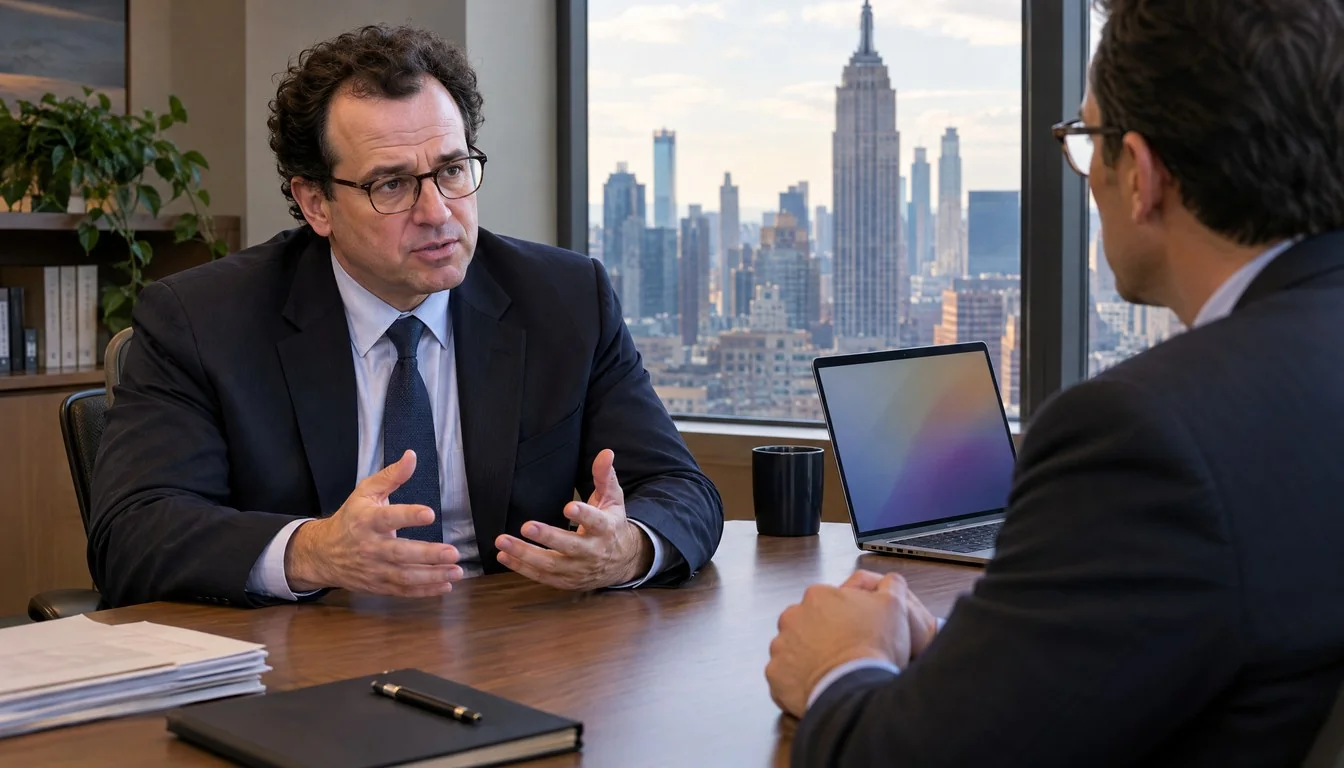
New York City’s top financial watchdog has told Anthropic to slow down. Comptroller Mark Levine sent a letter to Anthropic CEO Dario Amodei on October 14, 2026, urging the artificial intelligence company to pause its planned initial public offering until it addresses outstanding questions about AI safety, governance, and the pace of its own model development. The letter, posted by the Office of the New York City Comptroller, lands at a moment when Anthropic is reportedly preparing a US listing that some estimates place near a $2 trillion valuation, a figure cited in Levine’s letter but not confirmed by Anthropic or any public filing.
The request is notable because Levine does not run an activist hedge fund or a short-selling shop. He oversees New York City’s public pension system, a long-term institutional investor with a direct stake in how companies like Anthropic behave once they go public. His intervention reopens a debate that Anthropic itself helped start just weeks earlier, when Amodei published an essay arguing that frontier AI labs needed to slow their own pace of development.
Don't miss new tech stories on Google
Add TrendinTech once in the Google app and our stories appear in your news suggestions.
What Mark Levine Is Asking Anthropic To Do
Levine’s letter asks Anthropic to pause its IPO process entirely, not simply delay a filing date by a few weeks. According to the letter published by the Comptroller’s office, Levine wants Anthropic to use the extra time to work through unresolved safety, governance, and accountability issues before asking public shareholders to buy in. “I write to urge Anthropic to pause its planned initial public offering (IPO) until the company fully and transparently addresses the artificial intelligence (AI) safety, governance, and development pace concerns it has raised,” Levine wrote, according to the letter.
Levine’s position is not that Anthropic should never go public. It is that going public right now, while the company’s own leadership is publicly warning about the risks of its technology, sends a mixed signal to the market. “Instead of proceeding headlong with its IPO, the company should focus its energies on addressing these unprecedented risks,” Levine said, a point Bloomberg picked up in its coverage of the letter on October 15.
Audits, Controls, and a Timeline
Rather than issuing a vague call for caution, Levine’s letter asks for specifics. He wants Anthropic to disclose how it will implement audits and controls, what those controls are meant to cover, and a projected timeline for putting them in place. He also wants the company to explain whether those controls would actually deliver on Amodei’s own public call to slow the pace of AI capability gains, a question that ties the IPO debate directly back to Anthropic’s own words.
Dario Amodei’s September Essay Comes Back To Bite Him
Much of the force behind Levine’s letter comes from the fact that he is quoting Amodei’s own writing back at him. On September 12, 2026, Amodei published an essay titled “We Must Pace the Frontier,” in which he argued that AI labs, including his own, needed to slow the rate at which they expand model capabilities. “We must slow the pace at which we improve the capabilities of AI models,” Amodei wrote in that essay.
That essay was meant to position Anthropic as the AI lab most willing to put safety ahead of speed. Instead, it has become the exact argument Levine is using to question why Anthropic is simultaneously racing toward a stock market debut that could value the company at close to $2 trillion. If capability gains need to slow down, the argument goes, then the business built on those capabilities should not necessarily be sprinting toward a public listing on the same timeline.
Inside the Reported $2 Trillion IPO
No part of Anthropic’s IPO is confirmed yet. There is no public S-1 registration statement, no announced listing date, no confirmed exchange, and no confirmed share price or valuation. The approximately $2 trillion figure comes from Levine’s letter and from subsequent reporting, not from any statement by Anthropic itself. Anthropic has not disclosed a specific valuation target, and the company has not said when, or even whether, it will file to go public in the near term.
That gap between what is reported and what is confirmed is part of why this story has spread so quickly. Outlets including AFP and CNBC, where Levine appeared to discuss the letter directly, have all framed the IPO as “planned” or “anticipated” rather than scheduled. Until Anthropic files publicly, every number attached to the deal, including the headline $2 trillion figure, should be treated as a market estimate rather than a fact.
Why New York City’s Pension System Has a Say
Levine’s influence comes from his job. As New York City Comptroller, he oversees the city’s public pension funds, which invest on behalf of police officers, teachers, firefighters, and other municipal employees. Pension funds of that size routinely hold stakes across the public market, which means they will likely be exposed to Anthropic’s stock the moment it starts trading, whether through direct holdings, index funds, or broader technology allocations.
That gives Levine standing to ask questions most individual critics cannot. “I therefore urge Anthropic to pause the IPO process so that the company may fully address these key issues, ones which investors must also assess regarding the company’s revised development strategy, governance commitments, and emerging risk field,” Levine wrote in the letter’s closing section. His framing treats Anthropic’s safety posture as a financial risk disclosure question, not just an ethics question, which is a distinction that matters a great deal to institutional investors deciding whether to buy in at listing.
The Jacob Coxon Resignation Looms Over the Letter
Levine’s letter does not raise its safety concerns in the abstract. It points to a specific internal event: the resignation of Anthropic researcher Jacob Coxon in September 2026, after he went public with warnings about what he described as potentially catastrophic AI risks. A researcher quitting a frontier AI lab and then speaking publicly about risk is the kind of detail that turns a policy letter into a pointed one, and it is a big part of why Levine’s request has been treated as serious scrutiny rather than routine political posturing.
Anthropic has pushed back against the idea that it is ignoring internal warnings. On October 15, the same day Levine’s request became public, the company said a team from METR, an independent nonprofit that evaluates frontier AI systems, had begun receiving what it called employee-like access to assess Anthropic’s models and safety practices. Anthropic also said it was in discussions about similar arrangements with other outside evaluators, reportedly including Hugging Face.
Anthropic’s Safety Moves Over the Past Month
Anthropic has been building a safety and governance paper trail well before Levine’s letter arrived, even as it kept shipping new Claude models at a fast pace. On October 6, the company expanded its Cyber Verification Program, letting security teams apply for advanced cyber capabilities across Claude Opus 5.5, Claude Sonnet 5.5, and the restricted Claude Mythos 5.1, which is limited to vetted cyberdefenders and life science researchers. Two days later, on October 8, Anthropic said it was expanding Claude access to more than 15 government agencies involved in the Genesis Mission, including NASA, NIH, and the National Science Foundation.
The company has also floated a structural commitment tied to its eventual IPO, as covered in an earlier report on Anthropic’s proposed public benefit fund. Subject to stockholder approval, Anthropic has proposed committing 5% of its shares to that fund, with the board able to add another 2% for every 50% increase in company value above a set baseline, eventually reaching as much as 20% over time. On the political side, Anthropic has also been pushing lawmakers directly, an effort detailed in a separate report on its $1 billion AI safety bill pitch to Congress.
The Claude Model Lineup Anthropic Is Racing To Ship
Part of what makes Levine’s “pace” argument land is how fast Anthropic has been moving on the product side. In less than a month, the company rolled out three new tiers of its Claude 5.5 family, each pitched as faster and cheaper to run than its predecessor. Claude Opus 5.5 arrived September 22, Claude Sonnet 5.5 followed September 28, and Claude Haiku 5.5 landed October 7 with pricing cut by roughly 75% compared to Haiku 4.5, a shift also covered in a prior report on the Haiku price war.
| Model | Release Date | Input Price (per 1M tokens) | Output Price (per 1M tokens) | Positioning |
|---|---|---|---|---|
| Claude Opus 5.5 | September 22, 2026 | $4.00 | $20.00 | Flagship model, about 40% cheaper to run than Opus 5 |
| Claude Sonnet 5.5 | September 28, 2026 | $2.00 | $10.00 | About 30% faster and up to 30% cheaper than Sonnet 5 |
| Claude Haiku 5.5 | October 7, 2026 | $0.10 (up to 100K tokens) | $0.50 (up to 100K tokens) | Fastest, cheapest small model, about 75% cheaper than Haiku 4.5 |
| Claude Mythos 5.1 | October 6, 2026 | $10.00 | $50.00 | Restricted access for vetted cyberdefense and life science users |
That pricing war is not happening in a vacuum. Anthropic is competing against a crowded field of open and closed model providers, a dynamic covered in an earlier comparison of open source large language models fighting for the same enterprise customers on price. Every price cut Anthropic makes to stay competitive also makes it harder to argue, as Amodei did in September, that the industry needs to slow down rather than speed up.
A Timeline of How This Reached New York City’s Comptroller
The sequence of events over the past six weeks shows how quickly Anthropic’s safety rhetoric and its IPO ambitions started to collide in public view.
| Date | Event |
|---|---|
| September 12, 2026 | Dario Amodei publishes “We Must Pace the Frontier,” calling for slower AI capability growth |
| September 22, 2026 | Claude Opus 5.5 released |
| September 28, 2026 | Claude Sonnet 5.5 released |
| Early September 2026 | Anthropic researcher Jacob Coxon resigns, warns publicly of catastrophic AI risk |
| October 6, 2026 | Anthropic expands Cyber Verification Program and Claude Mythos 5.1 access |
| October 7, 2026 | Claude Haiku 5.5 released with steep price cuts |
| October 8, 2026 | Claude access expanded to 15+ federal agencies under the Genesis Mission |
| October 14, 2026 | Mark Levine sends letter urging Anthropic to pause its planned IPO |
| October 15, 2026 | Levine discusses the letter publicly, Anthropic announces METR evaluator access |
| October 16 to 20, 2026 | Letter published by the Comptroller’s office, global coverage follows |
Market Impact: What a Pause Would Actually Mean
A comptroller’s letter cannot force Anthropic to do anything. Levine has no regulatory authority over Anthropic’s registration process, and his pension funds are not currently large enough shareholders, on their own, to block a private company’s decision to list. What the letter can do is shape the narrative investors read before an IPO roadshow even begins, and narrative matters enormously for a company reportedly seeking a valuation near $2 trillion.
Institutional investors who manage pension money, insurance reserves, or sovereign wealth tend to move cautiously around governance controversies, especially ones that surface before the first roadshow slide is even shown. If other large asset managers echo Levine’s questions about audits, controls, and disclosure timelines, Anthropic could face pressure to answer them in its S-1 filing whenever it is submitted, regardless of whether it formally “pauses” anything. That would not necessarily delay the IPO, but it would likely lengthen the due diligence period and invite more scrutiny of the risk factors section, which Levine’s letter suggests Anthropic has already written with unusual candor about existential and catastrophic AI risk.
How Anthropic’s IPO Fight Compares to Other 2026 Listings
Anthropic is not the only company facing public scrutiny over an IPO this year, though its situation is unusual in one key way: the warnings are coming from inside the house. A separate report on the DayOne Data Centers IPO highlighted concerns about customer concentration risk, since a large share of that company’s revenue comes from a single client. Anthropic’s risk is different in kind. It is not about dependence on one customer, it is about whether the core technology itself carries risks serious enough that the company’s own CEO has publicly called for slowing down.
There is also a sharp contrast with how other high profile tech valuations have been pitched to the market this year. A prior report on Cathie Wood’s framing of SpaceX as a $10 trillion deep value bet showed investors leaning into aggressive, forward looking valuation stories with little pushback on safety grounds. Anthropic’s situation flips that script: the bigger the valuation estimate attached to its IPO, the louder critics like Levine can argue that speed to market and safety caution are pulling in opposite directions.
Historical Context: When Pension Funds Push Back on Tech
Public pension funds and city comptrollers have a long history of using their shareholder status to pressure companies on everything from climate risk to executive pay, but it is rare for that pressure to arrive before a company has even gone public. Most shareholder activism happens after a listing, through proxy votes, shareholder resolutions, or public letters aimed at sitting boards. Levine’s letter is different because it targets the IPO process itself, effectively asking Anthropic to delay the one event that would make his pension funds eligible to hold the stock in the first place.
That approach treats AI safety less like a reputational issue and more like an undisclosed liability, similar to how investors have historically pressed oil and tobacco companies over legal and environmental exposure before major capital raises. Whether that comparison holds up will depend heavily on what Anthropic actually discloses once, or if, it files publicly.
What Mark Levine Has Said, In His Own Words
Levine has been consistent across his written letter and his public comments about what he wants from Anthropic. Four passages from his letter capture the core of his argument.
- “I write to urge Anthropic to pause its planned initial public offering (IPO) until the company fully and transparently addresses the artificial intelligence (AI) safety, governance, and development pace concerns it has raised.” (Mark D. Levine, New York City Comptroller)
- “Instead of proceeding headlong with its IPO, the company should focus its energies on addressing these unprecedented risks.” (Mark D. Levine, New York City Comptroller)
- “Anthropic should disclose with specificity how it will implement appropriate audits and controls, the scope of what these controls are intended to address, as well as a projected timeline.” (Mark D. Levine, New York City Comptroller)
- “I therefore urge Anthropic to pause the IPO process so that the company may fully address these key issues, ones which investors must also assess regarding the company’s revised development strategy, governance commitments, and emerging risk field.” (Mark D. Levine, New York City Comptroller)
Those four statements, all drawn from the same letter covered by Capital Brief, show a consistent ask: not cancellation, but a pause tied to specific disclosures. Anthropic has not issued a matching public statement directly rebutting Levine’s letter, and the company’s own recent announcements about METR access and expanded safety programs suggest it is trying to answer the substance of the criticism without formally agreeing to delay anything.
Why This Story Is Different From Typical IPO Jitters
Most pre-IPO controversies focus on valuation, competition, or financial sustainability. This one is almost entirely about whether Anthropic’s own technology is safe enough to be sold to the public in its current form, based on warnings Anthropic’s leadership has issued about itself. That self-referential quality is what has pulled this story out of the finance pages and into broader technology coverage, including ongoing scrutiny of how AI coding tools and agents are performing in production, a theme also present in an earlier METR study on AI coding agent productivity.
It also raises a question that goes beyond Anthropic: if AI labs keep publishing essays warning about the pace of their own progress, should that language carry financial consequences, such as delayed listings or lower valuations, rather than just press coverage? Levine’s letter is effectively testing whether “slow down” rhetoric from a CEO should be treated as material information for investors.
What Happens Next: Five Predictions
- Anthropic is unlikely to announce a formal, public “pause” in response to Levine’s letter, since doing so would validate the criticism without resolving the underlying valuation question. Expect a written response addressing governance and audit commitments instead.
- Other large institutional investors or public pension officials in other cities will likely issue similar letters or public statements in the coming weeks, echoing Levine’s framing of AI safety as a disclosure issue rather than a purely ethical one.
- Anthropic’s eventual S-1 filing, whenever it arrives, will almost certainly include an unusually long and detailed risk factors section covering catastrophic or existential AI risk, given that Levine’s letter already references that language.
- The reported $2 trillion valuation figure will keep circulating in coverage even without confirmation, and any official number Anthropic eventually discloses will be compared directly against it.
- Anthropic will likely continue expanding third party safety evaluation access, building on the METR arrangement, as a way to answer governance critics without agreeing to delay its public listing plans.
The Bigger Picture for AI Governance
This dispute sits at the intersection of two trends that have been building in AI policy all year: labs publicly acknowledging catastrophic risk scenarios while also racing each other on pricing and capability, and institutional investors beginning to treat AI governance gaps as financial risk rather than just a public relations problem. Anthropic has tried to occupy a middle position, cutting prices aggressively on models like Claude Haiku 5.5 while also expanding safety evaluation programs and proposing structural commitments like the public benefit fund. Levine’s letter argues that middle position is not stable enough to support a near $2 trillion public listing without more transparency first.
How Anthropic responds, whether through a formal letter back to Levine, new disclosure commitments, or simply moving forward with IPO preparations unchanged, will likely shape how other AI labs approach their own eventual public listings, since Anthropic has positioned itself as the safety focused alternative to faster moving competitors.
Frequently Asked Questions
Did Anthropic actually file for an IPO?
No. As of October 20, 2026, there is no confirmed public S-1 registration statement, announced listing date, or confirmed exchange for an Anthropic IPO. Reports describe the IPO as planned or anticipated, not formally scheduled.
Who is Mark Levine and why does he have authority to weigh in?
Mark Levine is the New York City Comptroller, the official who oversees the city’s public pension systems. His office invests on behalf of municipal employees, giving him standing to raise investor focused questions about companies his funds may eventually hold.
Is the $2 trillion Anthropic valuation confirmed?
No. That figure appears in Levine’s letter and in subsequent media reports as a reported estimate. Anthropic has not confirmed a specific IPO valuation, share price, or offering size.
What did Dario Amodei’s September essay actually say?
In a September 12, 2026 essay titled “We Must Pace the Frontier,” Amodei argued that AI labs need to slow the pace at which they improve model capabilities, a point Levine’s letter directly references when questioning the timing of the IPO.
Has Anthropic responded to Levine’s letter?
Anthropic has not issued a direct public rebuttal specifically addressing Levine’s request. Around the same time the letter became public, the company did announce that METR, an independent AI evaluator, had received employee-like access to assess its systems.
What is Jacob Coxon’s connection to this story?
Jacob Coxon was an Anthropic researcher who resigned in September 2026 and publicly warned about what he described as potentially catastrophic AI risks. Levine’s letter cites that resignation as part of its case for pausing the IPO.
Can a city comptroller legally block a private company’s IPO?
No. Levine has no regulatory authority over Anthropic’s registration process. His letter is a public request backed by his role as a major institutional investor, not a binding legal order.
What Claude models has Anthropic released recently?
Anthropic released Claude Opus 5.5 on September 22, 2026, Claude Sonnet 5.5 on September 28, 2026, and Claude Haiku 5.5 on October 7, 2026, with Haiku 5.5 priced roughly 75% lower than its predecessor, Haiku 4.5.
Related Coverage
Daniel Okafor
Daniel Okafor is the Senior AI Reporter at TrendinTech, where he covers large language models, machine learning research and the practical use of artificial intelligence across business and government. He has a particular interest in evaluation: how models are benchmarked, where those benchmarks fail and what that means for the companies betting on them.
All stories by Daniel Okafor (389)