Audiophile.fm App Streams Free FLAC Radio at $0 [2026]

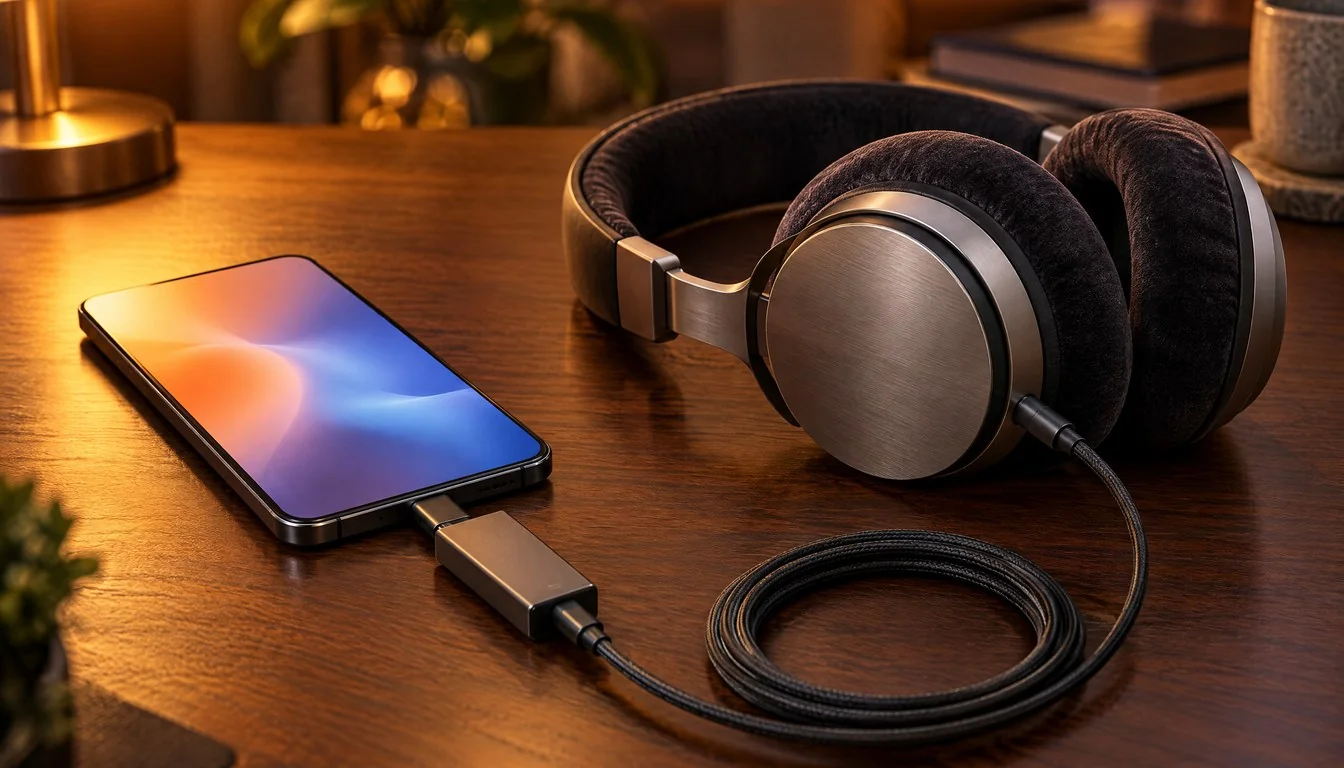
A free streaming app called Audiophile.fm landed on the iOS and Android app stores this week, and it is doing something almost no other free music app on a phone does: playing full FLAC audio, from CD quality up to hi-res, with no ads inside the app, no subscription tier, and no account sign-up required. TechRadar flagged it as the story worth watching in audio streaming today, noting that the discovery experience felt more fun than scrolling Spotify’s algorithmic playlists.
For an industry that has spent a decade training listeners to accept either ads or a monthly bill for anything beyond compressed audio, a free hi-res music streaming app that skips both is a genuine anomaly. It also lands at a moment when streaming economics, hi-res audio, and app-store competition are already colliding in ways that matter well beyond one radio app. This piece breaks down what Audiophile.fm actually is, why its free hi-res music streaming app model is notable, how it stacks up against the paid lossless tier, and what its arrival signals for a music software market that is under more financial pressure than it looks.
Don't miss new tech stories on Google
Add TrendinTech once in the Google app and our stories appear in your news suggestions.
What Audiophile.fm Actually Launched This Week
Audiophile.fm is not a new on-demand catalog competing with Spotify or Apple Music song for song. It is an internet radio aggregator: a curated directory of existing radio stations that happen to broadcast in FLAC, the lossless compression format audio enthusiasts have used for years to avoid the quality loss of MP3 or AAC. The company had already run a web version of the service before this week’s native app releases for iOS and Android, according to TechRadar’s report on the launch.
The iOS build requires iOS 26 or later, per TechRadar, which ties the app to Apple’s current mobile software generation rather than older iPhones running legacy versions, a reminder of how closely app releases now track phone software like the one running on the iPhone Duo and iPhone 18 Pro Max. On Android, the installation bar is lower, consistent with how most lightweight streaming utilities ship. Indonesian outlet Telset.id also covered the release, confirming the same core detail: a free lossless radio app with no ads, now available natively on both major mobile platforms.
The app’s creator, Bojan Vidanovic, described the original motivation in a Reddit post that predates this week’s mobile launch. “I launched this project in 2024 with the aim of simplifying the process of discovering and enjoying lossless radio stations,” Vidanovic wrote in a post on r/BudgetAudiophile. That timeline matters: Audiophile.fm is not a venture-funded startup making a splashy debut, but a two-year-old side project that has now reached both major app stores.
Why FLAC and Not Just “High Quality” Marketing Copy
Plenty of streaming apps use the phrase “high quality audio” loosely. Audiophile.fm’s pitch is more specific: stations in its directory stream in FLAC, Free Lossless Audio Codec, which preserves the full data of the original recording rather than throwing away information to shrink file size the way MP3 or Spotify’s default Ogg Vorbis streams do. TechRadar’s report describes the stations as running from CD quality up through hi-res resolutions, meaning some stations exceed the 16-bit, 44.1kHz standard that defines a compact disc.
Vidanovic put it plainly in a separate Reddit post on r/headphonesindia, describing the app as “a platform dedicated to streaming internet radio in lossless FLAC quality, ranging from CD quality to high-resolution audio.” The genre spread is broad rather than niche: TechRadar’s coverage and Vidanovic’s own posts point to jazz, classical, rock, and electronic stations populating the directory, among others.
Internet radio in FLAC is not new technology. What is new is bundling a curated directory of those FLAC streams into a polished, free mobile app with zero friction: no login wall, no forced trial, no app-level ad breaks interrupting a jazz station between songs. Vidanovic’s own framing on Reddit highlighted that point directly: “Best of all, it’s completely free, without any intrusive ads, and you don’t need to create an account.”
The Free Hi-Res Music Streaming App Gap Nobody Else Has Filled
To understand why a one-person project is generating coverage from a publication with TechRadar’s reach, it helps to look at what the rest of the free hi-res music streaming app market actually offers. According to a 2026 roundup from FreeYourMusic, none of the mainstream streaming apps currently offer unlimited, ad-free, on-demand listening for free. The closest comparable options the outlet names are Audiomack, which still carries ads, and Apple Music’s one-month free trial, which is time-limited rather than a permanent free tier. It is a different problem than the one solved by apps covered in our own look at the best music players for daily listening, most of which assume a paid tier is the price of entry for quality audio.
Put differently: Spotify’s free tier is ad-supported and capped at compressed audio. Apple Music and Tidal offer lossless and hi-res audio, but only inside paid subscriptions. That is the gap Audiophile.fm is stepping into, not by building an on-demand catalog to rival Spotify, but by sidestepping the licensing costs of on-demand streaming entirely and pointing listeners at radio stations that already broadcast in FLAC.
It is a clever structural choice. On-demand streaming requires paying labels and publishers for every play, which is why Spotify and Apple Music carry real costs that get passed on through ads or subscriptions. Internet radio stations already absorb their own licensing costs to broadcast, so an aggregator like Audiophile.fm can sit on top of that existing infrastructure without taking on the same per-stream royalty burden. That is also why TechRadar’s report notes that individual radio stations inside the app may play their own ads, even though the Audiophile.fm app itself does not.
How Audiophile.fm Compares to Paid Hi-Res Services
The honest comparison is not Audiophile.fm versus Spotify. It is Audiophile.fm versus the paid lossless tier that Tidal, Apple Music, and Qobuz all charge for. A 2026 comparison from BestAppsForAndroid lists Tidal’s hi-res lossless tier as reaching up to 24-bit, 192kHz audio with Dolby Atmos support, carried across every paid plan, with no ads. CNET’s own 2026 streaming service rankings single out Qobuz for offering a deep hi-res catalog without requiring special hardware decoders to play it back.
Those services are built around licensed on-demand catalogs: pick any song, any album, any time. Audiophile.fm cannot do that. It hands listeners a curated list of radio stations, which means passive discovery rather than deliberate search. For some listeners that is a downgrade. For others, including the original audience Vidanovic built the app for on r/BudgetAudiophile, that is closer to the point: a low-effort way to stumble onto lossless music without planning a playlist or paying a monthly fee.
| Service | Audio format | Cost | Ads | Catalog type |
|---|---|---|---|---|
| Audiophile.fm | FLAC, CD quality to hi-res | Free | None in-app (individual stations may carry ads) | Curated internet radio stations |
| Spotify Free | Compressed (Ogg Vorbis) | Free | Yes, frequent audio and banner ads | On-demand catalog |
| Tidal | Up to 24-bit/192kHz lossless, Dolby Atmos | Paid, all tiers | None | On-demand catalog |
| Apple Music | Lossless and Spatial Audio | Paid (free trial available) | None | On-demand catalog |
| Qobuz | Hi-res, no special decoder needed | Paid | None | On-demand catalog |
The table makes the trade-off obvious. Audiophile.fm is the only entry with both “free” and “no ads” in the same row, but it gives up the one thing every paid competitor offers: the ability to choose exactly what plays next. That trade-off is the entire story.
The Reddit Origin Story Behind the App
Before TechRadar picked up the story, Audiophile.fm’s growth happened in the same place a lot of niche audio software gets its first real audience: Reddit’s audiophile communities. Vidanovic posted the project to r/BudgetAudiophile and r/headphonesindia, framing it less as a startup pitch and more as a tool he wanted to exist. On r/headphonesindia, he wrote that the service “aggregates radio stations offering lossless FLAC streams across various genres, including jazz, rock, classical, and electronic music.”
That community-first path matters for how the app is likely to grow next. Audiophile communities are small but vocal, and they tend to reward tools that respect the listener’s time and hardware rather than tools optimized for engagement metrics. A free hi-res music streaming app with no dark patterns, no forced account creation, and no upsell screen is close to a native fit for that audience, which may explain why a two-year-old side project is only now breaking into mainstream tech coverage.
What “No Subscription, Possibly Later” Actually Means
TechRadar’s report notes that Audiophile.fm appears to plan on keeping the core app free while potentially adding paid features somewhere down the line. That detail has not been confirmed as an official company roadmap, and no pricing, timeline, or feature list has been published for any future paid tier. Readers should treat it as a direction hinted at in reporting, not a locked-in plan.
That ambiguity is normal for a project built outside the usual venture-funded playbook. Most consumer apps that launch with a clear “freemium” structure announce the paid tier on day one, because investors want a monetization story early. A side project that grew out of Reddit posts and a web app does not face that same pressure, which is likely why Audiophile.fm shipped first and left monetization vague.
Market Impact: Why Free Lossless Audio Is a Bigger Deal Than It Looks
Audio quality has become one of the last real battlegrounds among streaming services now that catalog size has mostly converged. Spotify, Apple Music, and Tidal all carry roughly the same major-label catalog, so the differentiators left on the table are price, interface, and audio fidelity. Lossless and hi-res tiers have been the premium lever every paid service pulls to justify the higher-tier price, which is exactly why a free alternative, even a limited one built on radio rather than on-demand tracks, is worth paying attention to.
It also lands in a software category that has been crowded with “best free music app” roundups all year without a genuine new entrant. ITechGuides’ 2026 ranking still names Spotify Free as the best free option for most users, specifically because, despite the ads and compressed audio, it offers the broadest mainstream catalog and the most device support. Audiophile.fm does not unseat that recommendation for a general listener who wants a specific song on demand. It creates a new category next to it: free, ad-free, lossless, but passive rather than searchable.
For developers and smaller software teams watching the streaming space, the launch is also a reminder that there is still room to ship a focused utility app that does one thing well, without a full licensing deal with major labels. The approach mirrors patterns seen elsewhere in consumer software, including how coding tools have started shipping native mobile apps instead of chasing every platform at once, where smaller tools built around aggregation or curation, rather than owned content, manage to compete against far larger incumbents by avoiding the costs those incumbents are locked into.
Historical Context: How We Got Here
Internet radio predates on-demand streaming by years. Services like Shoutcast and Icecast made it possible for independent broadcasters to stream audio online long before Spotify existed, and FLAC itself has been a standard lossless format in the audiophile community since the early 2000s. What changed over the past decade is that mainstream listening habits shifted almost entirely toward on-demand, algorithm-driven platforms, and internet radio quietly became a niche interest again, kept alive mostly by hobbyists and dedicated communities.
Lossless audio followed a similar arc. Tidal made hi-res a selling point as early as the mid-2010s, but adoption stayed limited to a smaller audience willing to pay a premium and own compatible hardware. Apple Music’s 2021 decision to add lossless and hi-res audio at no extra cost to existing subscribers was the moment that pushed lossless into the mainstream conversation, normalizing the idea that quality audio should not require a special add-on fee. Audiophile.fm’s free app pushes that same normalization one step further, questioning whether lossless audio needs a subscription at all, as long as the content is curated radio rather than an owned, searchable catalog.
Competitive Comparison: Where Audiophile.fm Fits Among Free Music Apps
The broader “best free music app” category is more crowded than it looks, and most entrants solve a different problem than Audiophile.fm does. DocumentaryTube’s 2026 roundup of music streaming apps notes that hi-res listening generally still points users toward Qobuz or Tidal, both paid. FreeYourMusic’s separate list of free alternatives highlights apps like ViMusic, an open-source Android app that streams from YouTube Music without ads, but notes it is Android-only with no iPhone version, unlike Audiophile.fm’s cross-platform release.
| App | Platforms | Audio quality | Account required | Catalog model |
|---|---|---|---|---|
| Audiophile.fm | iOS, Android, web | FLAC, CD to hi-res | No | Curated radio stations |
| ViMusic | Android only | Standard streaming quality | No | YouTube Music catalog |
| Spotify Free | iOS, Android, desktop, web | Compressed | Yes | On-demand catalog |
| Audiomack | iOS, Android, web | Standard streaming quality | Optional | On-demand catalog, with ads |
The pattern across the table is consistent: apps that are free and ad-free tend to sacrifice either platform coverage, audio quality, or catalog breadth. Audiophile.fm is the only one in this set holding onto cross-platform availability and lossless audio at the same time, precisely because it is not trying to be an on-demand catalog in the first place.
What Developers Can Take From Audiophile.fm’s Launch
For anyone building consumer software, Audiophile.fm’s path from a 2024 Reddit post to iOS and Android app store listings in 2026 is a useful case study in scope discipline. Vidanovic did not try to out-build Spotify’s catalog, its recommendation engine, or its social features. He picked one underserved niche, lossless radio discovery, and shipped a tool that does that one job cleanly, first as a web app, then as native mobile apps once the audience justified the extra engineering cost.
That build order matters. Shipping the web version first let the project validate demand on the lowest-cost platform before committing engineering time to iOS 26’s newer APIs and Android’s fragmented device field. It is the same sequencing a lot of small software teams use when they do not have the budget for simultaneous multi-platform launches, and it is worth noting given how much coverage mobile-first launches usually get compared to web-first ones.
Predictions: What Happens Next for Audiophile.fm and Free Lossless Audio
A few things look likely to play out over the coming months, based on the pattern this launch fits.
- Expect other radio aggregators to lean harder on the word “lossless” in their own marketing, now that Audiophile.fm has shown a free FLAC-first app can generate mainstream tech coverage.
- If Audiophile.fm does introduce a paid tier, the most likely features are offline caching, personalized station recommendations, or desktop apps, since those are the standard upsells in this category and the core radio streams would be hard to paywall without alienating the Reddit community that built the app’s initial audience.
- Expect at least one of the major paid lossless services, Tidal, Apple Music, or Qobuz, to be mentioned alongside Audiophile.fm in comparison content for the rest of 2026, since the “free versus paid lossless” framing is an easy, search-friendly angle.
- Android’s lower barrier to entry likely means Audiophile.fm’s Android installs outpace iOS installs in the near term, given the iOS build’s iOS 26 requirement locks out users on older iPhones, the same platform-fragmentation issue that shows up in Android software running across inconsistent hardware generations.
- Watch for competing free radio aggregators to emerge quickly, since the technical bar to curate existing FLAC radio streams is lower than building an on-demand catalog, meaning Audiophile.fm’s current novelty is unlikely to last as a differentiator on its own.
Getting Started With the App
For readers who want to try it, the practical setup is simple by design: download the app from the iOS App Store (iOS 26 or later) or the Google Play Store, skip past any permission prompts for notifications if you prefer, and browse the station directory by genre. No account creation step appears before playback starts, based on TechRadar’s walkthrough of the app, a contrast to the login and two-factor setup most streaming and authenticator-protected apps on iPhone now require before first use. Headphone or speaker hardware capable of handling hi-res files will make the quality difference more noticeable, though the app plays back fine on standard phone speakers for casual listening too.
Listeners coming from Spotify’s free tier should expect the biggest adjustment to be the lack of search. There is no typing in a song title and hitting play. Instead, the experience is closer to channel surfing: pick a genre, pick a station, and let it run. That is either a feature or a limitation depending on what a listener actually wants from fifteen free minutes with a new app.
The Bigger Picture for Streaming Software in 2026
Audiophile.fm will not replace Spotify, Tidal, or Apple Music for most listeners, and it is not trying to. What it does is expose a gap that the biggest streaming platforms have left wide open for two years: a genuinely free, ad-free way to hear lossless audio on a phone. That gap existed because on-demand licensing costs make it commercially risky for a major platform to offer the same thing without ads or a fee attached.
A small team working outside that licensing structure had the freedom to fill the gap differently, by pointing at content that was already free to broadcast. Whether Audiophile.fm scales past its current Reddit-and-tech-press moment will depend on whether casual listeners value the lossless audio enough to accept giving up search, or whether the appeal stays limited to the audiophile niche it grew out of. Either way, the app’s October 2026 mobile launch is a clean data point for how much appetite remains for free, ad-free listening, even among people who already pay for a mainstream subscription elsewhere.
Frequently Asked Questions
Is Audiophile.fm really free, with no hidden subscription?
Yes. According to TechRadar’s report on the launch, the app requires no subscription and no account to use. Individual radio stations within the app may carry their own ads, but the app itself does not display ads.
What platforms is Audiophile.fm available on?
The app is available on iOS (requiring iOS 26 or later) and Android, alongside an existing web version, per TechRadar and Telset.id’s coverage of the release.
What audio format does Audiophile.fm use?
FLAC, a lossless compression format. Stations in the app’s directory range from CD quality up to hi-res audio, according to TechRadar’s report.
Can I search for a specific song on Audiophile.fm?
No. The app is built around curated internet radio stations rather than an on-demand, searchable catalog, so listening is closer to browsing stations by genre than picking individual tracks.
Who created Audiophile.fm?
Bojan Vidanovic, who described launching the project in 2024 in posts to the r/BudgetAudiophile and r/headphonesindia communities on Reddit, well before this week’s native mobile app releases.
Will Audiophile.fm stay free forever?
That has not been confirmed. TechRadar’s report says the app appears to plan on keeping its core experience free while potentially adding paid features later, but no official pricing or feature roadmap has been published.
How does Audiophile.fm compare to Tidal or Apple Music’s lossless tiers?
Tidal and Apple Music both offer lossless and hi-res audio, but only within paid subscriptions, and both let users search and play specific songs on demand. Audiophile.fm is free and ad-free but limited to curated radio stations rather than a searchable catalog.
What genres are available on Audiophile.fm?
Reporting and the creator’s own posts point to jazz, classical, rock, and electronic stations, among others, spread across the app’s curated directory.
Related Coverage
Yusuf Demir
Yusuf Demir is the Cloud & Software Reporter at TrendinTech, where he covers cloud infrastructure, enterprise platforms, developer tools and the digital transformation of businesses in the UK and the United States. He is most interested in the gap between vendor roadmaps and the systems engineers actually run, and in what the cloud bill looks like once the free credits expire.
All stories by Yusuf Demir (392)