Apple Limits iPhone Duo to 2 Units as Shortage Bites [2026]

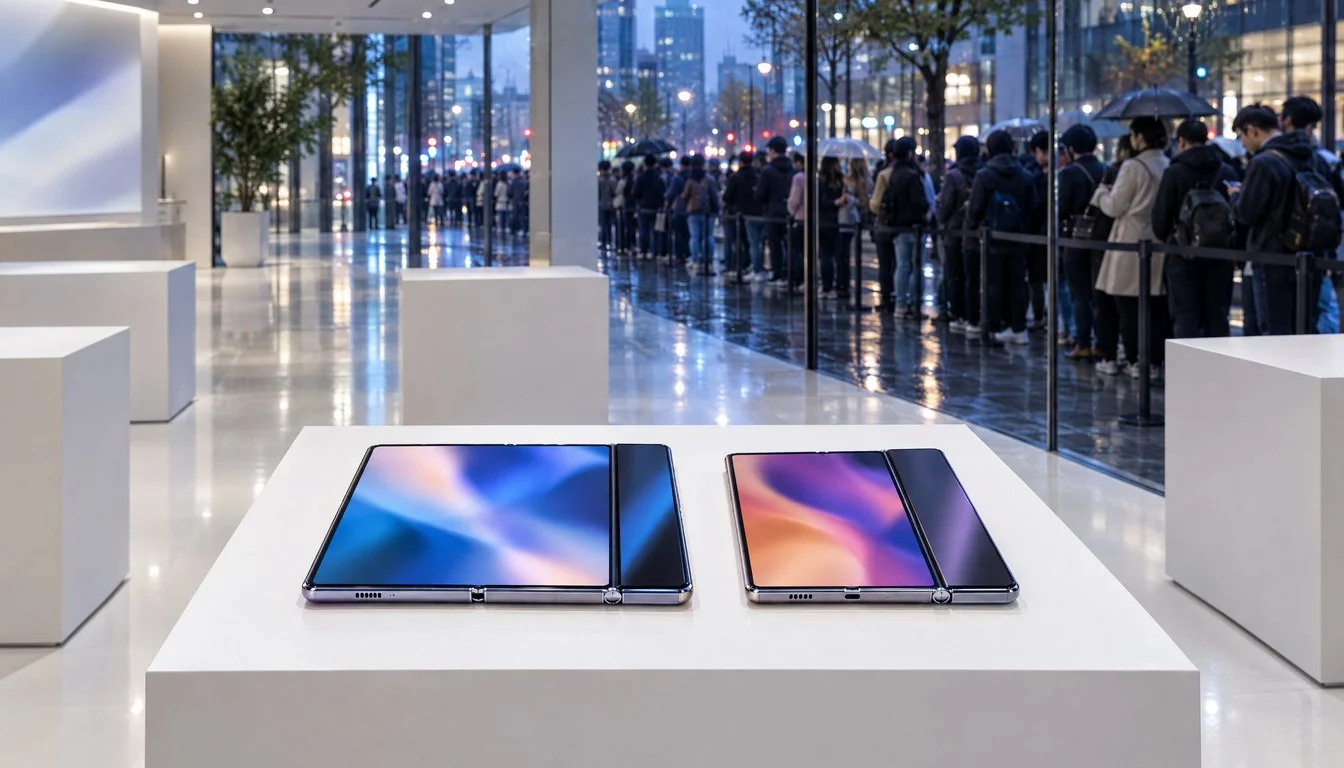
Apple capped iPhone Duo purchases at two units per customer in the United States on October 19 and 20, 2026, the clearest sign yet that the company underestimated demand for its first foldable iPhone. The move lands three days before the device’s scheduled October 23 launch, after online orders placed just hours into the preorder window were already quoted January 2027 delivery windows. For a company that built its reputation on tightly choreographed launches, the past five days have looked more like damage control than a victory lap.
The iPhone Duo shortage is no longer a side story about a popular new phone selling out fast. It has become a test of how Apple manages scarcity under its new leadership, and a preview of how far delivery dates can slip before a flagship launch effectively turns into a months-long waiting list. Here is what changed this week, what it means for Apple’s holiday quarter, and why the company’s incoming chief executive is facing his first real supply crunch less than two months into the job.
Don't miss new tech stories on Google
Add TrendinTech once in the Google app and our stories appear in your news suggestions.
Apple Caps iPhone Duo Orders at Two Units Per Customer
Starting around October 19, 2026, Apple’s online store and Apple Store app began rejecting iPhone Duo orders above two devices per customer in the United States. Anyone who tried to add a third unit to their cart saw a direct message from Apple: “A maximum of 2 iPhone Duo can be purchased per customer. Please adjust the total quantity of iPhone Duo in your order before checking out,” according to a report from MacRumors. Apple has used per-customer purchase caps before during tight launches, but rarely this early, and almost never before the device has even reached store shelves.
The restriction followed several days of visible strain on Apple’s supply chain. Engadget reported that the two-unit limit applies specifically to the iPhone Duo configuration, separate from any limits on the iPhone 18 Pro line, highlighting that the foldable model is the one Apple cannot keep in stock. The company has not published a figure for how many units it built ahead of launch, and it has not said when the limit might be lifted.
Why the Shortage Deepened in Less Than a Week
The timeline matters here. Apple unveiled the iPhone Duo on September 9, 2026, then opened preorders on October 16 at 5 a.m. Pacific time. According to MacRumors, Apple’s own delivery estimates for new orders slipped to January 25, 2027 within roughly 30 minutes of preorders opening, a shift already covered in detail in our earlier report on the 30-minute sellout. What has changed since then is the scale of the response. This is not a story about a single bad morning anymore. It is a story about Apple actively rationing a product five days before launch day, something it rarely has to do once initial preorder demand has already been absorbed.
Apple itself has acknowledged the scale of the demand without disclosing specific production numbers. The company described interest in the iPhone Duo as “nothing short of extraordinary,” per MacRumors, in a statement issued shortly after delivery estimates first moved. That kind of public framing usually follows a launch that exceeded internal forecasts, but five days later Apple was still unable to restock its online store enough to lift the delivery date, let alone guarantee walk-in stock at retail locations.
Our earlier coverage of Apple’s supply gamble noted that analysts were already split on whether the company built enough first-generation units to meet demand. This week’s purchase cap suggests the more cautious estimates were closer to correct.
Japan and South Korea Get Reservation-Only Rules
The United States was not the only market where Apple tightened the rules this week. On October 19, 2026, Apple temporarily restricted iPhone Duo and iPhone 18 Pro Max purchases at its retail stores in Japan and South Korea to customers who had already booked a pickup reservation, cutting off walk-in buyers entirely in those two countries, according to MacRumors reporting cited in the current facts record for this story. That is a notable pairing: the iPhone Duo is brand new and foldable, while the iPhone 18 Pro Max has been on sale since September 18. Restricting both at once in two of Apple’s most important Asian markets points to a broader capacity problem rather than a single-model miscalculation.
Our earlier piece on walk-in stock doubts across more than 70 countries flagged this risk before Apple made it official policy. The reservation-only rule in Japan and South Korea is the first confirmed case of Apple converting that risk into an explicit, enforced restriction rather than just a staffing recommendation.
Apple Retail Staff Were Already Bracing for This
The reservation requirement did not come out of nowhere. Apple Store employees told MacRumors they had been advised internally that there would likely be no iPhone Duo stock available for walk-in purchases on launch day, according to a report carried by 9to5Mac. That guidance went out on October 17, nearly a week before the October 23 launch date, which means Apple’s own retail staff had more advance warning about the shortage than most customers who placed preorders expecting a launch-week delivery.
Technology journalist David Phelan captured how fast the online allocation disappeared, writing that “as of 8:30 a.m. Eastern, all iPhone Duo configurations are backordered until next year,” in a report published through Forbes. That timestamp puts the full sellout of every iPhone Duo configuration at roughly three and a half hours after preorders opened at 5 a.m. Pacific.
Mark Gurman Calls the Early Preorder Timing a “Major Mistake”
Bloomberg’s Mark Gurman offered the sharpest outside critique of Apple’s handling of the launch. According to the same MacRumors report that detailed the two-unit purchase cap, Gurman characterized Apple’s decision to open iPhone Duo preorders despite known severe supply constraints as a “major mistake.” The reasoning, as described in that reporting and echoed by The Apple Post, is straightforward: once a company opens preorders publicly, it sets a customer expectation about delivery timing that it cannot walk back without reputational cost, even if the underlying production problem existed before the first order was placed.
Whether or not Apple could have delayed the preorder window to buy more manufacturing time, the current situation puts the company in an uncomfortable position heading into its most important sales quarter of the year. Customers who were told they would have a new foldable iPhone in time for the holidays are now being told, in effect, to wait until after them.
Inside the iPhone Duo: Specs, Price and What You Actually Get
Shortage aside, the iPhone Duo itself is a significant hardware departure for Apple. It pairs a 7.6-inch inner Super Retina XDR folding display, available with a nano-texture finish, with a 5.4-inch outer Super Retina XDR display, both running on Apple’s A20 Pro chip. Apple says the inner display is 50% larger than the screen on the iPhone 18 Pro Max, which gives a sense of how much more usable surface the fold design adds once opened.
The camera system centers on a 48MP Dual Fusion setup: a 48MP Fusion Ultra Wide camera, a 48MP Fusion Main camera with variable aperture options ranging from f/1.48 to f/4.0, and a 12MP Center Stage front camera. The device ships in two finishes, Star White and Night Sky, and in four storage tiers.
| Specification | iPhone Duo detail |
|---|---|
| Chip | A20 Pro |
| Inner display | 7.6-inch Super Retina XDR folding display (nano-texture option) |
| Outer display | 5.4-inch Super Retina XDR display |
| Camera system | 48MP Fusion Ultra Wide, 48MP Fusion Main (f/1.48 to f/4.0), 12MP Center Stage front |
| Storage options | 256GB, 512GB, 1TB, 2TB |
| Colors | Star White, Night Sky |
| Battery (video playback) | Up to 31 hours on inner display, up to 44 hours on outer display, up to 24 hours using both equally |
| Fast charging | Up to 50% charge in about 20 minutes with wired fast charging; MagSafe supported |
| Starting price (US) | $1,999 for 256GB, scaling to $3,199 for 2TB |
| Software | iOS 27 with Siri AI (beta) |
Pricing and Financing Options
Apple is offering two distinct ways to finance the iPhone Duo. Through the standard installment plan, pricing starts at $83.29 per month for 24 months. Through Apple Upgrade, the leasing program Apple launched with Klarna in the United States, pricing starts lower, at $57.99 per month for 24 months, excluding taxes and trade-in credit, because the leasing structure assumes the device returns to Apple or gets upgraded at the end of the term rather than being owned outright. Apple’s trade-in program separately offers $175 to $885 in instant credit for an eligible iPhone 13 or newer toward a new iPhone purchase.
iPhone Duo vs iPhone 18 Pro Max: Is the Fold Worth $700 More?
The most direct comparison inside Apple’s own lineup is between the iPhone Duo and the iPhone 18 Pro Max, which has been shipping since September 18, 2026 and starts at $1,299. That puts a $700 gap between the top of Apple’s conventional lineup and the entry price of its first fold. We covered the detailed spec-by-spec breakdown separately in our iPhone Duo versus iPhone 18 Pro Max comparison, but the short version is that buyers are paying a premium not for raw camera or chip performance, since both phones run recent Apple silicon, but for the folding form factor itself and the larger effective screen real estate it unlocks.
That premium is now compounded by a wait. An iPhone 18 Pro Max buyer can walk into an Apple Store today and leave with a phone. An iPhone Duo buyer placing a new order this week is, per Apple’s own online estimates, looking at delivery sometime around late January 2027. For many holiday shoppers, that gap alone may do more to steer purchase decisions than any spec sheet comparison.
Timeline: How a Launch-Week Phone Became a 2027 Product
Laid out chronologically, the past six weeks show how quickly Apple’s messaging shifted from a confident unveiling to active rationing.
| Date | What happened |
|---|---|
| September 9, 2026 | Apple unveils iPhone Duo, its first foldable iPhone, alongside iPhone 18 Pro and iPhone 18 Pro Max |
| September 18, 2026 | iPhone 18 Pro and iPhone 18 Pro Max go on sale |
| October 16, 2026, 5:00 a.m. PT | iPhone Duo preorders open |
| October 16, 2026, roughly 5:30 a.m. PT | Online delivery estimates for new orders move toward January 25, 2027 |
| October 16, 2026, 8:30 a.m. ET | All iPhone Duo configurations reported fully backordered into 2027 |
| October 17, 2026 | Apple retail staff reportedly told to warn customers against relying on launch-day walk-in stock |
| October 18, 2026 | Bloomberg’s Mark Gurman calls the early preorder timing a “major mistake” |
| October 19, 2026 | Apple restricts iPhone Duo and iPhone 18 Pro Max purchases in Japan and South Korea to reservation holders; US orders capped at two units per customer |
| October 23, 2026 | Scheduled retail launch in the US and more than 70 countries and regions |
| October 30, 2026 | Scheduled expansion to 28 additional countries and regions |
John Ternus’s First Major Test as Apple CEO
There is a leadership dimension to this story that has gotten less attention than the delivery dates themselves. John Ternus became Apple’s chief executive officer on September 1, 2026, succeeding Tim Cook, who moved into the role of executive chairman. Arthur Levinson continues as Apple’s lead independent director. The transition was announced back in April 2026, but September 1 is when it actually took effect, which means Ternus has been CEO for a little over seven weeks as the iPhone Duo shortage has unfolded in real time.
That timing makes the iPhone Duo launch a de facto first stress test for Apple’s new chief executive. The company he now leads unveiled its first foldable iPhone, took preorders for it, and then had to impose purchase caps and reservation-only retail policies within roughly a month of handing him the top job. How Apple communicates about delivery timelines over the next several weeks, and whether the January 2027 estimates hold or slip further, will shape early perceptions of how Ternus runs operations compared with his predecessor.
The Apple Store Playbook for Managing Hype and Scarcity
Apple has rationed demand before, but usually after a product has already reached shelves and sold through an initial allocation, not days before a scheduled launch. The tools it is using this time are familiar ones: a hard per-customer order cap, reservation-only retail access in specific markets, and internal staff guidance designed to manage walk-in expectations rather than turn away customers at the door with no warning.
What is different this time is the breadth of markets affected simultaneously. Within the same week, Apple restricted access in the United States, Japan, and South Korea, three of its largest and most important retail markets, while delivery estimates slipped for customers across the more than 70 countries and regions where the iPhone Duo is scheduled to launch on October 23. A rolling expansion to 28 more countries and regions is still scheduled for October 30, even as the initial launch markets have not stabilized.
Market Impact: What the Shortage Means for Apple’s Holiday Quarter
The iPhone Duo’s troubles are unfolding against a broader industry backdrop of tight component supply. Our recent coverage of the 20% drop in global smartphone shipments tied to a memory shortage described an industry-wide squeeze on components that is hitting multiple manufacturers at once, not just Apple. A constrained first-generation foldable launching into that environment was always going to be vulnerable to exactly this kind of bottleneck.
For Apple specifically, a starting price of $1,999 means every iPhone Duo unit that ships carries a meaningfully higher average selling price than the rest of the iPhone lineup, which should cushion revenue even if unit volumes stay constrained through the holiday quarter. Deferred demand is not necessarily lost demand. Customers who placed preorders this week and received January 2027 estimates are, for the most part, still in Apple’s order book rather than switching to a competing device, since Apple has not offered a comparable in-house alternative and most competing foldables run a different operating system entirely.
The bigger risk sits with customers who decide the wait is not worth it and instead buy an iPhone 18 Pro Max, which is in full supply, or hold off until next year entirely. Every week the shortage drags on increases the odds that some share of iPhone Duo preorder customers quietly convert to one of those two outcomes instead of waiting out a three-month-plus delivery window.
Historical Context: Apple Has Rationed Demand Before
Apple’s history includes several launches where demand outran initial supply, from early iPhone generations to popular Apple Watch models in their first holiday seasons. Per-customer purchase limits are not new to the company’s retail playbook. What stands out about the iPhone Duo situation is the compressed timeline: the jump from “extraordinary demand” to a formal two-unit cap and reservation-only retail rules in Japan and South Korea happened within roughly four days, between October 16 and October 20.
The iPhone Duo also represents a different kind of product risk than a typical annual iPhone refresh. It is a brand-new mechanical design, Apple’s first folding hinge and dual-display assembly shipping at volume, which likely carries a steeper manufacturing learning curve than incremental camera or chip updates on an established chassis. A shortage on a genuinely new hardware category is a different problem to solve than a shortage on a familiar form factor that simply proved more popular than forecast.
Competitive Field: Apple Enters a Foldable Market Others Built First
Apple is not introducing the folding phone concept to the market. Rival manufacturers have shipped multiple generations of folding devices over several years before the iPhone Duo existed. What Apple brings that those earlier entrants could not is the pull of iOS, Apple’s ecosystem lock-in, and a customer base that has been asking Apple specifically for a foldable iPhone for years rather than considering a device running a different operating system.
That built-in demand is precisely what turned into a liability this week. A less anticipated first-generation product might have sold through its initial allocation without triggering emergency purchase caps across three major markets at once. The intensity of pent-up interest in an Apple-branded fold, after years of rumors and reader speculation, appears to have outpaced even Apple’s own internal planning.
What People Close to the Launch Are Saying
Apple’s own public statement focused on demand rather than supply. Describing interest in the device, the company said it has been “nothing short of extraordinary,” as reported by MacRumors. That framing puts the emphasis on customer enthusiasm rather than production shortfalls, even as the practical effect for buyers is identical either way: a longer wait.
Bloomberg’s Mark Gurman took the more critical view, calling Apple’s decision to open preorders under known supply constraints a “major mistake,” a characterization that has circulated widely across tech coverage since October 18. David Phelan’s on-the-ground reporting for Forbes captured just how fast the window closed, noting that by 8:30 a.m. Eastern on launch day of preorders, every configuration was already backordered into the following year. And internally, Apple Store employees were reportedly told, according to 9to5Mac, that walk-in stock on October 23 would likely not be available at all, guidance that went out nearly a week before the public purchase cap was even confirmed.
Predictions: Where the iPhone Duo Shortage Goes From Here
- Expect the two-unit purchase limit to remain in place through at least the October 30 expansion to 28 additional countries and regions, since Apple has given no indication supply is catching up to demand.
- Delivery estimates for new online orders are more likely to extend further into 2027, rather than pull back toward launch-week dates, as additional markets open and compete for the same limited production run.
- Apple Stores in additional countries beyond Japan and South Korea may adopt similar reservation-only policies for iPhone Duo as the October 23 and October 30 launch dates approach in markets with historically high iPhone demand.
- Scrutiny of John Ternus’s operational leadership will intensify heading into Apple’s fiscal first-quarter holiday results, since this is the first major hardware rollout under his tenure as chief executive.
- Secondary market resale prices for early-allocation iPhone Duo units are likely to stay elevated through the holiday season in regions where official delivery windows extend into 2027, as buyers who want the device sooner bid up whatever limited retail stock does appear.
Frequently Asked Questions
Why is Apple limiting iPhone Duo purchases to two units?
Apple has not stated a reason publicly, but the limit followed days of visible supply strain, including delivery estimates slipping to January 2027 and retail restrictions in Japan and South Korea, suggesting the company is trying to spread limited inventory across as many individual customers as possible.
When will iPhone Duo units ordered this week actually ship?
Apple’s online store has shown delivery estimates for new orders stretching toward late January 2027, though exact dates vary by storage configuration, color, and shipping destination.
Can I still buy an iPhone Duo in an Apple Store on launch day?
Walk-in availability is uncertain. Apple retail staff were reportedly told to warn customers that walk-in stock would likely not be available on October 23, and in Japan and South Korea, Apple has restricted purchases to customers with pickup reservations.
How does the iPhone Duo compare with the iPhone 18 Pro Max on price?
The iPhone Duo starts at $1,999 for 256GB, compared with $1,299 for the iPhone 18 Pro Max, a gap of $700 for the entry configurations of each device.
Who is Apple’s new CEO during this launch?
John Ternus became Apple’s chief executive officer on September 1, 2026, succeeding Tim Cook, who became executive chairman. The iPhone Duo is the first major hardware launch to run into supply trouble under Ternus’s tenure.
Is the iPhone Duo shortage related to the broader smartphone component shortage?
It is unfolding alongside one. Industry-wide memory and component shortages have already contributed to a reported 20% drop in global smartphone shipments this year, creating a difficult supply backdrop for any manufacturer launching a new device, including Apple’s first foldable.
What financing options does Apple offer for the iPhone Duo?
Apple offers a standard installment plan starting at $83.29 per month for 24 months, or Apple Upgrade leasing through Klarna starting at $57.99 per month for 24 months, excluding taxes and trade-in credit.
Related Coverage
Owen Castellanos
Owen Castellanos is the Hardware & Gaming Reporter at TrendinTech, where he tests graphics cards, processors, consoles and peripherals and follows the games industry, from the major publishers to independent studios. He writes for readers who want to know whether a product is worth the money, and he is not shy about saying when it is not.
All stories by Owen Castellanos (403)