

Samsung SmartTag3 Confirmed for India Launch in Jan 2027

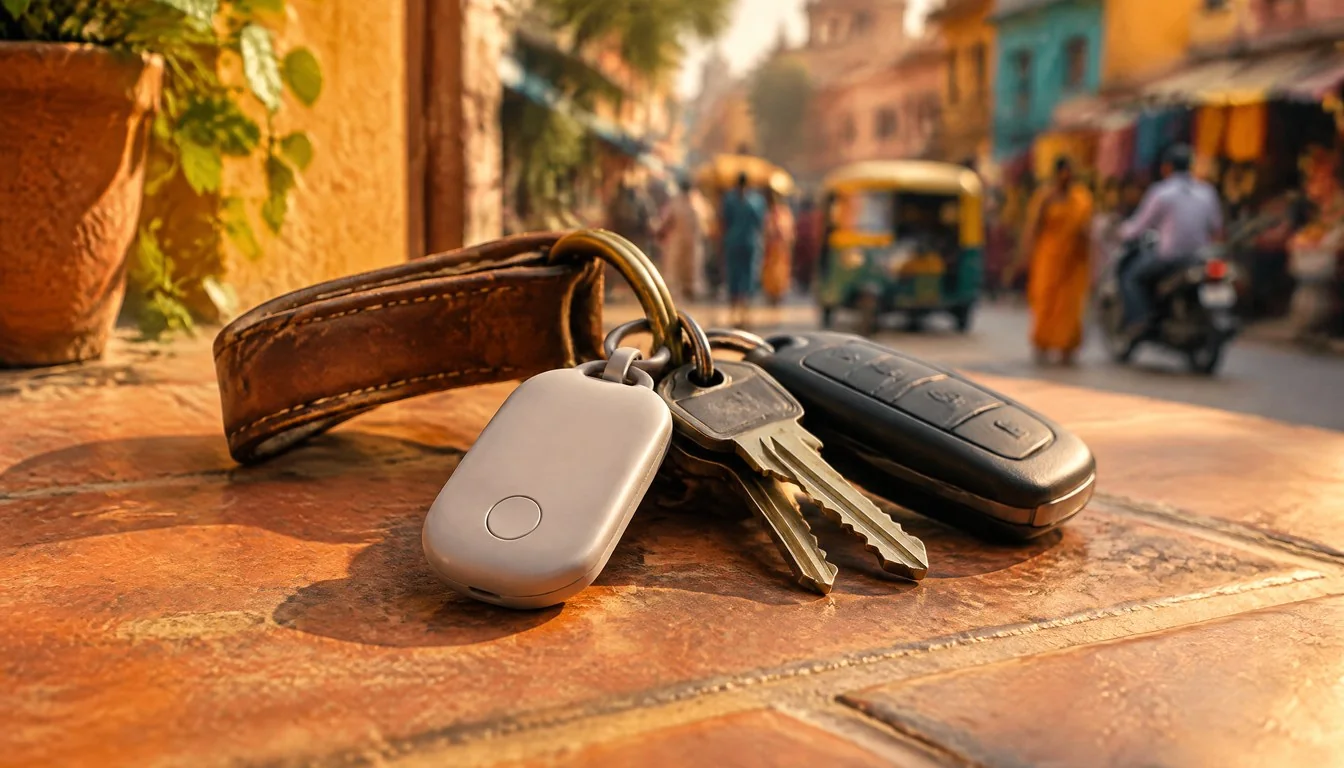
Samsung has confirmed that the Galaxy SmartTag3, its newest Bluetooth and ultra-wideband item tracker, will reach India in January 2027, months after the device went on sale in South Korea and the United States. The timing was confirmed by Daill Kim, Samsung India’s Head of Tablet, Note PC and Wearable, in a LinkedIn post this week, according to Gadgets360.com and SammyGuru. The confirmation ends weeks of speculation about whether India would get the tracker alongside other early markets, and it puts a firm, if still rough, date on a product that Samsung has been selling in pieces around the globe since late September.
The announcement matters beyond the gadget itself. Samsung is the dominant seller of premium Android phones in India, and the company has spent the past two years building out its Galaxy Find Network, the crowdsourced location mesh that SmartTag devices rely on to locate lost items even when they are out of Bluetooth range. A January 2027 India launch means Samsung’s home tracker ecosystem will have been live in other markets for roughly four months before Indian buyers can get their hands on it, a gap that says as much about regulatory and supply timelines as it does about market priority.
Don't miss new tech stories on Google
Add TrendinTech once in the Google app and our stories appear in your news suggestions.
What Samsung Actually Confirmed About the India Launch
The core fact is narrow but significant: Samsung will bring the Galaxy SmartTag3 to India in January 2027. Daill Kim’s statement, reported by Live Hindustan and SammyGuru, did not include an exact calendar date or an India-specific price. That leaves a roughly six-week window inside January during which Samsung could schedule the rollout, and it leaves pricing as the single biggest open question for a market where Samsung already competes hard on value against Apple, Xiaomi, and a growing field of budget-tracker makers.
Samsung’s own newsroom posts, picked up by outlets tracking the global rollout, describe a staggered release rather than a single worldwide day-one launch. The Galaxy SmartTag3 reached South Korea first, before expanding to the United States and other markets through the fall, with Germany and other European markets slated for early 2027 alongside India. That pattern mirrors how Samsung has handled recent Galaxy hardware launches generally, prioritizing its home market and the United States before widening availability to the rest of the world.
For context on how Samsung sequences hardware rollouts across regions, readers can compare this to the staggered rollout pattern seen with the Samsung Chromebook Plus V2 360, another recent Samsung device that reached different markets on different timelines rather than launching everywhere at once.
Galaxy SmartTag3: What the Hardware Actually Does
The Galaxy SmartTag3 is a compact item tracker, the kind of device clipped to keys, slipped into a bag, or tucked into a wallet to help locate it later through a smartphone app. Samsung ships it in two colors, white and black, and the company says battery life runs up to 550 days under typical use, stretching to 790 days in Power Saving Mode. That is a meaningful number for a category of accessory that many buyers resent having to recharge or replace batteries for every few months.
Connectivity is where the SmartTag3 differentiates itself from cheaper Bluetooth-only trackers. It uses Bluetooth 6.0 with Channel Sounding, a feature that improves distance and direction accuracy between the tag and a paired phone, alongside Ultra-Wideband (UWB) for precise, arrow-guided finding when the item is nearby. The device also carries an IP67 rating, meaning it can survive dust exposure and brief submersion in water, a baseline expectation for anything meant to live on a keychain or in a backpack side pocket.
Perhaps the most notable software decision is cross-platform support. The SmartTag3 works with iOS devices as well as Galaxy phones, a shift that puts Samsung’s tracker ecosystem in more direct competition with Apple’s own AirTag rather than confining it to the Android world. Tracking runs through Samsung’s Galaxy Find Network and the SmartThings Find app, the same crowdsourced location infrastructure Samsung has been expanding since the Galaxy SmartTag2.
| Specification | Galaxy SmartTag3 Detail |
|---|---|
| Colors available | White, Black |
| Battery life (typical use) | Up to 550 days |
| Battery life (Power Saving Mode) | Up to 790 days |
| Connectivity | Bluetooth 6.0 with Channel Sounding, Ultra-Wideband (UWB) |
| Water and dust resistance | IP67 |
| Tracking network | Galaxy Find Network via SmartThings Find app |
| Platform support | Galaxy devices and iOS |
| US pricing | $29.99 single pack, $99.99 four-pack |
| India price | Not yet announced |
The Global Rollout Timeline So Far
Samsung’s phased release pattern for the SmartTag3 has unfolded over several weeks rather than a single launch event. South Korea got first access, which is typical for Samsung hardware given the company’s domestic manufacturing and retail presence. The United States followed with general availability and the $29.99 and $99.99 price points reported on Samsung’s US newsroom. Germany’s local Samsung newsroom has pointed to an early 2027 timeline for that market, putting it in the same rough window as India.
That sequencing puts India in a second wave of SmartTag3 availability alongside parts of Europe, rather than in the same batch as South Korea and the United States. For a market where Samsung ships tens of millions of smartphones a year, a nearly four-month delay between the US launch and the India launch is long enough to matter for anyone already shopping for a tracker this holiday season, but short enough that it looks more like a staged logistics and certification rollout than a sign Samsung is deprioritizing India.
| Market | Reported Timing | Source |
|---|---|---|
| South Korea | Early October 2026 | Samsung Newsroom Germany |
| United States | Early October 2026 | Samsung Newsroom US |
| Germany | Early 2027 | Samsung Newsroom Germany |
| India | January 2027 | Daill Kim, Samsung India |
Why Pricing Is the Biggest Open Question
Samsung has not announced an India price for the Galaxy SmartTag3, and neither Gadgets 360 nor SammyGuru reported a specific figure in their coverage of Kim’s confirmation. That leaves Indian buyers guessing based on the US pricing of $29.99 for a single tracker and $99.99 for a four-pack, figures that typically do not translate directly into Indian rupees once import duties, GST, and local market positioning come into play. Samsung has historically priced trackers and accessories in India below a straight currency conversion of US prices, a pattern consistent with how the company handles mid-tier wearables and audio accessories in the market, but no concrete number exists yet for the SmartTag3.
Pricing will matter more in India than in markets where Samsung already has a deeply entrenched premium buyer base. India’s smartphone market remains intensely price-sensitive even at the top end, and the tracker category specifically competes against cheaper Bluetooth-only alternatives that lack UWB precision finding but cost a fraction of the price. Where Samsung lands the SmartTag3 on the price ladder will determine whether it is pitched as a premium companion accessory for Galaxy S-series and foldable buyers, or as a mass-market item meant to compete directly on shelf price with no-name trackers sold through Indian e-commerce platforms.
India’s Smartphone Market Context
The SmartTag3’s India debut lands in a market that has been growing unevenly. According to IDC’s Worldwide Quarterly Mobile Phone Tracker, India’s smartphone market grew 4% year over year in 2024 to 151 million units. That growth continued into 2025, though at a slower pace: IDC reported that India’s smartphone market shipped 70 million devices in the first half of 2025, representing 0.9% year-over-year growth, and that India’s smartphone market grew 4.3% year over year to 48 million units in the third quarter of 2025.
Samsung’s position within that market is a mixed picture. IDC found that Samsung held a 49% share of India’s super-premium smartphone segment in the first half of 2025, a dominant position among buyers paying top dollar for flagship devices, the exact audience most likely to also buy a $30 tracker as an accessory. But across the broader market, IDC reported that Samsung held a 12.6% share of India’s smartphone market in the third quarter of 2025, trailing budget-focused rivals that dominate volume sales. That split matters for how Samsung positions the SmartTag3: it has a captive, well-off premium buyer base ready to adopt accessories, but a much thinner footprint among the price-conscious majority who make up most of India’s phone market.
How the Galaxy SmartTag3 Stacks Up Against Rivals
The item-tracker category has become a genuine battleground since Apple popularized mainstream UWB tracking with the AirTag. Apple’s tracker has long sold for roughly $29 for a single unit in the US, a price point Samsung is now matching directly with the SmartTag3’s $29.99 US price. The real competitive differentiator is not price but network size and platform openness. Apple’s Find My network benefits from the enormous installed base of iPhones worldwide, while Samsung’s Galaxy Find Network has had to grow more slowly, built primarily on Galaxy device density.
Samsung’s decision to make the SmartTag3 work with iOS is the more interesting strategic move. Rather than trying to out-scale Apple’s network advantage, Samsung is positioning the SmartTag3 as a tracker that works regardless of which phone a buyer carries, something Apple’s AirTag notably does not do in reverse since AirTags are not designed for meaningful day-to-day tracking on Android. In a market like India, where Android overwhelmingly dominates but iPhone ownership is concentrated among the same premium buyers Samsung already courts, cross-platform support could matter more than in the US or South Korea.
Beyond Apple, Samsung also competes with lower-cost Bluetooth-only trackers from brands like Tile and Chipolo, which typically undercut both Samsung and Apple on price but lack UWB’s precision finding and, in Tile’s case, rely on a smaller crowdsourced network than either Apple or Samsung can offer. For India specifically, Samsung’s challenge is less about beating Apple on specs and more about convincing budget-conscious buyers that UWB precision justifies a price premium over Bluetooth-only alternatives already available through Indian retailers and online marketplaces.
Historical Context: From SmartTag to SmartTag3
Samsung’s item-tracker line has evolved through multiple generations, with each release pushing UWB range, battery life, and build quality further. The original Galaxy SmartTag introduced the category for Samsung, followed by the Galaxy SmartTag2, which expanded battery life and ruggedized the design for outdoor use. The SmartTag3 continues that trajectory with its claimed 550-to-790-day battery window and the newer Bluetooth 6.0 standard with Channel Sounding, a feature not available on earlier Bluetooth revisions used in prior SmartTag models.
What makes this release cycle different is the emphasis on cross-platform compatibility and the scale of the Galaxy Find Network itself. Samsung has spent several years building out that network as device density has grown, and the SmartTag3 is the first generation to lean into iOS support as a headline feature rather than treating Android exclusivity as a given. That shift reflects a broader trend across the accessory industry, where manufacturers increasingly see platform lock-in as a liability rather than an asset when the entire value proposition of a tracker depends on network size.
Market Impact for Samsung India’s Accessory Business
Samsung’s accessory and wearable business in India has grown into a meaningful complement to its phone sales, particularly among buyers of Galaxy S and Galaxy Z series devices who are already primed to spend on peripherals like the Galaxy Buds or Galaxy Watch lines. A January 2027 SmartTag3 launch gives Samsung a new accessory to bundle or cross-sell alongside its next wave of flagship launches, potentially timed to coincide with India-specific promotional windows around Republic Day sales and the broader Q1 retail calendar.
There is also a defensive angle. Every month that passes without an official Samsung tracker on Indian shelves is a month where price-sensitive buyers default to cheaper, unofficial Bluetooth trackers sold through Indian e-commerce platforms, or where premium buyers simply import an AirTag or buy one through grey-market channels. Closing that gap, even on a four-month delay relative to the US, limits how much ground Samsung cedes to alternatives before its own product becomes available domestically.
For buyers comparing flagship devices that might pair naturally with a SmartTag3, Samsung’s foldable lineup remains a relevant reference point, as detailed in recent coverage comparing the Galaxy Z Fold8 against rival foldables.
What Still Needs to Be Confirmed
Several specifics remain open as of this reporting. Samsung has not released an exact calendar date within January 2027, leaving a roughly four-to-six-week window for the actual retail launch. India-specific pricing has not been announced, and no outlet covering Kim’s statement has reported a rupee price point, confirmed or estimated by Samsung. It also remains unclear whether India will get the SmartTag3 in both colors at launch, whether the four-pack bundle seen in the US will be offered in India, and whether the launch will be tied to a specific Samsung India retail event or simply added quietly to online and offline stores.
What is confirmed is narrower but solid: Samsung, through Daill Kim’s statement, has committed to a January 2027 India availability window for the Galaxy SmartTag3, following launches already completed in South Korea and the United States. That is enough for prospective buyers to plan around, even without a firm date or price.
Competitive and Regulatory Pressures Shaping the Delay
India’s regulatory environment for wireless devices, including Bluetooth and UWB hardware, requires type approval from the Wireless Planning and Coordination wing before a device can be legally sold. That certification process, combined with import and local assembly logistics for Samsung’s accessory supply chain, is a plausible explanation for staggered international rollouts like this one, separate from any question of market priority. Samsung has followed similar patterns with past wearables and accessories, where domestic certification timelines push India availability weeks or months behind the US and South Korea.
There is also a manufacturing dimension. Samsung operates one of its largest global smartphone manufacturing facilities in Noida, India, and the company has periodically localized production of accessories and components to qualify for India’s production-linked incentive schemes. Whether the SmartTag3 units sold in India will be imported or locally assembled has not been disclosed, but the answer could influence both the final retail price and how quickly Samsung can restock the product once it launches.
What to Expect: Five Predictions for the India Launch
- Samsung will likely price the SmartTag3 in India below a straight dollar-to-rupee conversion of its $29.99 US price, consistent with how the company has positioned other accessories for the Indian market.
- The January 2027 launch will probably be timed near a broader Samsung India retail push, potentially coinciding with Republic Day promotional sales in late January.
- Samsung will likely bundle or cross-promote the SmartTag3 with upcoming Galaxy S-series and wearable launches rather than selling it as a standalone accessory push.
- Cross-platform iOS support will be marketed heavily in India given the large population of iPhone-owning professionals who also use Samsung tablets, laptops, or smart TVs.
- Competition from lower-cost Bluetooth trackers already available through Indian e-commerce platforms will keep pressure on Samsung to justify the SmartTag3’s premium over basic alternatives.
Why This Matters Beyond India
The SmartTag3’s staggered rollout is a small but telling data point in how large electronics makers sequence global launches in 2026 and into 2027. Even a company with Samsung’s manufacturing scale and India market presence does not launch everywhere simultaneously, and the gap between a US launch and an India launch for a $30 accessory says less about India’s importance and more about the layered reality of certification, logistics, and local pricing strategy that underlies every global hardware rollout. It is a pattern worth watching as Samsung and its rivals continue to lean on cross-platform ecosystems like the Galaxy Find Network and Apple’s Find My network to compete not just on hardware specs, but on the size and reach of the networks behind them.
For Indian consumers who have already been eyeing budget and mid-range phone options this year, as covered in recent roundups of the best phones under 10000 in India and the best budget smartphones under 20000, the SmartTag3’s eventual India price will likely determine whether it becomes a mainstream accessory or stays a premium-tier add-on reserved for flagship buyers.
Frequently Asked Questions
When will the Galaxy SmartTag3 launch in India?
Samsung has confirmed a January 2027 launch window for India, according to a statement from Daill Kim, Samsung India’s Head of Tablet, Note PC and Wearable. An exact calendar date has not been announced.
How much will the Galaxy SmartTag3 cost in India?
Samsung has not announced India pricing. In the United States, the SmartTag3 sells for $29.99 for a single unit and $99.99 for a four-pack, but Indian pricing has historically differed from a direct currency conversion of US prices.
Does the Galaxy SmartTag3 work with iPhones?
Yes. Samsung has built the SmartTag3 to be compatible with iOS devices in addition to Galaxy phones, a shift from treating the tracker as a Galaxy-exclusive accessory.
What colors is the Galaxy SmartTag3 available in?
Samsung has confirmed White and Black as the available colors.
How long does the Galaxy SmartTag3 battery last?
Samsung says the battery lasts up to 550 days under typical use, extending to up to 790 days in Power Saving Mode.
What connectivity does the Galaxy SmartTag3 use?
It uses Bluetooth 6.0 with Channel Sounding alongside Ultra-Wideband (UWB) for precise, directional item finding.
Is the Galaxy SmartTag3 waterproof?
It carries an IP67 rating, meaning it is resistant to dust and can withstand brief submersion in water, though it is not designed for prolonged underwater use.
Has the Galaxy SmartTag3 launched anywhere else already?
Yes. It has already launched in South Korea and the United States, with Germany and other European markets expected in early 2027 alongside India.
Related Coverage
- Rocket Lab Pushes Neutron Debut to 2027, Stock Sinks 10% [2026]
- Google Fitbit Edge Debuts at $179.99, Ships Oct 27 [2026]
- Blue Origin Adds 2 Florida Launch Pads, Targets 50 Flights [2026]
- NVIDIA RTX Spark PCs Hit $2,599, 6 Makers Ship Day 1 [2026]
- NVIDIA RTX Spark Launch: Nemotron 74B Cuts Cloud Calls [2026]
Owen Castellanos
Owen Castellanos is the Hardware & Gaming Reporter at TrendinTech, where he tests graphics cards, processors, consoles and peripherals and follows the games industry, from the major publishers to independent studios. He writes for readers who want to know whether a product is worth the money, and he is not shy about saying when it is not.
All stories by Owen Castellanos (359)![Verizon’s iPhone Handoff Fee Hits $10 a Month [2026]](https://trendintech.com/wp-content/uploads/2026/10/verizon-iphone-handoff-fee-10-dollars-2026-gen-640x360.webp)
![Apple’s $250M AI Settlement: Claims Open for $95 [2026]](https://trendintech.com/wp-content/uploads/2026/10/apple-250-million-ai-settlement-iphone-claims-2026-gen-640x360.webp)
![iPhone Duo Backordered to Jan. 25 in 30 Minutes [2026]](https://trendintech.com/wp-content/uploads/2026/10/iphone-duo-backordered-january-2027-gen-640x360.webp)