
The Race for Space Colonization Starts with NASA’s Lunar Station Plans
Where once the space race meant which superpower would get to the moon first, now the countries of the world are racing to build the first lunar base. Already the European Space Agency, or the ESA, have an agreement with China to build a joint moon station.

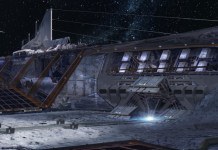
Where once the space race meant which superpower would get to the moon first, now the countries of the world are racing to build the first lunar base. Already the European Space Agency, or the ESA, have an agreement with China to build a joint moon station. When you include intentions to partner with private corporations, these agencies obviously have a clear picture of the space exploration plans.
At the same time, NASA and the Trump administration are leaning towards private corporations like Space X and investment groups focusing on building communities on the moon.
Ultimately, the goal for all the agencies and the main driving force for establishing a moon base in the first place is to send a manned mission to Mars. From the NASA Scope and Subject Category Guide indicates what parts of the moon will be built up in their plans and the Space Technology Roadmap lists the many projects it will work on to get there. The Deep Space Gateway, an orbiting spaceport, looks promising for a first start. Plus the smart robots which will build on the moon while also producing electricity send back to Earth.
With plans for an inflatable greenhouse for sustainable farming on the moon in the works too, there will have plenty of activity during our days on the moon. Published in the journal New Space, a new paper from NASA states its full lunar station plans that rely heavily on the work already done for the International Space Station, or ISS. Specifically learning from the architecture of the station, the next steps will be developed in low-earth-orbit space, also called LEO.
As previously mentioned, the lunar station will be a stepping stone on the way to Mars and therefore will be a testing ground for new technologies that will help complete the journey to Mars, and perhaps spur settlements there too.
The authors of the paper Robert Bruce Pittman, Mark E. Newfield, Daniel J. Rasky, and Lynn D. Harper addressed this in their paper: “It “Lunar Station” can provide a testing and prove ground for a variety of important advanced technologies and capabilities, including robotics, ISRU, resource depots, deep-space crew habitats, closed-loop life support, in-space propulsion, optical communication, and space-additive manufacturing [further elaborating that] the Lunar Station will give our space program a much-needed logical next step to strengthen its relevance to the US public, its leadership in the international community, and its technical cutting edge.”
Initially expected to be fully operational in five years, Lunar Station will cost about $2 billion a year. Once constructed, the Station will crew up to 10 people much in the same way as ISS and allow a much wider cooperative effort to support scientific work as well as commercial ends.
The paper further states that: “The Lunar Station community would jointly develop and share infrastructure as well as separately develop and own specific capabilities […] Activities would range from scientific research and technology development to resource mining and processing and human exploration of the Moon and even tourism.”
Although this latest NASA releases may disappoint those excited about the possibility or Mars colonization occurring soon stations and experiments on the moon must be the first step. As a matter of course, space exploration and development is risky, and the moon offers a perfect opportunity safely test technology before we move on to deeper space.
More News to Read
- Betfair to Take UK Drone Racing Bets
- Horizon Machine: Smart Tech to Fix Cracked iPhone Screens
- Another New Explanation For Dark Matter
- Amazon’s Purchase of Whole Foods Could Spell Dramatic Changes for Traditional Supermarkets
- Algae May Replace Fossil Fuels
Related Coverage
- Mars Base Camp Plans Underway for NASA
- Latest ESA Research Leads to Better Cameras for Precision Agriculture
- SpaceX Competition Brings More Than Just City Plans to Mars
- Is it Really Possible to Create a Livable Atmosphere Up on the Moon?
- Netflix Became One of the Biggest Online Streamers in the World
Don't miss new tech stories on Google
Add TrendinTech once in the Google app and our stories appear in your news suggestions.
Yusuf Demir
Yusuf Demir is the Cloud & Software Reporter at TrendinTech, where he covers cloud infrastructure, enterprise platforms, developer tools and the digital transformation of businesses in the UK and the United States. He previously reported on enterprise technology for The Register in London and covered the cloud and SaaS beat for TechCrunch, following the competition between AWS, Microsoft Azure and Google Cloud, the open source licensing disputes and the rise of Kubernetes. Yusuf holds an MEng in Computing from Imperial College London and speaks regularly at KubeCon and AWS re:Invent, where he moderates conversations with engineers and chief technology officers. He is most interested in the gap between vendor roadmaps and the systems engineers actually run, and in what the cloud bill looks like once the free credits expire.
All stories by Yusuf Demir (294)