
New Laser System Upgrade Allows Scientists to Explore Fusion Energy and Plasma Physics Like Never Before
Despite extensive research carried out over the past few years, plasma physics is still a subject of great mystery. However, thanks to a new laser system upgrade completed by scientists at the Department of Energy’s SLAC National Accelerator Laboratory, physicists can now triple the amount…

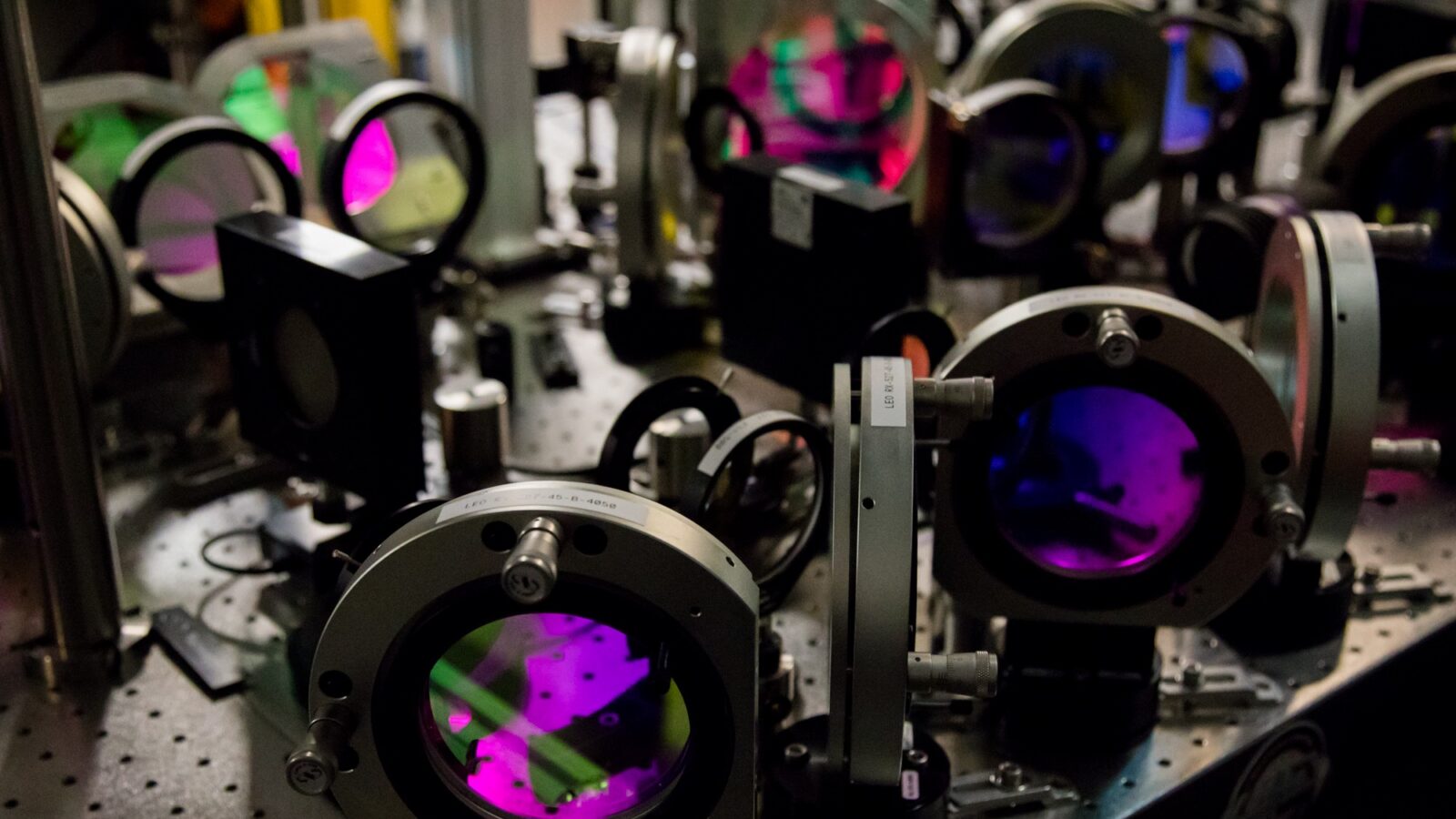
Despite extensive research carried out over the past few years, plasma physics is still a subject of great mystery. However, thanks to a new laser system upgrade completed by scientists at the Department of Energy’s SLAC National Accelerator Laboratory, physicists can now triple the amount of energy in the Matter in Extreme Conditions (MEC) instrument. In doing so it allows them to create the extreme high-pressure conditions needed to really explore these areas.
The MEC instrument is made up of optical and x-ray lasers that work together to create and capture extreme temperature and pressure conditions in materials. Using the same technology, researchers have also looked into how meteor impacts shocking the minerals of the Earth’s crust can turn aluminum foil into plasma.
Having received funding from the Office of Fusion Energy Services (FES) the team in charge of the MEC instrument were able to double the amount of energy produced by the optical beam in 10 nanoseconds. “The team exceeded our expectations, and exciting accomplishment for the DOE High Energy Density program and future MEC instrument users,” remarks Kramer Akli, program manager for High Energy Density Laboratory Plasma at FES.
Some of the other laser system upgrades included a new front-end and the addition of an automated system to help shape the laser pulses with extreme precision. Doing so will enable users to have much greater control over the shape of the pulse they’d like to use in their experiments. A more intense and reliable laser allows researchers to study fusion energy in conditions that are more relevant.
There are many different researchers across the world taking advantage of the MEC upgrade, including mechanical engineering doctoral student, Shaughnessy Brennan Brown. “The MEC upgrade at LCLS enables researchers like me to generate exciting, previously-unexplored regimes of exotic matter – such as those found on Mars, our next planetary stepping stone – with crucial reliability and repeatability,” she says.
The role of the optical laser is to amplify a low-power beam gradually until it reaches an extremely high energy level. However, as the laser beam is amplified it becomes much poorer quality and harder to control, making it pretty unreliable to use in test conditions. “The initial low energy pulse must have a pristine spatial mode and the properly configured temporal shape – that is, a precise sculpting of the pulse’s power as a function of time – before amplification to produce the laser pulse characteristics needed to enable each users’ experiment,” says the MEC Laser Area Manager, Michael Greenberg.
Before the upgrade, any adjustments to achieve the right energy and pulse shape for each target would have had to been done manually, which was very time-consuming. Now, with thanks to MEC laser scientist, Eric Cunningham, the team have an automated system to use that can shape the low-powered beam before it gets amplified. “The new system allows for precise tailoring of the pulse shape using a computerized feedback loop system that analyzes the pulses and automatically re-calibrates the laser,” says Cunningham. As well as improving pulse shapes, it’s also more consistent at depositing energy on samples, and as a result, both efficiency and quality are vastly improved.
- New Frequency Hopping Transmitter Defies Even the Fastest Hackers
- Are New Mars Rocks Shielding Secrets about Alien Life 4 Billion Years Ago?
- UCLA Scientists Report Their Deepest Understanding Yet of the Enzyme Telomerase
- New Fuel Reducing Ship Coating Could Save the U.S. Navy Millions of Dollars
- MIT Researchers Create New Way of Enhancing Light and Matter Interactions
Related Coverage
- World’s Largest Stellarator Attracts PPPL Physicists to Campaign
- Next Generation Fuel Cells Could Soon Be Here Thanks to Graphene and Nanocrystals
- Scientists Developed A Stem Cell Repair System
- How to Make a Supercomputer?
- Hyperloop Technology For Shipping Cargos
Don't miss new tech stories on Google
Add TrendinTech once in the Google app and our stories appear in your news suggestions.
Rachel Kowalski
Rachel Kowalski is the Cybersecurity Analyst at TrendinTech, where she covers vulnerabilities, ransomware, supply chain attacks, nation-state operations and the security rules shaping organizations in the United States and Europe. Before moving into journalism she worked as a threat intelligence analyst at a security vendor and later reported for CyberScoop and the security desk at Wired, covering the SolarWinds compromise and the ransomware wave that hit hospitals and pipelines. Rachel holds a Master of Science in Cybersecurity from the Georgia Institute of Technology and attends Black Hat and DEF CON in Las Vegas each year, where she follows research from the security community. She writes to make risks and countermeasures understandable to people who are not specialists.
All stories by Rachel Kowalski (214)