iPhone Duo Debuts at $1,999 After Gurman’s Rebuke [2026]

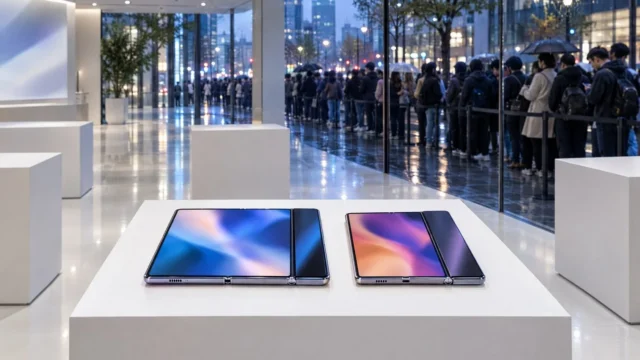
Apple’s first foldable iPhone reaches store shelves on Friday, October 23, priced from $1,999 in the United States and £1,999 in the United Kingdom, capping one of the most turbulent pre-order weeks in the company’s history. Apple confirmed on October 21 that walk-in inventory for the iPhone Duo would be limited even in the countries where it ships first, and Bloomberg journalist Mark Gurman has already delivered the harshest verdict of the launch: that Apple made what he called a “major mistake” by opening pre-orders before it had enough units to meet demand.
The iPhone Duo launch now stands as a case study in how a premium hardware debut can go sideways within minutes, even when the underlying demand is real. Within half an hour of pre-orders opening at 5 a.m. Pacific Time on October 16, delivery estimates for every configuration had slipped past the October 23 launch date, first into November, then into January 2027, according to MacRumors. What follows is a breakdown of what actually happened, what Apple has confirmed, and what the supply crunch means for the broader foldable phone market heading into 2027.
Don't miss new tech stories on Google
Add TrendinTech once in the Google app and our stories appear in your news suggestions.
What Apple Confirmed for iPhone Duo’s October 23 Launch
Apple’s official line on iPhone Duo launch day is narrower than the hype that preceded it. The company has confirmed that walk-in inventory will be available in just 14 markets on October 23: the United States, Australia, Austria, Belgium, Canada, Mexico, Germany, the Netherlands, Singapore, Spain, Sweden, Switzerland, Turkiye, and the United Kingdom. Even in those markets, Apple has not said how many units each store will carry, and it has told retail staff that quantities for customers without a reservation will be small.
Italy and Macao are also expected to receive some walk-in stock on launch day, though Apple has not identified which specific stores will have units, according to The Apple Post. Apple’s online store has pointed customers back to October 24 for a possible second wave of pickup availability, but the company has not guaranteed that any new stock will actually appear. A broader rollout to 28 additional countries and regions is scheduled for October 30, a full week after the initial launch.
For a device Apple unveiled on September 9 as its first foldable iPhone, the gap between announcement and actual retail availability has been unusually bumpy. iPhone Duo pricing starts at $1,999 for 256GB, climbing to $2,199 for 512GB, $2,599 for 1TB, and $3,199 for the top 2TB configuration. Apple is also offering the device on an Apple Upgrade lease starting at $57.99 a month for 24 months, before taxes and trade-in credit.
Gurman’s “Major Mistake” Critique, in Context
The sharpest line of the week came from Mark Gurman, who covers Apple for Bloomberg. Writing in his Power On newsletter and reported by MacRumors on October 18, Gurman said: “Let me cut to the chase: Apple made a major mistake here.” His argument was not that iPhone Duo itself is a bad product. It is that Apple knew, going in, that the device would face what Gurman described as “severe supply constraints” caused by manufacturing challenges, and chose to open pre-orders on October 16 anyway rather than wait until inventory could better match demand.
That decision set up a predictable outcome. Customers who tried to order iPhone Duo in the opening minutes still ended up with delivery dates stretching into next year, which is a frustrating experience for anyone paying close to $2,000 for a phone. Apple itself had signaled the risk ahead of time. In its own pre-order guidance to customers, the company said simply that “demand will be high,” a warning that proved accurate but did little to prepare buyers for a four-month wait. Apple’s public response to the backlash that followed leaned on positive framing rather than an apology. In a statement given to CNBC, Apple said: “We are working hard to get this revolutionary new product into customers’ hands as quickly as possible, and we will continue accepting orders online.”
Gurman’s criticism matters because it reframes the story. Apple has spent the past week allowing reporters and customers to describe the shortage as a byproduct of “extraordinary” demand, a framing that implicitly credits the company for building something people want badly enough to wait months for. Gurman’s rebuke flips that script: the problem was not that too many people wanted iPhone Duo, it was that Apple already knew supply would fall short and proceeded with the pre-order rollout regardless.
Inside the Supply Chain Squeeze
Apple has not detailed exactly why iPhone Duo production fell short of launch-week demand, and reports pointing to a complex hinge assembly or the foldable display as the specific bottleneck remain unconfirmed by Apple itself. What is confirmed is that Apple spent October 20 publicizing new American manufacturing partnerships tied directly to iPhone Duo, including Perryman Company, a Pennsylvania titanium supplier contributing to the device’s grade 5 titanium enclosure, and Qnity Electronics for other components. Apple separately disclosed a $100 million commitment tied to Perryman’s expanded titanium production, a move that reads as an attempt to shore up a material supply chain under visible strain during the exact week the Duo launch was wobbling.
Apple also said nearly 100 components across iPhone Duo and iPhone 18 Pro now come from U.S.-based suppliers, and that the titanium used in iPhone Duo’s enclosure contains at least 80 percent recycled content. None of that manufacturing news, however, appears to have materially changed the inventory picture by launch day. The timing suggests Apple was working to expand supply in real time even as it kept pre-orders open, rather than pausing sales to fix the shortfall first, which is precisely the sequencing Gurman flagged as a mistake.
The Order-Limit Response
Apple’s most direct acknowledgment that supply could not keep pace with demand came on October 20, when it capped U.S. customers at two iPhone Duo units per order, a restriction first reported as shortage bites into available stock. Japan went a step further, temporarily requiring reservations for any retail purchase rather than allowing walk-in sales at all. Purchase limits of this kind are one of the clearest signals a company can send that it expects demand to outstrip supply for an extended stretch, since healthy inventory rarely requires rationing by the unit.
The Week in Numbers: A Timeline of a Launch Going Sideways
The speed of the slide from “available” to “backordered into 2027” is itself part of the story. According to 9to5Mac, every color and storage combination showed an estimated ship date of January 25 by 8:30 a.m. Eastern Time on pre-order day, just over three hours after sales opened. The table below lays out how the launch unfolded, day by day, from Apple’s September unveiling through the October 23 retail debut.
| Date | Event |
|---|---|
| September 9, 2026 | Apple unveils iPhone Duo as its first foldable iPhone |
| October 16, 2026, 5:00 a.m. PT | Pre-orders open; delivery estimates begin slipping within minutes |
| October 16, 2026, 8:30 a.m. ET | All configurations show a January 25, 2027 ship date |
| October 17, 2026 | Apple retail staff told to warn against walk-in purchase attempts |
| October 18, 2026 | Mark Gurman calls the pre-order rollout a “major mistake” |
| October 20, 2026 | Apple caps U.S. orders at two units; announces Perryman and Qnity manufacturing deals |
| October 21, 2026 | Apple confirms limited walk-in stock in 14 markets for launch day |
| October 23, 2026 | iPhone Duo officially launches at $1,999 (US) / £1,999 (UK) |
| October 30, 2026 | iPhone Duo expands to 28 additional countries and regions |
Pricing and Configurations: What $1,999 Actually Buys
Beyond the supply drama, iPhone Duo represents a real jump in what Apple charges for its flagship hardware. The base 256GB model opens the lineup at $1,999, which is already $700 more than the iPhone 18 Pro Max at the top of Apple’s conventional lineup. Storage scales up quickly from there, with the 2TB model landing at $3,199. In the United Kingdom, the starting price mirrors the dollar figure in pounds at £1,999, and Apple’s Ireland newsroom lists a starting price of €2,369.
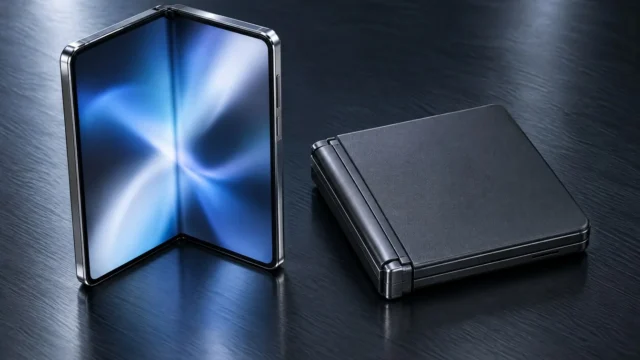
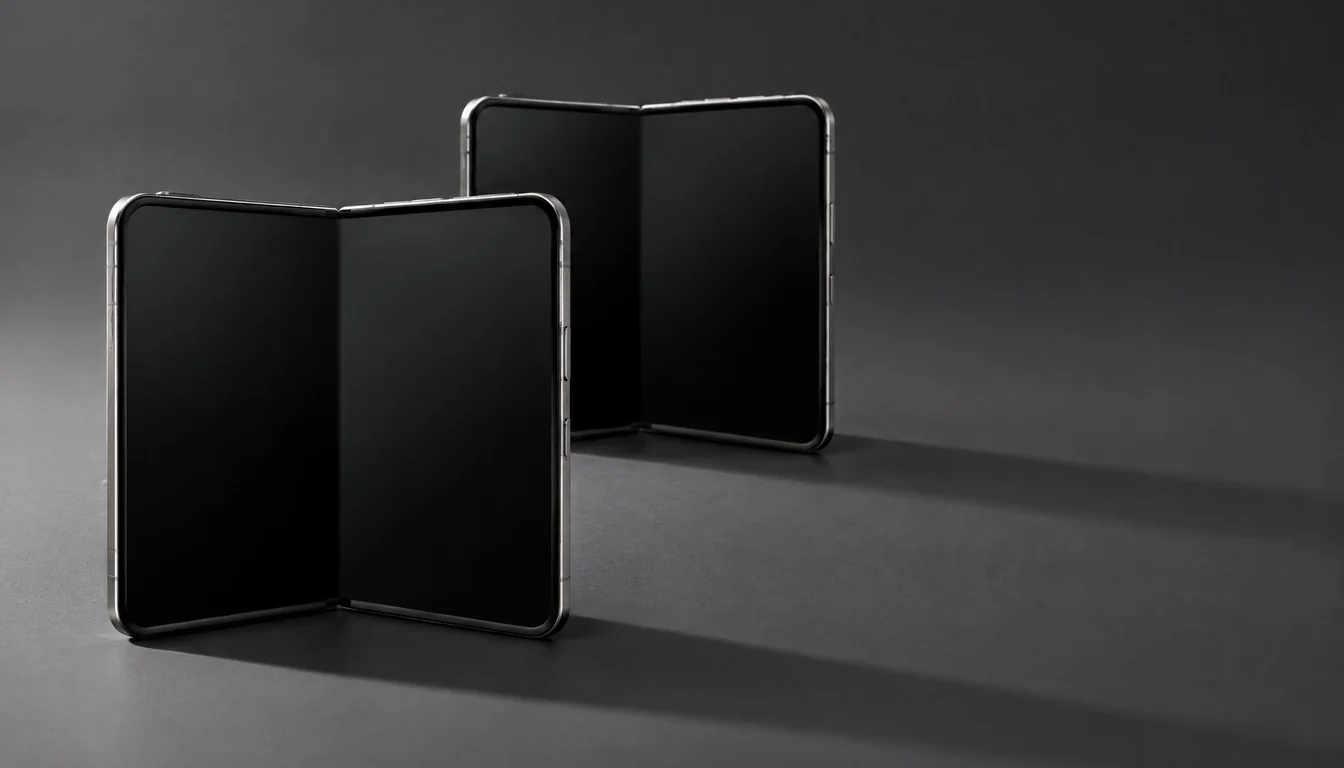
The device itself features a 7.6-inch Super Retina XDR folding inner display with a nano-texture finish and a 5.4-inch Super Retina XDR outer display, housed in a grade 5 titanium enclosure available in star white and night sky. Apple’s spec sheet also touts up to 31 hours of video playback on the inner display, roughly 50 percent charge in about 20 minutes with fast wired charging, and support for MagSafe wireless charging. Dedicated accessories include a $79 iPhone Duo Case and a $129 Folio with Kickstand in the U.S., priced at €89 and €149 respectively in Ireland.
| Storage | US Price | Apple Upgrade Lease |
|---|---|---|
| 256GB | $1,999 | From $57.99/mo for 24 months |
| 512GB | $2,199 | Scales above base lease rate |
| 1TB | $2,599 | Scales above base lease rate |
| 2TB | $3,199 | Scales above base lease rate |
Apple is also leaning on trade-in incentives to soften the sticker shock. Customers trading in an iPhone 13 or newer can receive between $175 and $885 in credit toward iPhone Duo, while carrier credits run as high as $1,200 at AT&T, $1,000 at T-Mobile, and $840 at Verizon. Those numbers matter for a launch this supply-constrained, since financing and trade-in paperwork are exactly the kind of friction that can cost a customer their spot in the delivery queue when inventory is this thin.
Where Walk-In Stock Will and Won’t Exist
The walk-in question has driven more reader anxiety than almost any other part of this launch, and for good reason. Apple retail staff were told as early as October 17 to warn customers against showing up expecting to buy iPhone Duo on the spot, according to MacRumors reporting on internal store guidance. That guidance softened only slightly by October 21, when Apple confirmed that some stock would exist for walk-in customers, but strictly in the 14 markets named above, and strictly in limited quantities.
Customers outside those 14 markets have no confirmed path to walk-in purchase on October 23 at all. Japan’s reservation requirement is the clearest example of Apple abandoning the traditional first-come, first-served retail model entirely for this launch, a step the company has not needed to take for a mainline iPhone release in recent years. The practical upshot: anyone who did not already secure a pre-order slot in the opening minutes of October 16 is now competing for a shrinking pool of walk-in units spread across a short list of countries, with no guarantee of success even after waiting in line.
Market Impact: How Wall Street and Analysts Are Reading the Shortage
A constrained launch cuts two ways for Apple’s business. On one hand, every unit Apple fails to ship this quarter is revenue pushed into a later reporting period, which matters for a company that leans heavily on iPhone sales for its overall results. On the other hand, a visibly oversubscribed launch, even one caused by Apple’s own planning, tends to reinforce the idea that the product itself is desirable, which is a dynamic Apple has benefited from during past constrained launches of high-end hardware.
The risk Gurman has pointed to is reputational rather than purely financial in the near term. Customers who pre-ordered expecting an October 23 delivery and instead received a January 25, 2027 estimate are the customers most likely to cancel, switch to a competing foldable, or simply wait for next year’s version rather than stay in the queue. That is a meaningfully different outcome than a shortage that simply delays gratification by a few weeks. Analysts have already split over how a reported 6 million-unit production crunch for iPhone Duo’s remaining 2026 run will affect Apple’s fiscal first quarter, since much of that demand is likely to simply convert into fiscal second quarter revenue instead of disappearing outright.
Historical Context: Apple Has Been Here Before
Apple’s history includes several launches where early demand outran initial supply, though rarely to the degree now unfolding with iPhone Duo. The original iPhone 4 in 2010 sold out its initial run within hours. iPhone X in 2017 arrived with wait times stretching past five weeks for some configurations after its November launch, driven by the complexity of manufacturing its then-new TrueDepth camera system. Apple Watch’s 2015 debut saw similarly long waits tied to new assembly processes.
What distinguishes iPhone Duo is the combination of a record-high price point with a delivery slip measured in months rather than weeks, arriving on a brand-new product category for Apple rather than an incremental update to an established line. Apple has never before pushed a flagship iPhone’s shipping estimate into the following calendar year within the first morning of pre-orders. That is the specific data point underpinning Gurman’s “major mistake” framing: previous Apple supply crunches were typically read as evidence of runaway demand, while this one is increasingly being read as evidence of a planning failure Apple could have avoided by delaying the pre-order date.
Competitive Comparison: Where iPhone Duo Sits in the Foldable Market
iPhone Duo enters a foldable phone category that Samsung and Google have already been selling into for several years, though Apple’s version is distinct in both form factor and price. At $1,999 to start, iPhone Duo is priced well above the going rate for most competing book-style foldables, positioning Apple’s first entry as a premium flagship rather than a mass-market play. That pricing strategy mirrors how Apple entered other mature categories late, such as wireless earbuds and smartwatches, by charging a premium rather than competing on price from day one.
The bigger competitive question is supply execution rather than specs. Samsung has spent multiple generations refining its foldable manufacturing and retail availability, generally avoiding the kind of months-long delivery slip now facing iPhone Duo buyers. If Apple cannot resolve its production bottleneck before the broader October 30 international rollout, competitors have a real opening to pitch foldable buyers on availability as much as on specifications, a message that resonates especially strongly with customers who have already waited once this month only to see their estimated delivery date move again.
The Developer and Software Angle
iPhone Duo’s hardware delay has a quieter counterpart on the software side. Apple has maintained a dedicated developer resource at developer.apple.com encouraging third-party teams to prepare their apps for the device’s dual-display, foldable layout well ahead of general availability, a step Apple does not take lightly for a brand-new form factor. Developers adapting existing apps to the 7.6-inch inner display and 5.4-inch outer display face layout challenges that go beyond a simple screen-size bump, since app interfaces need to behave sensibly whether the device is folded, unfolded, or mid-transition.
That software readiness work continues regardless of how constrained physical inventory is at launch, which means the developer ecosystem around iPhone Duo will likely mature faster than the retail supply chain does. For readers tracking the broader toolchain and platform side of major hardware launches like this one, ongoing coverage of app development and platform tooling trends is available in TrendinTech’s software coverage.
What Comes Next: Five Predictions for iPhone Duo’s First Month
- Delivery estimates will likely improve gradually rather than suddenly, with Apple working through its backlog in waves tied to component availability rather than a single large inventory release.
- Expect additional purchase restrictions, reservation requirements, or regional allocation changes in markets beyond Japan if walk-in demand overwhelms the 14 confirmed launch markets on October 23.
- The October 30 expansion to 28 additional countries and regions is likely to repeat the same pattern seen on October 16, with early sellouts and quickly slipping delivery windows in at least some of those markets.
- Scrutiny of Apple’s American manufacturing partnerships, including the Perryman titanium deal, will intensify if those partnerships fail to visibly improve iPhone Duo inventory within the next several weeks.
- Gurman’s “major mistake” framing is likely to shape how analysts and reporters describe Apple’s next constrained launch, raising pressure on Apple to either delay future pre-order dates until supply is ready or communicate shortages more directly before orders open.
Why This Launch Matters Beyond iPhone Duo
The iPhone Duo situation is a useful test of how much goodwill a premium brand can spend on a rocky launch before customers start walking away rather than waiting. Apple’s $1,999 starting price already asks buyers to trust that the company can deliver a flawless, premium experience. A four-month round trip between placing an order and receiving the device undercuts that trust in a way that a smaller, shorter delay would not. Whether Apple treats this as a one-time stumble tied to a genuinely new manufacturing process, or as a repeatable pattern for future foldable generations, will likely define how skeptically the next iPhone Duo launch gets covered.
For now, the headline numbers tell their own story: a $1,999 phone, a 14-market walk-in launch, a purchase limit of two units per order, and a Bloomberg reporter willing to call the whole sequence a mistake in print. Apple will have more chances to correct course before the October 30 international expansion, but the opening week of iPhone Duo has already become the reference case for what happens when demand, pricing, and manufacturing capacity do not line up on launch day.
Frequently Asked Questions
When does iPhone Duo officially launch?
iPhone Duo officially launches on Friday, October 23, 2026, in 14 confirmed markets with limited walk-in inventory, following pre-orders that opened on October 16.
How much does iPhone Duo cost?
iPhone Duo starts at $1,999 for 256GB in the United States and £1,999 in the United Kingdom, rising to $2,199 for 512GB, $2,599 for 1TB, and $3,199 for 2TB. Apple also offers a lease option starting at $57.99 a month for 24 months.
Why did Mark Gurman call the iPhone Duo launch a “major mistake”?
Gurman argued that Apple knew iPhone Duo would face severe supply constraints from manufacturing challenges but chose to open pre-orders on October 16 anyway, rather than waiting until inventory could better match demand, a decision that led delivery estimates to slip to January 2027 within minutes of sales opening.
Will Apple Stores have iPhone Duo available for walk-in purchase?
Apple confirmed limited walk-in inventory for October 23 in 14 markets: the United States, Australia, Austria, Belgium, Canada, Mexico, Germany, the Netherlands, Singapore, Spain, Sweden, Switzerland, Turkiye, and the United Kingdom, plus some stores in Italy and Macao. Quantities without a reservation are expected to be small, and Japan requires reservations rather than offering walk-in sales.
Why are iPhone Duo delivery estimates so far out?
Delivery estimates for every iPhone Duo configuration slipped to January 25, 2027 within roughly three hours of pre-orders opening on October 16, as initial allocation sold out faster than Apple’s production could replenish it. Apple capped U.S. orders at two units per customer on October 20 as part of its response.
When will iPhone Duo reach more countries?
Apple has scheduled an expansion to 28 additional countries and regions on October 30, one week after the initial October 23 launch in the first 14 confirmed markets.
Is iPhone Duo Apple’s first foldable iPhone?
Yes. Apple unveiled iPhone Duo on September 9, 2026 as its first foldable iPhone, featuring a 7.6-inch folding inner display and a 5.4-inch outer display in a titanium enclosure.
Related Coverage
Owen Castellanos
Owen Castellanos is the Hardware & Gaming Reporter at TrendinTech, where he tests graphics cards, processors, consoles and peripherals and follows the games industry, from the major publishers to independent studios. He writes for readers who want to know whether a product is worth the money, and he is not shy about saying when it is not.
All stories by Owen Castellanos (152)