
Engineers Develop World’s Most Functional and Flexible Transistor
As well creating the most functional, flexible transistor in the world, the team at the University of Wisconsin-Madison has also come up with a new process in which to fabricate them.

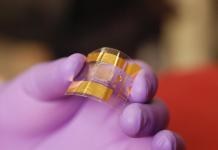
As well creating the most functional, flexible transistor in the world, the team at the University of Wisconsin-Madison has also come up with a new process in which to fabricate them. It’s simple, fast, and inexpensive and a method that could easily be scaled up to a commercial level.
This kind of advancement could lead to other exciting applications involving ‘smart’ wireless technology, including things like wearable sensors and computers that can stretch, bend, and curve. Transistors are a key component in modern electronics, and this new advancement looks to change a standard that’s been in place for the past two decades. It’s a BiCMOS (bipolar complementary metal oxide semiconductor) transistor that brings together two types of technologies on one platform.
The devices that use both analog and digital capabilities are ideal for many portable electronics used today including cell phones. “The industry standard is very good,” says Zhenqiang (Jack) Ma, the Lynn H. Matthias Professor and Vilas Distinguished Achievement Professor of electrical and computer engineering at UW-Madison. “Now we can do the same things with our transistor – but it can bend.”
Traditionally, making BiCMOS flexible takes several months, partly because of the number of steps involved. With Ma’s new method, the team cut this time down considerably by fabricating their flexible electronics on a single-crystal silicon nanomembrane on a solitary piece of bendable plastic. “In industry, they need to finish these in three months,” says Ma. “We finished it in a week.” Ma is quite confident that the process is ready to be scaled for commercial use now.
More News to Read
- New Joint Initiative Between Imperial and Kings College London Boosts Artificial Cell Design
- Check Out New Features of Mars Rover 2020
- Astronomers Image Material That Obscures Black Holes
- A New Concept of Terrestrial Planet Formation Proposed
- Hydrogel Casts Could Become the New Way to Control Bleeding Disorders
Related Coverage
- 5 Ways to Improve Your Construction Management – Software Included
- Engineers Develop Nanoscale Optical Quantum Memory Chip
- 4 Key Wrike Integrations
- Fast Custom Made Robots Made in a Number of Minutes
- China’s New Type of Quantum Computing Device, Built Inside a Diamond
Don't miss new tech stories on Google
Add TrendinTech once in the Google app and our stories appear in your news suggestions.
Helena Marsh
Helena Marsh is the Editor-in-Chief at TrendinTech, where she leads editorial strategy and oversees coverage across artificial intelligence, cybersecurity and enterprise technology. With more than a decade in technology journalism on both sides of the Atlantic, she previously served as a senior editor at Wired UK and covered the technology sector for The Guardian, following the rise of the big platforms, the Cambridge Analytica scandal and the regulatory push from Brussels and Washington. Helena holds an MA in Journalism from City, University of London and is a regular speaker at Web Summit in Lisbon and CES in Las Vegas. She believes technology reporting should be rigorous and plainly written, so readers understand what actually changes for them rather than what a company's announcement promises.
All stories by Helena Marsh (201)