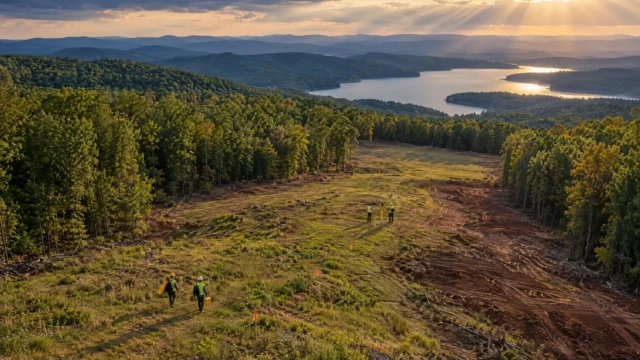
Wiikwemkoong Data Center Cuts 305 KM Microsoft Tie [2026]

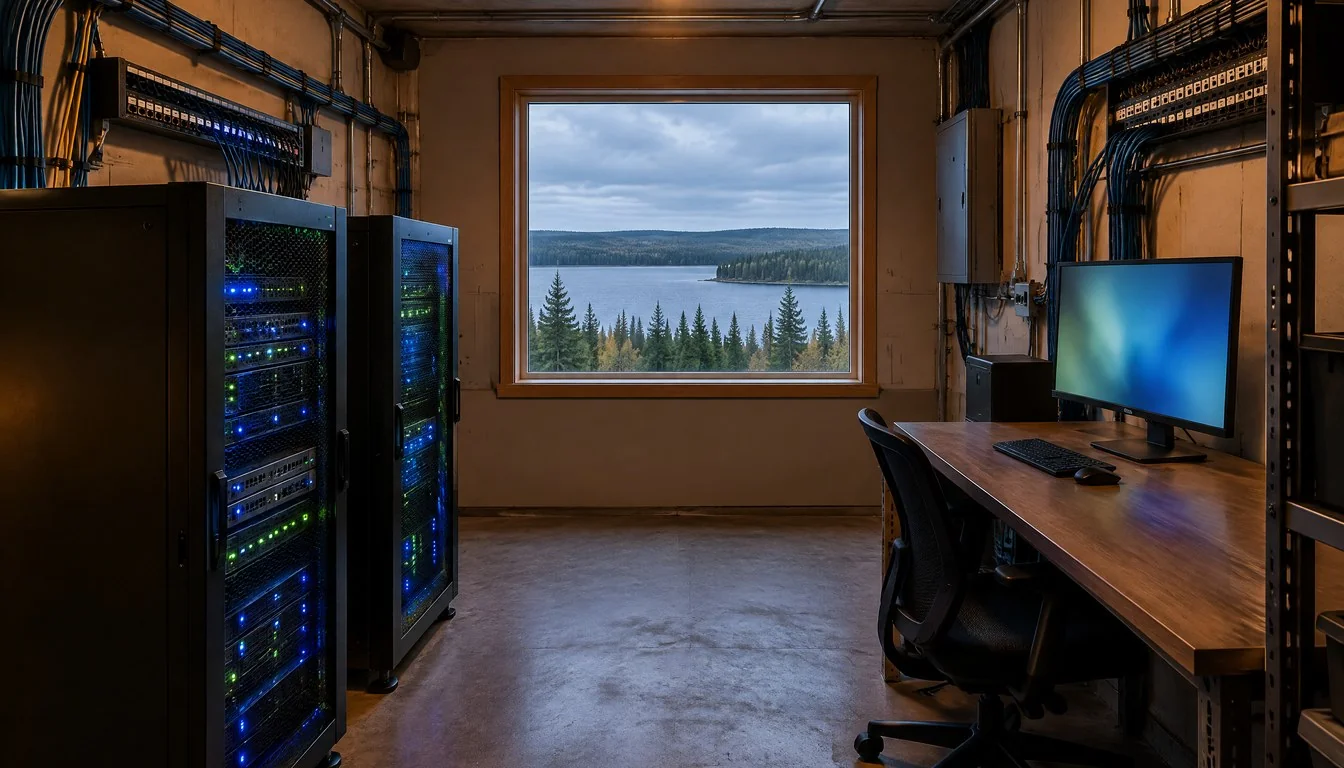
A First Nation community in rural Ontario has built its own data center, and the project is being read across Canada as a case study in indigenous data sovereignty. The Wiikwemkoong Unceded Territory installed a small facility in 2025 to store Anishinaabe language recordings, corporate records, residents’ health data and security camera footage, according to reporting published October 21, 2026 by BNN Bloomberg. The community has been migrating that information away from a Microsoft data center in Toronto, roughly 305 kilometres south of Wiikwemkoong, and putting it under local control instead.
The story has spread quickly through Canadian and international outlets this week, and it lands at an interesting moment for the cloud computing industry. Governments and telecoms across the country are racing to build sovereign cloud and AI infrastructure, often on or near Indigenous land, frequently without consulting the communities who live there. Wiikwemkoong’s approach runs the opposite direction: a community-owned, garage-sized facility built specifically so one First Nation can hold its own records, its own health data, and its own language on its own terms.
Don't miss new tech stories on Google
Add TrendinTech once in the Google app and our stories appear in your news suggestions.
A Garage-Sized Data Center on Treaty Territory
The Wiikwemkoong data center is physically modest. Reporting describes it as roughly the size of a single-car garage, installed in 2025 as part of a broader modernization of the community’s recordkeeping systems. It is a far cry from the gigawatt-scale AI data centers dominating cloud computing headlines this year, and that is largely the point. Wiikwemkoong did not set out to compete with hyperscale cloud providers. It set out to stop depending on one.
Inside the facility, the community stores four categories of information: video recordings of Anishinaabe speakers, corporate and administrative documents, residents’ health records, and security camera footage. That mix matters. It means the data center isn’t a single-purpose archive. It is simultaneously a language preservation tool, a records office, a health data repository and a public safety backbone, all run by the same small team on the same small footprint of hardware.
Michael McCormick, Wiikwemkoong’s chief technical officer, has said he believes it is the only data center on Indigenous territory in Canada, according to the October 21 report. That claim has not been verified against any national registry, and no government or industry body appears to track data center ownership by Indigenous status. Still, the fact that a community technical officer felt confident making the claim says something about how rare locally owned cloud infrastructure still is on First Nations land in Canada.
Why Wiikwemkoong Built Its Own Cloud Infrastructure
The trigger goes back to 2022. A flood that year caused the loss of digital records that had been scattered across different Wiikwemkoong offices rather than centralized, according to the BNN Bloomberg report. Records distributed across multiple buildings, with no unified backup, are vulnerable in a way that centralized systems are not, and the flood exposed that vulnerability directly. It became the catalyst for a multi-year push to modernize how the community stores and protects its information.
That history fits a pattern familiar to anyone who has watched the cloud computing sector respond to disaster risk: organizations that lose data once rarely want to repeat the experience, and many respond by consolidating rather than scattering their systems further. What makes Wiikwemkoong’s response distinctive is the direction it took. Rather than simply centralizing records inside a larger third party cloud provider, which would have been the conventional move, the community chose to build and operate its own physical infrastructure.
Indigenous data sovereignty, the principle that First Nations, Inuit and Métis communities should control data about their own people, lands and culture, has been a growing policy conversation in Canada for several years. Wiikwemkoong’s data center turns that conversation into physical infrastructure: server racks, cooling systems and access controls sitting on the community’s own unceded territory rather than in a commercial facility hundreds of kilometres away.
From Microsoft’s Toronto Servers to Local Control
Before the local facility existed, Wiikwemkoong’s information sat in a Microsoft data center in Toronto. The community has been transferring that information out, moving it roughly 305 kilometres north to the new, locally controlled facility. The specific Microsoft product or service that hosted the data was not identified in the available reporting, so it is worth being careful not to overstate the connection: this is not described as a dispute with Microsoft, nor as a security incident. It reads as a deliberate, planned migration toward local ownership.
The timing is notable given what Microsoft has been doing elsewhere in its own sovereign cloud business. The company has spent 2026 expanding what it calls Microsoft Sovereign Cloud, a portfolio spanning public cloud, private cloud and partner-run deployments aimed at governments and regulated industries that want more control over where and how their data is processed. Microsoft has also been promoting Azure Local and Azure Arc as tools for managing workloads across data centers, edge locations and sovereign deployments from a single control plane. None of that infrastructure is confirmed to be connected to the Wiikwemkoong case specifically, but it shows that even the largest cloud providers are responding to the same pressure that pushed Wiikwemkoong toward self-hosting: a demand for data to stay closer to the people it describes. Microsoft itself has pulled back from at least one large external data center partnership this year, a reminder that even the biggest cloud names are still adjusting where and how they commit to new infrastructure.
Moving data away from a hyperscale provider and onto self-managed, local hardware is also a trend playing out well beyond Indigenous communities. Enterprises weighing the economics of cloud infrastructure costs have increasingly asked whether centralized, pay-as-you-go cloud computing is always the right answer, or whether certain workloads belong closer to home. Wiikwemkoong’s answer, for its most culturally sensitive records at least, was local.
Preserving the Anishinaabe Language in Code
The cultural stakes of the project are arguably higher than the technical ones. Wiikwemkoong’s data center stores video recordings of fluent Anishinaabe speakers, a resource the community considers irreplaceable as elders and knowledge keepers age. Chief Tim Ominika has spoken directly about why that matters.
“Our language is one of the biggest things that most First Nations across the country are losing,” Ominika said, according to The Globe and Mail.
He described the data center’s role in concrete terms, tying the infrastructure directly to generational continuity. “We will have our knowledge keepers, our language speakers who may be moving on to the spirit world, but their legacy is still going to be protected for many years to come by having our own data systems in place and protecting that,” Ominika said.
That framing separates this project from a typical IT upgrade. A corporate data migration is usually judged on uptime, cost and security. Wiikwemkoong’s data center is also being judged on whether it can keep a living language alive after the people who speak it fluently are gone. Video recordings of elders speaking Anishinaabe are not easily replaced if lost, which raises the stakes of where, and under whose control, that footage is stored considerably higher than a typical records migration.
Public Safety Gets a Digital Upgrade Too
Language preservation is only part of what the data center enables. The same modernization effort that produced the facility has also supported new public safety infrastructure, including a drone fleet and a network of security cameras, according to the October 21 reporting. Those systems depend on the same local storage and processing capacity that houses the language recordings and health records, which is one reason the project is being described as foundational infrastructure rather than a single standalone archive.
Combining health records, administrative documents, surveillance footage and cultural archives inside one community-run facility raises its own set of questions around access controls, retention policies and who within the community can view what. Reporting on the facility has not detailed those governance mechanisms in depth, so it is worth treating Wiikwemkoong’s internal data governance as a developing area rather than a fully settled one. What is confirmed is that the drone and camera systems represent a meaningful expansion of the community’s own technical capacity, built on top of infrastructure that didn’t exist before 2025.
Wiikwemkoong Data Center at a Glance
| Detail | Reported fact |
|---|---|
| Location | Wiikwemkoong Unceded Territory, rural Ontario |
| Installed | 2025 |
| Physical size | Approximately the size of a single car garage |
| Previous host | Microsoft data center in Toronto, roughly 305 kilometres south |
| Stored data | Anishinaabe language recordings, corporate documents, health data, security footage |
| Trigger event | 2022 flood that caused loss of scattered digital records |
| Community chief | Tim Ominika |
| Chief technical officer | Michael McCormick |
| Related infrastructure | Drone fleet and surveillance camera network for public safety |
Indigenous Data Sovereignty: A Growing Movement in Canada
Wiikwemkoong is not operating in isolation. Indigenous data sovereignty, the idea that First Nations, Inuit and Métis governments should control the collection, storage and use of data about their own communities, has become a more visible policy issue across Canada as cloud computing and AI infrastructure expand onto or near Indigenous land. The core argument is straightforward: data about a community’s health, land, language and members should not sit indefinitely inside infrastructure that community does not own or control.
That argument gains force as AI data center construction accelerates across Canada. Communities increasingly find themselves adjacent to, or directly affected by, large scale data center projects proposed by telecoms, cloud providers and provincial governments, often with little advance consultation. Wiikwemkoong’s facility represents one end of that spectrum: small, self-built and community-controlled. At the other end sits a very different kind of project now under construction several provinces away.
The Other Data Center Story: A Contested Project in Saskatchewan
While Wiikwemkoong builds small and locally, Bell has been building large and provincially, and the contrast is instructive. Bell has been developing an AI data center project in Saskatchewan under its Bell AI Fabric brand, initially planned at 300 megawatts and later expanded through a non-binding agreement with the Saskatchewan government covering up to 900 additional megawatts, a combination that could create roughly 1.2 gigawatts of AI infrastructure capacity. That kind of power demand puts Bell’s project in the same category as other large AI infrastructure power deals being negotiated around the world this year, where megawatts, not server count, have become the real unit of scale.
That project has drawn public objections from First Nations in the area. Standing Buffalo Dakota Nation sought formal consultation from Bell over the project and was denied, though Bell agreed to an informal meeting instead, according to reporting in mid-October 2026. Carry the Kettle First Nation has separately called on provincial and federal governments to pause the project pending a full environmental and consultation review. Construction has reportedly continued despite those objections.
The two projects are not directly comparable in scale, ownership structure or purpose, and nothing in the available reporting ties them together operationally. But placed side by side, they illustrate two very different relationships between Indigenous communities and data center development in Canada during the same month: one where a First Nation builds and owns the infrastructure itself, and another where a telecom builds infrastructure on a larger scale near First Nations territory while facing accusations of bypassing its duty to consult.
Two Approaches to Data Centers on Indigenous Land
| Factor | Wiikwemkoong data center | Bell AI Fabric, Saskatchewan |
|---|---|---|
| Ownership | Community owned and operated | Telecom owned, provincial partnership |
| Scale | Single car garage sized facility | 300 MW, with a proposed path to roughly 1.2 GW |
| Primary purpose | Language and records preservation, public safety, local administration | AI compute capacity and sovereign cloud infrastructure |
| Consultation status | Built by and for the community itself | Disputed; Standing Buffalo Dakota Nation’s formal consultation request was denied |
| Public response from nearby First Nations | Framed by Chief Tim Ominika as protecting legacy and language | Carry the Kettle First Nation has called for a pause pending review |
What This Means for the Cloud Computing Market
For the broader cloud computing industry, Wiikwemkoong’s project is small in raw compute terms but meaningful as a signal. It adds to a growing body of evidence that data sovereignty is becoming a real purchasing and infrastructure decision, not just a policy talking point. Governments, hospitals and now Indigenous governments are increasingly asking not just how much cloud capacity costs, but where that capacity physically sits and who can access it.
That pressure is visible in how the large cloud providers are positioning themselves. Microsoft’s sovereign cloud push, Bell’s sovereign AI infrastructure partnerships with Cisco and SAP, and the broader trend toward edge and local deployment through tools like Azure Local all point toward the same conclusion: hyperscale, centralized cloud computing is no longer the only credible model on offer. Communities like Wiikwemkoong, with far smaller budgets and far more specific needs, are effectively building their own miniature version of that same sovereign infrastructure trend, just without the marketing budget.
It also raises a practical question for data center developers and cloud providers operating in Canada: as more Indigenous governments pursue their own local infrastructure, large scale data center projects proposed near or on First Nations land will likely face more scrutiny over consultation, land use and data governance, not less. The Saskatchewan dispute suggests that scrutiny is already underway.
Historical Context: From Oral Tradition to Server Racks
For thousands of years, Indigenous peoples across what is now Canada passed down traditions, history and knowledge through oral storytelling, not written or digital records. That context makes Wiikwemkoong’s project more than a routine IT modernization story. It represents a First Nation applying a very modern tool, a local data center, to a very old responsibility: making sure language and knowledge survive the loss of the people who carry it.
The 2022 flood that triggered the broader modernization effort is a reminder that this shift wasn’t purely philosophical. It followed a concrete loss. Records scattered across multiple offices with no centralized backup were vulnerable to a single weather event in a way a properly designed, centrally managed system would not have been. That practical lesson, more than any abstract policy debate about sovereignty, appears to be what pushed Wiikwemkoong toward building real infrastructure rather than simply discussing the idea.
Predictions: Where This Trend Goes Next
Based on the pattern visible in Wiikwemkoong’s project and the broader state of Canadian data center development, a few developments look likely over the next year or two. These are analysis and informed projection, not confirmed facts.
- More First Nations communities will likely explore small, locally owned data infrastructure for culturally sensitive records, following a similar logic to Wiikwemkoong’s language and health data strategy.
- Large scale AI data center projects proposed near Indigenous territory, including Bell’s Saskatchewan project, will probably face continued consultation disputes as more communities push back on projects they were not meaningfully consulted on.
- Major cloud providers, including Microsoft, are likely to keep expanding sovereign cloud and local infrastructure products like Azure Local, partly in response to the same pressures driving Wiikwemkoong’s migration away from centralized hosting.
- Indigenous data sovereignty is likely to become a more explicit factor in how provincial and federal governments evaluate data center and AI infrastructure proposals going forward, given the public attention both the Wiikwemkoong and Saskatchewan stories have drawn.
- Expect more community-level backup and resilience planning generally, not just among Indigenous governments, as organizations weigh the cost of a single-location failure against the cost of maintaining redundant, locally controlled infrastructure.
The Bigger Picture for Data Governance
Wiikwemkoong’s data center is a small facility by any industry measure, dwarfed many times over by projects like Bell’s Saskatchewan buildout or the hyperscale campuses major cloud providers are constructing across North America. But its significance isn’t about scale. It’s about the precedent of a First Nation designing, owning and operating its own infrastructure specifically to protect its language, its health records and its administrative independence, rather than renting that capability from a distant provider.
That precedent matters for how the cloud computing industry thinks about its own customer base going forward. The assumption that every organization, government or community wants maximum scale and minimum local control no longer holds universally. For some communities, the priority is the opposite: smaller, slower, but entirely their own. Wiikwemkoong’s data center, modest as it is, puts that proposition into working, physical form on the community’s own unceded territory.
Frequently Asked Questions
What is the Wiikwemkoong data center used for?
It stores video recordings of Anishinaabe language speakers, corporate and administrative documents, residents’ health data and security camera footage for the Wiikwemkoong Unceded Territory in Ontario.
When was the Wiikwemkoong data center installed?
It was installed in 2025 as part of a modernization of the community’s recordkeeping systems, according to reporting published October 21, 2026.
Why did Wiikwemkoong stop using Microsoft’s Toronto data center?
The community has been transferring its information from a Microsoft data center in Toronto, roughly 305 kilometres south, to its own local facility as part of a push for data sovereignty and local control over culturally sensitive records.
What caused Wiikwemkoong to modernize its data systems?
A 2022 flood caused the loss of digital records that had been distributed across different community offices without centralized backup, prompting the broader modernization effort that led to the data center.
Is the Wiikwemkoong facility the only data center on Indigenous territory in Canada?
Chief technical officer Michael McCormick has said he believes it is, but that claim has not been verified against any national registry and no public body is known to track data center ownership by Indigenous status.
What is indigenous data sovereignty?
It is the principle that First Nations, Inuit and Métis governments should control the collection, storage and use of data about their own people, land and culture, rather than that data being held indefinitely by third parties.
How does the Wiikwemkoong project compare to Bell’s Saskatchewan AI data center?
Wiikwemkoong’s facility is small and community owned, built for language and records preservation. Bell’s Saskatchewan project is a large scale, telecom owned AI data center initially planned at 300 megawatts with a proposed expansion toward roughly 1.2 gigawatts, and it has drawn consultation disputes from nearby First Nations.
What other public safety systems does the data center support?
The same modernization effort has supported a drone fleet and a network of security cameras for the community, built on the local storage and processing capacity the data center provides.
Related Coverage
Yusuf Demir
Yusuf Demir is the Cloud & Software Reporter at TrendinTech, where he covers cloud infrastructure, enterprise platforms, developer tools and the digital transformation of businesses in the UK and the United States. He is most interested in the gap between vendor roadmaps and the systems engineers actually run, and in what the cloud bill looks like once the free credits expire.
All stories by Yusuf Demir (408)