Google Confirmed as Mystery Buyer Behind 111-Acre Wood Haven Site [2026]

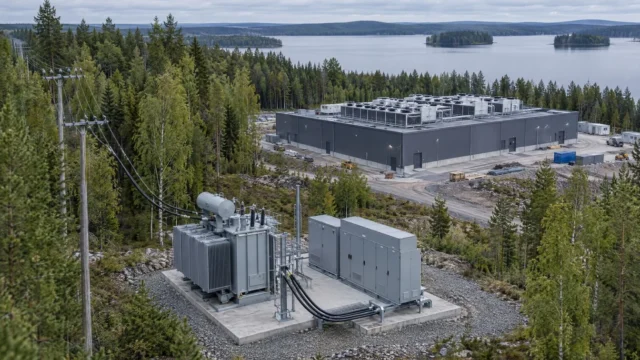
Google is the company evaluating Wood Haven Technology Park in Roanoke County, Virginia, as a potential data center site. The Western Virginia Regional Industrial Facility Authority confirmed the news on Friday, October 16, 2026, ending months of speculation over who was behind a mysterious land deal tied to an obscure corporate entity. For a region that has spent the better part of a year guessing at the identity of its would-be tenant, the announcement turns a quiet real estate transaction into one of the biggest tech infrastructure stories in southwest Virginia this year.
The confirmation matters well beyond Roanoke County. It places Google alongside Microsoft, Amazon, and Meta in a race to lock down land, power, and water access across the mid-Atlantic for the next generation of AI-scale data centers. It also raises the same questions that have followed every major hyperscaler project announced in 2026: how much electricity will it draw, how much water will it need, and how long will residents wait for real answers.
Don't miss new tech stories on Google
Add TrendinTech once in the Google app and our stories appear in your news suggestions.
What the Western Virginia Regional Industrial Facility Authority Confirmed
John Hull, executive director of the Western Virginia Regional Industrial Facility Authority, made the announcement that ended weeks of community guesswork. “We’re confirming today that Google is evaluating a potential data center facility in the Woodhaven Technology Park,” Hull said, according to Virginia Business. He followed with a second statement clarifying exactly what had changed: “Today is the first confirmation that Google is the entity that is securing land control and investigating by way of a due diligence period a potential project.”
That second sentence is doing a lot of work. It draws a careful line between “securing land control” and actually building anything. Roanoke County officials have been under a non-disclosure agreement tied to the land sale since mid-September, and Friday’s statement was the first time any public official could say Google’s name out loud in connection with Wood Haven. For residents who watched trucks and surveyors move through the property for weeks without official explanation, it was the first concrete answer.
Google’s own regional public affairs manager, Clay Allsop, added context after the authority’s announcement, framing the Wood Haven evaluation as an extension of the company’s existing footprint in the area rather than a cold start. “Google has more than 20 years of experience responsibly building data centers and is proud of the relationships we’ve built in the Roanoke community since announcing our data center project in Botetourt County,” Allsop said. He added that the company is “committed to growing this collaboration as a long-term partner in the Roanoke Region,” and said Google will “continue our due diligence process on Wood Haven and keep the local community updated as more information is available.” Google has not set a timeline for a final decision, and Allsop’s statements stopped short of confirming that a data center will actually be built there.
Clearview Dynamics LLC and the Paper Trail Behind the Deal
Before Friday, the only name tied to the Wood Haven land transaction on public documents was Clearview Dynamics LLC, a corporate entity formed in January 2026. That kind of shell-company arrangement is standard practice for hyperscalers shopping for industrial land. Naming the real buyer too early can inflate a seller’s asking price or invite competing bids, so tech companies routinely route land deals through single-purpose LLCs until a deal is far enough along to go public. WSLS reported that the Western Virginia Regional Industrial Facility Authority’s board had already voted to sell park property to Clearview Dynamics weeks before Friday’s confirmation, which is what triggered the NDA that kept county officials quiet through most of September.
That approach is not unique to Virginia or to Google. Shell-company land acquisitions have become close to the industry standard for data center site selection, mirroring how companies such as DayOne Data Centers have structured deals tied to major cloud and streaming tenants elsewhere. The pattern shows up again and again: a nondescript LLC buys or options land, local officials sign confidentiality agreements, and the real tenant’s name surfaces only once due diligence has advanced far enough that a leak carries less competitive risk.
Inside the 111-Acre Wood Haven Site
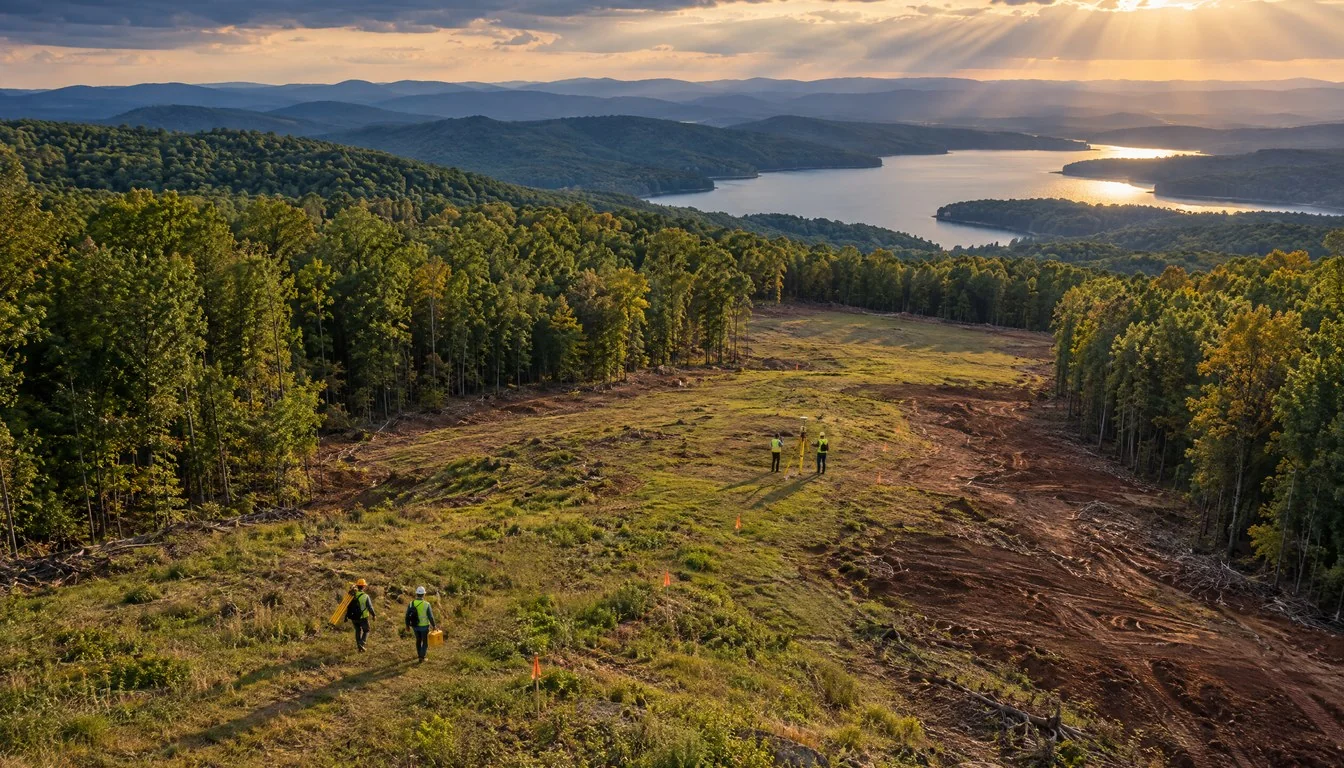
Wood Haven Technology Park spans 111 acres at the junction of Interstates 81 and 581 in the Roanoke Valley, a location that offers the kind of highway and logistics access that industrial park developers covet. The purchase agreement tied to the Clearview Dynamics transaction covers 94 of those 111 acres, according to reporting from The Roanoke Times. That leaves a sliver of the park outside the current deal, though no official has said what, if anything, is planned for the remaining acreage.
The interstate junction location is notable because it puts the prospective data center close to existing fiber routes and regional substations that have already attracted industrial tenants to the Roanoke Valley over the past decade. It is the same general logic that has pulled hyperscalers toward other interstate-adjacent sites around the country, from Northern Virginia’s “Data Center Alley” corridor to newer builds further south and west, where land is cheaper and permitting timelines move faster than in saturated markets like Loudoun County.
| Detail | Confirmed Figure | Source |
|---|---|---|
| Total site size | 111 acres | Western Virginia Regional Industrial Facility Authority |
| Acreage under purchase agreement | 94 acres | The Roanoke Times |
| Location | Junction of Interstates 81 and 581 | The Roanoke Times |
| Corporate entity on land records | Clearview Dynamics LLC | WSLS, Cardinal News |
| Entity formation date | January 2026 | WSLS |
| Due diligence window | Through March 2027 | Cardinal News, WVTF |
| Potential water source named by officials | Spring Hollow Reservoir | Western Virginia Regional Industrial Facility Authority |
| Final deal status as of October 19, 2026 | Not finalized, under evaluation | Virginia Business |
The Due Diligence Clock: Why March 2027 Matters
Google’s due-diligence and inspection period on Wood Haven is expected to run through March 2027, a timeline confirmed by both Cardinal News and WVTF. That stretch gives Google roughly five months from this week’s announcement to complete the technical and regulatory homework that precedes any decision to actually build. It is a meaningful window, long enough to run full engineering and geotechnical assessments, utility-capacity studies, and environmental reviews rather than a cursory check of the box.
Those three categories of work, as described by officials tracking the project, cover the areas most likely to make or break a data center deal of this size. Geotechnical assessments determine whether the soil and bedrock under the site can support the enormous structural load of server halls and backup generators. Utility-capacity studies determine whether the regional grid and water systems can actually deliver what a modern AI-scale facility needs without starving nearby residential and commercial customers. Environmental reviews check for wetlands, protected species habitat, and other constraints that can add months or years to a permitting timeline.
Officials have been explicit, though, that none of this due diligence guarantees a finished deal. The Western Virginia Regional Industrial Facility Authority’s own language, confirming only that Google is “evaluating” the site, leaves plenty of room for the company to walk away if any of those studies turn up a dealbreaker. Hyperscalers have abandoned sites mid-diligence before when power or water commitments could not be secured on the timeline or terms they needed, and Roanoke County officials have not promised otherwise.
Spring Hollow Reservoir and the Water Question
The Western Virginia Regional Industrial Facility Authority has pointed to Spring Hollow Reservoir as a potential water source for the project, a detail that is likely to become one of the most scrutinized parts of the deal as it moves forward. Data centers, particularly those built to support AI training and inference workloads, can consume enormous volumes of water for cooling, and reservoir capacity has become a flashpoint in data center fights from Georgia to Arizona to the Pacific Northwest over the past two years.
Spring Hollow Reservoir already serves as a regional water supply for Roanoke County and surrounding jurisdictions, which means any commitment of capacity to a hyperscale data center will have to be weighed against existing residential and commercial demand. Neither Google nor the regional authority has released figures on how much water a completed Wood Haven facility might draw, and that is explicitly flagged among the unconfirmed details of the project as of this week. Residents who have pushed for answers since the NDA period began in September are likely to make water commitments one of their first questions at upcoming public meetings.
How Wood Haven Fits Into Google’s Virginia Footprint
Google’s interest in Wood Haven does not appear out of nowhere. Clay Allsop’s statement specifically referenced the company’s existing data center project in Botetourt County, Virginia, which borders Roanoke County, as the foundation of the relationships Google says it wants to keep building in the region. That framing suggests Google is treating the Roanoke Valley as a cluster rather than a one-off site, a strategy that mirrors how the company and its hyperscaler peers have approached regions like Northern Virginia, where dozens of facilities now sit within a tight radius of shared substations and fiber backbones.
Virginia overall remains the single largest data center market in the United States by most industry measures, a position built over two decades around Loudoun County’s “Data Center Alley.” As that core market has run short on available land, power capacity, and public patience, hyperscalers including Google, Microsoft, and Amazon have pushed further west and south across the state looking for the next buildable corridor. Roanoke County, sitting at a major interstate junction with access to regional water infrastructure, fits that pattern closely. The same dynamics have shaped grid planning conversations described in CNBC’s reporting on how AI-driven data center demand is reshaping aging power grids well beyond Virginia’s borders.
Competitive Context: Hyperscalers Are Not Always Welcomed
Google’s Wood Haven evaluation lands at a moment when not every data center proposal from a major cloud provider is sailing through local approval. Across the Atlantic, Microsoft recently backed away from residency plans at what would have been the United Kingdom’s largest data center, citing power supply concerns, according to TechRadar. That reversal is a reminder that grid capacity, not just land availability, has become the real bottleneck constraining where hyperscalers can realistically build in 2026, whether in rural England or rural Virginia.
The contrast is instructive. Roanoke County officials have moved relatively quickly to confirm Google’s involvement and frame the project in positive economic terms, while UK regulators and grid operators forced Microsoft to abandon a marquee site altogether. Whether Wood Haven ends up closer to the Virginia success story or the UK retreat will depend heavily on what Google’s utility-capacity studies find over the next five months, and on whether Appalachian Power and regional water authorities can commit the capacity a modern AI data center campus requires.
| Project | Company | Status as of October 19, 2026 | Key Constraint |
|---|---|---|---|
| Wood Haven Technology Park, Roanoke County, VA | Under evaluation, due diligence through March 2027 | Water supply (Spring Hollow Reservoir), grid capacity | |
| UK’s largest proposed data center site | Microsoft | Residency plans abandoned | Power supply concerns |
| Botetourt County, VA (existing Google project) | Operating, cited as regional precedent | Not disclosed |
What Local Officials Are Saying Now
John Hull’s framing of the project as “transformative” for the region signals how local economic development officials are preparing to pitch Wood Haven to residents and county boards in the months ahead. Data center projects of this scale typically come with promises of expanded tax base, construction jobs, and long-term facility staffing, and Hull’s language leans into that playbook. He has also been careful to repeat that the authority is “proud to partner with Google” on a project framed around jobs, tax revenue, and community investment, language that mirrors how similar authorities have pitched hyperscaler projects in other Virginia counties over the past several years.
What is missing so far is any specific commitment on job numbers, construction investment, or the scale of the finished facility. Those figures typically surface later in the process, often tied to incentive packages that require county board approval and sometimes state-level economic development agreements. Residents who lived through the opaque NDA period in September are likely to push hard for those numbers before any final vote, especially after weeks of being told only that an unnamed company was “digging into” the site, as WDBJ7’s earlier reporting put it.
Why the NDA Period Frustrated Roanoke County Residents
The confidentiality agreement that kept Google’s name out of public discussion for weeks is a familiar irritant in data center site selection, and it is worth understanding why it exists even though it frustrates transparency advocates. Counties and regional authorities sign NDAs with prospective tenants because disclosing a hyperscaler’s interest too early can trigger land speculation, competing offers from rival jurisdictions, or local opposition before a company has even decided whether a site is viable. From the company’s perspective, premature disclosure can also tip off competitors to expansion strategy.
From a resident’s perspective, though, that same logic can look like a company and a government body deciding together what the public gets to know and when. Roanoke County’s board of supervisors heard a presentation on the financial benefits of a potential data center project at Wood Haven back in September, even while the identity of the company behind it remained under wraps, according to The Roanoke Times. That sequencing, financial benefits discussed publicly before the tenant’s name was public, is part of why neighbors near the site have been vocal about wanting faster, clearer answers.
The Bigger Pattern: Data Centers Are Reshaping Regional Power Grids
Wood Haven is a local story with national implications. Across the country, data center demand tied to AI infrastructure is forcing utilities to rethink decades-old assumptions about grid capacity, a dynamic CNBC’s recent reporting traced through examples including Pine Island, Minnesota, where Google has also been active in grid planning conversations. The throughline across these stories is the same: aging infrastructure built for a different era of electricity demand is now being asked to support loads that did not exist five years ago, and utilities, state regulators, and county governments are all scrambling to catch up. Data center operators elsewhere have pushed for earlier visibility into these large new loads, a dynamic also playing out in FERC’s approval of PJM’s 50MW data center registry, which is designed to flag projects like Wood Haven to grid planners long before construction begins.
That broader context helps explain why the due-diligence period for Wood Haven matters so much, and why it extends all the way to March 2027. Utility-capacity studies are not a formality. They are the mechanism by which Google determines whether Appalachian Power’s regional grid, and Roanoke County’s water infrastructure, can actually support a modern hyperscale facility without triggering the kind of capacity fights that have already derailed projects elsewhere, including Microsoft’s abandoned UK site.
What Still Isn’t Confirmed
It is worth being precise about what Friday’s announcement did and did not establish. Confirmed: Google is the company behind the Clearview Dynamics LLC land transaction, and it is conducting formal due diligence on the Wood Haven site through March 2027. Not confirmed: the final design or capacity of any facility, a construction schedule, the total investment amount, projected employment figures, projected power demand, projected water consumption, the purchase price of the land, or a construction start date.
That gap between what is confirmed and what remains open is typical for a project at this stage. Companies the size of Google rarely commit publicly to capacity or investment figures before due diligence wraps, since those numbers depend directly on what the engineering, utility, and environmental studies turn up. Expect more concrete figures, if the project advances, closer to the spring of 2027, once Google’s inspection period concludes and any formal agreements with Roanoke County move toward a public vote.
Market and Industry Impact
For Roanoke County and the broader Roanoke Valley, even an unconfirmed Google data center carries outsized economic weight. Data center projects of comparable scale elsewhere in Virginia have translated into hundreds of millions of dollars in capital investment and meaningful increases in local tax revenue, which is almost certainly the basis for John Hull’s description of the project as “transformative.” For Google, the move fits a broader pattern across the hyperscaler industry of pushing data center development beyond saturated markets like Loudoun County into secondary interstate corridors with available land and grid capacity, a trend that has also shown up in deals covered elsewhere involving companies like 3 E Network’s power deal for a Finland AI hub and other regional infrastructure plays tied to AI demand.
It also adds another data point to a national conversation about whether local power grids and water systems can keep pace with hyperscaler expansion. The IMF and other institutions have flagged grid and infrastructure strain tied to AI-era data centers as a growing risk, a theme that echoes through recent coverage of infrastructure vulnerabilities tied to AI-scale systems. Wood Haven, if it advances, will be a real-world test of whether a mid-sized Virginia utility and water authority can absorb that kind of demand without the kind of public backlash that derailed Microsoft’s UK plans.
Predictions: What Happens Next at Wood Haven
- Expect Roanoke County officials to hold additional public briefings before Google’s due-diligence period concludes in March 2027, driven partly by resident frustration over the NDA period that preceded Friday’s confirmation.
- Watch for Appalachian Power and regional water officials to begin publishing capacity assessments tied to Spring Hollow Reservoir, since water availability is likely to be the single most contested technical question in the project’s public debate.
- If Google proceeds, the company will likely follow the same incentive-package playbook used in Botetourt County and other Virginia jurisdictions, pairing tax abatements with commitments on local hiring and infrastructure contributions.
- Expect scrutiny of the Clearview Dynamics LLC structure to continue, including questions about who controls the entity and what land options, if any, extend beyond the current 94-acre purchase agreement.
- If Google walks away from Wood Haven during due diligence, as hyperscalers have done elsewhere when power or water terms fell short, expect the Western Virginia Regional Industrial Facility Authority to quickly shop the site to other cloud providers rather than let a shovel-ready, interstate-adjacent parcel sit idle.
Historical Context: Virginia’s Long Run as the Data Center Capital
Virginia’s dominance in data center development did not happen overnight. Loudoun County’s Data Center Alley grew over roughly two decades into the highest concentration of data center capacity in the world, built on cheap land, favorable tax policy, and proximity to internet exchange points that trace back to the early days of commercial internet infrastructure in the 1990s. As that core corridor filled up and land and power grew scarcer and more expensive, hyperscalers began looking further afield within the state, a trend that accelerated sharply once AI training workloads started demanding far more power density per facility than earlier cloud-era data centers.
Roanoke County and the broader Roanoke Valley represent one of the newer frontiers in that expansion. Google’s existing Botetourt County project, referenced directly by the company’s own public affairs statement this week, already established a foothold in the region before Wood Haven ever came up for discussion. Seen through that lens, Wood Haven looks less like a one-off land deal and more like the next step in a deliberate regional buildout that Google appears to have been planning for some time, even if the company has not said so explicitly.
Frequently Asked Questions
Is Google definitely building a data center at Wood Haven Technology Park?
No. The Western Virginia Regional Industrial Facility Authority has confirmed only that Google is evaluating the site through a due-diligence period expected to run through March 2027. No final decision to build has been announced.
What is Clearview Dynamics LLC?
Clearview Dynamics LLC is the corporate entity named on land records tied to the Wood Haven purchase agreement. It was formed in January 2026 and is widely understood to be a single-purpose entity used to secure land control before Google’s involvement was made public.
How big is the Wood Haven Technology Park site?
The park spans 111 acres at the junction of Interstates 81 and 581 in Roanoke County. The purchase agreement tied to the current deal covers 94 of those acres.
Where would the data center get its water?
The Western Virginia Regional Industrial Facility Authority has named Spring Hollow Reservoir as a potential water source, though no specific consumption figures have been released.
Why did it take so long for Google’s name to come out publicly?
Roanoke County officials were bound by a non-disclosure agreement tied to the land sale that began in mid-September 2026. The NDA prevented officials from confirming the buyer’s identity until the regional authority made its statement on October 16, 2026.
Does Google already have other data centers in the region?
Yes. Google has referenced an existing data center project in neighboring Botetourt County, Virginia, as part of the relationship it says it wants to continue building in the Roanoke region.
When will a final decision be made?
No firm date has been announced. Google’s due-diligence and inspection period is expected to continue through March 2027, after which the company could move toward a final agreement, request changes, or withdraw from the site entirely.
What economic benefits are officials expecting?
Officials have described the project in broad terms as a potential source of jobs, an expanded tax base, and community investment, but specific figures for employment, construction spending, or incentive packages have not been released as of October 19, 2026.
Related Coverage
Yusuf Demir
Yusuf Demir is the Cloud & Software Reporter at TrendinTech, where he covers cloud infrastructure, enterprise platforms, developer tools and the digital transformation of businesses in the UK and the United States. He is most interested in the gap between vendor roadmaps and the systems engineers actually run, and in what the cloud bill looks like once the free credits expire.
All stories by Yusuf Demir (392)