
Understanding the Nerve Network Our Second Brain
The human stomach, often called our ‘second brain’, is a patchwork of overlapping nerve cells that often baffle doctors when looking for causes and treatments for common gastrointestinal diseases like chronic constipation and irritable bowel syndrome.

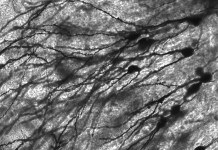
The human stomach, often called our ‘second brain’, is a patchwork of overlapping nerve cells that often baffle doctors when looking for causes and treatments for common gastrointestinal diseases like chronic constipation and irritable bowel syndrome. A new discovery, revealed in the journal Science, might explain how this mysterious system work. This new understanding might help in maintaining gut health.
Scientists at the Francis Crick Institute, in collaboration with the Quadram Institute Bioscience, Stanford University, University of Leuven, and the Hubrecht Institute, now understand how the enteric nervous system, made up of half a billion nerves in the stomach wall, is built, at least during mouse development.
Vassilis Pachnis, Group Leader at the Francis Crick Institute explains why this system is so fascinating: “The gut wall is home to many types of nerve cells which appear to be distributed randomly. But despite this chaos, the neural networks of the gut are responsible for well organized and stereotypic functions such as the production of stomach acid, movement of food along the gut, communication with immune cells and bacteria, and relay of information to the brain. We wanted to find out how organized activity emerges from such a chaotic system.”
The research team used genetic tools to tag certain progenitor cells in the enteric system. Progenitors are a group of cells that divide to create reproductions of themselves that then go on to make many cell types. Scientists label these cells and their descendants with unique color tags and followed their reproduction and purposes through development.
“We uncovered a set of rules that control the organization of the ‘second brain’ not just along a single gut layer but across the 3D space of the gut wall,” says Reena Lasrado, first author of the paper and researcher at the Francis Crick Institute.
They found that some of these descendant copies made nerve cells, some made glia, cells that support those nerves, and others made both types. The children cells stayed close to the parent cells in close groupings and these groupings tend to overlap their neighbor groupings like houses built too close together in a suburb and forced to share rooms or yards. These groupings can be seen on the stomach like a city map.
Next, researchers tested to see if this uniquely close structure influenced the activity of nerve cells in the stomach.
“A subtle electrical stimulation to the enteric nervous system showed that nerve cells generated by the same parent cell responded in synchrony,” says Vassilis. “This suggests that developmental relationships between cells of the enteric nervous system of mammals are fundamental for the neural regulation of gut function.”
“Now that we have a better understanding of how the enteric nervous system is built and works, we can start to look at what happens when things go wrong particularly during the critical stages of embryo development or early life. Perhaps mistakes in the blueprint used to build the neural networks of the gut are the basis of common gastrointestinal problems.”
More News to Read
- Shape Changing Noodles From MIT
- More Strange Secrets Revealed about Blackbody Force
- How can we count the number of stars in our Universe?
- Adobe’s New Free Mobile Scanning App available For iOS and Android
- How Elon Musk Maintains his Intense Motivation
Related Coverage
- Researchers Find an Enzyme That Feeds Brain Tumors
- Imagine Being Able to Explore the Brain Like a Website
- Disease Diagnosing Google’s Deep Learning Technology Have Better Accuracy than Doctors
- Scientists Gain Deeper Understanding of the Brain With These Two Key Proteins
- Scientist Discovered a Catfish Gene, When activated in a Rodent Brain, Can Sense Electromagnetic fields
Don't miss new tech stories on Google
Add TrendinTech once in the Google app and our stories appear in your news suggestions.
Daniel Okafor
Daniel Okafor is the Senior AI Reporter at TrendinTech, where he covers large language models, machine learning research and the practical use of artificial intelligence across business and government. He previously reported on artificial intelligence for MIT Technology Review, covering the labs behind the current generation of frontier models and the policy debates in Washington and Brussels. Daniel holds a Master of Science in Machine Learning from Carnegie Mellon University and follows the research community closely, attending NeurIPS and ICML each year to speak with the people behind the papers. He has a particular interest in evaluation: how models are benchmarked, where those benchmarks fail and what that means for the companies betting on them.
All stories by Daniel Okafor (316)