
Disease Diagnosing Google’s Deep Learning Technology Have Better Accuracy than Doctors
Boffins at Google have been busy working with its deep learning technology in an attempt to diagnose certain diseases. Also, because it’s continually learning, the system can now diagnose some diseases more accurately than most human doctors.

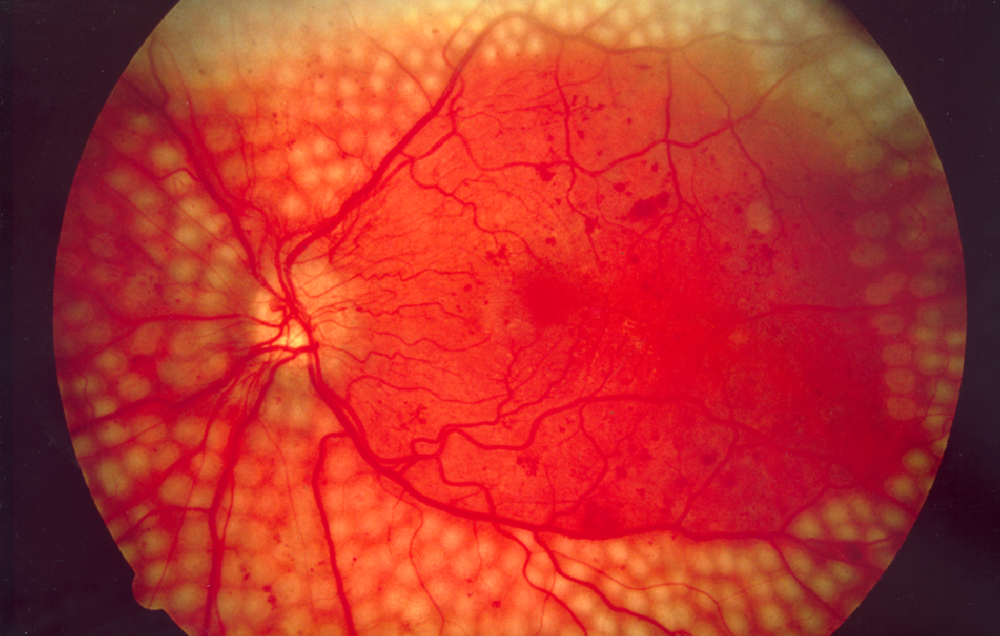
Boffins at Google have been busy working with its deep learning technology in an attempt to diagnose certain diseases. Also, because it’s continually learning, the system can now diagnose some diseases more accurately than most human doctors. One area that the robots are excelling in is in diagnosing diabetes. This is large because one of the problems that patients with diabetes often suffer with is a condition called diabetic retinopathy, and the machine learning robots have learned quite quickly from photos how to diagnose it accurately.
Google’s deep learning technology is capable of learning almost anything is you give it enough data and the right algorithm, and being able to detect diabetic retinopathy early on could save millions of people from becoming blind unnecessarily. One of the problems that many individuals have when it comes to this disease is that they don’t have a qualified ophthalmologist to go to who can diagnose the issue.
The team at Google worked with the deep learning technology to train it to recognize both healthy and diseased eyes. The results showed that loaded with the correct algorithm, the AI achieved a better accuracy level at diagnosing diseases than qualified ophthalmologists. This type of technology is already being used to diagnose other diseases such as heart failure and certain types of cancer but isn’t quite as advanced as Google’s machine.
This is just another step forward for AI becoming integrated into society and as long as good results are being achieved, then why not welcome it in? This is a breakthrough for diabetes patients. Hopefully, soon, they will not need to worry if the right professional is nearby as they can simply send their photo straight to the AI to get an accurate diagnosis. Others that are also working on similar projects include IBM with its skin cancer detection algorithm and a Finnish group who are developing a malaria detecting algorithm.
More News To Read
- Is it really Possible for Humans to Regenerate Body Parts? We Got The Genes…
- NASA Uses X-Ray Technology In Space For Faster Communication
- Could An Algorithm Really Mimic Our Way Of Thinking?
- Amazing Artificial Solar Cell Turns CO2 into Energy
- Tracking Diabetic Health With This Smart Sock Can Save Your Feet
Related Coverage
- The Use of Search Engines to Help Diagnose Patients With Medical Conditions Could Soon Be Coming Our Way
- Scientist Have Tried to Make HIV-Proof Human Embryos
- MIT Researchers Develop New Way to Communicate With Implants Within the Body
- Researchers Have Developed a Prototype Smart Pill to Diagnose and Treat Diseases
- Google Wants to Humanize Artificial Intelligent
Don't miss new tech stories on Google
Add TrendinTech once in the Google app and our stories appear in your news suggestions.
Daniel Okafor
Daniel Okafor is the Senior AI Reporter at TrendinTech, where he covers large language models, machine learning research and the practical use of artificial intelligence across business and government. He previously reported on artificial intelligence for MIT Technology Review, covering the labs behind the current generation of frontier models and the policy debates in Washington and Brussels. Daniel holds a Master of Science in Machine Learning from Carnegie Mellon University and follows the research community closely, attending NeurIPS and ICML each year to speak with the people behind the papers. He has a particular interest in evaluation: how models are benchmarked, where those benchmarks fail and what that means for the companies betting on them.
All stories by Daniel Okafor (316)