
No Time For Visiting Art Galleries? Google Here to Help!!
While it’s already possible to visit certain art museums utilizing the Street View function in Google Maps, there aren’t many features to this function other than gazing at still pictures of art.

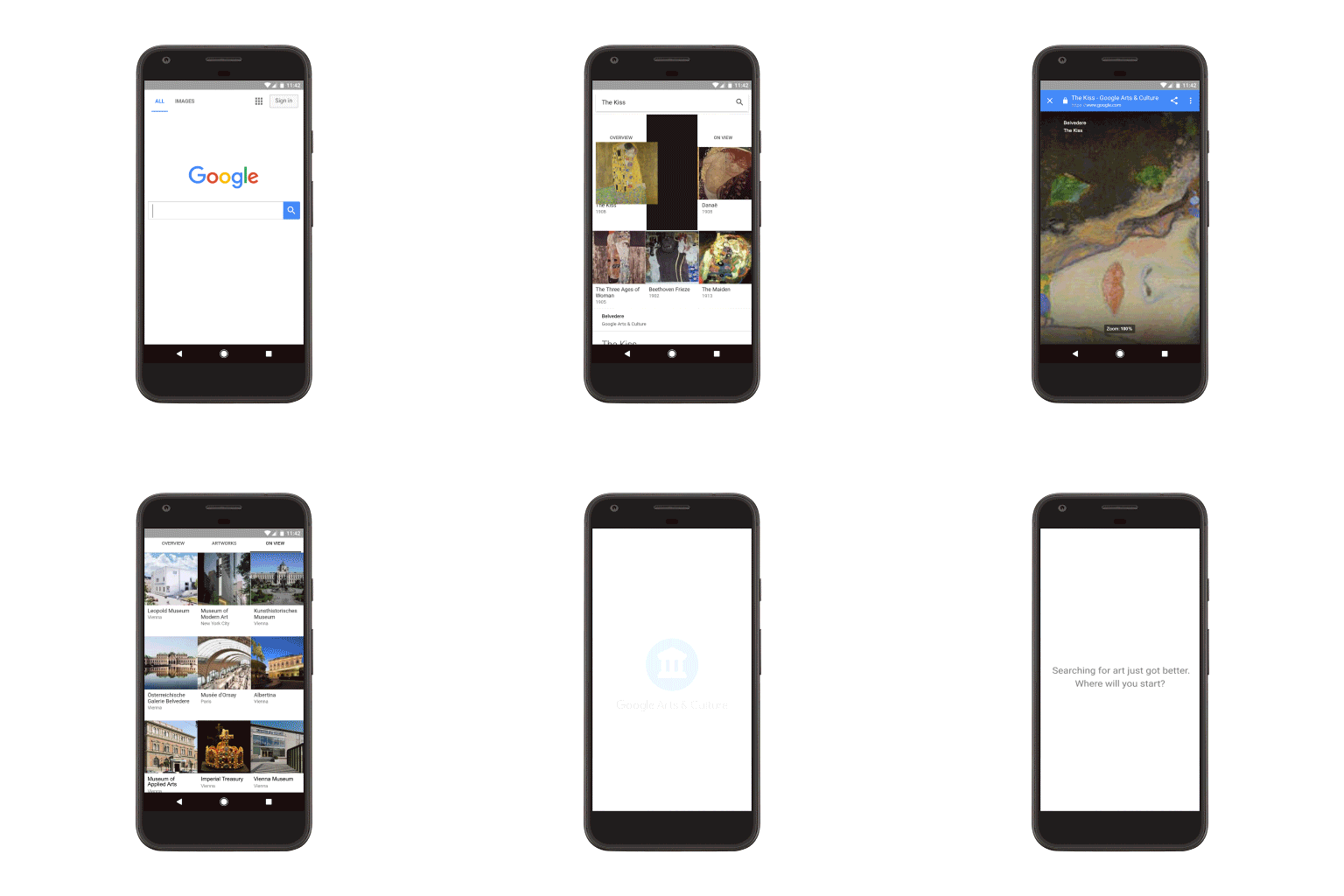
While it’s already possible to visit certain art museums utilizing the Street View function in Google Maps, there aren’t many features to this function other than gazing at still pictures of art. But now, Google is adding more options for museum lovers. Starting Wednesday, if you want to visit museums like the Smithsonian National Art Museum or MOMA with Street View, you will be able to read information about the paintings, see high-res close-ups, and more.
If you’re using Google’s Chrome browser, whether, on a computer or a cell phone, you can receive additional data alongside the paintings when visiting a museum on Google Street View. Click on the annotations and details Google has collected from museums across the globe will give you further facts on the specific work of art. In order to provide these added points, Street View, using the same technology that allows Google’s Photos app to tell the difference between food and people, cross-references visual cues from paintings with information from Google’s Arts & Culture department provided by the museums in the partnership.
Marzia Niccolai, a Technical Program Manager at Google, explains why the change: “It’s not just about what the user has searched for, but taking them on a journey so that they can discover things that they never even knew they would like.”
According to Google, users make searches pertaining to art 500 million times per month. In an effort to improve the search experience, an art related question will not only return specific results, say about Pablo Picasso, but also provide examples of his work or where certain paintings are housed in a special panel available across all Google’s platforms. “Once we realized the demand was out there, we decided that this was something that was a very high priority for us,” adds Niccolai.
In addition to helping users, this new feature may keep Google at the top of the class, beating out Microsoft and Apple when it comes to educational services. Last year, Chromebooks made up 58% of classroom devices in American primary and secondary schools according to Futuresource Consulting, with its competitors falling behind at 22% and 14% respectively. Though Niccolai says that helping its users is Google’s main focus: “It’s just about search being able to derive the best answers to peoples’ questions.”
More News to Read
- States Unite in Lowering Pollution and Increasing Renewables
- Old Coal Mines Get Revived in an Attempt to Promote Clean Energy
- Experience Diving Without All the Scuba Gear With AirBuddy
- New Specs Revealed About Tesla’s Model 3
- Do Supernovas Hold the Key to Unraveling the Antimatter Mystery?
Related Coverage
- Internet of Things and Artificial Intelligence Go Hand in Hand and Here’s Why
- Google Maps Goes Offline
- Our Privacy is at Stake With Development of New Facial Recognition Technology
- See the World in a Different Language With Google’s Augmented Reality
- Google Maps Will Predict Your Destination and Give You The Traffic Updates
Don't miss new tech stories on Google
Add TrendinTech once in the Google app and our stories appear in your news suggestions.
Yusuf Demir
Yusuf Demir is the Cloud & Software Reporter at TrendinTech, where he covers cloud infrastructure, enterprise platforms, developer tools and the digital transformation of businesses in the UK and the United States. He previously reported on enterprise technology for The Register in London and covered the cloud and SaaS beat for TechCrunch, following the competition between AWS, Microsoft Azure and Google Cloud, the open source licensing disputes and the rise of Kubernetes. Yusuf holds an MEng in Computing from Imperial College London and speaks regularly at KubeCon and AWS re:Invent, where he moderates conversations with engineers and chief technology officers. He is most interested in the gap between vendor roadmaps and the systems engineers actually run, and in what the cloud bill looks like once the free credits expire.
All stories by Yusuf Demir (294)