
Tabby’s “Alien-Megastructures” Star Had Begun to Dim Again
Since it was first discovered, Tabby’s Star has baffled scientists all across the world. The reason for this is that it doesn’t act like any other star out there.

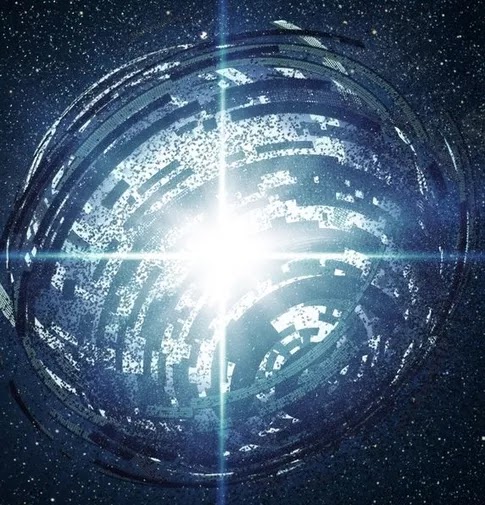
Since it was first discovered, Tabby’s Star has baffled scientists all across the world. The reason for this is that it doesn’t act like any other star out there. It continues to lose brightness is random erratic spurts and is something that we’re not used to seeing. One astrophysicist from Louisiana State University, Tabetha Boyajian, recently tweeted that the star had dimmed by as much as three percent, which is quite a lot.
Some scientists believe these dips in brightness are caused by planetary collisions with Tabby’s Star, while others have suggested that a massive alien superstructure could be obstructing its starlight. The latest tweet brought excitement to the world of astronomy as it may indicate a greater dimming trend is about to begin. Using data from NASA’s Kepler Telescope, Boyajian previously discovered over a 100-day period the star had, in fact, dimmed several times, losing as much as 20 percent of its radiance at one point.
The idea that an alien megastructure may be in the way derived from a 1960’s thought where Freeman Dyson suggested that advanced civilizations may need large amounts of energy to power their advanced technologies, and so what better place than a star. Dyson’s suggestion was that the aliens could build a megastructure around the star in order to capture and harness its energy. The belief is then that this megastructure would obstruct the light’s luminosity, causing it to dip suddenly.
The megastructure theory isn’t the only one in existence. In January this year, a study was released in which Columbia astrophysicist Brian Metzger proposed his theory that a planet may have collided with or pushed very close to Tabby’s Star. He suggests that such action may cause the sun to rip parts of the planet and send a mess of planetary material and dust flying into space, obstructing our view of Tabby’s light.
More News to Read
- Why Not Use the Moon as A Gas Station to Get to Mars?
- Researchers Discover How to Store Information In Chemicals
- Are These Mini Spherical Reactors the Answer to Fusion Energy’s Problems?
- Scientists Subject Quantum Entanglement to Extreme Levels of Acceleration
- New Monster Mars Rover Looks a Little Scary
Related Coverage
- Fast Radio Bursts Demystified With the Help of IceCube Neutrino Detector
- Missed Out on the Bitcoin Boom? These Other Cryptocurrencies maybe Worthy of Investment
- More Proof that Einstein’s General Theory of Relativity is Correct
- The Gene Has Been Found, No More Gray Hair
- A Radioactive Cold War Military Base Will Soon Come To The Surface Because of Climate Change
Don't miss new tech stories on Google
Add TrendinTech once in the Google app and our stories appear in your news suggestions.
Helena Marsh
Helena Marsh is the Editor-in-Chief at TrendinTech, where she leads editorial strategy and oversees coverage across artificial intelligence, cybersecurity and enterprise technology. With more than a decade in technology journalism on both sides of the Atlantic, she previously served as a senior editor at Wired UK and covered the technology sector for The Guardian, following the rise of the big platforms, the Cambridge Analytica scandal and the regulatory push from Brussels and Washington. Helena holds an MA in Journalism from City, University of London and is a regular speaker at Web Summit in Lisbon and CES in Las Vegas. She believes technology reporting should be rigorous and plainly written, so readers understand what actually changes for them rather than what a company's announcement promises.
All stories by Helena Marsh (201)