
Researchers Discover the Human Body’s Internal Clock
A new study published in the journal Proceedings of the National Academy of Sciences (PNAS) confirms the discovery of the internal clock within live human cells. This is a fantastic breakthrough and may help to unfold more clues as to how disease comes about and…

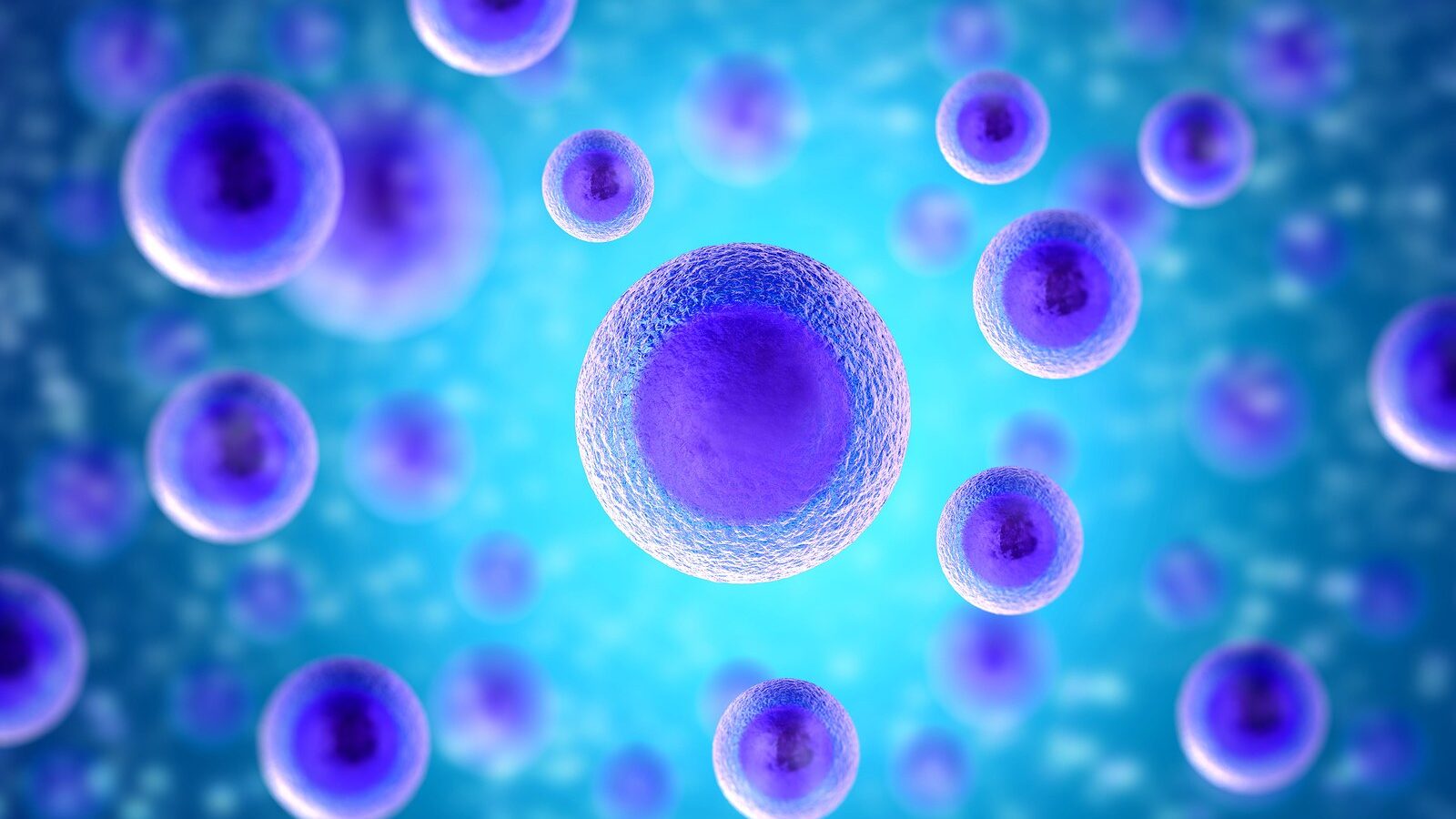
A new study published in the journal Proceedings of the National Academy of Sciences (PNAS) confirms the discovery of the internal clock within live human cells. This is a fantastic breakthrough and may help to unfold more clues as to how disease comes about and to gain a better understanding about the building blocks of life.
Alexandra Zidovska is an assistant professor of physics at New York University and the senior author on the study. “Previously, a precise point of a cell in its life cycle could only be determined by studying dead cells,” she explains. However, with this discovery, which shows that the nucleus exhibits rapid fluctuations that decrease during the life cycle of the cell, we can enhance our knowledge of both healthy and diseased human cells.”
Others that took part in the study included Fang-Yi Chu, an NYU doctoral candidate, and Shannon Haley, and NYU undergraduate. Together the scientists used a special microscope to enable them to see the very small and very rapid changes that take place in the cell nucleus of living cells. In doing this they discovered that the nucleus behaves in a way that previously went undetected. The nucleus flickers over a few seconds of time. They also noted that these changes decrease over time as the cell goes through its cycle.
“Therefore, this process can serve as an internal clock of the cell, telling you at what stage in the cell cycle the cell is,” confirmed Zidovska. “We know that structural and functional errors of the nuclear envelope lead to a large number of developmental and inherited disorders, such as cardiomyopathy, muscular dystrophy, and cancer. Illuminating the mechanics of nuclear shape fluctuations might contribute to efforts to understand the nuclear envelope in health and disease.”
More News to Read
- Researcher Discovered a New Way of Eco-Friendly Disposal for Data Security and Healthcare
- NASA’s Ocean Observation Reveals Sea-Level Fingerprints
- Chinese Scientists Create Device That Converts Blood Flow Energy into Electricity
- Researchers Revealed a New Clinically Tested Drugs that Inhibits the Growth of Tumours
- What Do You Think About Clothes that Grow With Your Child?
Related Coverage
- New Experimental Drug Reverses Memory Loss due to Brain Injury
- Scientists Discover a New Way to Repair DNA
- Research Confirms Diabetes is Linked to Problems the Oral Microbiome
- Without The Moon Earth’s Magnetic Field May Not Be Existed
- Without The Moon Earth’s Magnetic Field May Not Have Existed
Don't miss new tech stories on Google
Add TrendinTech once in the Google app and our stories appear in your news suggestions.
Owen Castellanos
Owen Castellanos is the Hardware & Gaming Reporter at TrendinTech, where he tests graphics cards, processors, consoles and peripherals and follows the games industry, from the major publishers to independent studios. He previously wrote reviews and benchmarks for Tom's Hardware and contributed features to PC Gamer, covering everything from laptop testing to the economics of game development. Owen holds a Bachelor of Science in Electrical Engineering from the University of Texas at Austin and attends CES in Las Vegas, Computex in Taipei and the Game Developers Conference in San Francisco each year to meet chipmakers and developers. He writes for readers who want to know whether a product is worth the money, and he is not shy about saying when it is not.
All stories by Owen Castellanos (252)