Michael MJD Revives Sony Xperia Play Phone, 15 Years On [2026]

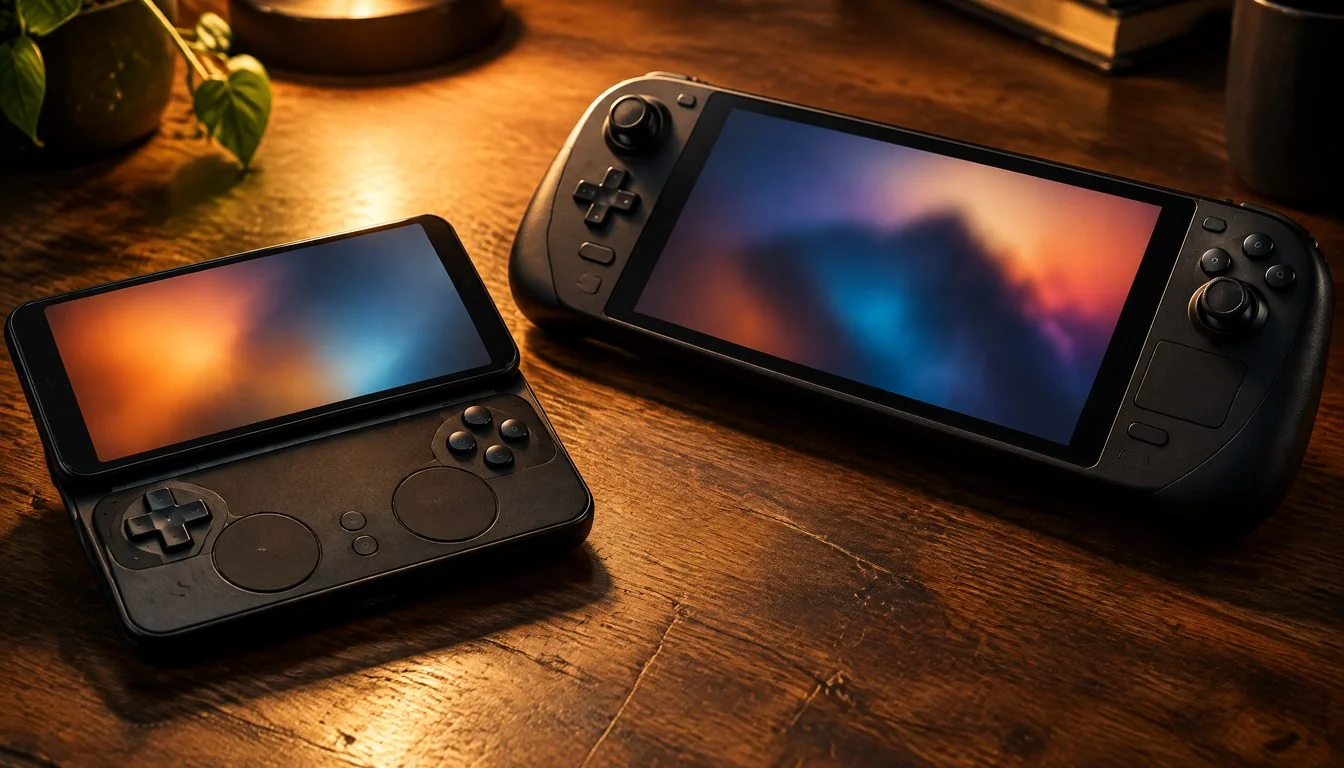
A phone that Sony Ericsson buried nearly fifteen years ago is suddenly back in front of gamers, and the reason has nothing to do with Sony. YouTuber Michael MJD has revived the Xperia Play, the 2011 Android handset with a slide-out PlayStation-style controller, in a project that has pulled the long-forgotten device back into tech news cycles this week. TechEBlog flagged the story as a top trending gaming headline, and the renewed attention says as much about what the mobile gaming market still lacks as it does about nostalgia.
The Xperia Play was never a hit. It arrived at a moment when touchscreen-only phones were steamrolling the market, and a hybrid device with physical gaming controls felt like a detour rather than a direction. Yet the specs Sony Ericsson shipped in 2011, and the ambition behind them, read differently in 2026, now that the industry has spent a decade circling back toward dedicated gaming handhelds like the Steam Deck, the ROG Ally, and a wave of Android-based emulation devices. The Xperia Play revival is a reminder that the “phone plus controller” idea did not fail because it was a bad concept. It failed because the hardware and the software catalog around it were not ready.
Don't miss new tech stories on Google
Add TrendinTech once in the Google app and our stories appear in your news suggestions.
What Michael MJD’s Xperia Play Project Actually Involves
Details on the exact scope of the revival, including whether it involves custom firmware, a hardware refresh, or a straightforward restoration and review of an original unit, have not been independently confirmed beyond the trending headline that surfaced through TechEBlog and secondary aggregation from outlets including 9to5Google. What is clear is that the project is significant enough to push a thirteen-year-old phone back into the news cycle, competing for attention against current-generation handheld announcements. That alone says something about how thin the catalog of slide-out, controller-equipped Android phones has remained since 2011. No major manufacturer has shipped a direct successor to the Xperia Play concept at scale, which leaves a content creator’s revival project filling a gap that Sony, Samsung, and every other phone maker left open.
For context on why this matters to a wider audience than retro-phone collectors, it helps to look at where gaming hardware attention has been concentrated recently. Readers who have been tracking handheld console rankings for 2026 will recognize the pattern: every major handheld on that list solves the same problem the Xperia Play tried to solve in 2011, physical controls paired with a screen, just with far more capable chips and far larger batteries behind them.
The Original Xperia Play Specs, Revisited
Sony Ericsson unveiled the Xperia Play at Mobile World Congress in February 2011, branding it officially as the Xperia PLAY, and leaning hard into the PlayStation association. The company built the phone around a 1 GHz Scorpion ARMv7 processor on the Qualcomm MSM8255 Snapdragon S2 platform, paired with Adreno 205 graphics. That combination powered a 4-inch capacitive touchscreen running at 480 by 854 pixels, a modest resolution even by 2011 smartphone standards, let alone against today’s displays.
The headline feature was the slide-out gaming controller built into the phone’s lower half, identified in coverage at the time as a PlayStation Certified controller, complete with a layout modeled on PlayStation button conventions. Sony Ericsson paired that hardware with Android 2.3, known as Gingerbread, and gave the phone 512 MB of RAM alongside roughly 400 MB of internal phone memory, numbers that look almost quaint next to the gigabytes of RAM in any current flagship. An 8 GB microSD card shipped in the box, with support for cards up to 32 GB, which handled the overflow that the thin internal storage could not.
Camera specs followed the modest trend: a 5 megapixel rear sensor with autofocus and LED flash, nothing that would turn heads even in its own era. Physically, the phone measured 119 by 62 by 16 millimeters and weighed 175 grams, chunky by the standards of slimming-down phone design trends that were already underway in 2011. Sony Ericsson quoted a maximum gameplay battery life of 5 hours and 35 minutes, and the device shipped in black and white color options. The company’s own marketing pitch centered on a specific technical claim: that the processor and graphics hardware combination enabled, in the company’s words, “smooth 60fps” mobile gaming, a performance promise that was ambitious for the Android hardware field of that year.
| Specification | Sony Ericsson Xperia PLAY (2011) |
|---|---|
| Announced | Mobile World Congress, February 2011 |
| Operating system | Android 2.3 (Gingerbread) |
| Processor | 1 GHz Scorpion ARMv7, Qualcomm MSM8255 Snapdragon S2 platform |
| Graphics | Adreno 205 |
| Display | 4-inch LCD/TFT, 480 x 854 pixels |
| RAM / internal storage | 512 MB RAM, approximately 400 MB phone memory |
| Expandable storage | 8 GB microSD included, up to 32 GB supported |
| Rear camera | 5 megapixels, autofocus, LED flash |
| Dimensions / weight | 119 x 62 x 16 mm, 175 grams |
| Max gameplay battery life | 5 hours 35 minutes |
| Colors | Black, white |
| Controller | Slide-out, PlayStation Certified control layout |
Why a 2011 Phone Is Trending in 2026
There is a straightforward explanation for why a revival of a thirteen-year-old handset cuts through a news cycle otherwise dominated by current-generation hardware: the Xperia Play occupies a category that the smartphone industry abandoned and the handheld gaming industry only partially rebuilt. Phone makers walked away from built-in physical controllers almost entirely after 2011, leaving that function to clip-on accessories, external Bluetooth pads, or dedicated devices that are not phones at all. Michael MJD’s project resurfaces a design question that the market still has not answered cleanly: should a gaming controller live inside the phone, or bolt onto it.
That question has taken on new weight as smartphone shipment numbers have softened. Readers following the broader phone market already know the backdrop here, with global smartphone shipments posting their worst third quarter in fourteen years amid a memory shortage, a slump that has pushed manufacturers to look for any differentiator that might move units. A built-in gaming identity, the exact thing the Xperia Play tried and failed to make mainstream, is one of the few hardware angles that has not been fully tried again at scale by a major phone brand since.
At the same time, the handheld gaming hardware market has kept growing in the opposite direction, toward devices that are gaming-first and phone-adjacent at best. Pairings such as the Retroid Pocket Duo against the Anbernic RG DDS in the dual-screen handheld category show how far Android-based gaming hardware has moved since 2011, often running full emulation suites rather than native mobile titles. The Xperia Play predates nearly all of that ecosystem, and its revival puts a spotlight on how much groundwork modern Android gaming hardware owes to a device most casual readers had forgotten existed.
How the Xperia Play Compares to the Hybrid Hardware of 2026
Comparing the 2011 Xperia Play directly against today’s phone-and-controller hybrids is less about raw numbers, since fifteen years of chip progress makes that comparison lopsided by default, and more about design philosophy. The Xperia Play tried to make the controller permanent and the phone the primary device. Most of what followed, including modern clip-on grips and Bluetooth controllers sold alongside flagship Android phones, treats the controller as optional and detachable. That shift reflects a lesson the industry drew from the Xperia Play’s commercial struggles: a built-in controller adds bulk and weight to a device that most owners use as a phone first and a game console second, and that trade-off did not land with buyers in 2011.
Dedicated Android handhelds solved that trade-off differently, by giving up on being a phone at all. That is the same logic behind devices tracked in comparisons such as Android emulator benchmarking on PC hardware, where the software stack, not a phone’s call and data functions, is the entire point of the device. The Xperia Play sat awkwardly between those two worlds in 2011, and the fact that almost no major manufacturer has tried to occupy that middle ground since suggests the market concluded it was not worth the compromise, at least not until phone hardware got powerful enough to make the trade-off less painful.
| Category | Xperia PLAY approach (2011) | Typical approach in 2026 hybrid and handheld hardware |
|---|---|---|
| Controller integration | Built-in, slide-out, non-removable | Mostly detachable or clip-on accessories; dedicated handhelds build it in permanently instead |
| Core identity | Phone first, gaming controller second | Either a phone with optional gaming accessories, or a gaming device with no phone function at all |
| Software catalog | Small library of Android 2.3-era optimized titles | Massive emulation and native app catalogs across Android-based handhelds |
| Chip class | 1 GHz single-core Snapdragon S2 | Multi-core chips built for sustained gaming workloads, often with dedicated handheld thermal designs |
| Battery life framing | 5 hours 35 minutes of gameplay, marketed as a selling point | Battery life remains a constant trade-off across nearly every handheld on the market |
The Mobile Gaming Market the Xperia Play Never Got to See
The mobile gaming industry the Xperia Play launched into in 2011 looked nothing like the one surrounding its revival today. According to Statista, mobile gaming revenue in the United States alone surpassed 18 billion dollars in 2023, a figure that dwarfs anything the Xperia Play’s era could have generated, since app stores and mobile-native game design were still in their early years when the phone shipped. Statista Market Insights also projected global mobile gaming revenue to reach 126 billion dollars in 2025, underlining how much larger and more lucrative the category has become since Sony Ericsson’s experiment came and went (source).
Player behavior data tells a similar story about how central phones have become to gaming overall. Statista reported that more than 67 percent of global respondents said they played video games on smartphones in the third quarter of 2024, a penetration rate that makes the Xperia Play’s core bet, that people wanted serious gaming built into their phone, look less like a misjudged gamble and more like an idea that simply arrived too early (source). Separately, Nielsen data from 2011, the same year the Xperia Play launched, found that the average mobile gamer played 7.8 hours per month, while Android smartphone gamers specifically logged closer to 9.3 hours per month, numbers that show mobile gaming engagement was already building momentum right as Sony Ericsson’s hybrid device hit shelves (source).
Put together, that data suggests the Xperia Play was not chasing a market that did not exist. It was chasing a market that had not yet grown large enough to reward a dedicated physical-controller phone, and that by the time mobile gaming engagement caught up years later, the industry had already moved past built-in controllers toward software-first mobile gaming and separate, dedicated handheld hardware for anyone who wanted physical buttons.
Historical Context: Sony’s Long, Complicated Relationship With Phone Gaming
The Xperia Play was not an isolated experiment. It arrived during a period when Sony and Sony Ericsson were actively trying to connect PlayStation branding to mobile hardware, hoping to extend the PlayStation ecosystem beyond dedicated consoles and handhelds like the PSP. The Xperia Play’s “PlayStation Certified” controller designation, reported at launch, was Sony’s attempt to make the phone feel like a legitimate extension of its console lineage rather than a third-party imitation. That branding strategy never scaled the way Sony hoped, and the company has not shipped a direct successor with a built-in PlayStation-style controller since.
Looking at how console and handheld sales have moved more recently adds useful context to why Sony has stayed cautious about reviving the concept officially. Coverage of how Xbox and PlayStation hardware sales have both fallen sharply in 2026 shows a console market under pressure across the board, not just in the mobile-hybrid category the Xperia Play once tried to serve. In that climate, reviving a niche hardware format from scratch is a harder sell internally than it might have been a decade ago, which is likely part of why this kind of revival has ended up coming from a content creator rather than from Sony itself.
What a Modern Equivalent Would Need to Succeed
If a major manufacturer wanted to revisit the Xperia Play’s concept with 2026 technology, the gap between 2011 hardware and what is achievable now is enormous, and that gap cuts both ways. A modern chip would deliver exponentially more graphics performance than the Adreno 205 ever could, and a modern display would run at resolutions the 480 by 854 panel could not approach. But the bar for what counts as acceptable handheld gaming performance has also risen just as fast, pushed upward by devices that readers have already seen tested directly, such as comparisons measuring how a current flagship phone handles emulator workloads in pieces like the breakdown of Android emulators running without hardware virtualization support. A revived Xperia Play concept competing in 2026 would be judged against that modern baseline, not against its own 2011 specs.
Battery technology is the other obvious gap. The original phone’s 5 hour and 35 minute gameplay ceiling, treated as a selling point in 2011, would be viewed as a serious limitation today, when dedicated handhelds are commonly judged on whether they can clear several hours of sustained, demanding gameplay on a single charge. Any serious modern revival of the concept would need a battery and thermal design built specifically around sustained gaming loads, not adapted from a general-purpose phone battery the way the original Xperia Play’s was.
Market Impact: What This Revival Signals
The immediate market impact of a single creator’s revival project is limited. It will not move a stock price or shift a manufacturer’s roadmap on its own. But stories like this one tend to function as informal market research, surfacing real demand signals that companies sometimes act on indirectly. The volume of attention around a forgotten device with a built-in gaming controller suggests that nostalgia for that specific hardware format has not faded, even as the broader industry moved toward detachable accessories and standalone handhelds instead.
That signal lands at a moment when phone makers are already under pressure to find differentiation beyond camera and chip specs, given the shipment slump mentioned earlier. It also lands while handheld hardware makers are locked in an increasingly crowded competition of their own, where incremental spec bumps and pricing moves, the kind tracked across comparisons of current handheld models, are the main battlegrounds left. A revived interest in phone-integrated controllers, even sparked by a YouTube project rather than a corporate announcement, is the kind of signal that hardware teams at phone makers do track when scoping future concept devices, even if it rarely leads to a shipped product quickly.
Predictions: Where This Trend Goes Next
Several outcomes look plausible from here, based on how the market has behaved around similar nostalgia-driven hardware moments in gaming and mobile tech.
- Expect more content creators and modding communities to attempt their own Xperia Play style projects, using the renewed attention as a springboard, since the device’s slide-out controller mechanism remains mechanically distinctive enough to attract hobbyist interest.
- Expect no major phone manufacturer to announce a direct, built-in-controller successor within the next year. The shipment slump and margin pressure across the smartphone market make that kind of experimental hardware bet unlikely in the near term.
- Expect dedicated Android handheld makers, rather than phone brands, to be the ones who actually benefit from any renewed interest in phone-shaped gaming hardware, since their devices already occupy the niche the Xperia Play once tried to claim.
- Expect secondhand market interest and prices for original, working Xperia Play units to tick upward in the short term, a pattern seen repeatedly whenever a retro device gets a viral spotlight.
- Expect continued coverage treating the Xperia Play as a case study in hardware timing, used as a reference point whenever a new hybrid phone-controller concept is pitched or leaked in the coming year.
Why the Timing Still Matters
Hardware history is full of devices that were right about the destination but wrong about the timing, and the Xperia Play fits that pattern closely. Sony Ericsson correctly identified that serious mobile gaming on phones was coming. What it got wrong was betting that a built-in physical controller, rather than better software, faster chips, and larger app ecosystems, would be the thing that got players there. The market’s actual path toward serious mobile gaming ran through app stores, cloud gaming, and dedicated handhelds instead, leaving the Xperia Play as a footnote rather than a foundation.
That is also why a revival now reads differently than it would have five years ago. The handheld gaming category has matured enough, and grown large enough, that a hardware idea the market rejected in 2011 can be re-examined on its own terms rather than dismissed outright. Whether or not Michael MJD’s specific project leads anywhere beyond a well-watched video, it has already done something notable: it put a thirteen-year-old phone back into the same news cycle as the current generation of gaming hardware, and forced a fresh look at a design question the industry never fully resolved.
Frequently Asked Questions
What is the Sony Ericsson Xperia Play?
It is an Android smartphone that Sony Ericsson unveiled at Mobile World Congress in February 2011, built around a slide-out gaming controller identified at the time as a PlayStation Certified control layout, paired with a 4-inch, 480 by 854 pixel display.
Who is Michael MJD and what did he do with the Xperia Play?
Michael MJD is a YouTube creator whose Xperia Play revival project has driven renewed trending attention to the device this week, as flagged by TechEBlog. Full technical details of the project itself have not been independently confirmed in available reporting beyond the headline coverage.
What processor and operating system did the original Xperia Play use?
It ran Android 2.3, known as Gingerbread, on a 1 GHz Scorpion ARMv7 processor built on the Qualcomm MSM8255 Snapdragon S2 platform, with Adreno 205 handling graphics.
How much RAM and storage did the Xperia Play have?
The phone shipped with 512 MB of RAM and approximately 400 MB of internal phone memory, supplemented by an included 8 GB microSD card, with support for cards up to 32 GB.
How long did the Xperia Play’s battery last during gaming?
Sony Ericsson reported a maximum gameplay battery life of 5 hours and 35 minutes, a figure the company marketed as a selling point at the time.
Is any phone maker currently building a direct successor to the Xperia Play?
No major manufacturer has shipped a direct, built-in-controller successor at scale since the Xperia Play. Most gaming-focused phone accessories today use detachable or clip-on controllers instead, while dedicated Android handhelds have taken over the built-in-controller niche.
Why is a 2011 phone trending in tech news now?
The revival project has resurfaced interest in a hardware category, phones with built-in gaming controllers, that the industry largely abandoned after 2011, and it arrives while smartphone shipments are down sharply and handheld gaming hardware competition is intensifying.
How does the Xperia Play compare to today’s gaming handhelds?
Modern handhelds use far more powerful chips, larger batteries, and far bigger software catalogs, but they largely abandoned the Xperia Play’s core idea of putting the controller inside a phone, favoring either detachable phone accessories or standalone gaming devices instead.
Related Coverage
Owen Castellanos
Owen Castellanos is the Hardware & Gaming Reporter at TrendinTech, where he tests graphics cards, processors, consoles and peripherals and follows the games industry, from the major publishers to independent studios. He writes for readers who want to know whether a product is worth the money, and he is not shy about saying when it is not.
All stories by Owen Castellanos (403)