Nintendo Bets 99-Score Remake Against GTA 6, 14 Days Early [2026]

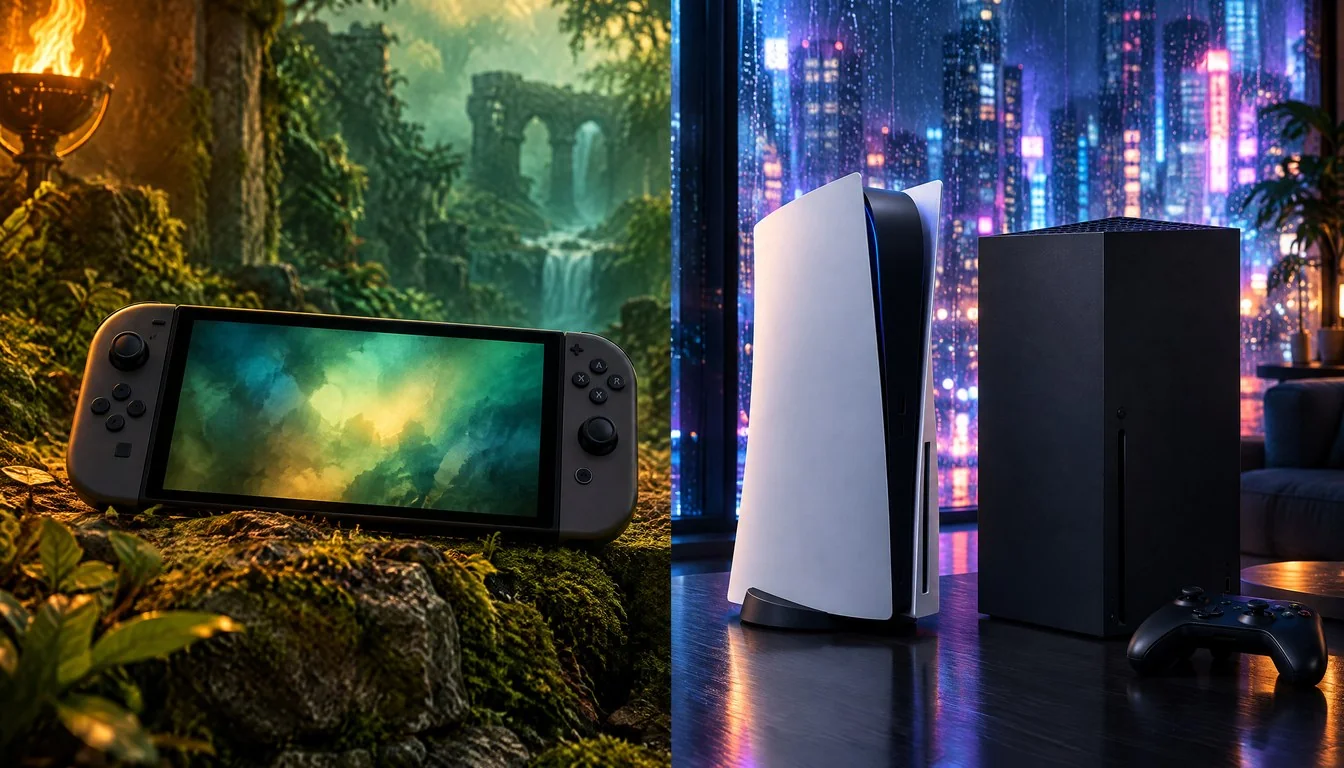
Every major publisher with a release ready for November 2026 has done the same thing: moved it. Grand Theft Auto VI, Rockstar Games’ first new entry in the series since 2013, has turned the month into a dead zone for competing launches. Nintendo did the opposite. The company is shipping The Legend of Zelda: Ocarina of Time remake on Nintendo Switch 2 on November 5, 2026, exactly 14 days before Grand Theft Auto VI arrives on PlayStation 5 and Xbox Series X|S on November 19, 2026.
That gap, just two weeks, has become one of the most discussed scheduling decisions in gaming this year. It is not a case of a smaller studio stumbling into bad timing. It is a 28 year old game, originally released in 1998, going head to head in the same release window as the most anticipated entertainment product of the decade. The question dominating gaming forums, trade press, and now Wall Street desks covering both companies is simple: why would Nintendo do this, and can a remake actually hold its ground against Rockstar’s juggernaut.
Don't miss new tech stories on Google
Add TrendinTech once in the Google app and our stories appear in your news suggestions.
The 14 day gap that has the industry talking
The basic facts are not in dispute. The Legend of Zelda: Ocarina of Time remake launches on Nintendo Switch 2 on November 5, 2026. Grand Theft Auto VI launches on PlayStation 5 and Xbox Series X|S on November 19, 2026. Grand Theft Auto VI is not confirmed for Nintendo Switch 2 at launch, which means the two games are not fighting over the same hardware, but they are absolutely fighting over the same wallets, the same holiday shopping lists, and the same slice of gaming media attention.
What makes the timing notable is the behavior of everyone else in the industry. According to games.gg, the list of titles still scheduled to launch anywhere near Rockstar’s date has shrunk dramatically as publishers push their own releases earlier into October or later into December and January 2027. The outlet frames Ocarina of Time’s remake as one of the only major releases brave enough to sit inside that same month at all.
Gaming analyst Rishi Gupta, writing about the standoff, put the contrast in blunt terms. “GTA 6 is so big that every major game publisher evacuated November. Except Nintendo, who scheduled a remake of the highest-rated game ever made, a 99 on Metacritic, two weeks in front of it,” Gupta said, according to GamesRadar+. Gupta added a second observation that cuts to why Nintendo might feel comfortable making this move at all: “They’re the only company in the industry with a fanbase loyal enough to make that bet.”
That loyalty argument is not abstract. Nintendo has spent the better part of two years building one of the fastest selling console bases in US history, and the timing of this remake looks less like recklessness and more like a company betting on an audience it already has firmly in hand. For more on how that hardware base has grown, see our earlier coverage of the Switch 2 versus ROG Xbox Ally X handheld comparison.
Why a 1998 game still matters in 2026
To understand why anyone would compare a 28 year old Nintendo 64 game to the biggest open world release of the decade, it helps to look at what Ocarina of Time actually represents in gaming history. The original launched in 1998 and holds a 99 score on Metacritic, a figure that has stood for nearly three decades as one of the highest ever recorded for a video game on that aggregator. Few titles released since have matched it, and none have done so while also being remade for modern hardware in the same year as gaming’s single biggest release.
That history is exactly why Gupta’s comparison landed the way it did. Nintendo is not throwing a new, unproven IP into the ring against Rockstar. It is sending its most decorated single title, recoded for Switch 2, into the same month as Grand Theft Auto VI, banking on the fact that a critically perfect game from gaming’s golden era still pulls enough weight to coexist with the industry’s biggest modern blockbuster rather than get flattened by it.
It is worth being precise about what is confirmed here and what is not. Nintendo has not issued a public statement explaining its internal reasoning for the release date, and no outlet has confirmed that the company deliberately chose November 5 as a direct response to Rockstar’s schedule. What is confirmed is the date itself, the 14 day gap, and the fact that the original game’s critical reputation is being used throughout the current wave of coverage, including by Gupta, as the explanation for why the bet makes sense on paper.
What Grand Theft Auto V’s launch tells us about Rockstar’s ceiling
Rockstar’s side of this story carries its own set of numbers that explain why so many publishers are steering clear of its launch window entirely. Grand Theft Auto V, the previous mainline entry in the series, reportedly generated $1 billion in revenue within three days of its 2013 release. Gupta described that figure as “faster than any movie, album, or anything else ever sold” at the time, a claim that still holds up as a benchmark for entertainment launches across every medium, not just games.
That track record is the reason competing publishers are not simply cautious about November 2026, they are actively rescheduling around it. A game that cleared $1 billion in three days thirteen years ago, well before mobile gaming, streaming, and the current console generation expanded the addressable market, sets an expectation that this sequel could move even faster. DFC Intelligence has reportedly projected Grand Theft Auto VI could generate $3.2 billion in its first year, though that figure is a forecast rather than a confirmed outcome, and should be read as an estimate rather than a locked-in number.
Our earlier reporting tracked the run up to this release in detail, including the period when Rockstar finally broke its silence on leak activity and when speculation mounted over the PC version’s separate 2027 timeline. Both pieces of context help explain why console exclusivity and timing have become such a central part of the story heading into launch week.
Two very different audiences, two very different bets
The more useful way to read this scheduling clash is not as a head to head sales fight, because the two games are not actually competing for the same hardware dollar. Grand Theft Auto VI is not confirmed for Nintendo Switch 2 at launch, and Ocarina of Time’s remake is a Switch 2 exclusive. What they are competing for is attention, media cycles, holiday gift budgets, and the limited number of hours a player has in late 2026 to commit to a major release.
Nintendo’s calculation appears to rest on the idea that its audience does not necessarily overlap with Rockstar’s in a way that creates direct cannibalization. A parent buying a Switch 2 remake of a beloved childhood game for a kid, or a nostalgic adult who grew up on the N64 original, is not necessarily the same buyer lining up for an open world crime epic rated for mature audiences. If that read is correct, the 14 day gap is less a collision course and more two separate industries briefly sharing a calendar page.
That does not mean there is zero overlap. Plenty of players will have budget and time for only one major purchase in November, and attention is a genuinely scarce resource even when hardware platforms differ. The games and entertainment press can only run so many cover stories in a single month, and Rockstar’s gravitational pull on that coverage is part of why other publishers evacuated the window in the first place, as reported by games.gg.
Market context: the industry Nintendo and Rockstar are launching into
Both companies are entering this window with real momentum behind their respective platforms, based on figures tracked by research firm Circana. Circana recorded that the Nintendo Switch 2 sold 1.6 million units in the United States during June 2025 alone, which it described as the highest launch-month unit sales figure for video game hardware in US history, a mark that has since been cited widely as evidence of how deep Nintendo’s current hardware demand runs.
That early surge did not fade. Circana also reported that Nintendo Switch 2 hardware sales in the United States reached 4.4 million units across all of 2025, making it, in Circana’s framing, the fastest selling console in US history. Those numbers matter directly to this story, because they are the installed base Nintendo is counting on when it schedules a first-party exclusive two weeks ahead of the biggest release of the console generation.
The broader market backs up why both companies are fighting so hard for position this particular November. Circana’s annual tracking put total US video game sales at $60.685 billion in 2025, up roughly 1 percent from $59.876 billion in 2024. Growth in a market that size is hard won, and a launch window capable of moving the needle on an annual report that large explains the stakes on both sides of this November calendar.
Switch 2’s installed base and what it means for a remake’s ceiling
Research firm Statista has estimated that the combined audience for the original Nintendo Switch and the Switch 2 could reach 130 million people by the end of 2026, a figure that reflects just how large Nintendo’s total addressable market has become across two hardware generations. Statista separately noted that the Switch 2 sold more than 3.5 million units worldwide during its first four days on sale, underlining how quickly the newer hardware alone built its own base independent of the original Switch’s long tail.
Those figures are the backdrop against which Nintendo’s bet on Ocarina of Time needs to be judged. A remake does not need to out-earn Grand Theft Auto VI in absolute terms to be considered a success for Nintendo. It needs to convert a meaningful fraction of an installed base approaching 130 million people into buyers of a single, relatively low-risk remake of a game whose quality is not in question. Readers curious about how that hardware base is performing against other recent Switch 2 releases can check our coverage of the Witcher 3 Switch 2 patch fixing visual issues and the ongoing conversation around Switch 2 file sizes for major third-party ports.
Side by side: the two November 2026 launches
| Detail | The Legend of Zelda: Ocarina of Time (remake) | Grand Theft Auto VI |
|---|---|---|
| Publisher | Nintendo | Rockstar Games |
| Release date | November 5, 2026 | November 19, 2026 |
| Platforms | Nintendo Switch 2 (exclusive) | PlayStation 5, Xbox Series X|S |
| Original release | 1998 (Nintendo 64) | First entry in the mainline series since 2013 (GTA V) |
| Historical benchmark | 99 Metacritic score for the original 1998 release | GTA V reportedly made $1 billion in three days in 2013 |
| Gap between launches | 14 days | |
Confirmed facts versus industry speculation
Given how much chatter this scheduling decision has generated, it is worth separating what outlets have actually confirmed from what remains speculation dressed up as analysis. The table below lays out that distinction clearly, because several claims circulating in gaming forums and social media threads have outpaced what any outlet has verified on the record.
| Claim | Status |
|---|---|
| Ocarina of Time remake launches November 5, 2026 on Switch 2 | Confirmed |
| Grand Theft Auto VI launches November 19, 2026 on PS5 and Xbox Series X|S | Confirmed |
| 14 day gap between the two releases | Confirmed |
| Grand Theft Auto VI is not launching on Nintendo Switch 2 | Confirmed |
| Original Ocarina of Time holds a 99 Metacritic score | Confirmed, as reported by cited outlets |
| Nintendo deliberately scheduled the remake to compete with GTA 6 | Unconfirmed, no official statement from Nintendo |
| GTA VI first year revenue will reach $3.2 billion | Unconfirmed, a DFC Intelligence projection, not a reported result |
| Ocarina of Time remake includes a new jump button | Unconfirmed pending separate Nintendo confirmation |
How this fits the industry’s long history of dodging big launches
Publishers steering clear of a dominant competitor’s release window is not new behavior. The gaming industry has quietly rescheduled around Call of Duty’s annual fall launches for years, and studios have historically avoided stacking major releases against each other inside the same quarter whenever possible. What is unusual here is the scale of the evacuation. According to games.gg’s tracking of the November 2026 release calendar, the number of major titles still willing to launch anywhere near Grand Theft Auto VI has thinned out to almost nothing, with most publishers choosing to move earlier into October or push into December 2026 and January 2027 instead.
Nintendo’s decision to hold its ground inside that same month, rather than push the remake into a quieter period, is what has made this specific case stand out from the normal pattern of competitive scheduling. It is a company with nothing obvious to prove choosing to compete anyway, on the strength of a 28 year old game’s reputation rather than a new blockbuster built to go toe to toe with Rockstar on raw scale.
What retailers and holiday shoppers are watching
For retailers, the 14 day gap is less a collision and more a scheduling gift. A Switch 2 exclusive landing in early November gives stores a full two weeks to sell Ocarina of Time as a standalone holiday purchase before Grand Theft Auto VI arrives and absorbs the bulk of gaming related media coverage and foot traffic for the rest of the month. Rather than two games splitting attention on the same release day, shoppers get a clean sequence: buy the Zelda remake first, then line up for Rockstar’s release two weeks later.
That sequencing could end up benefiting both companies more than a head-on collision would have. Nintendo gets an uncontested week and a half of retail shelf space and media attention before Rockstar’s launch swallows the news cycle, while Rockstar still gets its traditional mid-November window without a same-day rival on a separate platform siphoning off coverage. Whether that was the actual intent behind Nintendo’s scheduling remains unconfirmed, but the practical effect lines up with that reading regardless of motive.
The clash has already crossed over into mainstream pop culture well ahead of either launch. Saturday Night Live turned the standoff into a Weekend Update bit pitting a Grand Theft Auto VI character against Zelda’s Link, a sign of how far this scheduling story has traveled beyond gaming media, as noted by GTA BOOM.
Competitive field beyond these two titles
It is worth remembering that Nintendo and Rockstar are not the only companies with a stake in how November 2026 plays out. Every publisher that moved a release away from Grand Theft Auto VI’s window effectively ceded part of that month to these two titles alone, concentrating holiday season attention on a narrower set of games than usual. That concentration raises the ceiling for both Nintendo and Rockstar simultaneously, since neither has to split shelf space, advertising budgets, or press coverage with a third major blockbuster competing for the same month.
It also means smaller and mid-sized studios face a genuinely difficult choice heading into the holiday quarter: launch earlier and risk getting lost in the pre-GTA 6 buildup, or launch later and compete against the inevitable wave of post-launch Grand Theft Auto VI coverage, reviews, and ongoing community buzz that will dominate gaming media well into December. Neither option is comfortable, which is exactly why so many chose to clear out of November entirely rather than gamble on either side of the calendar.
What happens if the bet does not pay off
Nintendo’s history of first-party remakes suggests the company has rarely been burned badly by this kind of release, even when timing looks aggressive on paper. A 99 Metacritic pedigree is a strong hedge against obscurity, and Nintendo’s own Switch 2 installed base, tracked by Circana at 4.4 million US units sold across 2025 alone, gives the remake a built-in audience that does not depend on winning any head-to-head comparison with Rockstar’s release.
The bigger risk is less about sales and more about media oxygen. If gaming press coverage tilts overwhelmingly toward Grand Theft Auto VI in the days immediately following November 5, Nintendo’s remake could see its own launch week overshadowed even if unit sales hold up fine on their own. That is the scenario Gupta’s framing was most directly addressing when describing Nintendo as the only publisher with a fanbase loyal enough to make this particular bet work regardless of what the press cycle looks like.
Five predictions for how November 2026 plays out
- Ocarina of Time’s remake will post strong opening week numbers on Switch 2 specifically because it faces no direct hardware competition from Grand Theft Auto VI, which is not confirmed for that platform.
- Media coverage volume will shift heavily toward Grand Theft Auto VI starting in the days before November 19, even if Nintendo’s remake continues selling steadily through the back half of the month.
- Retailers will lean into the 14 day gap deliberately, marketing Ocarina of Time as an early holiday gift purchase ahead of Grand Theft Auto VI’s own marketing blitz.
- Other publishers who moved their releases out of November will closely track both launches’ performance data to decide how they schedule major titles against future Rockstar releases.
- Expect continued debate over whether Nintendo’s timing was a deliberate competitive strategy or simple release pipeline scheduling, with Nintendo unlikely to comment directly on its internal reasoning either way.
The bigger picture for Nintendo’s release strategy
Regardless of how the next month of sales data shakes out, this moment says something about how confident Nintendo has become in its current position. A company less secure in its hardware base or its first-party catalog would almost certainly have slotted a remake of this caliber into a quieter month, free of any comparison to the industry’s biggest release. Instead, Nintendo appears comfortable letting a nearly three decade old game stand on its own reputation in the same conversation as Grand Theft Auto VI, a comparison that would have seemed almost unthinkable for most other publishers.
Whether that confidence was earned through deliberate strategy or simply a release calendar that happened to land this way, the outcome is the same: two of gaming’s most recognizable franchises, separated by generations and genres, sharing a single month in a way that has given the entire industry something to talk about weeks before either game has shipped a single copy.
Frequently asked questions
When does the Ocarina of Time remake release on Switch 2?
The Legend of Zelda: Ocarina of Time remake is scheduled to launch on Nintendo Switch 2 on November 5, 2026.
When does Grand Theft Auto VI release, and on what platforms?
Grand Theft Auto VI is scheduled to launch on November 19, 2026, for PlayStation 5 and Xbox Series X|S. It is not confirmed for Nintendo Switch 2 at launch.
How many days apart are the two releases?
The two releases are 14 days apart, with Ocarina of Time’s remake arriving first.
Did Nintendo confirm it scheduled the remake to compete with GTA 6?
No. Nintendo has not issued a public statement about its reasoning for the November 5 date, and no outlet has confirmed the timing was a deliberate response to Rockstar’s schedule. That explanation currently comes from industry analysis, not an official Nintendo statement.
What score did the original Ocarina of Time receive?
The original 1998 release holds a 99 score on Metacritic, among the highest scores ever recorded for a video game on that platform, as cited in coverage of this story.
How much did Grand Theft Auto V earn at launch in 2013?
Grand Theft Auto V reportedly generated $1 billion in revenue within three days of its 2013 release, a figure analyst Rishi Gupta described as faster than any movie, album, or other entertainment product sold at that time.
Is the $3.2 billion first year revenue figure for GTA VI confirmed?
No. That figure is a projection reportedly made by DFC Intelligence, not a confirmed sales result, and should be treated as a forecast rather than an actual outcome.
Does the Ocarina of Time remake include a jump button?
Some outlets have reported this detail, but it is not yet confirmed directly by Nintendo, so it should be treated as unverified until Nintendo addresses it officially.
Related Coverage
Owen Castellanos
Owen Castellanos is the Hardware & Gaming Reporter at TrendinTech, where he tests graphics cards, processors, consoles and peripherals and follows the games industry, from the major publishers to independent studios. He writes for readers who want to know whether a product is worth the money, and he is not shy about saying when it is not.
All stories by Owen Castellanos (403)