Samsung P9 Express microSD Card Hits $59.99, 25% Off [2026]

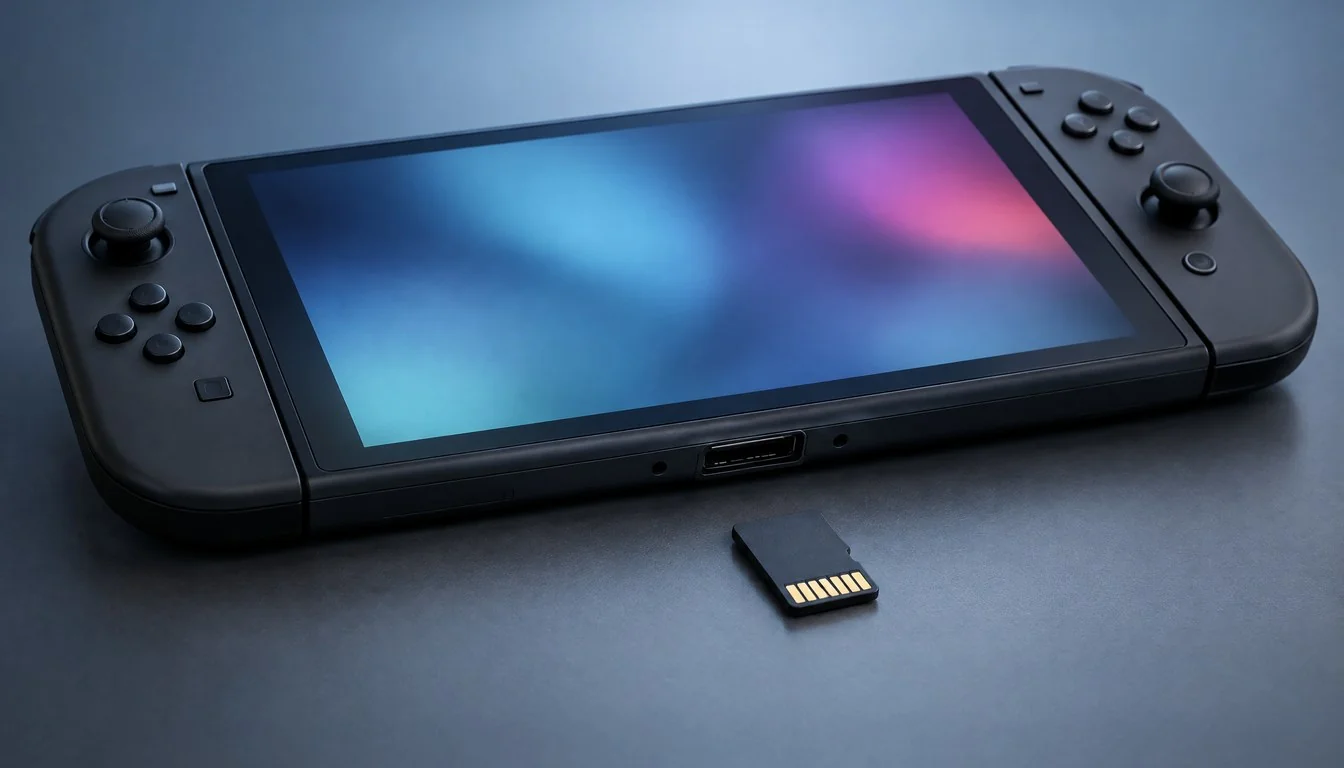
Samsung has cut the price of its P9 Express microSDXC cards built for Nintendo Switch 2, and the timing lines up with a console generation that finally needs memory cards fast enough to keep up with it. Amazon listings tracked by Android Authority and 9to5Toys on October 19, 2026 show the 256GB P9 Express at $59.99, down from its $79.99 list price, while the 512GB model has dropped to $99.99 against a $149.99 list price. That is a 25 percent cut on the smaller card and a 33 percent cut on the larger one, and for a product category that has spent most of 2026 stuck at or near full price, the discount is the kind of thing Switch 2 owners have been waiting for.
The P9 Express is not a generic microSD card with a Switch 2 sticker slapped on it. It is built around the microSD Express standard, a newer spec that uses a PCIe and NVMe pathway instead of the older UHS-I bus that every prior generation of Switch cartridge storage relied on. That distinction matters more than it sounds, and it is the reason this particular price drop is getting attention from outlets that do not normally cover memory card deals.
Don't miss new tech stories on Google
Add TrendinTech once in the Google app and our stories appear in your news suggestions.
What the Samsung P9 Express price cut actually changes
Samsung sells the P9 Express directly at $79.99 for the 256GB capacity and $149.99 for the 512GB capacity, according to the product pages on Samsung’s own site. Those are the official list prices the company has held since the card launched. The discount reported by Android Authority knocks the 256GB card down by $20 to $59.99 on Amazon, and 9to5Toys flagged the 512GB card falling to $99.99, which it described as the lowest price the 512GB card has reached since an earlier round of price increases pushed it as high as $200 before settling closer to $185 in recent months.
Newegg is also carrying discounted P9 Express stock, with the 256GB card showing up at prices between $65 and $89.95 depending on the specific listing, which puts Samsung’s direct Amazon price among the more aggressive discounts currently available rather than an outlier. Best Buy’s promotional page for microSD Express cards lists the 512GB card at $319.99 and the 256GB card without a markdown, which underlines how much the price varies by retailer right now. If you are shopping for a Switch 2 card this week, the retailer matters as much as the capacity.
None of the outlets reporting on this discount have confirmed it is the single lowest price the 256GB card has ever hit, and Samsung has not issued a press statement framing this as a planned promotion tied to any particular date. The practical story is simpler: a card that Switch 2 owners have needed since launch is now meaningfully cheaper at the two biggest online retailers carrying it.
Why Nintendo Switch 2 owners specifically need this card
Nintendo built the Switch 2 around game files that are dramatically larger than anything the original Switch ever asked a microSD card to handle. A card that tops out at 90MB/s under the old UHS-I spec, which is what every Switch 1 microSD card used, turns load times and patch installs into a bottleneck once file sizes climb into the double-digit gigabyte range. Samsung’s P9 Express is rated for sequential reads up to 800MB/s when running in SD Express mode, nearly nine times faster than the UHS-I ceiling, and it falls back to the familiar 90MB/s if it is ever used in an older UHS-I-only device.
That speed jump is not cosmetic. Switch 2 titles are shipping at file sizes that would have been unthinkable on the original console, and Switch 2 owners juggling a growing library quickly run into the console’s limited internal storage. A fast, affordable microSD Express card is effectively the only way to expand storage without constantly deleting and reinstalling games, which is exactly why a $20 to $50 price swing on these cards generates headlines that a typical memory card markdown never would.
For context on how big the problem has gotten, consider two recent Switch 2 releases that TrendinTech’s hardware desk has covered. Switch 2 file sizes for Call of Duty: Modern Warfare 4 hit 84.9GB, while Resident Evil 2’s remaster needs a comparatively modest 14GB. A single install of a major third-party title can now eat more than a third of a 256GB card, which is the gap the P9 Express discount is landing in the middle of.
Inside the P9 Express: specs that explain the price
Samsung’s spec sheet for the P9 Express lists a PCIe Gen3.0x1 interface running NVMe 1.3 over the SD 7.1 standard, with UHS-I backward compatibility built in. The card uses Samsung’s own V-NAND TLC memory paired with an SM2708 controller, and it carries U3, V30, and A1 speed class ratings, the same tier of classification buyers would look for on a card meant for 4K video capture or fast application loading, not just casual photo storage. Samsung backs the card with what it calls 6-Proof Protection, covering water, temperature, X-ray, magnetic, drop, and wear resistance, plus a 3-year limited warranty.
That combination of NVMe-level throughput in a microSD form factor is still relatively new technology, and it explains why these cards have carried a premium over ordinary microSD cards since the Switch 2 launched. microSD Express is a different manufacturing process and a different licensing structure than the UHS-I cards that have dominated the market for over a decade, and early adopter pricing on new storage standards almost always starts high before competition and yield improvements bring it down.
| Spec | 256GB P9 Express | 512GB P9 Express |
|---|---|---|
| Samsung list price | $79.99 | $149.99 |
| Discounted Amazon price | $59.99 | $99.99 |
| Discount percentage | 25% off | 33% off |
| Sequential read speed (SD Express mode) | Up to 800 MB/s | Up to 800 MB/s |
| Sequential read speed (UHS-I fallback) | Up to 90 MB/s | Up to 90 MB/s |
| Interface | PCIe Gen3.0x1, NVMe 1.3, SD 7.1, UHS-I | PCIe Gen3.0x1, NVMe 1.3, SD 7.1, UHS-I |
| NAND type | Samsung V-NAND TLC | Samsung V-NAND TLC |
| Controller | SM2708 | SM2708 |
| Speed class | U3, V30, A1 | U3, V30, A1 |
| Warranty | 3-Year Limited Warranty, 6-Proof Protection | 3-Year Limited Warranty, 6-Proof Protection |
microSD Express versus the old UHS-I standard Switch owners know
Why the original Switch never needed this
The original Nintendo Switch launched in 2017 with a cartridge slot that read microSD and microSDXC cards over the UHS-I bus, a standard that tops out around 104MB/s in theory and closer to 90MB/s in most real-world cards, including Samsung’s own. That was plenty for a console whose biggest games rarely broke 15 to 20GB. Switch 2 changes the math entirely. It supports microSD Express, a format that physically fits the same card slot but uses an entirely different electrical interface underneath, borrowing the NVMe protocol used in solid state drives rather than the older SD bus logic.
That is why a Switch 2 owner cannot simply reuse an old UHS-I card from their original Switch and expect Switch 2 speeds. A UHS-I card will still work in the Switch 2, but it will cap out at the same 90MB/s or so it always did. Only a card built to the microSD Express spec, like the P9 Express, SanDisk’s own Switch 2 Express cards, or similar cards from other manufacturers, will actually deliver the faster loading the new console’s larger games benefit from.
How the P9 Express compares to Samsung’s own portable SSD lineup
Samsung’s storage catalog spans far beyond this one microSD card, and the company’s portable SSD line gives a useful reference point for what “fast” means across its product range. TrendinTech’s own benchmarking coverage found that Samsung’s T9 portable SSD and rivals from SanDisk and Crucial push sequential speeds well past 2,000MB/s, and dedicated NVMe enclosures reviewed in TrendinTech’s portable M.2 NVMe SSD build guide can clear 6,000MB/s under the right conditions. Against that backdrop, the P9 Express’s 800MB/s ceiling looks modest, but it is still roughly nine times what the Switch 1 generation of cards could manage, and it is delivered in a form factor the size of a fingernail rather than a standalone drive with its own enclosure and cable.
The interface comparison also matters for anyone deciding between external SSD storage and a microSD Express card for their Switch 2. TrendinTech’s look at Thunderbolt 5 versus USB4 2.0 portable SSDs found pricing around $400 per terabyte for the fastest external drives on the market, while the discounted P9 Express now works out to roughly $195 per terabyte at the 512GB price point. The Switch 2’s cartridge slot cannot use an external SSD at all, though, so for console storage expansion the microSD Express card remains the only real option regardless of how its per-terabyte price compares to USB-connected drives built for PCs.
Switch 2 hardware context: why storage keeps coming up
Storage has been a recurring theme in Switch 2 coverage since launch, and not by accident. TrendinTech’s comparison of the Switch 2 against the ROG Xbox Ally X noted that both machines ship with internal storage that fills up fast once a handful of modern titles are installed, pushing buyers toward expansion cards or external drives almost immediately after unboxing. The ranking of the best handheld consoles of all time that TrendinTech published this year likewise flagged expandable storage speed as one of the clearer differentiators between handheld generations, not just raw processing power.
Big first-party Switch 2 titles are adding to the pressure. TrendinTech’s hands-on look at The Legend of Zelda: Ocarina of Time on Switch 2 covered a remaster built with modern texture work that, like most Switch 2 remasters, is considerably larger on disk than its original release. Multiply that kind of file size growth across a full game library and the appeal of a cheaper, faster microSD Express card becomes obvious: it is less about convenience and more about whether a Switch 2 owner can keep more than three or four big games installed at once.
Market impact: what a price cut like this signals
Price drops on licensed console accessories tend to follow predictable patterns. Early in a console’s life, official or officially licensed storage accessories carry a premium because supply is constrained and demand is concentrated among early adopters willing to pay it. As the install base grows and competing manufacturers catch up with their own compatible cards, prices soften. The fact that Samsung’s price cut is showing up roughly a year and a half after Switch 2’s original 2025 launch window fits that pattern closely, and it suggests retailers are now treating microSD Express cards as a mainstream accessory category rather than a scarce launch-window add-on.
It also puts pressure on other manufacturers making Switch 2 compatible cards. SanDisk, Lexar, and other storage brands have their own microSD Express products on the market, and a sustained discount from Samsung, one of the two or three biggest names in flash memory, tends to force competitors to match pricing or lose shelf space. Newegg’s current range of P9 Express listings between $65 and $89.95 for the 256GB card suggests that process is already underway, with different retailers settling on different price points rather than a single uniform market price.
Historical context: how Nintendo storage pricing has evolved
Nintendo’s relationship with microSD storage pricing has always lagged a generation behind the broader memory card market. When the original Switch launched in 2017, 128GB UHS-I cards cost around $35 to $40, a price that fell steadily over the console’s seven-year run as NAND flash costs dropped and UHS-I became a commodity technology with dozens of manufacturers competing on price. microSD Express is still in its early years by comparison. It is a newer standard with fewer manufacturers currently producing compatible cards, which is part of why the P9 Express launched at a higher relative price than UHS-I cards ever did for the first Switch.
9to5Toys’s price history noted the 512GB card has swung widely since its debut, launching near $100, climbing as high as $200 during a period of tighter memory supply, and settling closer to $185 before this latest discount. That kind of volatility is unusual for a console storage accessory and points to a market still working out where microSD Express pricing should land as more manufacturers enter the category and production scales up.
Competitive comparison: P9 Express against the rest of the microSD Express field
Samsung is not the only company selling microSD Express cards for Switch 2, and buyers comparing options are generally weighing speed claims, warranty terms, and price per gigabyte against each other. The table below lines up what is currently confirmed about the P9 Express against its own official specs at full list price, since third-party competitor pricing and official spec sheets were not independently confirmed for this piece and should not be assumed to match.
| Metric | P9 Express 256GB | P9 Express 512GB |
|---|---|---|
| List price | $79.99 | $149.99 |
| Current Amazon price | $59.99 | $99.99 |
| Price per GB (discounted) | About $0.23/GB | About $0.20/GB |
| Rated read speed | 800 MB/s | 800 MB/s |
| Rated write speed | Not specified in official listing | Up to 310 MB/s (per retailer listing) |
| Warranty term | 3 years | 3 years |
| Retailer carrying discount | Amazon, Newegg | Amazon |
The 512GB card’s price per gigabyte is now slightly better than the 256GB card’s, which is typical for flash storage once a larger capacity reaches a comparable discount tier. For buyers trying to decide between capacities, that math tends to favor stretching the budget to 512GB if the $40 price gap between the two discounted cards is affordable, since the larger card holds roughly double the games for proportionally less money per gigabyte.
What this means for Switch 2 buyers right now
For anyone who bought a Switch 2 at launch and has been putting off a storage upgrade, this is the first time Samsung’s own card has dropped meaningfully below its list price at a major retailer. The 256GB card at $59.99 is a reasonable entry point for a casual player with a handful of digital titles, while the 512GB card at $99.99 makes more sense for anyone collecting multiple full-size third-party releases like Modern Warfare 4, where a single install can run past 80GB.
Buyers should still check whether a card is genuinely microSD Express rated before purchasing, since older UHS-I cards remain on the market at lower prices and will physically fit the Switch 2’s card slot without delivering any of the speed benefit. Looking for the SD Express or microSD Express label specifically, rather than just “compatible with Switch 2,” is the simplest way to avoid that mistake.
Predictions: where Switch 2 storage pricing goes next
- More manufacturers will likely enter the microSD Express market over the next six to twelve months, and increased competition should push prices on both Samsung’s cards and rival products down further, following the same curve UHS-I cards followed after the original Switch launched.
- Expect retailers to use microSD Express card discounts as a recurring promotional tool around major Switch 2 game releases, bundling or discounting cards whenever a large file size title like a Call of Duty entry ships, since that is when buyers are most storage-constrained.
- Samsung will probably introduce a 1TB P9 Express or successor capacity within the next year as game file sizes continue climbing, mirroring how microSD capacities expanded steadily through the original Switch’s lifespan.
- Price volatility on the 512GB card, which 9to5Toys noted has swung between roughly $100 and $200 over its life so far, should gradually settle into a narrower band as NAND flash supply stabilizes and microSD Express production scales up across more manufacturers.
- Competing brands will likely match or undercut Samsung’s discounted pricing within weeks, since console accessory pricing across major retailers tends to converge quickly once one manufacturer makes a visible move.
The bigger picture for Nintendo’s storage strategy
Nintendo’s decision to require microSD Express rather than sticking with UHS-I for Switch 2 was always going to create a transition period where compatible cards cost more than buyers were used to paying for Switch accessories. That transition is still playing out, and this week’s price cuts from Samsung are an early sign that the premium is starting to come down as the format matures. Whether that trend continues through the rest of 2026 and into 2027 will depend largely on how many other manufacturers follow SanDisk and Samsung into the microSD Express category, and how quickly NAND flash costs move in buyers’ favor.
For now, the practical takeaway for Switch 2 owners is straightforward: the two cards Nintendo’s own ecosystem has leaned on most heavily since launch just got cheaper at two of the biggest online retailers, and that is unlikely to be the last discount of its kind before the holiday shopping season picks up.
Frequently asked questions
What is the new price of the Samsung P9 Express microSD card?
Amazon is currently listing the 256GB Samsung P9 Express at $59.99, down from its $79.99 list price, and the 512GB card at $99.99, down from $149.99, according to listings reported by Android Authority and 9to5Toys on October 19, 2026.
Does the Nintendo Switch 2 require a special microSD card?
The Switch 2 accepts older UHS-I microSD cards, but they are limited to about 90MB/s. To get the console’s full storage speed, you need a microSD Express card like the P9 Express, which supports speeds up to 800MB/s.
Is the Samsung P9 Express faster than a regular microSD card?
Yes. Samsung rates the P9 Express at up to 800MB/s in SD Express mode, compared with up to 90MB/s for standard UHS-I microSD cards, a nearly ninefold increase in rated sequential read speed.
What capacities does the P9 Express come in?
Samsung currently sells the P9 Express in 256GB and 512GB capacities, priced at $79.99 and $149.99 respectively before any retailer discounts.
Is this the lowest price the P9 Express has ever reached?
9to5Toys described the 512GB card’s $99.99 price as its lowest since an earlier round of price increases pushed it as high as $200. No outlet has confirmed whether the 256GB card’s $59.99 price is an all-time low.
What warranty does the P9 Express include?
Samsung backs the P9 Express with a 3-year limited warranty and what it calls 6-Proof Protection, covering resistance to water, temperature extremes, X-rays, magnets, drops, and general wear.
Can I use a regular microSD card in my Switch 2 instead?
Yes, standard UHS-I microSD cards physically work in the Switch 2’s card slot, but they run at the older, slower 90MB/s ceiling rather than the up to 800MB/s the console can use with a microSD Express card.
Where can I find this discount?
Android Authority and 9to5Toys both reported the discounted pricing appearing on Amazon as of October 19, 2026. Newegg is also carrying discounted P9 Express stock at varying prices depending on the specific listing.
Related Coverage
Owen Castellanos
Owen Castellanos is the Hardware & Gaming Reporter at TrendinTech, where he tests graphics cards, processors, consoles and peripherals and follows the games industry, from the major publishers to independent studios. He writes for readers who want to know whether a product is worth the money, and he is not shy about saying when it is not.
All stories by Owen Castellanos (386)Related Articles

PS Plus Cloud Streaming PC Setup: 13 Steps, 50 Min [2026]
Best Handheld Console of All Time 2026: 12 Systems Ranked