
Is it Possible to See the Edge of the Universe?
Scientists hypothesize that there’s an edge to the Universe, as like most things, does not go on forever. But, is that is the case, what does it look like?

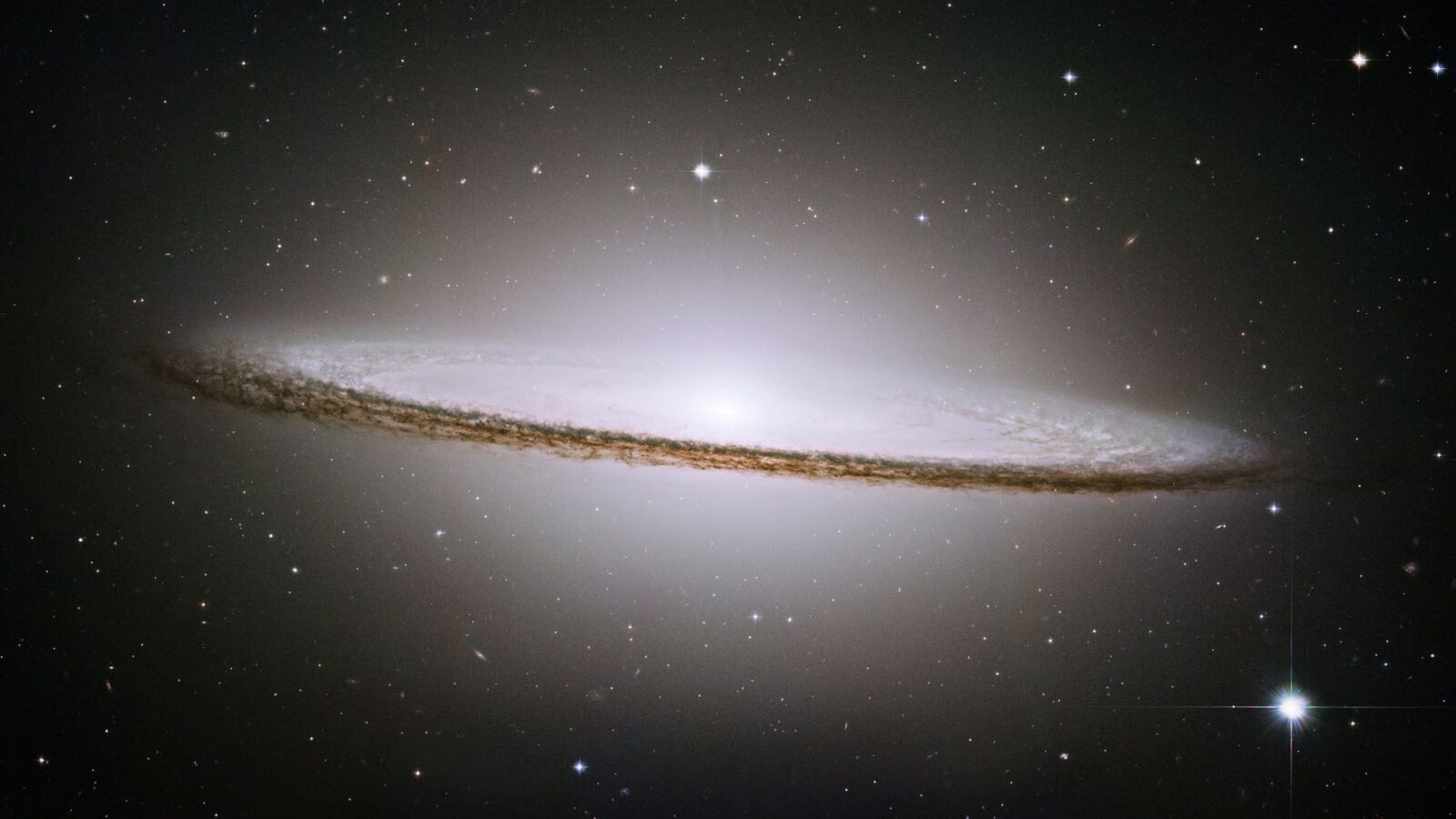
Scientists hypothesize that there’s an edge to the Universe, as like most things, does not go on forever. But, is that is the case, what does it look like? Would we be able to recognize it? One thing we are fairly certain of is that the Universe began around 13.8 billion years ago following that almighty cosmic event, The Big Bang. What we see in the Universe today is the result of expanding space and matter that’s undergone gravitational attraction. However, there’s still a limit to what we can see and beyond a certain point, the stars disappear along with the galaxies that contain them.
Beyond our own Milky Way lies a sea of other galaxies that are all sorts of shapes, sizes, masses, and types. Those that are farther away are likely to be smaller and lower in mass than our own and also have much bluer stars. This makes sense because the farther away we look, the farther back in time we’re observing, so the longer it takes light to reach us. The deepest image of the distant Universe is the Hubble eXtreme Deep Field (XDF). In it, there are thousands of galaxies, all at a variety of distances from one another. However, one thing you can’t see in the image is that each galaxy has an associated spectrum where gas clouds absorb light at certain wavelengths. That wavelength then stretches as the Universe expands and as a result of the farther away galaxies appear more red than normal, enabling scientists to infer their distance.
Millions of years ago the radiation levels in the Universe were that high that no neutral atoms were able to form and photons continually bounced off charged particles. The leftover glow that appeared when neutral atoms did eventually form was called the Cosmic Microwave Background. Anywhere you look out today you will see the same cosmic story unfolding from now right back until the time of the Big Bang itself. However, what you can see is simply the observable Universe, it is not a real boundary in space, just a boundary in time. We’re limited to what we can see because the speed of light will only permit information to travel so far following the Big Bang.
If you were to travel to the time just before the Big Bang you would see the Universe in the midst of cosmic inflation where the Universe was expanding fast and pre-existing particles were pushed out. When this inflation came to an end where we are, the Universe was filled with matter and radiation from the Big Bang, creating what we know today as the observable universe. The limit to what we can see is around 46 billion light years away. While on the surface the Universe would look very much the same all over, the individual components would differ from one another. But just remember that the Universe isn’t finite in volume and that’s because the Big Bang is that boundary in time that separates us from the rest.
More News to Read
- Lost in The Wild? This Drone Can Boost your Cell Signal
- A Look into the Early Mars Climate
- General Relativity in a Supermassive Black Hole
- Future Generations May Never Need to Learn to Drive
- Get the Lowdown on the Tesla Semi
Related Coverage
- Physicists Create Theory on Self-Interacting Dark Matter
- Apple designed its own external phone battery
- The Gene Has Been Found, No More Gray Hair
- Have Scientists Finally Unraveled the Mysteries of Antimatter?
- Does Nuclear Physics Hold the Key to Finally Unfolding the Standard Model?
Don't miss new tech stories on Google
Add TrendinTech once in the Google app and our stories appear in your news suggestions.
Yusuf Demir
Yusuf Demir is the Cloud & Software Reporter at TrendinTech, where he covers cloud infrastructure, enterprise platforms, developer tools and the digital transformation of businesses in the UK and the United States. He previously reported on enterprise technology for The Register in London and covered the cloud and SaaS beat for TechCrunch, following the competition between AWS, Microsoft Azure and Google Cloud, the open source licensing disputes and the rise of Kubernetes. Yusuf holds an MEng in Computing from Imperial College London and speaks regularly at KubeCon and AWS re:Invent, where he moderates conversations with engineers and chief technology officers. He is most interested in the gap between vendor roadmaps and the systems engineers actually run, and in what the cloud bill looks like once the free credits expire.
All stories by Yusuf Demir (294)