Hasbro Hikes Outlook as Magic Tops $600M in Q3 [2026]


Hasbro said on October 20, 2026, that Magic: The Gathering generated $616 million in third-quarter revenue, the first time the 33-year-old card game has cleared $600 million in a single quarter. The result, up 34% year over year, pushed Hasbro to raise its full-year 2026 outlook and double its planned share-repurchase target, a sharp contrast to a video game industry that has spent much of 2026 announcing layoffs and studio closures.
The filing, posted to the U.S. Securities and Exchange Commission, shows Hasbro’s total revenue rising 15% year over year, marking the company’s fourth consecutive quarter of double-digit growth. For a toy and games company whose fortunes have swung between hit movie tie-ins and licensing deals for three decades, the quarter marks a turning point: a single card game, sold mostly in specialty hobby stores and increasingly through a digital client, is now the single biggest driver of Hasbro’s earnings.
Don't miss new tech stories on Google
Add TrendinTech once in the Google app and our stories appear in your news suggestions.
Hasbro’s Q3 2026 Earnings, by the Numbers
Hasbro, Inc. (NASDAQ: HAS) reported operating profit of $517 million for the quarter and adjusted operating profit of $541 million, up 52% year over year, according to the company’s official release. Reported net earnings came to $2.77 per diluted share, while adjusted earnings per diluted share hit $2.90, comfortably ahead of the $1.86 consensus estimate cited by Benzinga.
The results included roughly $55 million in tariff refunds, which Hasbro attributed to favorable mix and ongoing cost productivity work. The company returned $206 million to shareholders through dividends and share buybacks during the quarter and put another $79 million toward debt reduction, including open-market bond repurchases meant to pre-fund 2026 and 2027 bond maturities.
| Metric | Q3 2026 Result | Change vs. Q3 2025 |
|---|---|---|
| Total revenue | Up 15% year over year | Fourth straight quarter of double-digit growth |
| Operating profit | $517 million | Includes ~$55 million in tariff refunds |
| Adjusted operating profit | $541 million | +52% |
| Reported EPS (diluted) | $2.77 | – |
| Adjusted EPS (diluted) | $2.90 | Beat $1.86 consensus estimate |
| Cash returned to shareholders | $206 million | Dividends plus buybacks |
| Debt reduction | $79 million | Bond repurchases, 2026/2027 maturities |
Magic: The Gathering Breaks the $600 Million Barrier
The headline number inside Hasbro’s report belongs to Wizards of the Coast. Magic: The Gathering revenue reached $616 million for the quarter, up 34% year over year and the first time the franchise has topped $600 million in a three-month span. It is also the second revenue record Magic has set in 2026: the card game first crossed $500 million in quarterly revenue just one quarter earlier, in results Hasbro reported on July 21, when the second-quarter figure landed at roughly $545.3 million, up 32% year over year, partly on the back of the Marvel Super Heroes crossover set.
That means Magic added more than $70 million in quarterly revenue in a single three-month stretch, a pace that has let the game’s year-to-date tabletop revenue climb well past $1.6 billion through the first nine months of 2026, according to Hasbro’s segment reporting. Hasbro’s official earnings materials, reviewed via Zolmax, credit the acceleration to a mix of tentpole set releases, strong backlist sales of older cards, and the expanding Secret Lair collectible-drop program.
Segment by Segment: Wizards, Consumer Products, and Entertainment
Hasbro’s Wizards and Digital Gaming segment, the business unit that houses Magic and the company’s licensed digital-gaming partnerships, grew 31% year over year in the quarter, with segment operating profit of $367 million, up 46%, and an operating margin of 49%. Digital and licensed gaming, the mobile and PC side of the segment that includes the hit free-to-play title Monopoly Go!, grew 3% and Monopoly Go! alone contributed $41 million of quarterly revenue.
Consumer Products, the toy and licensing segment, posted a smaller 4% revenue gain, led by Marvel, the KPop Demon Hunters toy line, and Transformers. Operating profit there reached $174 million and adjusted operating profit hit $178 million, up 100% year over year, helped by productivity initiatives and roughly $48 million in tariff-refund benefit. Entertainment, Hasbro’s smallest reporting segment, grew revenue 9% on strength in its Family Brands lineup, with adjusted operating profit of $18 million, up 63%.
| Segment | Revenue change | Operating profit | Key drivers |
|---|---|---|---|
| Wizards and Digital Gaming | +31% | $367 million (+46%), 49% margin | Magic: The Gathering (+34%), Monopoly Go! ($41M) |
| Consumer Products | +4% | $174M reported / $178M adjusted (+100%) | Marvel, KPop Demon Hunters, Transformers |
| Entertainment | +9% | $17M reported / $18M adjusted (+63%) | Family Brands |
| Year-to-date total | +15% | – | Wizards/Digital +28% YTD, Consumer Products +3% YTD, Entertainment -13% YTD |
Why Hasbro Raised Its 2026 Outlook
Hasbro used the Magic milestone to lift guidance for the rest of the year. The company now expects constant-currency revenue growth of 7% to 9% for full-year 2026, up from its previous 5% to 7% range. Adjusted operating margin guidance rose to 27% to 28%, from 25% to 26%, and adjusted EBITDA guidance climbed to between $1.575 billion and $1.625 billion. Hasbro also said it was doubling its planned 2026 share-repurchase target, choosing to return more cash to shareholders even as it keeps investing in the Magic pipeline and its licensing business.
| Guidance metric | Prior outlook | Updated outlook (Oct. 20, 2026) |
|---|---|---|
| Constant-currency revenue growth | 5% to 7% | 7% to 9% |
| Adjusted operating margin | 25% to 26% | 27% to 28% |
| Adjusted EBITDA | Roughly $1.45B to $1.50B | $1.575B to $1.625B |
| 2026 share-repurchase target | Baseline target | Doubled |
Gina Goetter, Hasbro’s chief financial officer and chief operating officer, walked analysts through the new targets on the earnings call, telling investors the company now expects “consolidated revenue to grow 7%-9% year-over-year on a constant currency basis and adjusted EBITDA to be in the range of $1.575 billion-$1.625 billion,” according to a transcript published by Investing.com. Goetter also said on the same call that “Magic revenue topped $600 million for the first time, growing 34% versus last year and beating the record we set last quarter.”
What Hasbro’s Executives Said on the Earnings Call
Chief executive Chris Cocks opened the call by flagging the guidance change before Goetter detailed the numbers, saying, “We are increasing our outlook for the year, which Gina will walk through in her remarks,” according to a transcript hosted on Yahoo Finance. In the company’s official results release, posted to Hasbro’s investor relations site, Cocks said, “Given this momentum, we are raising our 2026 outlook and doubling our share repurchase target for the year, balancing investment in the business with returning cash to shareholders.”
Cocks also pointed beyond the current quarter, adding in the same release, “With a Magic lineup that keeps building, we expect a strong finish to 2026 and continued growth in 2027.” That forward-looking line matters because it signals Hasbro does not see the Magic boom as a one-quarter spike tied to a single hit set, but as a sustained pattern it expects to carry into next year’s slate.
The Product Pipeline Behind the Growth
Hasbro’s own release points to a specific lineup of releases behind the surge. Reality Fracture launched worldwide on October 2, 2026, with Play Boosters priced at $5.49, Collector Boosters at $26.99, and Commander decks ranging from $29.99 to $49.99. Magic: The Gathering | The Hobbit, which released August 14, helped drive the prior quarter’s momentum. On the digital side, Wizards shipped Alchemy: Reality Fracture, a 31-card digital-only expansion for MTG Arena, on October 13, continuing a pattern of pairing every paper set with digital-exclusive content.
The collectibles side of the business kept pace too. Wizards launched the Secret Lair: Corn Maze Superdrop on October 12, with individual non-foil drops priced at $29.99 and foil versions at $39.99. Looking ahead, Magic: The Gathering | Star Trek is scheduled to release November 13, 2026, with preorders already open; official pricing lists Play Boosters at $6.99, Collector Boosters at $37.99, standard Commander decks at $74.99, Collector’s Edition Commander decks at $159.99, and Draft Night bundles at $119.99. A licensed crossover with a franchise as established as Star Trek gives Hasbro a built-in audience heading into the holiday quarter, the period Cocks referenced when he talked about a “strong finish to 2026.”
Market and Investor Reaction
Hasbro shares moved higher after the release, with coverage from The Verge’s gaming desk noting the result landed the same week as a wave of other gaming-industry headlines, from cloud-gaming pricing changes to major studio restructuring. Hasbro’s beat-and-raise quarter stood out for a different reason: unlike software and hardware companies wrestling with AI-driven cost pressure, Hasbro’s growth engine is a three-decade-old paper card game that has found a second life through digital distribution, licensed crossovers, and a thriving secondary collectibles market.
Analysts quoted by Benzinga and Investing.com framed the quarter as validation of Hasbro’s multi-year strategy of leaning into Magic and Wizards and Digital Gaming while trimming exposure to lower-margin toy lines. The adjusted EPS beat, at $2.90 against a $1.86 consensus, was large enough that several outlets described it as one of Hasbro’s strongest quarterly surprises in recent years.
Historical Context: From Tabletop Niche to Billion-Dollar Franchise
Magic: The Gathering has been published continuously since 1993, making it one of the oldest actively supported game franchises in any medium. For most of its history, the game’s revenue was tied almost entirely to print-run economics: booster packs, starter decks, and tournament organizer support sold through local game stores. What has changed over the past several years, and what shows up clearly in Hasbro’s 2026 numbers, is the addition of three new revenue layers on top of that original print business: a digital client in MTG Arena that sells cosmetic and gameplay content directly to players, a premium collectibles program in Secret Lair that functions almost like a direct-to-consumer drop model, and a growing slate of licensed crossover sets, Marvel, The Hobbit, and now Star Trek, that pull in collectors and franchise fans who might never buy a standard booster box.
That layered model is why Magic could go from its first $500 million quarter in July to its first $600 million quarter in October without a single flagship “mainline” set driving the entire gain. Each revenue stream now adds its own increment, and Hasbro’s guidance changes suggest the company expects all three to keep growing in parallel through 2027.
Competitive Comparison: Magic Against a Rough Year for Gaming
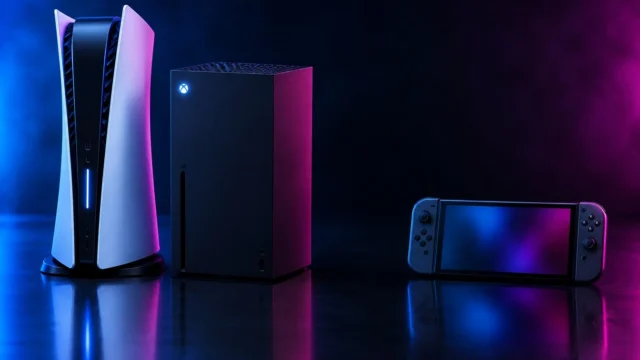
Hasbro’s quarter lands at an unusual moment for the broader games industry. Electronic Arts announced plans this same week to close BioWare and cut roughly 400 jobs, ending early development on the next Mass Effect game as part of a broader restructuring. That followed a string of other studio cutbacks across 2026, including Ubisoft’s closure of RedLynx and cuts in Singapore and Supermassive Games’ third consecutive year of layoffs. Console hardware has told a similarly difficult story, with Xbox and PlayStation hardware sales both down sharply this year, continuing a decline that had already pushed PS5 and Xbox hardware sales to a 13-year low.
Hasbro’s Wizards and Digital Gaming segment sits outside that pressure almost entirely. It does not depend on console hardware cycles, does not carry the fixed development costs of a triple-A video game studio, and benefits from a built-in secondary market that keeps older cards valuable and collectible years after release. That structural difference helps explain why a 103-year-old toy company’s trading-card division can post a 46% jump in operating profit in the same quarter that some of the biggest names in traditional video game publishing are cutting staff. It also helps explain investor enthusiasm elsewhere in gaming-adjacent markets this quarter, a dynamic visible in the broader market rally that lifted shares tied to AI and gaming infrastructure, as tracked in recent Nasdaq trading activity.
What Analysts and Investors Are Watching Next
The next test for Hasbro’s thesis arrives in November, when Magic: The Gathering | Star Trek ships against the busiest stretch of the holiday shopping season. Investors will also be watching whether Monopoly Go! and the rest of the digital and licensed gaming business, which grew just 3% in the quarter against Magic’s 34%, can pick up pace, and whether the Entertainment segment’s year-to-date 13% revenue decline stabilizes as the My Little Pony: Forever Friendship series, set to premiere exclusively on YouTube in early 2027, gets closer to launch.
Hasbro’s doubled buyback target also puts a new data point in front of shareholders: management is signaling confidence not just by raising sales guidance, but by committing more cash to repurchases rather than banking it or funneling it entirely into new product development.
Five Predictions for Hasbro and Magic Through 2027
- Magic: The Gathering | Star Trek’s November 13 launch will likely push Wizards and Digital Gaming to another record quarter when Hasbro reports full-year results, given the set’s crossover appeal and already-open preorders.
- Hasbro will keep expanding the Secret Lair collectible-drop model, since it lets the company sell the same intellectual property multiple times to the same collector base without competing against its own core boosters.
- Expect more licensed Magic crossovers announced for 2027, following the commercial pattern set by Marvel Super Heroes, The Hobbit, and Star Trek.
- Hasbro’s digital and licensed gaming growth, currently lagging tabletop Magic at just 3% this quarter, will become a bigger talking point on future earnings calls as investors ask why MTG Arena and Monopoly Go! are not growing as fast as the paper card business.
- Pressure will keep building on the rest of the traditional video game industry to explain why a tabletop card company is now outgrowing console publishers, a contrast likely to resurface the next time a major studio announces layoffs.
What This Means for Players and Collectors
For everyday Magic players, the financial milestone translates into a faster release cadence and more premium product tiers. Collector Boosters, Secret Lair drops, and licensed Commander decks all carry higher price points than a standard booster pack, and Hasbro’s results show those premium formats are a meaningful part of why revenue is climbing. Players who stick to Standard-format drafting and casual kitchen-table games may not feel much different, but the overall product mix is shifting toward the collector and crossover buyer, a trend the Star Trek set’s pricing, topping out at $159.99 for a Collector’s Edition Commander deck, makes explicit.
For the broader games industry, Hasbro’s quarter is a reminder that growth in interactive entertainment is not evenly distributed. While publishers tied to console and PC release cycles navigate layoffs and studio closures, a card game built on scarcity, collectibility, and steady digital reinvestment just posted one of the strongest quarters in its history. More coverage of the industry’s ups and downs is available in the gaming section.
Frequently Asked Questions
How much revenue did Magic: The Gathering generate in the third quarter of 2026?
Hasbro reported $616 million in Magic: The Gathering revenue for the third quarter of 2026, up 34% year over year and the first time the game has topped $600 million in a single quarter.
Why did Hasbro raise its 2026 outlook?
Hasbro cited the record Magic quarter and broader momentum in its Wizards and Digital Gaming segment, raising its constant-currency revenue growth target to 7% to 9%, its adjusted operating margin target to 27% to 28%, and its adjusted EBITDA guidance to $1.575 billion to $1.625 billion.
Who leads Hasbro, and who spoke on the Q3 2026 earnings call?
Chris Cocks is Hasbro’s chief executive officer and Gina Goetter is the company’s chief financial officer and chief operating officer. Both spoke on the October 20, 2026, earnings call about the Magic milestone and the raised outlook.
What new Magic: The Gathering products are coming next?
Magic: The Gathering | Star Trek is scheduled to release November 13, 2026, with preorders already open and pricing ranging from $6.99 Play Boosters to $159.99 Collector’s Edition Commander decks.
How does Hasbro’s quarter compare with the rest of the video game industry?
Hasbro’s results arrived the same week Electronic Arts announced plans to close BioWare and cut roughly 400 jobs, part of a broader pattern of 2026 layoffs and studio closures across traditional video game publishing and hardware sales.
Did Hasbro increase its share buyback program?
Yes. Hasbro said it was doubling its planned 2026 share-repurchase target alongside the raised revenue and margin guidance.
Which Hasbro segment grew the fastest in the third quarter of 2026?
Wizards and Digital Gaming, the segment that includes Magic: The Gathering, grew 31% year over year, far outpacing Consumer Products at 4% and Entertainment at 9%.
Is Magic: The Gathering available digitally as well as on paper?
Yes. Wizards of the Coast publishes paper sets alongside a parallel digital-only program on MTG Arena, including the Alchemy: Reality Fracture expansion that launched October 13, 2026, with 31 digital-exclusive cards.
Related Coverage
Helena Marsh
Helena Marsh is the Editor-in-Chief at TrendinTech, where she leads editorial strategy and oversees coverage across artificial intelligence, cybersecurity and enterprise technology. She believes technology reporting should be rigorous and plainly written, so readers understand what actually changes for them rather than what a company's announcement promises.
All stories by Helena Marsh (284)