

Google’s One Step Closer to Quantum Computing Supremacy Thanks to New Chip
The race to build the first quantum computer has been in play for quite some time now. Although minor developments keep being made, no one is still quite t

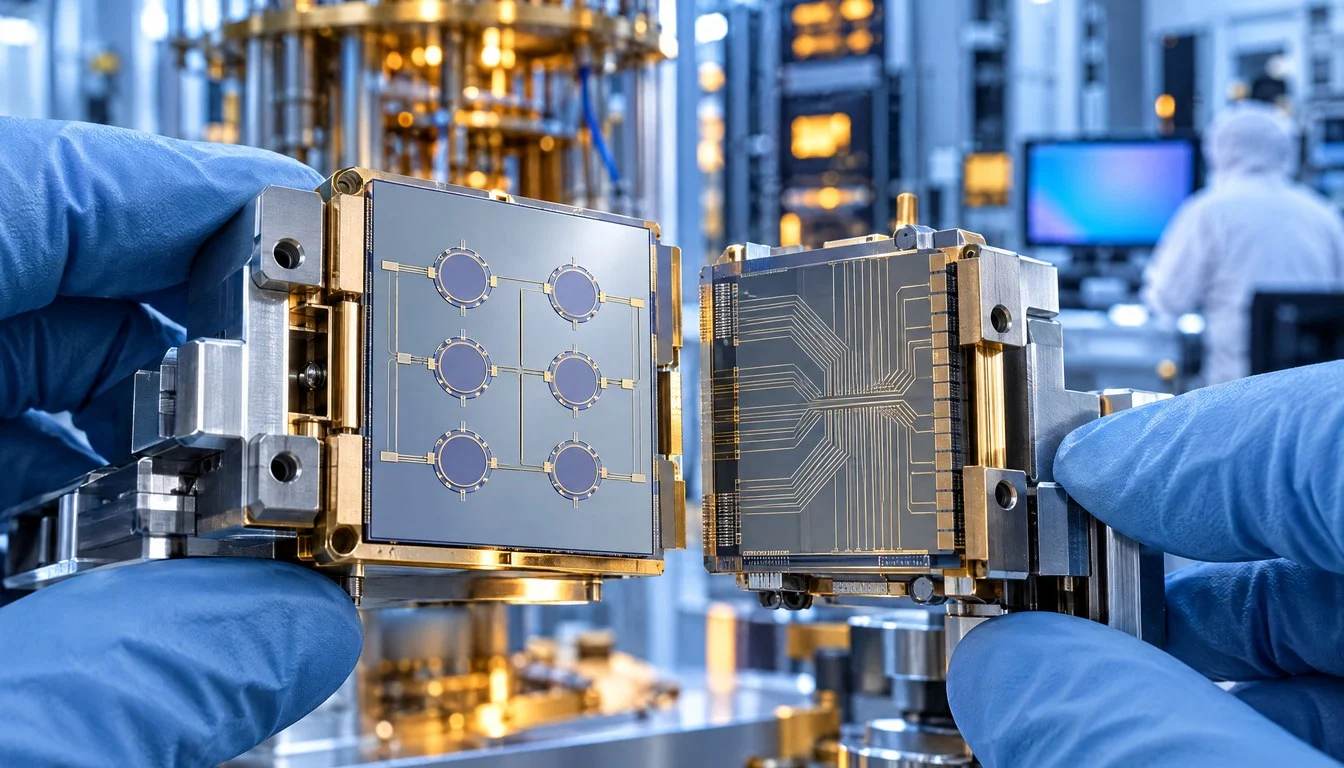
The race to build the first quantum computer has been in play for quite some time now. Although minor developments keep being made, no one is still quite there when it comes to building the first practical quantum computer. The main contenders in this race are IBM, Intel, Microsoft, and Google. However, Google may be about to fly ahead in the race as they announce plans to release a computer chip that can manipulate data using the quirks of quantum mechanics.
John Martinis is Google’s research leader working on the chips, and he says, “We think we’re ready to do this experiment. It’s something we can do now.” But, there’s still a way to go before the company reach their goals. So far the team has managed to produce a chip that has nine qubits in a line, but for the quantum supremacy experiment to work 49 qubits are needed. The latest chip produced by Google has six qubits arranged in a two-by-three configuration, proving that the technology will still work when the qubits are side by side opposed to in a line.
A new manufacturing method is also being tested as part of the experiment that involves the qubits and the wiring that controls them being made on separate chips and then “bump bonded” together later. “That process is all working,” says Martinis. “Now we’re ready to kind of move fast.” Martinis’ team is one of many research groups that’s formed recently in an attempt to make quantum computing possible, and Google itself is one of the leaders now. If Google does pull off what they set out to do this year, then it will certainly be a great achievement.
But, as pointed out by Chris Monroe, a professor at the University of Maryland and co-founder of quantum computing company IonQ, “Afterward you still have to figure out how to make it more scalable and programmable.” Martinis do agree that there is more work to be done but is confident the experiment could act as a benchmark for anyone claiming to have a quantum computer that works.
More News to Read
- Is a Trip to the Brightest Star Sirius on the Cards for Astronomers?
- Could Artificial Intelligence Really Be Used to Attain Human Immortality?
- 10 Cool iPhone Camera Tricks to Help Improve Your Photos
- Shining a Light on Dark Matter Halos
- Is Nitrogen the Next Step for Battery Advancement?
Comments
Don't miss new tech stories on Google
Add TrendinTech once in the Google app and our stories appear in your news suggestions.
Yusuf Demir
Yusuf Demir is the Cloud & Software Reporter at TrendinTech, where he covers cloud infrastructure, enterprise platforms, developer tools and the digital transformation of businesses in the UK and the United States. He is most interested in the gap between vendor roadmaps and the systems engineers actually run, and in what the cloud bill looks like once the free credits expire.
All stories by Yusuf Demir (349)![RTX 5090 vs RTX 4090: 25% Faster Without DLSS [2026]](https://trendintech.com/wp-content/uploads/2026/10/rtx-5090-vs-rtx-4090-native-performance-2026-gen-640x360.webp)
![Kioxia’s SSD Hits 20M IOPS, Takes Aim at DRAM [2026]](https://trendintech.com/wp-content/uploads/2026/10/kioxia-gp1-ssd-20-million-iops-dram-2026-gen-640x360.webp)
![Set Up a Portable M.2 SSD: 14 Steps to 3,800MB/s [2026]](https://trendintech.com/wp-content/uploads/2026/10/set-up-portable-m2-ssd-tutorial-2026-gen-1-640x360.webp)