

Switch 2 vs Steam Deck vs ROG Ally X20: 61FPS (2026)

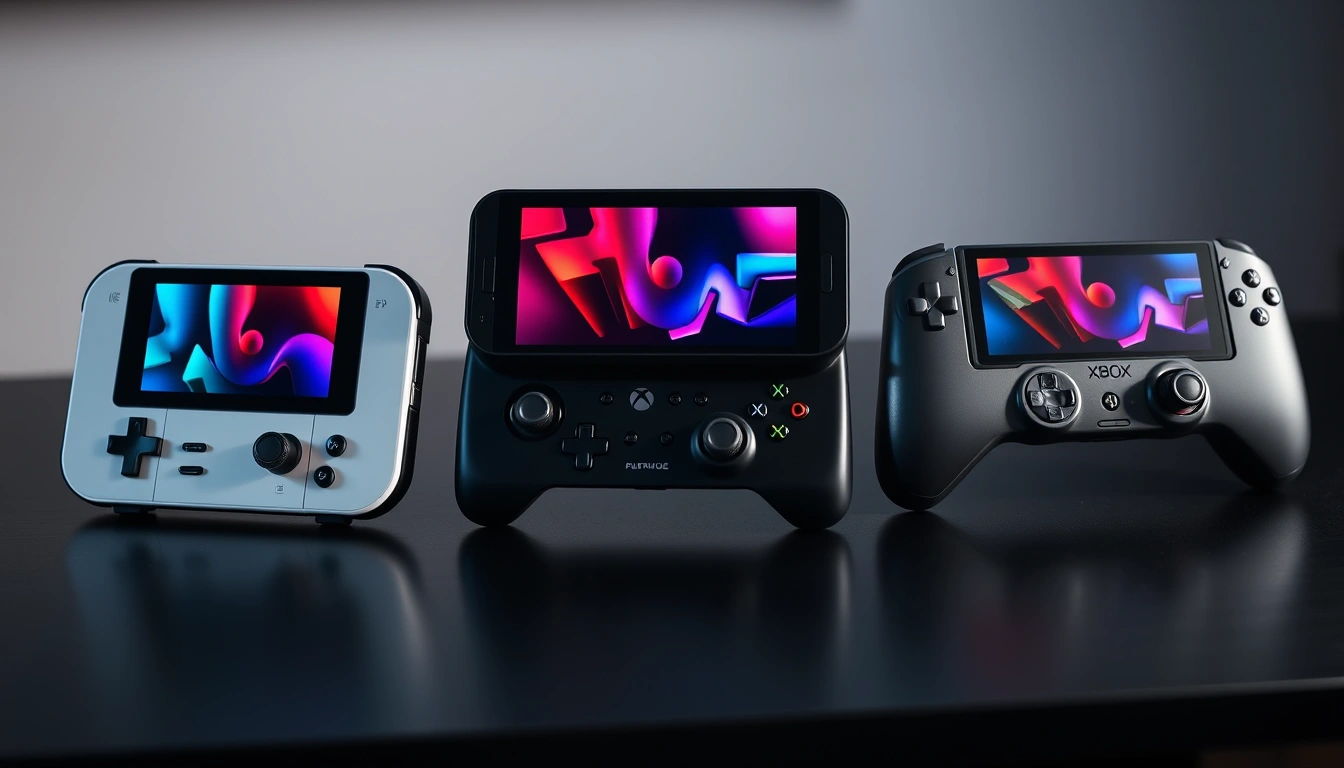
Three handhelds are fighting for the same backpack space in Australia right now, and none of them agree on what a gaming handheld should even be. The Nintendo Switch 2 is a closed console wearing a tablet’s body. The Steam Deck OLED is a Linux PC that happens to fold into your hands. And the ROG Xbox Ally X20, which starts shipping October 15, 2026, is Microsoft and ASUS trying to turn Windows into something you can play on a train without wanting to throw it. Picking between them used to be a question of brand loyalty. In late 2026 it is a question of frame rates, battery chemistry and which software ecosystem you are willing to live inside.
This comparison pulls specs straight from Nintendo, Valve and ASUS’s own technical pages, cross-checks the frame rate claims against Digital Foundry and ASUS’s own first-party benchmark data, and prices every configuration in Australian dollars as sold through local retailers in October 2026. It sits alongside our broader coverage of mobile and handheld gaming trends in 2026. If you are trying to work out whether Nintendo Switch 2 vs Steam Deck vs ROG Ally questions apply to your specific use case, the answer depends heavily on what you actually plan to play, so we have broken it down by scenario rather than just declaring an overall winner.
Don't miss new tech stories on Google
Add TrendinTech Australia once in the Google app and our stories appear in your news suggestions.
Three gaming handheld ecosystems, three different bets
Nintendo’s Switch 2 launched in June 2025 as the follow-up to the best-selling Switch, and it stayed a closed-garden console: you buy Nintendo-approved cartridges or digital codes, and that is the entire catalogue. Valve’s Steam Deck OLED, which has been on sale since late 2023 and remains the company’s current flagship handheld as of October 2026 (Valve has not released a Steam Deck 2), runs SteamOS on top of a Linux kernel and plays almost anything in your existing Steam library, plus a growing slice of Windows games through Proton compatibility layers. ASUS’s ROG Xbox Ally X20, developed jointly with Microsoft and announced in June 2026, runs full Windows 11 with a custom Xbox full-screen shell layered on top, giving it access to Steam, the Microsoft Store, Battle.net, Epic and Xbox Game Pass simultaneously.
That difference in philosophy matters more than any spec sheet number. A Switch 2 buyer is paying for first-party exclusives like Mario Kart World and Fire Emblem: Fortune’s Weave, which arrived on the platform September 17, 2026. A Steam Deck OLED buyer is paying for an open PC that already owns their existing Steam library. A ROG Xbox Ally X20 buyer is paying a premium for maximum compatibility and raw horsepower, with the tradeoff of carrying genuine Windows overhead, background processes and driver quirks into a handheld form factor.
Full specs comparison table
Here is how the three devices stack up on paper, using the manufacturers’ own published tech specs pages.
| Spec | Nintendo Switch 2 | Steam Deck OLED | ROG Xbox Ally X20 (2026) |
|---|---|---|---|
| Processor | Custom NVIDIA chip (publicly reported as Tegra T239-based) | Custom AMD APU, Zen 2 CPU / RDNA 2 GPU | AMD Ryzen AI Z2 Extreme (Zen 5 CPU / RDNA 3.5 GPU, up to 50 TOPS NPU) |
| RAM | 12GB LPDDR5X | 16GB LPDDR5 | 24GB LPDDR5X |
| Storage | 256GB internal, microSD Express expansion | 512GB or 1TB internal NVMe SSD, microSD expansion | Up to 1TB PCIe 4.0 NVMe M.2 SSD (2230), microSD Express expansion |
| Display | 7.9-inch LCD, 1920×1080, HDR10, VRR up to 120Hz | 7.4-inch OLED, 1280×800, up to 90Hz, roughly 1,000-nit HDR peak | 7.4-inch ROG Nebula OLED, 1920×1080, 120Hz |
| Measured brightness | Approx. 420 nits (Digital Foundry hardware review) | Up to 1,000 nits HDR peak (Valve spec) | Not independently measured yet (pre-launch) |
| Battery capacity | 19.7Wh | 50Wh | 80Wh |
| Rated battery life | 2 to 6.5 hours (Nintendo estimate) | 3 to 12 hours (Valve estimate) | Up to 9.9 hours light gaming, up to 2.7 hours heavy AAA gaming (ASUS estimate) |
| Weight | 401g console-only, approx. 534g with Joy-Con 2 attached | Approx. 640g | 756g |
| Operating system | Proprietary Nintendo OS | SteamOS (Linux-based) | Windows 11 Home with Xbox full-screen experience |
| Game library model | Closed, Nintendo-approved titles only | Steam library plus Proton-compatible Windows games | Windows-native: Steam, Xbox/Game Pass, Battle.net, Epic, Microsoft Store |
| Connectivity | Wi-Fi, Bluetooth, dock for TV output | Wi-Fi 6E, Bluetooth 5.3 | Wi-Fi 6E (triple band), Bluetooth 5.4 |
| Australian RRP (at launch) | A$699.95 | A$1,199 (512GB) / A$1,429 (1TB) | A$2,499 (20th Anniversary bundle, preorder) |
A few of those numbers deserve context. Nintendo lifted the Switch 2’s Australian recommended retail price from A$699.95 to A$769.95 effective September 1, 2026, so expect to pay the higher figure at JB Hi-Fi, EB Games, Big W, Target, Kmart or Amazon Australia today. The Steam Deck OLED’s pricing also climbed: Valve’s Australian distributor lifted the 512GB model from A$899 to A$1,199 and the 1TB model from A$1,049 to A$1,429. Full specifications on the Nintendo Switch 2 tech specs page and the Steam Deck OLED product page confirm the figures above.
Benchmark results: how they actually perform
Specs on paper only tell half the story, and this is where the three devices genuinely separate. Because the Switch 2’s library is closed and the other two run open PC architectures, there is no single game that runs natively on all three with identical settings. Instead, each outlet benchmarks within its own ecosystem, which is still useful for understanding generational jumps and relative headroom.
ROG Xbox Ally X-series: ASUS’s own Turbo mode benchmarks
ASUS publishes direct frame rate comparisons between its own current and previous-generation Ally hardware, tested at 1080p with default in-game graphics settings. In Turbo mode (35W, plugged into AC power), the Ryzen AI Z2 Extreme-powered Ally X hit 41fps in Doom: The Dark Ages against 28fps on the previous-generation Ryzen Z1 Extreme Ally X. Indiana Jones and the Great Circle jumped from 38fps to 61fps, and Cyberpunk 2077 went from 31fps to 41fps. Running on battery in Performance mode (17W), the gap persists: Doom went from 25fps to 36fps, Indiana Jones from 34fps to 56fps, and Cyberpunk 2077 from 22fps to 33fps. ASUS frames this as roughly a 30 percent generational performance increase, measured specifically in Indiana Jones and the Great Circle and Doom: The Dark Ages under Turbo mode at 1080p.
| Benchmark (1080p, Turbo/AC mode) | Previous-gen Ally X (Z1 Extreme) | ROG Xbox Ally X-series (Z2 Extreme) | Source |
|---|---|---|---|
| Doom: The Dark Ages | 28fps | 41fps | ASUS official benchmarks |
| Indiana Jones and the Great Circle | 38fps | 61fps | ASUS official benchmarks |
| Cyberpunk 2077 | 31fps | 41fps | ASUS official benchmarks |
| Mario Kart World (Switch 2, handheld/docked) | n/a | 60fps stable | TechRadar |
| Tears of the Kingdom (Switch 2) | n/a | Near 60fps, up to ~120fps at 1080p in favourable conditions | PCMag Australia |
| Cyberpunk 2077 (Switch 2 port) | n/a | 30fps target, dips observed, up to 40fps in lighter display mode | Digital Foundry |
| Baldur’s Gate 3 (Steam Deck OLED) | n/a | Approx. 30fps, low-to-medium settings with FSR | Pengulin review |
Treat this table as a reference point rather than a strict head-to-head, since no single game runs identically across a closed console, a Linux PC and a Windows PC. What it does show clearly is the size of the generational jump inside ASUS’s own Ally lineup, and the fact that Nintendo’s first-party engineering keeps the Switch 2 close to a locked 60fps in games built specifically for it, even though its silicon is the least powerful of the three on paper.
Switch 2: Digital Foundry and TechRadar’s hands-on numbers
Digital Foundry’s hardware review of the Switch 2 found that Nintendo’s hybrid approach prioritises stability over peak resolution. Mario Kart World, reported by TechRadar, holds a stable 60fps in both handheld and docked play, with docked output reaching 1440p and handheld output staying at 1080p. The Legend of Zelda: Tears of the Kingdom runs at close to 60fps in nearly all tested scenarios, according to PCMag Australia, with brief stretches approaching 120fps at 1080p under favourable conditions. Cyberpunk 2077’s Switch 2 port targets a more modest 30fps with dynamic resolution scaling between roughly 720p and 1080p, and Digital Foundry observed occasional dips below that target during dense city scenes. A lighter handheld display mode can push toward 40fps.
Steam Deck OLED: real-world PC game testing
Because the Steam Deck OLED runs full PC titles rather than console ports, its frame rates vary with graphics settings the player chooses. A 2026 hands-on review from independent outlet Pengulin found Baldur’s Gate 3 settling around 30fps using a low-to-medium settings mix with FSR upscaling enabled. Digital Foundry’s direct Switch 2 vs Steam Deck comparison piece noted that titles playable on both platforms ran at roughly 60fps with no major performance issues on either device, though the Steam Deck OLED draws dramatically more power doing it: its 50Wh battery is more than double the Switch 2’s 19.7Wh cell.
The pattern across all three benchmark sources is consistent: the ROG Xbox Ally X-series has the most raw horsepower and the biggest generational jump, the Switch 2 trades peak performance for consistency and efficiency in first-party titles, and the Steam Deck OLED sits in between, with frame rates dictated entirely by how aggressively the player tunes graphics settings.
Battery life and portability compared
On paper, bigger battery capacity should mean longer runtime, but handheld battery life is really a function of chip efficiency, screen brightness and how hard the game pushes the silicon. Nintendo’s own estimate for the Switch 2 is a wide 2 to 6.5 hour range depending on the game. Tom’s Guide measured just under 2.5 hours playing Breath of the Wild with Wi-Fi enabled and automatic brightness, while TechAdvisor’s mixed-session test across Fall Guys, Mario Kart World with GameChat active, and Zelda returned 3 hours, 12 minutes and 17 seconds. That is a smaller battery doing less work per charge, but it also means a lighter, cooler-running device.
Valve rates the Steam Deck OLED at a broad 3 to 12 hours, and that range is honest: light 2D indie games sip power while demanding AAA titles at high settings will drain the 50Wh cell inside three hours. ASUS rates the ROG Xbox Ally X20 at up to 9.9 hours for light gaming but only around 2.7 hours under heavy AAA load at maximum performance, despite packing the largest 80Wh battery of the three. That is the tradeoff of running full Windows 11 with a power-hungry Ryzen AI Z2 Extreme chip: more battery capacity is partly cancelled out by higher baseline power draw.
Weight follows the same logic. The Switch 2 is the lightest at 401g without controllers (534g with Joy-Con 2 attached), the Steam Deck OLED sits in the middle at roughly 640g, and the ROG Xbox Ally X20 is the heaviest at 756g. For anyone who plans to hold a handheld for session lengths beyond an hour, that 355g gap between the lightest and heaviest device is genuinely noticeable in wrist fatigue over a commute or long flight.
Display and screen quality compared
The Switch 2 uses a 7.9-inch LCD panel running at 1920×1080 with HDR10 support and variable refresh rate up to 120Hz, but Digital Foundry’s hardware review found actual peak brightness closer to 420 nits, which limits how much the HDR10 label actually delivers in practice. Both the Steam Deck OLED and ROG Xbox Ally X20 use OLED panels instead, which deliver deeper blacks and wider contrast than the Switch 2’s LCD. The Steam Deck OLED runs at a lower native resolution (1280×800) but reaches up to 90Hz and a Valve-specified 1,000-nit HDR peak, a figure well above the Switch 2’s measured brightness. The ROG Xbox Ally X20 pairs OLED with full 1080p resolution and 120Hz refresh, making it the only device of the three combining high resolution, OLED contrast and a fast refresh rate simultaneously, at least on paper, though it had not been independently brightness-tested by major outlets as of this comparison going live, since retail units only ship from October 15, 2026.
Controls, ergonomics and in-hand feel
Button layout and grip shape matter just as much as chip speed once a session runs past twenty minutes. The Switch 2 keeps Nintendo’s detachable Joy-Con 2 design, which lets the controllers slide off the sides and attach magnetically, doubling as a basic local multiplayer pair when needed. That flexibility comes with a well-known tradeoff: detachable controllers introduce more moving parts and, on the original Switch, a history of analog stick drift complaints. Nintendo redesigned the Joy-Con 2’s stick mechanism for the Switch 2, though the full long-term reliability picture will not be clear until more units have been in daily use for a year or more.
The Steam Deck OLED uses a fixed, non-detachable grip with two trackpads positioned below the analog sticks, aimed specifically at PC games that expect mouse-like cursor input rather than a controller-first interface. That trackpad layout is unique among the three devices here and takes a short adjustment period for anyone coming from a traditional controller, but it solves a real problem: plenty of PC games, especially strategy and simulation titles, simply do not work well with a joystick alone.
The ROG Xbox Ally X20 borrows its control layout directly from Xbox’s own wireless controller, including the same button spacing and an Xbox-style contoured grip, which ASUS specifically designed in partnership with Microsoft for familiarity. For anyone who already owns an Xbox console, the muscle memory carries over almost exactly, though that same Xbox-first design is part of why the device weighs more and runs larger than the other two. The grips need to be deep enough to support a 756g chassis comfortably during long sessions.
Docking, TV output and accessory ecosystems
All three devices can connect to a television, but the experience differs sharply. The Switch 2 is built around docked play from day one: Nintendo’s dock outputs up to 1440p when docked, and the entire system, from menus to game switching, is designed assuming players will regularly move between handheld and TV modes. Nintendo’s accessory ecosystem, sold through the same retailers that stock the console itself, is also the most mature of the three, since it has had since June 2025 to build out cases, grips and additional dock options.
The Steam Deck OLED can output to a TV or monitor through a USB-C to HDMI/DisplayPort adapter or Valve’s own official dock, but the underlying experience is closer to plugging a small PC into a monitor than a console-style docking flow. SteamOS’s Desktop Mode becomes genuinely useful once docked, letting the device behave like a full Linux desktop with a mouse and keyboard attached. The ROG Xbox Ally X20 supports standard USB-C video output for TV or monitor connections and, because it runs full Windows 11, also plugs into the broader PC accessory market: standard USB-C docks, external GPUs and peripherals built for Windows laptops generally work without needing a device-specific accessory line, which is one underrated advantage of its PC-first architecture over the other two.
Pricing in Australia: what you actually pay
Sticker prices only tell part of the pricing story, since none of these devices are “buy once and you’re done” purchases once you add storage, subscriptions and accessories.
| Device / config | AUD price | Notes |
|---|---|---|
| Nintendo Switch 2 (console only) | A$769.95 | Raised from A$699.95 effective September 1, 2026 |
| Nintendo Switch 2 + Mario Kart World bundle | Approx. A$769 bundled pricing at select retailers | Varies by retailer promotion |
| Steam Deck OLED 512GB | A$1,199 | Raised from A$899 |
| Steam Deck OLED 1TB | A$1,429 | Raised from A$1,049 |
| ROG Xbox Ally X (2025, previous generation) | Discounted to around A$1,599 from A$1,799 RRP | Being cleared as the X20 arrives |
| ROG Xbox Ally X20 (2026) 20th Anniversary bundle | A$2,499 (preorder) | Ships October 15, 2026, bundle includes premium accessories |
| Xbox Game Pass Ultimate (for cloud/Ally streaming) | A$25.95/month | Cut from A$35.95 in April 2026, then capped cloud hours added from November 2026 |
| Extra 256GB-1TB microSD Express card | A$60 to A$220 depending on capacity | Needed for Switch 2 and ROG Ally storage expansion |
The gap between the cheapest and most expensive option here is stark: a base Switch 2 costs roughly a third of the ROG Xbox Ally X20 bundle price. That is not really an apples-to-apples comparison though, because you are paying for three different categories of device: a console-grade appliance, a mid-range gaming PC in your hands, and a premium gaming PC in your hands. Microsoft’s own cloud gaming tier changes matter here too. Xbox announced new cloud-streaming caps starting November 2026 of 5 hours per month on Essential, 10 hours on Premium and 15 hours on Ultimate, through the Xbox Cloud Gaming service, which affects anyone planning to lean on cloud streaming rather than local storage on any of these three handhelds.
Game library and software ecosystem compared
This is the comparison dimension that actually decides most purchases, and it has nothing to do with chip names. The Switch 2 plays Nintendo-published and Nintendo-licensed games only, full stop. That includes new releases like Mario Kart World and Fire Emblem: Fortune’s Weave, plus backward compatibility with original Switch titles via physical cartridges and digital purchases already owned.
The Steam Deck OLED plugs directly into an existing Steam library. If you already own hundreds of PC games on Steam, the Deck instantly unlocks most of them through Proton, Valve’s Windows-compatibility layer, with Valve maintaining a rating system (Verified, Playable, Unsupported) to flag which titles work well. It is a worse fit for someone starting from zero, since you are buying into the PC storefront model rather than a curated console catalogue.
The ROG Xbox Ally X20 is the broadest by far, because it is genuinely Windows 11 underneath a console-style shell. That means native access to Steam, the Microsoft Store, Xbox Game Pass, Battle.net and Epic Games Store simultaneously, plus Xbox Cloud Gaming for streaming supported titles, and Xbox Remote Play for streaming from a home Xbox console. The tradeoff is that Windows 11 brings its usual background update processes, driver management and occasional desktop-mode troubleshooting into a device meant to feel instant-on, closer to a laptop that happens to have a controller built in than a true console.
Real-world use cases: which handheld fits which person
Rather than naming one universal winner, here is how the decision plays out across common buyer profiles in Australia.
- The daily commuter on public transport: the Switch 2’s 401g weight and simple instant-on console experience beats carrying a heavier Windows PC through a crowded train carriage. Its weaker battery life matters less on a 30 to 45 minute commute than on a long-haul flight.
- The existing PC gamer with a large Steam library: the Steam Deck OLED is the only device of the three that unlocks a library already paid for, rather than asking you to rebuy games on a new storefront.
- The Xbox Game Pass subscriber who wants one device for everything: the ROG Xbox Ally X20’s native Xbox full-screen shell, Game Pass integration and Xbox Remote Play support make it the only option built specifically around that subscription, at the cost of carrying the heaviest, most expensive device of the three.
- The family buying a shared household device: the Switch 2’s lower entry price, simpler interface and family-friendly first-party library (Mario Kart World, Zelda, Pokémon) make it dramatically easier to hand to a child than a Windows 11 desktop shrunk into a handheld.
- The enthusiast who wants maximum frame rates and does not mind complexity: ASUS’s own benchmark data shows the ROG Xbox Ally X-series pulling ahead by a wide margin in Indiana Jones and the Great Circle (61fps vs 41fps on the Switch 2’s Cyberpunk-equivalent load) and Doom: The Dark Ages, making it the clear pick for anyone chasing the highest sustained frame rates in demanding AAA titles.
- The budget-conscious buyer upgrading from an original Switch: the Switch 2 is still the cheapest entry point of the three at A$769.95, and backward compatibility with existing Switch game libraries removes the cost of rebuying a catalogue.
- The traveller who wants the longest runtime away from a power outlet: ASUS rates the ROG Xbox Ally X20 at up to 9.9 hours under light gaming loads, the longest quoted figure of the three, though that number drops sharply to around 2.7 hours the moment you load a demanding AAA title at full performance.
Migration guide: switching between handheld platforms
Moving from one ecosystem to another is rarely a clean swap, since none of these three platforms talk to each other. Here is what actually needs doing at each step, depending on which direction you are migrating.
Moving from Switch 2 to Steam Deck OLED or ROG Xbox Ally X20
- Accept upfront that Nintendo-exclusive titles (Mario Kart World, Zelda, Pokémon, Fire Emblem) do not exist on either PC handheld. There is no workaround for this, so budget for rebuying equivalent genres on Steam or the Microsoft Store if you want similar experiences.
- Create or sign into a Steam account before the hardware arrives, so your library and friends list are ready on first boot.
- On Steam Deck OLED, use Valve’s built-in game compatibility filter (Verified, Playable, Unsupported) to check which of your existing PC games will actually run well before relying on the device for a specific title.
- On ROG Xbox Ally X20, sign into your Xbox, Steam, Battle.net and Epic accounts separately since each storefront operates independently inside the Windows 11 shell. There is no single unified login.
- Export save data manually where cross-save is supported (many live-service and cloud-save-enabled titles sync automatically via platform cloud saves). Titles without cloud save support will not transfer progress between ecosystems.
Moving from Steam Deck OLED to ROG Xbox Ally X20 (or vice versa)
This is the easiest migration of the three because both devices ultimately run your existing Steam account. You are changing operating system (SteamOS to Windows 11, or the reverse) rather than changing storefront. On Windows, checking current battery health and power draw before a long trip is worth doing through the built-in diagnostic tool:
powercfg /batteryreport /output "C:\Users\%USERNAME%\Desktop\battery-report.html"That command generates a full battery health and usage history report on the ROG Xbox Ally X20, useful for confirming the 80Wh cell is holding its rated capacity after months of use. SteamOS equivalents are simpler: battery stats are visible directly in the Quick Settings overlay without needing a terminal command.
Pros and cons of each handheld
Nintendo Switch 2
- Pros: lightest of the three at 401g, cheapest entry price at A$769.95, simplest instant-on interface, exclusive first-party library, broad retail availability across JB Hi-Fi, EB Games, Big W, Target, Kmart and Amazon Australia.
- Cons: closed game library with no PC storefront access, shortest realistic battery life in demanding titles (measured as low as 2.5 hours by Tom’s Guide), weakest raw horsepower of the three, LCD display measured at only around 420 nits despite HDR10 labelling.
Steam Deck OLED
- Pros: instant access to an existing Steam library, true OLED display with Valve-specified 1,000-nit HDR peak, broadest open-platform flexibility including the ability to install other storefronts manually, middle-of-the-road 640g weight.
- Cons: lower native resolution (1280×800) than the other two, frame rates entirely dependent on manually tuning graphics settings per game, price increases in 2026 pushed it above its original launch pricing, no first-party exclusive content.
ROG Xbox Ally X20 (2026)
- Pros: highest benchmarked frame rates of the three in ASUS’s own testing (up to 61fps in Indiana Jones and the Great Circle versus 41fps on the previous Ally generation), broadest software access spanning Steam, Xbox, Battle.net and Epic simultaneously, largest 80Wh battery, OLED display at full 1080p and 120Hz.
- Cons: heaviest of the three at 756g, most expensive at A$2,499 for the launch bundle, shortest battery life under heavy AAA load despite the largest battery (around 2.7 hours), full Windows 11 overhead including background updates and driver management, and it had not yet shipped to retail at the time of writing (ships October 15, 2026).
Software updates and long-term support
How long a handheld stays useful depends heavily on who is responsible for keeping it updated. Nintendo pushes Switch 2 system updates centrally and on its own schedule, which keeps the experience consistent but means players have no control over timing or rollback if an update introduces a bug. New first-party content, like Fire Emblem: Fortune’s Weave arriving September 17, 2026, lands through the same centralised update channel, so the console effectively gains new reasons to stay relevant years after launch without the owner doing anything beyond connecting to Wi-Fi.
Valve updates SteamOS on the Steam Deck OLED on its own release cycle, and because the underlying system is Linux-based and open, a smaller community of enthusiasts also maintains unofficial tweaks, custom boot themes and performance patches, something neither of the other two devices realistically supports. That openness cuts both ways: it gives technically confident owners more control, but it also means troubleshooting a broken update sometimes requires digging into Linux-style settings menus rather than a simple factory reset.
The ROG Xbox Ally X20 inherits Windows 11’s standard update cadence, including monthly security patches and periodic feature updates pushed by Microsoft, plus separate driver and firmware updates from ASUS’s own Armoury Crate software. That is more moving parts than either of the other two devices, and it is the most likely of the three to occasionally interrupt a gaming session with an unscheduled restart prompt, a known friction point carried over from Windows laptops generally rather than something unique to this handheld.
Where to buy in Australia
The Switch 2 is the most widely stocked of the three, available through JB Hi-Fi, EB Games, Amazon Australia, Big W, Target and Kmart, which keeps its street price relatively stable and makes trade-in or bundle deals easy to find around major retail sales periods. The Steam Deck OLED is sold directly through Valve’s own Steam Deck storefront with shipping into Australia, alongside limited third-party retailer stock. The ROG Xbox Ally X20 is sold through ASUS’s own Australian online store and select specialist retailers, with the 20th Anniversary bundle requiring preorder ahead of its October 15, 2026 shelf date. The previous-generation ROG Xbox Ally X (2025) remains available at a discounted price while that stock clears.
The single biggest buying mistake to avoid
The most common mistake buyers make with any of these three devices is assuming rated battery life applies to the games they actually want to play. Every manufacturer’s quoted battery range assumes a mix that skews toward lighter workloads. Nintendo’s 2 to 6.5 hour range, Valve’s 3 to 12 hour range and ASUS’s 9.9-hour light-gaming figure for the Ally X20 are all best-case numbers. Real-world testing consistently lands closer to the bottom of each range for demanding AAA titles: Tom’s Guide measured under 2.5 hours on Switch 2 playing a first-party title at full brightness, and ASUS itself quotes only 2.7 hours for the Ally X20 under heavy AAA gaming despite its 80Wh battery being the largest of the three. If battery life away from a power outlet is your top priority, budget around the lower end of each manufacturer’s range, not the headline number on the box.
When this comparison does not apply
This comparison assumes you are choosing a primary handheld gaming device. It does not apply if you already own a home console and are specifically shopping for a remote-play streaming accessory, since Sony’s PlayStation Portal occupies that narrower category and, as of September 2026, still does not support direct cloud streaming for Australian users even though Sony enabled that feature in 31 other countries. It also does not apply if your budget is strictly retro-handheld territory. Devices like Anbernic’s Android-based emulation handhelds sit in a separate, much cheaper category built around older-generation game libraries rather than current AAA releases.
The verdict: what the data actually supports
There is no single winner here, and the benchmark numbers back that up rather than contradict it. If raw performance and software flexibility matter most, ASUS’s own testing shows the ROG Xbox Ally X20 delivering roughly 30 percent higher frame rates than the previous Ally generation in Indiana Jones and the Great Circle and Doom: The Dark Ages, at the cost of being the heaviest (756g), most expensive (A$2,499 for the launch bundle) and shortest-battery-under-load (2.7 hours in heavy AAA gaming) device of the three. If an existing Steam library and genuine OLED contrast matter most, the Steam Deck OLED is the only device of the three giving direct access to games already owned, at a mid-range A$1,199 to A$1,429 price point. If price, weight and simplicity matter most, the Switch 2 remains the lightest (401g) and cheapest (A$769.95) option, with the tradeoff being a closed library and the weakest measured screen brightness of the three at around 420 nits.
For most Australian buyers weighing Nintendo Switch 2 vs Steam Deck vs ROG Ally against each other for the first time, the deciding question is not which chip benchmarks fastest. It is which software ecosystem you are already invested in, because none of these three platforms will play the other’s games, and that single fact matters more than any frame rate gap on the spec sheet.
Frequently asked questions
Is the Nintendo Switch 2 more powerful than the Steam Deck OLED?
Not consistently. The Switch 2 holds a steady 60fps in optimised first-party titles like Mario Kart World, but its Cyberpunk 2077 port targets only 30fps with dynamic resolution scaling. The Steam Deck OLED’s frame rates vary by how the player tunes graphics settings per game, so direct comparisons depend heavily on the specific title and settings chosen.
How much does the ROG Xbox Ally X20 cost in Australia?
The 20th Anniversary bundle is priced at A$2,499 for preorder, shipping October 15, 2026. The previous-generation ROG Xbox Ally X (2025) is being discounted to around A$1,599 from its A$1,799 RRP as retailers clear stock ahead of the newer model’s arrival.
Can I play my Steam library on the ROG Xbox Ally X20?
Yes. Because the ROG Xbox Ally X20 runs full Windows 11, it supports the native Steam client alongside the Microsoft Store, Xbox Game Pass, Battle.net and Epic Games Store, all installed and running simultaneously on the same device.
Why did the Nintendo Switch 2 price go up in 2026?
Nintendo raised the Australian recommended retail price from A$699.95 to A$769.95 effective September 1, 2026. Nintendo has not published a detailed public breakdown of the reasoning for the increase.
Does the Steam Deck OLED work with an Xbox controller or other accessories?
The Steam Deck OLED supports Bluetooth and USB-connected third-party controllers through SteamOS’s standard controller input system, and docks are available for TV output, though it is not purpose-built around Xbox-specific features the way the ROG Xbox Ally X20 is.
Which of the three has the best battery life for travel?
On paper, the ROG Xbox Ally X20 quotes the longest figure at up to 9.9 hours for light gaming. In practice, that number drops sharply under demanding AAA loads to around 2.7 hours, which is actually shorter than the Steam Deck OLED’s lower-end estimate of 3 hours. For genuinely long sessions away from power, the Steam Deck OLED’s 3 to 12 hour range offers more consistency across workloads.
Is Xbox Cloud Gaming available in Australia on any of these devices?
Yes, Xbox Cloud Gaming has streamed through Microsoft’s Azure Sydney data region since October 2021 and remains available to Australian subscribers on the ROG Xbox Ally X20 and other Windows devices. From November 2026, Microsoft is introducing monthly cloud-streaming caps of 5 hours on the Essential tier, 10 hours on Premium and 15 hours on Ultimate.
Will my original Nintendo Switch games work on the Switch 2?
Yes. The Switch 2 supports backward compatibility with original Nintendo Switch games, including both physical cartridges and previously purchased digital titles.
Related Coverage
Update log
Mitchell Brandt
Mitchell Brandt is the Hardware & Gaming Reporter at TrendinTech, where he tests graphics cards, processors, consoles and peripherals and follows the games industry, from major publishers to the independent studios of Melbourne and Brisbane. His reviews are built on long test sessions rather than spec sheets, with a close eye on what Australian pricing and availability actually mean for buyers.
All stories by Mitchell Brandt (5)![EmuDeck 2.7 Setup Guide: 12 Steps on Steam Deck [2026]](https://trendintech.com/au/wp-content/uploads/sites/9/2026/10/emudeck-2-7-setup-guide-steam-deck-2026-gen-640x360.webp)
![LDPlayer 14 vs MuMu Player vs BlueStacks 10: 480 FPS [2026]](https://trendintech.com/au/wp-content/uploads/sites/9/2026/10/ldplayer-14-vs-mumu-player-vs-bluestacks-10-2026-gen-640x360.webp)
![GTA 6 Leak: New 25-Minute Gameplay Video Surfaces [2026]](https://trendintech.com/au/wp-content/uploads/sites/9/2026/10/wpshim-2669603-gta-6-leak-25-minute-gameplay-video-2026-640x360.webp)