
Are Twinkling Little Enzyme’s the Answer to Curing Cancer?
Enzymes are an important part of maintaining good health, and a new test confirms they could even help to pave the way to produce better treatments for cancer patients. Certain properties of enzymes have been highlighted using fluorescent dyes to tag them.

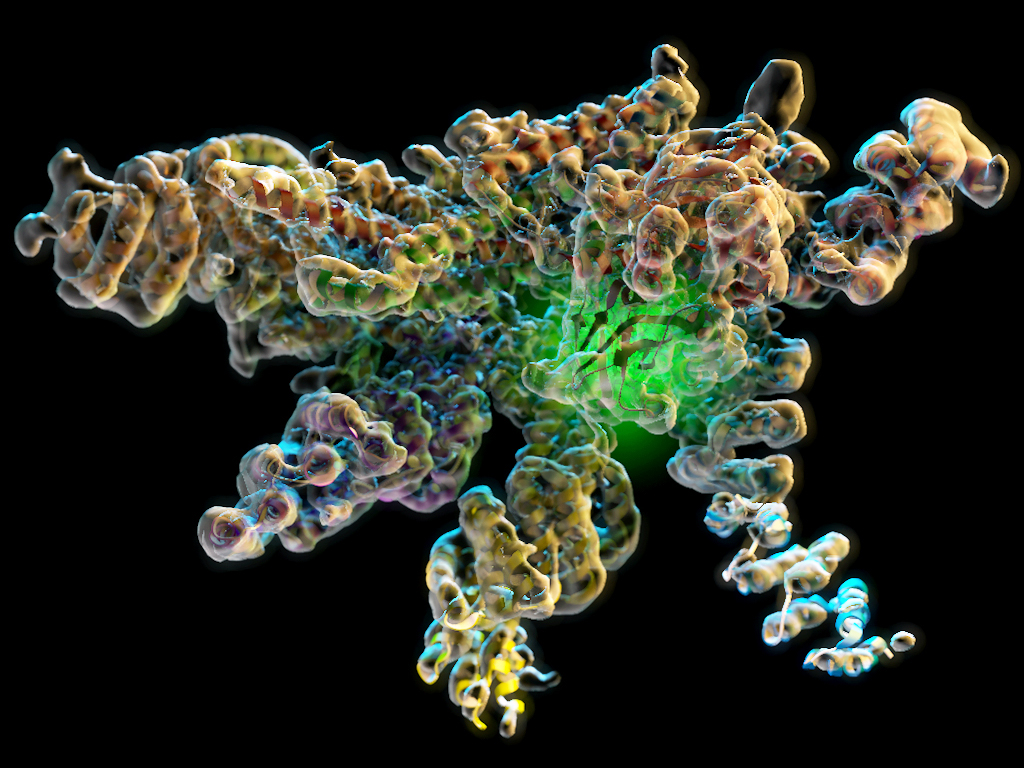
Enzymes are an important part of maintaining good health, and a new test confirms they could even help to pave the way to produce better treatments for cancer patients. Certain properties of enzymes have been highlighted using fluorescent dyes to tag them. This process is the first step to developing better, more targeted drugs for certain infections, inflammatory disease, and even cancer.
The enzymes causing the hype are called kinases. Traditionally we’ve known these enzymes to be responsible for aiding in the regulation of cells and coordinating their responses as to what’s happening in the body. They also play a major role in cell signaling and are quick to raise the alarm if the cell’s DNA suddenly becomes damaged for some reason. When it comes to enzymes, they come in two different forms: active and inactive forms. Which category they fall into depends on the shape and position of the ‘activation loop.’
Dr. Charlotte Dodson, a research fellow at Imperial’s National Heart and Lung Institute and colleagues have discovered a way in which to show which enzymes are active and which are inactive and also how they change in response to inhibitors and molecules. “In the active form, the enzyme is ready to go and to carry out its biological function, but in its inactive form it is unable to do its job,” states Dodson. During her research, Dodson and team were able to tag fluorescent markers to two different regions of the enzyme. When in an active state, the enzymes had a fluorescent glow to them and when in an inactive state the twinkle died.
“Because we can measure the fluorescence of individual molecules, we know they are changing in solution, and this is something no one has been able to do before,” confirms Dodson. This could mean great things in regards to finding more refined drugs that can target enzymes by understanding how they affect the mix of active and inactive states. If for example, an inhibitor were to push a sample of kinases to a level of 70 percent inactive and 30 percent active, drug manufacturers could alter the mix and measure the impact it had on a population of kinases. After altering the mix, if the mix changes to 90 percent inactive, it would prove the inhibitor is affecting it more than usual.
Dr. Dodson informs, “We’ve developed the test and carried out a proof of principle in one particular kinase to show that it works and to explore what’s going on. The next step is to take things on and apply this to other kinases of interest.” Enzymes are important in a number of diseases. “The more information we can provide at the design stage of drug development, the better. By using this approach we could enable drug makers to design new treatments more efficiently, which could save time and money,” she added.
More News to Read
- Meet Root – The Robot That Will Teach You Coding in No Time!
- Is that Possible to Make a Self Healing Tire? Even While Driving!!
- Surprising Discovery Reveals the Cure to Insomnia Lies Outside the Brain
- 3D Printing’s Even More Affordable Now Thanks to SparkMaker
- Is it the End of the Road for Silicon Chips?
Related Coverage
- Are Enzymes the Answer to Curing Diseases Such as Cancer and Diabetes?
- Researches Revealed a New Clinically Tested Drugs that Inhibits the Growth of Tumours
- Scientists Discover a New Way to Repair DNA
- Healthcare Is Advancing With the Help of AI and Robotics
- Are These Mini Spherical Reactors the Answer to Fusion Energy’s Problems?
Don't miss new tech stories on Google
Add TrendinTech once in the Google app and our stories appear in your news suggestions.
Rachel Kowalski
Rachel Kowalski is the Cybersecurity Analyst at TrendinTech, where she covers vulnerabilities, ransomware, supply chain attacks, nation-state operations and the security rules shaping organizations in the United States and Europe. Before moving into journalism she worked as a threat intelligence analyst at a security vendor and later reported for CyberScoop and the security desk at Wired, covering the SolarWinds compromise and the ransomware wave that hit hospitals and pipelines. Rachel holds a Master of Science in Cybersecurity from the Georgia Institute of Technology and attends Black Hat and DEF CON in Las Vegas each year, where she follows research from the security community. She writes to make risks and countermeasures understandable to people who are not specialists.
All stories by Rachel Kowalski (214)