
Researchers Get One Step Closer to Understanding Type la Supernovae
A supernova is the explosion of a star, and the bigger the star, the bigger the explosion. The most famous of these supernovae may be those that come as a result of huge stars exploding, but they can also occur when an intermediate-mass such as the Sun explodes too.

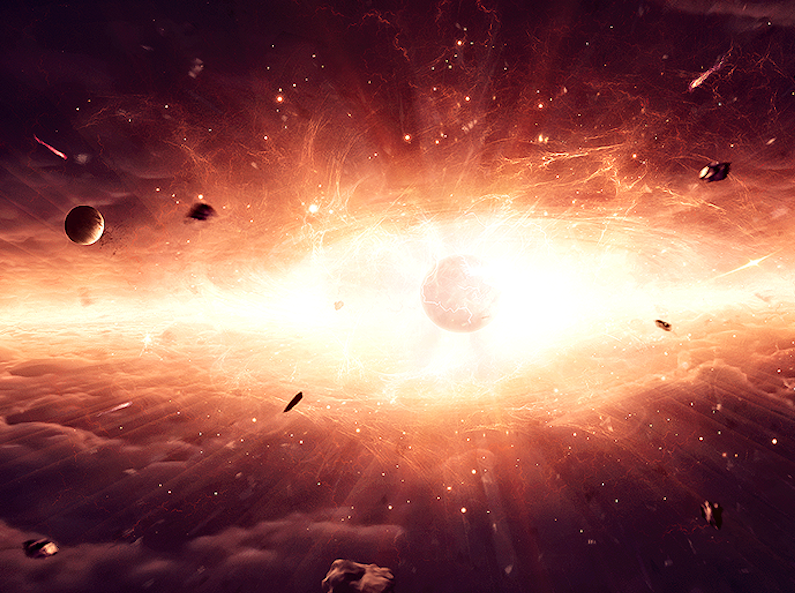
A supernova is the explosion of a star, and the bigger the star, the bigger the explosion. The most famous of these supernovae may be those that come as a result of huge stars exploding, but they can also occur when an intermediate-mass such as the Sun explodes too. This sometimes happens when the white dwarf is part of a binary star system. As the white dwarf accretes material from the nearby star, it’s possible that could explode as a type la supernova.
Type la supernovae are often used to measure distances in astronomy as they’re very easy to spot due to their brightness. Even so, astronomers are still baffled as to how these explosions begin. And, even though they’re extremely bright and easy to spot when they’re there, the fact that they only happen around once every 100 years, means astronomers could be waiting a while before they have all the answers.
However, Ji-an Jiang, a graduate student at the University of Tokyo, and a group of international researchers set to find more. In order to maximize their chances of capturing an image of these type la supernovae early in its formation, the team used the Subaru Telescope with the Hyper Suprime-Cam mounted on it. This combination allowed the scientists to capture a wider area of the sky at once. They also managed to create a system that automatically detected supernova among the heavy incoming data, enabling them to capture the supernova in real time.
During their observation the team discovered over 100 different supernova candidates; many of which had only exploded within the last few days. One supernova was captured within a day of it exploding, and the team saw how its brightness and color changed over time and was unlike any other previously discovered type la supernova. They suggested this could be the result of a white dwarf that has a helium layer on its surface. If the helium layer were to become ignited it would cause an explosion.
More News to Read
- Researchers Discover Link Between Bacterial Levels and Breast Cancer
- Swiss Researchers Create Batteries Out of Waste Graphite
- Help Comes in the Form of Biosensors for Cystic Fibrosis Patients
- Researchers Get a Much Closer Look at Exoplanets Thanks to New Telescope Attachment
- Got a Song Stuck in Your Head? Here’s How to ‘Unstick it’
Related Coverage
- Researchers Get One Step Closer to Understanding Type la Supernovae
- Astounding Aftermath of an Exploding Star
- Researchers Get One Step Closer to Building a Global Quantum Internet
- IQ May Be Linked to Genetics, But We Still Can’t Predict Intelligence
- China’s New Type of Quantum Computing Device, Built Inside a Diamond
Don't miss new tech stories on Google
Add TrendinTech once in the Google app and our stories appear in your news suggestions.
Helena Marsh
Helena Marsh is the Editor-in-Chief at TrendinTech, where she leads editorial strategy and oversees coverage across artificial intelligence, cybersecurity and enterprise technology. With more than a decade in technology journalism on both sides of the Atlantic, she previously served as a senior editor at Wired UK and covered the technology sector for The Guardian, following the rise of the big platforms, the Cambridge Analytica scandal and the regulatory push from Brussels and Washington. Helena holds an MA in Journalism from City, University of London and is a regular speaker at Web Summit in Lisbon and CES in Las Vegas. She believes technology reporting should be rigorous and plainly written, so readers understand what actually changes for them rather than what a company's announcement promises.
All stories by Helena Marsh (201)