
On the Hunt for Clandestine Nuclear Weapon Sites
One of the biggest threats to mankind today is that of nuclear weapons. It’s not so much the ones that we know about that are the problem, it’s all the others that remain undetected that pose the real threat.

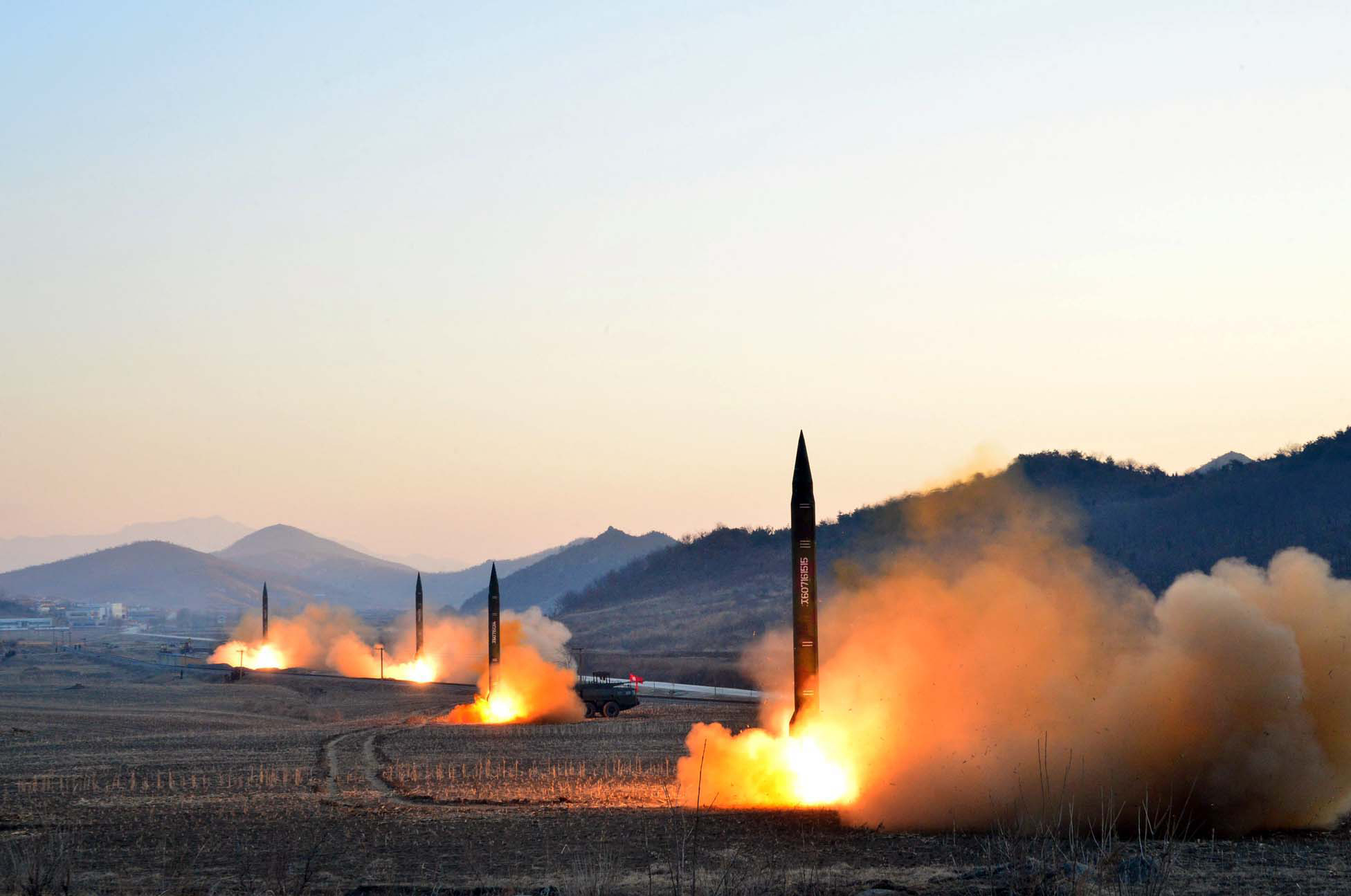
One of the biggest threats to mankind today is that of nuclear weapons. It’s not so much the ones that we know about that are the problem, it’s all the others that remain undetected that pose the real threat.
At the moment, inspectors spend a lot of their time looking for signs of plutonium or highly enriched uranium production. Explosive devices can be made very quickly using either of these ingredients in the right quantity.
“The assembly work can be done in an office building, underground facility, or even a big kitchen. It’s nearly impossible to detect once the program reaches this point,” explains Scott Kemp, an associate professor of nuclear science and engineering at MIT. Thankfully manufacturing these materials can leave quite obvious clues.
One of the main reasons as to why intelligence is able to detect some of these programs is because there are typically a lot of people involved. But, traditional intelligence is not always the most reliable of sources, especially when it comes to places such as North Korea where societies are very close.
According to Kemp, detecting the production of plutonium is much easier than detecting the production of enriched-uranium for many reasons. The first giveaway is the heat signature. “Nearly all plutonium production occurs in nuclear reactors, and they obviously produce a lot of heat,” he says. “There are clever things a country could do to hide the heat signature, but they are not simple. Infrared satellites can search for waste heat leaving buildings, or being pumped into rivers or oceans.”
Another clue is the detection of chemical signatures. Reactor fuel is often processed in order to extract plutonium, and while most of this is contained within the reactor, some do still leak out, particularly noble gases such as krypton and xenon. “But, a country could do all sorts of fancy things, like cryogenically freezing the off-gas, to eliminate the chemical signature if they wanted to,” says Kemp. “So, we may or may not find signs of plutonium production this way.”
Uranium also produces a chemical signature that’s very distinct, but the chance of a leak is much lower. However, when it does happen, the gas decomposes into hydrofluoric acid and a kind of dust-like aerosol. While the hydrofluoric acid is pretty useless in terms of detection, the dust-like aerosol is very unique and distinctive.
“There are many techniques for identifying molecules, but the sensitivity required in this case is exceedingly high, and the aerosol form presents a number of other challenges,” says Kemp. “If we could come up with extremely sensitive detectors that are cheap enough to put around a country without a lot of fancy equipment or maintenance, we would make significant inroads into the problem of detecting clandestine uranium-enrichment programs.”
A new special provision, called the Additional Protocol, has been introduced that will allow the International Atomic Energy Agency (IAEA) to be able to investigate further tips regarding suspicious sites. It also gives the IAEA the power to deploy environmental sensors to help monitor the situation.
“But politics ultimately drives this in the end,” says Kemp. “If inspectors learned something, whether from intelligence or sensors, but were refused the additional access needed to follow up on the lead, then the international community would probably presume the worst. It would therefore still be in Iran’s interest to provide follow-up access even if they did not technically have to – that is unless they were really hiding something.”
More News to Read
- History of Computer Games: Your Essay VS Controversial Prejudice
- AI is Now More Accurate at Diagnosing Skin Cancer than Dermatologists
- What Technologies should you invest in for the Future?
- Researchers Develop Technique that can Remotely Operate Lab-Grown Heart Cells
- Researchers Get Close Up of Bacteria Signaling Using New ‘Movie’ Technique
Related Coverage
- Anvil 3D Printer – Brilliant Technology at a Low Cost!
- China is Building A Meltdown-Proof Nuclear Reactor
- Major Banking Malware Operation Uncovered
- New CRISPR Pill Could Soon Become an Alternative to Traditional Antibiotics
- Nuclear Fuel Pools Pose Safety And Health Risks
Don't miss new tech stories on Google
Add TrendinTech once in the Google app and our stories appear in your news suggestions.
Rachel Kowalski
Rachel Kowalski is the Cybersecurity Analyst at TrendinTech, where she covers vulnerabilities, ransomware, supply chain attacks, nation-state operations and the security rules shaping organizations in the United States and Europe. Before moving into journalism she worked as a threat intelligence analyst at a security vendor and later reported for CyberScoop and the security desk at Wired, covering the SolarWinds compromise and the ransomware wave that hit hospitals and pipelines. Rachel holds a Master of Science in Cybersecurity from the Georgia Institute of Technology and attends Black Hat and DEF CON in Las Vegas each year, where she follows research from the security community. She writes to make risks and countermeasures understandable to people who are not specialists.
All stories by Rachel Kowalski (214)