Mistral Voxtral 3 Voice Agents Debut at $0.04/Min [2026]

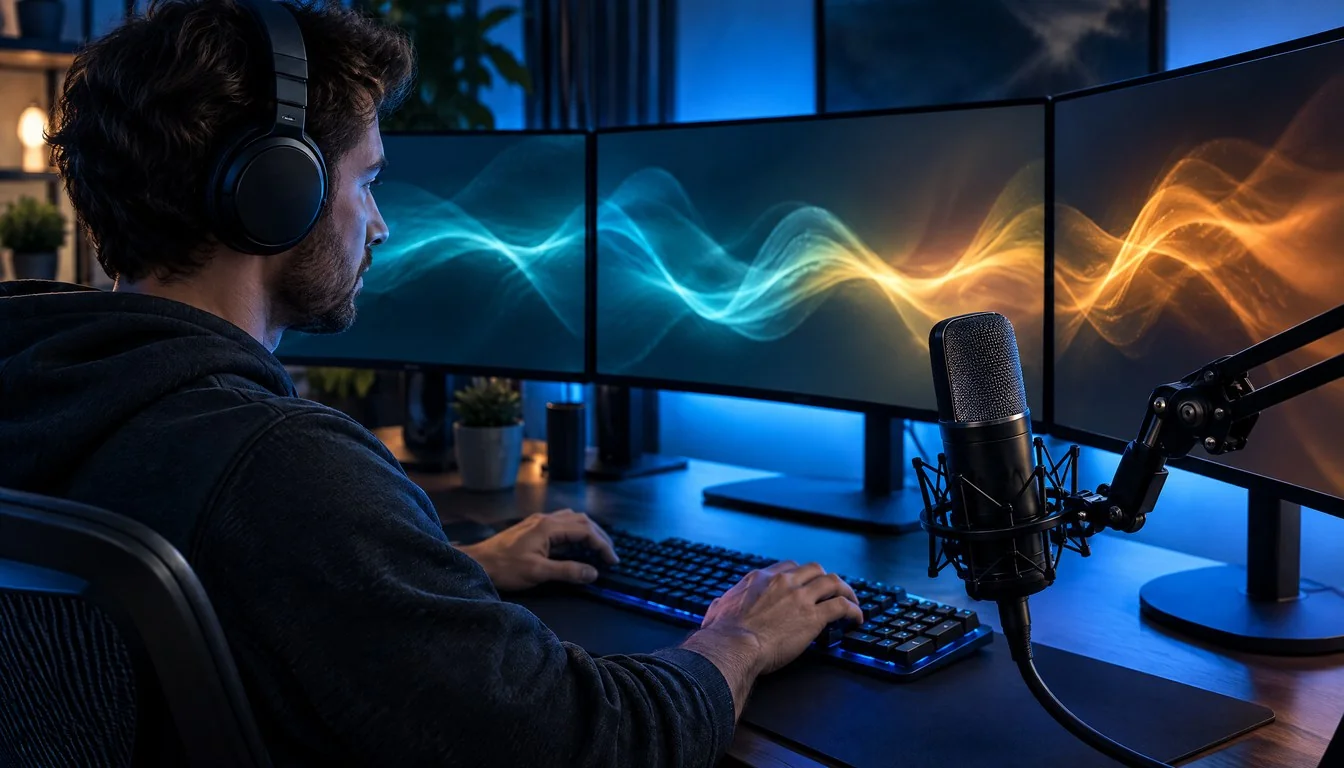
Mistral AI pushed a new speech platform into the open on October 20, 2026, and it is built to do something most voice tools still cannot: listen, think, call a tool, and talk back without handing the job to three different vendors. The release is called Voxtral 3, and it bundles transcription models, a text-to-speech model, and a voice-agent SDK into one streaming pipeline. Mistral priced the full pipeline as low as $0.04 per minute, a number that puts pressure on rivals from OpenAI’s Whisper line to ElevenLabs’ voice-cloning business.
The announcement landed on Mistral’s own news page and spread quickly through developer channels, in part because Mistral is explicitly framing Voxtral 3 as a challenge to the two companies that currently define consumer voice AI: OpenAI, whose Whisper models power a huge share of existing transcription tools, and ElevenLabs, whose speech-generation products cover roughly 90 languages according to French outlet Frandroid. Mistral says its own speech models cover more than 35 spoken languages and over 50 dialects, with transcription stretching past 50 languages total.
Don't miss new tech stories on Google
Add TrendinTech once in the Google app and our stories appear in your news suggestions.
What Mistral Actually Shipped on October 20
Voxtral 3 is not one model. It is a family of four active products plus an SDK that wires them together. Mistral’s own launch post describes the goal plainly: to combine listening, thinking, tool calling, and speaking into a single real-time streaming pipeline, rather than forcing developers to stitch together a transcription API, a language model, and a separate speech-generation service.
The four named models are Voxtral Mini Transcribe 3, a 4 billion parameter batch transcription model priced at $0.0035 per minute; Voxtral Mini Transcribe Realtime 3, a streaming transcription model priced at $0.008 per minute; Voxtral Small Transcribe 3, described by Mistral as its highest-accuracy transcription option at $0.004 per minute; and Voxtral Mini TTS 3, also referred to in some coverage as Voxtral Speech 3, a text-to-speech model priced at $13 per million characters. Mistral’s own legal and governance pages list every one of these as active, with retirement dates marked as not applicable, meaning there is no scheduled end-of-life for any of them as of this week.
Sitting on top of those four models is the real headline product: the Voxtral 3 Voice Agent SDK, built on LiveKit’s streaming infrastructure. Mistral describes the SDK this way in its launch materials: “Voxtral 3 also introduces a voice agent SDK, built on LiveKit. Transcribe listens, a reasoning model thinks and calls tools, and Speech replies, streamed as one pipeline for natural, intelligent conversation.” Developers can run that full pipeline with Mistral’s own Small 4 reasoning model for $0.04 per minute, or swap in a larger reasoning model for $0.08 per minute.
Inside the Voxtral 3 Model Lineup
For teams trying to decide which Voxtral 3 component fits a given product, the pricing and feature split matters more than the marketing copy. Here is how the family breaks down based on Mistral’s own documentation and governance pages.
| Model | Type | Price | Key specs |
|---|---|---|---|
| Voxtral Mini Transcribe 3 | Batch transcription | $0.0035 per minute | 4B parameters, 50+ languages, diarization, context biasing |
| Voxtral Mini Transcribe Realtime 3 | Streaming transcription | $0.008 per minute | Configurable latency from 80ms to 2,400ms, end-of-turn detection, context biasing |
| Voxtral Small Transcribe 3 | High-accuracy transcription | $0.004 per minute | Highest-accuracy tier, 50+ languages, diarization, context biasing |
| Voxtral Mini TTS 3 (Voxtral Speech 3) | Text-to-speech | $13 per million characters | 35+ languages, 50+ dialects, voice cloning, emotion and pace control |
| Voice Agent SDK, Mistral Small 4 reasoning | Full pipeline | $0.04 per minute | Built on LiveKit, listens, reasons, calls tools, and speaks in one stream |
| Voice Agent SDK, larger reasoning model | Full pipeline | $0.08 per minute | Same SDK with a more capable reasoning model swapped in |
Notice that the cheapest batch transcription option, Voxtral Mini Transcribe 3, is actually priced lower than Voxtral Small Transcribe 3 despite carrying a smaller parameter count. Mistral’s positioning is clear: Small Transcribe 3 is for teams that need the best accuracy on multilingual audio with speaker diarization, while Mini Transcribe 3 is the efficient option for high-volume batch jobs where raw cost per minute matters more than squeezing out the last percentage point of word accuracy.
How the Voice Agent SDK Pipeline Actually Works
Most voice assistants built before this year followed a cascaded design: a transcription service converts speech to text, a separate large language model reasons over that text, and a third speech-generation service turns the reply back into audio. Each handoff adds latency, and each vendor adds its own billing line. Mistral’s pitch with Voxtral 3 is to collapse that chain into one streamed call.
In practice, that means a developer’s app sends a live audio stream into the SDK. Voxtral’s transcription layer listens and detects when a speaker has finished a turn, using the end-of-turn detection feature built into Voxtral Mini Transcribe Realtime 3. A reasoning model, Mistral Small 4 by default, picks up the transcribed turn, decides whether it needs to call an external tool such as a booking system or a database lookup, and generates a response. That response is handed to Voxtral Mini TTS 3, which streams audio back to the caller with configurable emotion and pacing. Mistral says the entire loop is designed to run as one pipeline rather than three disconnected API calls, which is the architectural shift the company is betting on.
That single-pipeline approach echoes a trend already visible elsewhere in the coding and agent tooling world, where companies are racing to fold more of the reasoning loop into one managed service. Developers who have experimented with running local AI agents through a router layer will recognize the same basic motivation: fewer seams between components means fewer places for latency and errors to creep in.
What a Minute of AI Voice Actually Costs Right Now
Mistral’s $0.04 per minute pipeline price only tells half the story, because the reasoning model sitting inside a voice agent is itself a cost variable. LiveKit, the infrastructure layer Mistral built its SDK on top of, publishes its own per-minute pricing for a range of reasoning models used inside voice pipelines through its LiveKit Inference service. Those figures, current as of this week, show just how wide the spread is across providers once a model is wired into a live voice loop.
| Reasoning model | Provider | Price per minute (via LiveKit Inference) |
|---|---|---|
| GPT-6 Luna | OpenAI | $0.0004 |
| DeepSeek V4.1 Flash | DeepSeek | $0.0011 |
| Gemini 3.1 Flash Lite | Google DeepMind | $0.0010 |
| Gemini 3.8 Flash | Google DeepMind | $0.0029 |
| Kimi K2.6 | Moonshot AI | $0.0035 |
| Grok 4.20 Reasoning | xAI | $0.0070 |
| GPT-6 Sol | OpenAI | $0.0077 |
| Gemini 4 Argon | Google DeepMind | $0.0155 |
Those numbers are for the reasoning step alone, not a complete voice pipeline, so they are not directly interchangeable with Mistral’s all-in $0.04 or $0.08 per minute figures for the full Voxtral 3 agent stack. Still, the spread is a useful reality check on how much the choice of reasoning model can swing a voice product’s unit economics. A team running thousands of customer-service minutes a day through a pipeline built on a premium reasoning model, such as Gemini 4 Argon at over a cent and a half per minute just for reasoning, is paying a very different bill than one running the same volume through a lighter model like GPT-6 Luna. The ongoing price war among model providers, visible in recent comparisons such as the one between Kimi K2, DeepSeek, and Qwen3 open models, is now spilling directly into voice-agent economics.
From Voxtral 2 to Voxtral 3: What Actually Changed
Mistral’s speech lineup did not appear from nothing. The company’s documentation shows a clear lineage: Mistral’s first Voxtral speech-understanding models arrived in July 2025, followed by Voxtral Transcribe 2 in February 2026, built around Voxtral Mini Transcribe V2 for batch work and a separate Voxtral Realtime model for live use. A standalone Voxtral TTS model followed in March 2026, a 4 billion parameter text-to-speech system supporting nine languages at a starting price of $0.016 per 1,000 characters.
Voxtral 3 is a generational jump from that lineage rather than a simple price update. Mistral’s own documentation now directs developers to migrate from Voxtral 2 to the new Voxtral 3 models, and the language coverage, latency controls, and agent-SDK layer are all new additions that did not exist in the prior generation. Mistral has not stated that Voxtral 2 or the original Voxtral TTS model are being shut down or formally retired, so for now both generations technically coexist, but every new feature Mistral is promoting, from end-of-turn detection to the LiveKit-based SDK, is exclusive to the Voxtral 3 line.
Guillaume Lample and Mistral’s Sovereign AI Pitch
Guillaume Lample, identified on Mistral’s own site as the company’s co-founder and chief scientific officer, is the figure most closely associated with pushing the Voxtral 3 announcement out to developers. The launch is also tied into a broader argument Mistral has been making all year: that European and other sovereign buyers need an AI stack they can run on infrastructure they control. Mistral’s materials describe Voxtral 3 as supporting both hosted API access through European, US, and global endpoints, and full self-deployment, with explicit messaging about giving organizations control over audio processing, data handling, and conversation retention.
That sovereignty framing is consistent with other recent Mistral moves. The company announced a roughly 1 trillion parameter multimodal model called Mistral Large 4 on October 6, 2026, trained on 3,800 Nvidia Grace Blackwell GPUs inside Mistral-operated European data centers, and followed it on October 21 with an expanded engineering partnership with Nvidia. Voxtral 3 fits the same pattern: a product built to be deployed inside a buyer’s own infrastructure footprint rather than only through a single centralized API.
How Voxtral 3 Stacks Up Against ElevenLabs and Whisper
Mistral is not shy about naming its competition. Launch coverage from Tech Times frames Voxtral 3 explicitly as an attempt to beat OpenAI’s Whisper on cost and pipeline simplicity, while Frandroid’s coverage frames it as a direct shot at ElevenLabs, noting that ElevenLabs currently supports roughly 90 languages for speech generation against Voxtral’s advertised 35-plus spoken languages and 50-plus dialects.
It is worth being precise about what is actually confirmed here. Mistral has not published independent, reproducible benchmark scores showing Voxtral 3 beating Whisper or ElevenLabs on word-error rate, diarization accuracy, or voice-cloning quality. What is confirmed is a pricing and architecture argument: Mistral’s transcription models undercut several competitors on cost per minute, and the bundled SDK removes a layer of integration work that a Whisper-plus-separate-TTS setup still requires. Whether that is enough to shift enterprise contracts away from ElevenLabs or OpenAI will depend on accuracy numbers that have not yet been independently verified.
Why Voice Agents Became the New AI Battleground
Voxtral 3 is landing at a moment when nearly every major AI lab is racing to put a voice layer on top of its text models. LiveKit’s own October 16 announcement confirmed that its Inference service now routes realtime voice models from OpenAI, xAI, and Google DeepMind, alongside Mistral, through one infrastructure layer, with named products including OpenAI’s GPT-Live and GPT Realtime, xAI’s Grok Voice Think Fast, and Google DeepMind’s Gemini Live. That is a crowded field for Mistral to enter, but it is also evidence that voice has become the next front in the broader AI model race, following the same pattern already playing out in text and code generation, where providers compete on which model a platform sets as its default.
The stakes are commercial rather than purely technical. Call centers, airline and travel booking desks, and customer-support operations are the most obvious buyers for a cheaper, bundled voice-agent pipeline, because those are high-volume, cost-sensitive use cases where shaving a cent off a per-minute rate multiplies quickly across millions of calls. Mistral’s documentation specifically mentions contact centers, virtual assistants, and hands-free copilots as target applications for the Voice Agent SDK.
Market Impact: What This Means for Enterprise Voice Spending
For enterprise buyers currently running voice pipelines across multiple vendors, Voxtral 3’s bundled pricing is the kind of move that forces a renegotiation. A company paying separately for a transcription API, a reasoning model, and a text-to-speech service has three different billing relationships and three different latency budgets to manage. Mistral’s pitch collapses that into one $0.04 to $0.08 per minute line item, which is an easier number for a finance team to model against call volume.
That pressure is likely to show up first in competitive bids rather than in existing contracts. Vendors like LiveKit, AssemblyAI, and Fish Audio, all of which appear in LiveKit’s own published pricing alongside Mistral’s new models, will need to either match the bundled pricing or lean harder on accuracy and feature differentiation to justify a premium. The broader AI infrastructure market has already shown this dynamic playing out in adjacent categories, from the pricing pressure DeepSeek has put on closed-source coding models to the way DeepSeek’s open-source inference tooling is reshaping expectations for what a model provider should give away for free.
Historical Context: From Siri to Streaming Voice Agents
Voice assistants have gone through several distinct eras. The first generation, led by products like Siri and Google Assistant more than a decade ago, relied on rigid intent-matching systems that could handle a narrow set of commands and little else. The second era, roughly 2022 through 2024, saw transcription and generation split into separate specialized models, with Whisper becoming a default choice for transcription and early text-to-speech systems handling the reply half of the loop. What Voxtral 3 represents is a third era: transcription, reasoning, tool use, and speech generation collapsed into one managed streaming pipeline, aimed less at consumer assistants and more at enterprise call automation.
Mistral itself has moved through this arc quickly. Its first Voxtral speech-understanding models in July 2025 were transcription-only tools. Fourteen months later, the company is shipping a full agent SDK. That pace mirrors how quickly voice control has become a checkbox feature across the AI tooling field, including in developer tools well outside the voice-AI category, such as recent additions of voice control to coding assistants.
What Mistral Is Saying About the Launch
Mistral’s own launch materials lay out the reasoning behind the release in direct terms. In its announcement, the company said: “To address this, we introduce Voxtral 3: a new family of state-of-the-art speech-to-text and text-to-speech models, alongside a voice agent SDK that brings listening, thinking, tool calling, and speaking into a single real-time streaming pipeline,” according to Mistral’s official announcement.
On the product’s day-to-day usefulness, Mistral described the combined offering this way: “It combines accurate transcription, natural speech synthesis with emotional adaptability, and deep tool integration for smooth workflow automation,” per the same announcement. The company’s launch post on X put the technical framing even more simply: “Voxtral 3 also introduces a voice agent SDK, built on LiveKit. Transcribe listens, a reasoning model thinks and calls tools, and Speech replies, streamed as one pipeline for natural, intelligent conversation,” Mistral AI said in its launch thread on X.
Mistral also highlighted the accuracy claims behind its transcription lineup, stating in its announcement thread: “Voxtral Mini Transcribe 3 achieves state-of-the-art multilingual transcription, diarization and context-biasing.” None of these statements have yet been checked against an independent third-party benchmark, so they should be read as Mistral’s own positioning rather than a verified head-to-head result.
Predictions: Where Voice AI Goes From Here
- Expect a round of matching price cuts. LiveKit’s own pricing table already shows transcription and reasoning costs falling into fractions of a cent per minute across several providers, and Mistral’s bundled $0.04 figure is likely to pull at least one major competitor into a public price adjustment within the next quarter.
- Independent benchmarks will arrive within weeks. Given how quickly third parties published head-to-head scores after other recent model launches, expect an outside lab to publish word-error-rate and voice-cloning comparisons between Voxtral 3, Whisper, and ElevenLabs before the end of the year.
- Enterprise call centers will be the first production buyers. The combination of per-minute bundled pricing and diarization support makes Voxtral 3 a natural fit for contact-center automation before it shows up in consumer-facing products.
- Sovereignty and self-deployment options will matter more in Europe than price alone. Mistral’s EU-hosted and self-deployable positioning gives it an edge with regulated buyers that a pure price comparison does not capture.
- Expect Voxtral 4 planning within roughly a year. Mistral’s own release cadence, moving from first-generation Voxtral in July 2025 to Transcribe 2 in February 2026 and now Voxtral 3 in October 2026, suggests the company treats its speech line as a fast-iterating product rather than a stable platform.
Open Questions and Risks
Several details remain unresolved. Mistral has not published a context-length or maximum-audio-duration specification for Voxtral 3, which matters for long customer calls or multi-hour meeting transcription. The exact licensing terms for each model also need closer reading: secondary coverage describes the transcription models as using a permissive license while the TTS model carries a noncommercial restriction, but Mistral’s own legal pages should be the final word for any team planning a commercial deployment. And because no independent benchmark yet confirms Mistral’s accuracy claims, procurement teams comparing Voxtral 3 against Whisper or ElevenLabs should run their own evaluation on real call data before committing budget.
There is also the open question of how fast rivals respond. Google DeepMind, OpenAI, and xAI all already have realtime voice models available through LiveKit’s own infrastructure, meaning the distribution layer Mistral is relying on to reach developers is the same one its competitors already use. That lowers the switching cost for a developer to try Voxtral 3 today and move to a different provider next quarter if pricing or accuracy shifts.
Frequently Asked Questions
What is Voxtral 3?
Voxtral 3 is a family of speech-to-text and text-to-speech models from Mistral AI, paired with a voice-agent SDK built on LiveKit, announced on October 20, 2026.
How much does Voxtral 3 cost?
Individual models range from $0.0035 per minute for batch transcription to $13 per million characters for text-to-speech. The full Voice Agent SDK pipeline starts at $0.04 per minute with Mistral’s Small 4 reasoning model, or $0.08 per minute with a larger reasoning model.
What replaced Voxtral 2?
Voxtral 3 is the direct successor to Voxtral Transcribe 2, which launched in February 2026, and to the standalone Voxtral TTS model from March 2026. Mistral’s documentation directs developers to migrate from Voxtral 2 to the new Voxtral 3 models, though Mistral has not confirmed a formal retirement date for the older models.
How does Voxtral 3 compare to ElevenLabs and Whisper?
Mistral is positioning Voxtral 3 as cheaper and more bundled than either rival. ElevenLabs currently supports roughly 90 languages for speech generation against Voxtral’s 35-plus spoken languages, while Mistral’s pitch against Whisper centers on combining transcription, reasoning, and speech in one SDK rather than on a published accuracy win. No independent benchmark comparison has been published yet.
What languages does Voxtral 3 support?
Mistral says the transcription models cover more than 50 languages, including all 24 official European Union languages, while the text-to-speech model supports more than 35 spoken languages and over 50 dialects.
Is Voxtral 3 open source?
Secondary coverage describes the transcription models as carrying a permissive commercial license and the text-to-speech model as carrying a noncommercial restriction, but teams planning a commercial deployment should check Mistral’s own legal and governance pages rather than relying on secondary summaries.
Who built the voice-agent SDK underneath Voxtral 3?
The SDK is built on LiveKit’s streaming infrastructure, the same platform that also routes realtime voice models from OpenAI, xAI, and Google DeepMind through its Inference service.
Can Voxtral 3 be self-hosted?
Mistral says Voxtral 3 is available both through hosted API endpoints in Europe, the US, and globally, and through self-deployment on an organization’s own infrastructure, a positioning the company ties to data sovereignty and conversation-retention control.
Related Coverage
Daniel Okafor
Daniel Okafor is the Senior AI Reporter at TrendinTech, where he covers large language models, machine learning research and the practical use of artificial intelligence across business and government. He has a particular interest in evaluation: how models are benchmarked, where those benchmarks fail and what that means for the companies betting on them.
All stories by Daniel Okafor (398)