
Meteor Shower From Dead Comet Sighted Again
During the first Japanese Antarctic Research Expedition in December 1956, the Phoenicid meteor was seen for the very first time. But, since then, it’s disappeared, which leads to the question, where did it go?

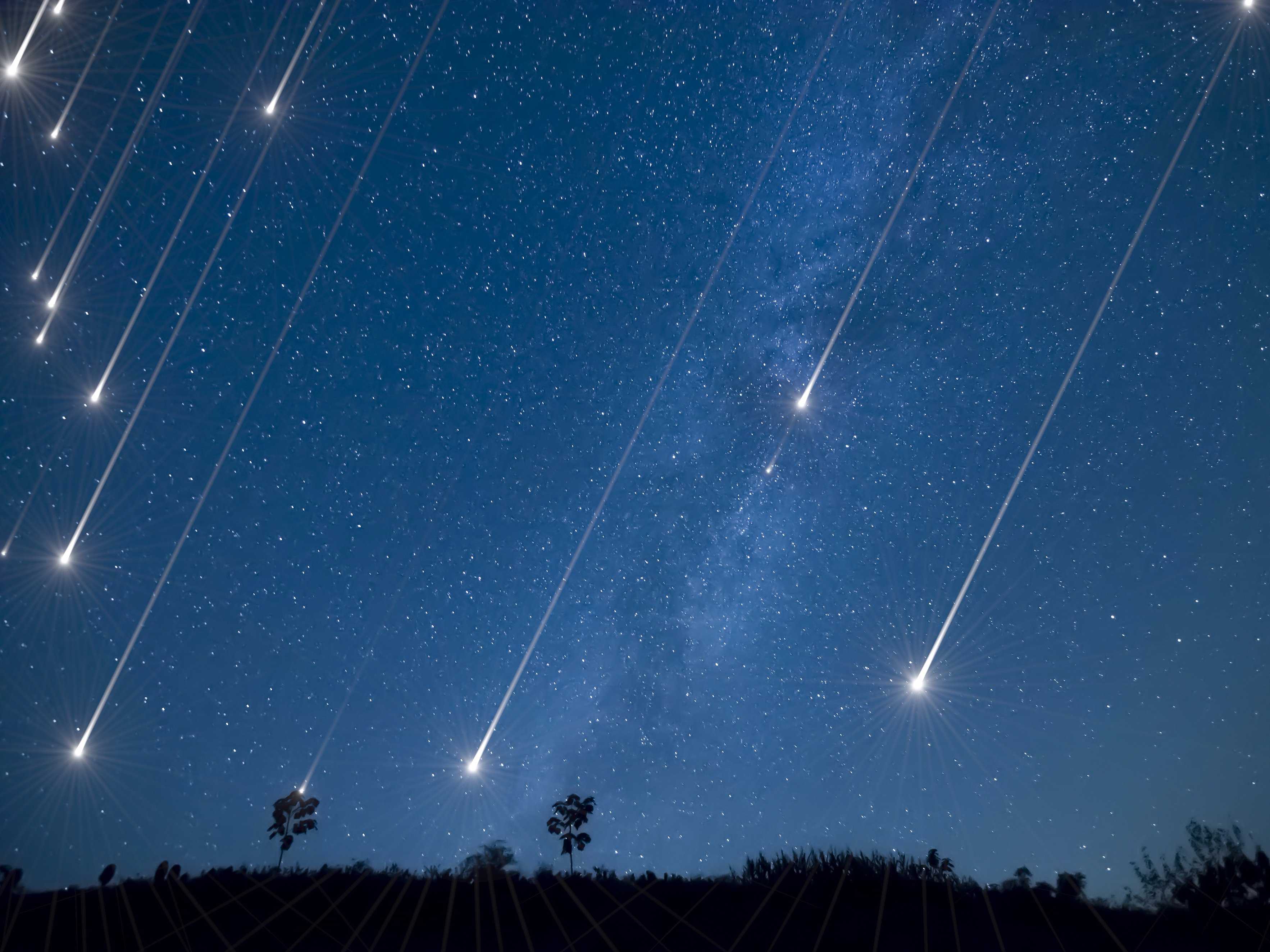
During the first Japanese Antarctic Research Expedition in December 1956, the Phoenicid meteor was seen for the very first time. But, since then, it’s disappeared, which leads to the question, where did it go? To try and get to the bottom of this mystery, two Japanese teams carried out research that linked the Phoenicid meteor shower to Comet Blanpain, a celestial body that appeared in 1819 then disappeared. Then, in 2003, astronomers discovered remains of Comet Blanpain moving along the same orbit it did all those many years ago. They believe the reason they reappeared as an asteroid was because all the gas and dust would have long escaped.
Astronomers are also assuming that Comet Blanpain is the parent body of the Phoenicids. Bearing that in mind, they predicted that the Phoenicids should be observed again December 1, 2014, so two teams set out to do just that. The first team was led by Yasunori Fujiwara, a graduate student at the Department of Polar Science/SOKENDAI (The Graduate University for Advanced Studies) and Takuji Nakamura, a professor of the National Institute of Polar Research/SOKENDAI, who carried out their observations in North Carolina.
The second team was led by Mikiya Sato, an astronomical officer at Kawasaki Municipal Science Museum, and Junichi Watanabe, a professor of the National Astronomical Observatory of Japan/SOKENDAI, and their observations were made from La Palma Island off the West coast of Africa.
For the teams to be able to distinguish Phoenicids from sporadic meteors they had to first analyze the data carefully by tracing each meteor trail back to its source. If there are many meteors that come from the same point in the sky they’ll be part of the same meteor shower. From the study, 29 of the 138 meteors observed in North Carolina turned out to be Phoenicids. Although it was a good result, it wasn’t quite as good as the astronomers were hoping for and the number of Phoenicids observed compared to those predicted was around 10%. But, it’s still the first time ever that the evolution of a comet has been estimated through the observed meteor shower. Moving forward, Fujiwara says, “We would like to apply this technique to many other meteor showers for which the parent bodies are currently without clear cometary activities, in order to investigate the evolution of minor bodies in the Solar System.”
More News to Read
- XOD: A New Open Source Visual Programming Language
- Researchers Learn How Cytoplasm Feels to a Cell
- World’s First Nanoweave Created From Purely Organic Materials
- MIT Gives Students Well-Rounded Software Development Experience
- why should Every Developerd Learn Javascript?
Related Coverage
- SpaceX Will Try To Land on a Moving Platform on the sea.
- Google Has Given DeepMind a Memory, The AI Will not Make the Same Mistakes Again
- How Artificial Intelligence Might Transform the Engineering Industry
- Jurassic World Starts With Chicken Legs
- New Research Suggests the Best Way to Find Evidence of Life on Mars is to Find Vanadium First
Don't miss new tech stories on Google
Add TrendinTech once in the Google app and our stories appear in your news suggestions.
Rachel Kowalski
Rachel Kowalski is the Cybersecurity Analyst at TrendinTech, where she covers vulnerabilities, ransomware, supply chain attacks, nation-state operations and the security rules shaping organizations in the United States and Europe. Before moving into journalism she worked as a threat intelligence analyst at a security vendor and later reported for CyberScoop and the security desk at Wired, covering the SolarWinds compromise and the ransomware wave that hit hospitals and pipelines. Rachel holds a Master of Science in Cybersecurity from the Georgia Institute of Technology and attends Black Hat and DEF CON in Las Vegas each year, where she follows research from the security community. She writes to make risks and countermeasures understandable to people who are not specialists.
All stories by Rachel Kowalski (214)