
Jumping Gene and Bacterial Gene-Editing System Join Forces
A new study has captured evidence for the first time of ‘jumping genes’ adopting a bacterial immune mechanism for transferring genetic material across bacterial species as well as between bacteria itself.

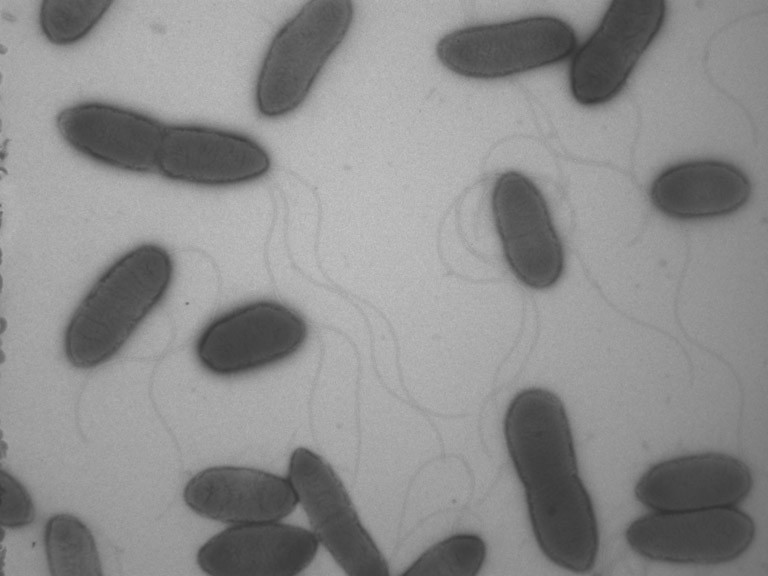
A new study has captured evidence for the first time of ‘jumping genes’ adopting a bacterial immune mechanism for transferring genetic material across bacterial species as well as between bacteria itself. Using bioinformatics to survey 50,000 bacterial genomes the study’s authors discovered evidence of this mechanism.
The ‘jumping gene’ has been nicknamed as such because it has the ability to move around and insert itself into DNA. It’s known as Tn7 and can hold more than 100 genes in the host’s genome. These Tn7 elements spread antibiotic resistance between bacteria and can transfer genes between bacteria, practically anywhere. In the study, the researchers report some Tn7-like jumping genes that seem to have adopted their own CRISPR-Cas system.
You’ll often hear of CRISPR-Cas technologies being used across the globe in various applications in medicine and agriculture. These technologies offer a better chance for fighting genetic genes and altering genomes for medical purposes. Eugene Koonin, senior investigator at the National Center for Biotechnology Information, was carrying out his own research of bacterial genomes for CRISPR-Cas systems when he teamed up with Joseph Peters, Cornell professor of microbiology and lead author of the paper. Together, they managed to reveal three separate occurrences where Tn7-like elements captured the CRISPR-Cas system.
Currently scientists use CRISPR (clustered regularly-interspaced short palindromic repeats) systems in which to edit genes. These are part of the bacteria’s natural defense systems, typically against phages. If a phage infects a bacterium, but doesn’t kill it, a piece of that viral DNA is taken and transferred into guide RNA. If the same virus re-infects the bacteria the guide RNA directs CRISPR-associated proteins (Cas proteins) to that string of viral DNA. Once there, the Cas proteins disable the virus by cutting the viral DNA.
Out of 50,000 bacterial genome sequences searched, researchers found almost 11,000 Tn7-like elements. “Right now, it’s circumstantial evidence that these CRISPR-Cas have been stolen by these transposons jumping genes as a tool to recognize new sites,” says Peters. While CRISPR-Cas systems are good at doing what they do, there is evidence to suggest Tn7-adapted systems mostly recognize plasmids between bacteria. These are DNA sequences with mobile genetic elements that are small and circular and distinct from a bacteria’s chromosomal DNA. Tn7-associated Cas proteins don’t have the ability to cut these DNA like normal CRISPR-Cas systems. This is supporting evidence to suggest that Tn7 elements are guided to the plasmid DNA where they insert themselves into it to enable the spreading of that genetic material.
More News to Read
- Welcome the M1 E-Bike – The World’s First Crossover Motorbike
- Stuck on Kids Gift Ideas – Why Not Try Toybox the Kids 3D Printer
- Chile’s Very Large Telescope Interferometer Captures Best Image Ever of a Star’s Surface
- Taking Things to the Next Level with HP’s Wearable VR Backpack
Related Coverage
- Scientists Will Modify Genes to Treat Cancer or Autism
- Breakthrough in Gene Editing Comes as Scientists Correct Disease-Causing Mutation in Human Embryo
- Researchers Discover Link Between Bacterial Levels and Breast Cancer
- Researchers Develop New System That Allows the Transferring of Code Across Programs
- According to a New Study Early Life Stress Can Change Genes in Brain
Don't miss new tech stories on Google
Add TrendinTech once in the Google app and our stories appear in your news suggestions.
Yusuf Demir
Yusuf Demir is the Cloud & Software Reporter at TrendinTech, where he covers cloud infrastructure, enterprise platforms, developer tools and the digital transformation of businesses in the UK and the United States. He previously reported on enterprise technology for The Register in London and covered the cloud and SaaS beat for TechCrunch, following the competition between AWS, Microsoft Azure and Google Cloud, the open source licensing disputes and the rise of Kubernetes. Yusuf holds an MEng in Computing from Imperial College London and speaks regularly at KubeCon and AWS re:Invent, where he moderates conversations with engineers and chief technology officers. He is most interested in the gap between vendor roadmaps and the systems engineers actually run, and in what the cloud bill looks like once the free credits expire.
All stories by Yusuf Demir (294)