
It’s Raining on the Self-Driving Car Parade
The development of the self-driving car industry is advancing incredibly fast. No longer is Tesla the only ones daring to test the trend. Now, General Motors, Uber, and even Google have their own working prototypes roaming the roads.

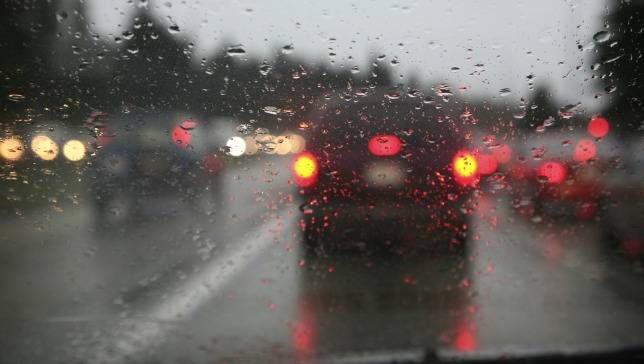
The development of the self-driving car industry is advancing incredibly fast. No longer is Tesla the only ones daring to test the trend. Now, General Motors, Uber, and even Google have their own working prototypes roaming the roads. It appears that they’re gaining popularity quickly too, with almost two-thirds of Millenials stating they’d be happy to own a self-driving car within the next 10 years. And while this all sounds quite promising, there’s one big problem: rain.
“We have computer vision algorithms which can be used by cars. But if you train a vehicle using the current algorithms, they don’t perform so well in adverse weather conditions,” says the lead author of the ‘Raincouver’ study, Fred Tung. Self-driving cars learn through the use of machine learning algorithms. Manually labeled images are fed to the computer at a per-pixel level in order for it to learn to recognize them. This process is known as semantic segmentation.
While there are several datasets out there available for self-driving cars, most were shot under near perfect conditions (i.e. good weather and daylight). But Tung and his team wanted to know how the algorithms would perform when using footage taken in the rain. So, they decided to attach a camera to the dashboard of a car and then proceeded to drive around Vancouver gathering footage. Every six seconds the team labeled the people, roads, and vehicles on screen. They named the project ‘Raincouver’.
It appeared that the rain really had an effect on the way in which the algorithms worked. Streets looked different; there was a glare from the windshield and headlights that sometimes obstructed the view, and the computer found it difficult to distinguish people from the dark background they’re standing in. Humans have difficulty seeing in the dark, so how can we expect a computer to be any different?
Vancouver gets around 160 rainy days per years so if self-driving cars are unable to cope in rainy conditions, there’s going to be a big problem. Thankfully Tung and his team have come up with some ideas as to how to get around this issue. The first thing they’re proposing is to expand the datasets they’re using to train the vehicles. Capturing more footage in more cities under different conditions would enable the system to learn much more. The researchers even suggested adding things like trees and buildings to the data set to help cars navigate.
Whether you’re for or against them, self-driving cars are coming. Tung believes they could help solve the congestion problems of many cities or help the elderly or those with impaired vision get to where they need to, safely. And, computers won’t get distracted by the radio or phones like people can be. It’s clear that these weather issues need to be addressed before self-driving cars will be released to the mainstream public. But, it is coming. So, fasten your seatbelt and get ready for the ride.
More News to Read
- Computer Scientists Create New Algorithm That’s Exponentially Faster Than Any We’ve Seen Before
- Engineers Use Graphene to Create New Revolutionary Photodetector
- Researchers Develop New Spectral Invisibility Cloak Like Nothing We’ve Seen Before
- Scientists Discover Nearly 80 Exoplanet Candidates in NASA’s K2 Mission
- On the Hunt for Clandestine Nuclear Weapon Sites
Related Coverage
- NXP BlueBox Computer that Make Self-Driving Cars Available to Consumers by 2020
- The Race for Self-Driving Cars Continues as Google and Mobileye Battle it Out
- The Navy Team Up With General Motors On Autonomous Undersea Vehicle Mission
- Should Your Autonomous Car Choose to Kill You Instead of Others?
- Google Patents “Sticky” Layer To Protect Pedestrians From Car Accidents
Don't miss new tech stories on Google
Add TrendinTech once in the Google app and our stories appear in your news suggestions.
Daniel Okafor
Daniel Okafor is the Senior AI Reporter at TrendinTech, where he covers large language models, machine learning research and the practical use of artificial intelligence across business and government. He previously reported on artificial intelligence for MIT Technology Review, covering the labs behind the current generation of frontier models and the policy debates in Washington and Brussels. Daniel holds a Master of Science in Machine Learning from Carnegie Mellon University and follows the research community closely, attending NeurIPS and ICML each year to speak with the people behind the papers. He has a particular interest in evaluation: how models are benchmarked, where those benchmarks fail and what that means for the companies betting on them.
All stories by Daniel Okafor (316)