
Drones Get Clever by Stealing Data from PC’s through its Blinking Lights
Drones have been becoming more and more popular recently as people recognize the potential good they can do. The problem is, however, that they can also be used to carry out unscrupulous and often illegal activities too.

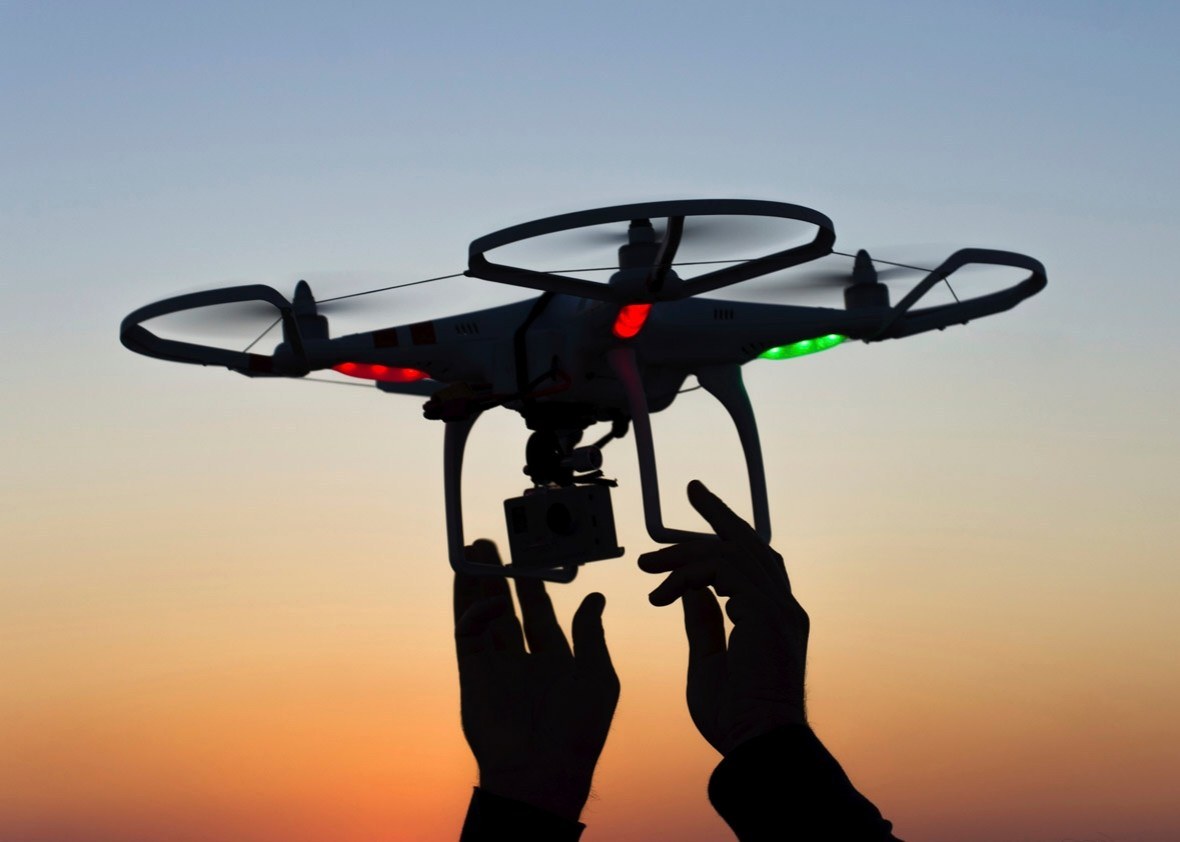
Drones have been becoming more and more popular recently as people recognize the potential good they can do. The problem is, however, that they can also be used to carry out unscrupulous and often illegal activities too. Now drones have been used in an exercise that involved stealing data from a computer using a drone and the blinking light on the PC. Once the LED winked out the computer’s data, it streamed it across to the camera-fitted drone that hovered outside.
Luckily it was an experiment that was carried out by a group of researchers at Ben-Gurion’s University in Israel. To try and counteract these sorts of attacks the team has devised a method known as the air-gap to separate any sensitive data from that of potential hackers. However, if malware is able to be put on the system by an attacker, then this method proves pretty useless as every blink of the computer hard drive’s LED indicator can leak sensitive data.
To explain this further, Ben-Gurion researcher, Mordechai Guri, said, “If an attacker has a foothold in your air-gapped system, the malware still can send the data out to the attacker. We found that the small hard drive indicator LED can be controlled up to 6,000 blinks per second. We can transmit data in a very fast way at a very long distance.” During their research, the team found they could move data as quickly as 4,000 bits per second and the malware could even replay those blinks on a loop to ensure nothing is missed.
Because a computer’s LED is always blinking, it’s impossible to detect anything suspicious is happening when the malware’s at work. The researchers also discovered that if they read data in chunks of 4 kilobytes or less at a time the hard drive’s LED would blink for less than 1/5 of a millisecond. Those blinks were then used to send messages to various cameras and light sensors through a system of data encoding called on-off-keying (OOK). In doing this they found that a smartphone camera can only receive around 60 bits per second and a GoPro camera around 120 bits per second, so instead used a Siemens photodiode sensor that allowed them to reach 4,000 bits per second.
It’s even possible that attackers can make the hard drive’s LED indicator to blink so fast that its undetected by the human eye yet still picked up by the light sensor. The advice that’s been given by the experts in an attempt to combat these attacks is to ensure you still air-gap your machine and keep it in a secure room away from any windows. Buildings could also place a layer of film over the windows to mask any potential camera flashes, and there is even software out there that could randomly access the hard drive to create a noise and thus disrupt any attempt at stealing data via your hard disk’s LED. But, the easiest, most simple way to stop this kind of attack from happening is to cover the actual LED up. If no LED light can be picked up by the drone, then that data ain’t going anywhere.
More News To Read
- Personalized Medicine is Great for Treatment, but What About Prevention of Chronic Diseases
- What Good Does ‘Junk DNA’ Do?
- The UK Introduces New Autonomous Vehicle Insurance Laws, Who pays for damages?
- The World’s First Real Quantum Computing Battle, How is Ended?
- Should We Be Concerned Our Future Autonomous Car May Get Hacked?
Related Coverage
- Uncomfortable Truths About Photography
- Solar Cells Get Another Efficiency Boost by Up to 18%
- Most Popular Uses of Blockchain in Mobile Applications
- Solar Panel Installations Soar as Prices Fall to an All-Time Low
- Potential Treatment Discovered for Controlling Bleeding Brains After Strokes
Don't miss new tech stories on Google
Add TrendinTech once in the Google app and our stories appear in your news suggestions.
Daniel Okafor
Daniel Okafor is the Senior AI Reporter at TrendinTech, where he covers large language models, machine learning research and the practical use of artificial intelligence across business and government. He previously reported on artificial intelligence for MIT Technology Review, covering the labs behind the current generation of frontier models and the policy debates in Washington and Brussels. Daniel holds a Master of Science in Machine Learning from Carnegie Mellon University and follows the research community closely, attending NeurIPS and ICML each year to speak with the people behind the papers. He has a particular interest in evaluation: how models are benchmarked, where those benchmarks fail and what that means for the companies betting on them.
All stories by Daniel Okafor (316)