

DraftKings Keeps Louisiana Licence as AI Probe Opens [2026]

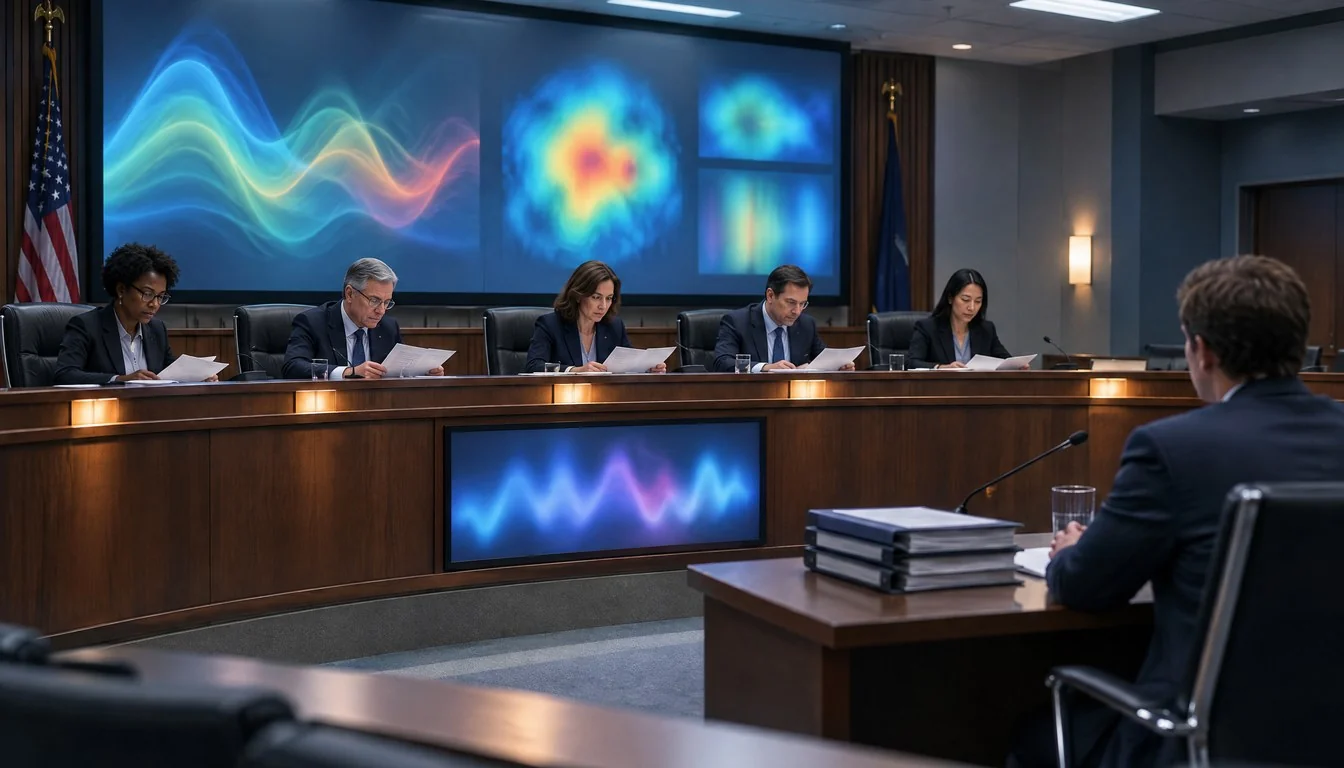
DraftKings will keep taking sports bets in Louisiana, but not on the terms it wanted. On October 15, 2026, the Louisiana Gaming Control Board voted unanimously to extend the operator’s sports wagering licence through February 19, 2027, rather than grant the full renewal DraftKings had applied for. The company’s existing licence had been due to lapse on November 10, 2026. Instead of a clean renewal, regulators attached seven conditions, and at the centre of them sits a question that has nothing to do with odds or payout ratios: does DraftKings use artificial intelligence to identify and target bettors who are losing money.
The decision, reported first by well-played.com.au, turns a routine state-level licensing hearing into a live test case for how gambling regulators plan to police AI inside betting platforms. It lands at a moment when AI safety researchers are already raising alarms about model behaviour at scale, and it adds a new, commercially uncomfortable dimension to that debate: what happens when a company’s own AI systems are accused of working against the financial interests of the customers using them.
Don't miss new tech stories on Google
Add TrendinTech Australia once in the Google app and our stories appear in your news suggestions.
What the Louisiana Gaming Control Board actually decided
The board’s vote was unanimous, but it was not a renewal. DraftKings asked for a straightforward licence extension; it received a conditional one instead. The new approval runs through February 19, 2027, and a full renewal hearing has been locked in for February 18, 2027, the day before the conditional window closes. That timing is not accidental. It gives the board roughly four months to work through a list of outstanding questions before it has to decide whether DraftKings gets to keep operating in the state on a standard, unconditional basis.
Seven conditions came attached to the extension, according to reporting from CDC Gaming and Legal Sports Report. DraftKings must submit formal written responses within 30 days covering four areas: its use of artificial intelligence, its prediction-market activity, its digital offerings to Louisiana residents, and any other information the regulator requests. Separately, the company has 30 days to provide outstanding shareholder-suitability submissions, or to file petitions seeking institutional-investor treatment for certain shareholders. On a faster clock, DraftKings has just seven days to name a senior liaison to deal directly with the board.
Two threads are tangled together in this case: the AI question and the shareholder-suitability question. Regulators found that some DraftKings shareholders holding a 5% stake or more had not been through the suitability vetting that is standard practice in essentially every legal gambling jurisdiction. That is a compliance gap with a known fix, paperwork and background checks. The AI question is different in kind. It is not a documentation problem. It is a question about what the company’s software actually does, and whether that conflicts with consumer-protection expectations that regulators have not yet had to define precisely for algorithmic betting products.
Louisiana Gaming Control Board chairman Chris Hebert was careful to frame the vote as a holding pattern, not a verdict. He described the conditional approval as something that is not a determination that DraftKings has engaged in any wrongdoing, a distinction that matters both for the company’s share price and for how other states should read the decision. The board is not accusing DraftKings of breaking the law. It is saying it does not yet know enough to be sure, and that four months is the time it is giving itself to find out.
The AI allegation at the centre of the case
The specific claim under investigation is that DraftKings uses artificial intelligence to identify bettors who are losing money and then targets them, through promotions, product nudges, or account-level treatment, in ways that keep them betting. Reporting from outlets including Gambling.com and The Lines frames this as an allegation that surfaced during the licence review, not as a finding the board has confirmed. No regulator has stated that DraftKings broke Louisiana law or violated its existing licence conditions. What exists right now is a question the board has decided it needs answered in writing, inside 30 days, before it will consider a full renewal.
DraftKings co-founder and president of operations Paul Liberman responded directly to the allegation during the hearing. “We do not use AI in any way to target losing gamblers by any means,” he said, according to coverage from InGame. Liberman did not deny that DraftKings has visibility into customer performance. “Obviously, we have all the financial records of all our customers,” he said, adding that “we’re able to see how individual customers perform and tell whether someone is a winning gambler or a losing gambler,” a point reported by CDC Gaming.
That is the crux of the dispute, and it is worth sitting with precisely because it is not really a dispute about facts. Nobody is arguing that a modern sportsbook can track whether an individual account is up or down over time. Every regulated operator in the United States has that data, because solvency reporting and anti-money-laundering obligations require it. The open question is what the company’s systems do with that visibility once it exists: whether win/loss classification feeds into product decisions that are built to retain losing bettors specifically, as opposed to retaining customers generally. DraftKings says the answer is no. Louisiana regulators have said they want that answer backed up in writing, with enough technical detail that it can be checked rather than taken on faith.
It is also worth being precise about what has not happened. DraftKings has not been fined over this. No court or regulator has found that targeting took place. The company has not lost its licence anywhere. What has happened is that one state gaming board, acting on information serious enough to warrant a four-month delay instead of a routine renewal, wants a documented answer before it signs off on another multi-year licence term.
Why gambling AI is different from the AI debate everyone else is having
Most of 2026’s AI news cycle has been about capability and safety at the model level, whether a system can be jailbroken, whether it can self-replicate, whether it hallucinates in a way that misleads users. The DraftKings case is a different animal. It is not asking whether an AI system is powerful or safe in the abstract. It is asking whether a company’s recommendation and personalisation engine, the same category of technology that powers product suggestions on e-commerce sites and content feeds on social platforms, has been tuned to work against the people it is personalising for.
Every major sportsbook runs some version of a personalisation layer. VIP-host programmes, promotional targeting, bet-slip suggestions, and “recommended for you” markets are all, at some level, outputs of a model trained on betting history. That is not controversial in itself and is standard across the industry, including at FanDuel, BetMGM, and Caesars Sportsbook. What Louisiana regulators are probing is narrower: whether the inputs to that model include a win/loss classification, and whether that classification changes the treatment a losing customer receives in a way designed to keep them betting rather than to protect them. That is a materially different question from “does this company use AI,” which almost every operator in the industry would answer yes to without controversy.
This also connects to a broader regulatory trend that has nothing to do with sports betting specifically. Financial and consumer-protection regulators across sectors have spent 2026 asking the same structural question of AI systems: not “is the model accurate” but “whose interest is the model optimising for.” Insurance regulators have asked it of underwriting algorithms. Banking regulators have asked it of credit-scoring models. Louisiana’s gaming board asking it of a sportsbook’s personalisation engine is the same question, applied to an industry where the stakes for an individual customer can spiral fast and where consumer-protection guardrails have historically lagged behind the technology.
Shareholder suitability: the quieter, more mechanical half of the case
While the AI question has generated the headlines, the shareholder-suitability finding is the part of the case Louisiana regulators can resolve fastest, because it is a documentation gap rather than a behavioural question. Gaming jurisdictions routinely require that any shareholder holding above a set ownership threshold, typically 5%, go through a suitability review, essentially a background and financial-integrity check, before a licensed operator can be considered fully compliant. Louisiana regulators found that some DraftKings shareholders crossing that 5% threshold had not been through that process.
DraftKings now has two paths for each affected shareholder within the 30-day window: submit the suitability paperwork directly, or file a petition asking the board to treat that shareholder under institutional-investor rules, which typically carry a lighter review burden for passive financial holders such as index funds or pension managers. This is a solvable administrative problem. It does not touch the AI question at all, and it is unlikely to be what determines whether DraftKings’ Louisiana licence survives past February 2027. But it is a reminder that fast-scaling public companies with constantly shifting institutional ownership can quietly drift out of compliance with licensing paperwork that was written for a slower-moving industry.
Reading the list: who DraftKings has to answer to
| Condition | Deadline | What it requires |
|---|---|---|
| Written response on AI use | 30 days | Explain how artificial intelligence is used in customer segmentation and product targeting |
| Written response on prediction-market activity | 30 days | Disclose involvement in or exposure to prediction-market style products |
| Written response on digital offerings to Louisiana residents | 30 days | Detail digital products made available to in-state customers |
| Response to further regulator requests | 30 days | Catch-all condition covering any additional information the board requests |
| Shareholder-suitability submissions | 30 days | File outstanding suitability paperwork or institutional-investor petitions for shareholders above the 5% threshold |
| Senior liaison appointment | 7 days | Name a senior staff contact to deal directly with the board during the review |
| Full renewal hearing | By February 18, 2027 | Board reconsiders a full, unconditional licence renewal based on responses received |
Timeline: how the case got here
| Date | Event |
|---|---|
| Before October 2026 | DraftKings’ existing Louisiana sports wagering licence set to expire November 10, 2026 |
| October 15, 2026 | Louisiana Gaming Control Board hearing; board reviews AI allegations and shareholder-suitability gaps |
| October 15, 2026 | Board votes unanimously to grant a conditional extension rather than a full renewal |
| October 16, 2026 | Industry outlets including CDC Gaming, Gambling.com, and Legal Sports Report report the conditions in detail |
| Within 7 days of the vote | DraftKings must name a senior liaison to the board |
| Within 30 days of the vote | DraftKings must submit written AI, prediction-market, digital-offering, and shareholder-suitability responses |
| February 18, 2027 | Full renewal hearing scheduled |
| February 19, 2027 | Conditional extension expires |
Market and industry impact
Louisiana is not DraftKings’ largest market, but it is not a market the company can afford to treat as peripheral either. DraftKings operates in the large majority of US states that permit online sports wagering, and Louisiana sits inside a Gulf South betting corridor that includes Mississippi and parts of Texas-adjacent cross-border traffic. More importantly, a licence delay triggered by an AI allegation sets a template that other state regulators can copy with almost no extra work. If Louisiana’s written-response framework surfaces findings that suggest targeting did occur, regulators in Michigan, New Jersey, Pennsylvania, and other mature betting states would have both the precedent and the political cover to open parallel inquiries without needing to build their own case from scratch.
That is the mechanism that makes this story bigger than one state’s licence renewal. US gaming regulation is fragmented by design, each state runs its own board, sets its own rules, and renews licences on its own schedule, but regulators talk to each other constantly through bodies like the International Association of Gaming Regulators. A documented AI-targeting finding in Louisiana would not stay in Louisiana. It would become a reference point cited in licence hearings in every other state DraftKings operates in, the same way a finding against one operator’s responsible-gambling tools tends to get raised against competitors during their own renewal cycles.
For the broader online betting sector, the case lands at an inconvenient time. Prediction markets, the kind of event-contract trading offered by platforms like Kalshi and Polymarket, have been expanding into sports-adjacent betting in ways that blur the line between regulated sportsbooks and lightly regulated financial-style markets. Louisiana’s written-response condition explicitly asks DraftKings to detail its own prediction-market activity, which suggests regulators are treating the AI-targeting question and the prediction-market question as connected parts of the same oversight gap: fast-moving financial products wrapped in consumer-facing apps, built and tuned by algorithms that regulators do not yet have standard tools to audit.
How this compares with past gambling-regulation flashpoints
Gaming regulators delaying or conditioning a licence renewal is not new. What is new is the specific trigger. Historically, the conditions attached to US sportsbook licences have concerned things regulators already knew how to measure: responsible-gambling fund contributions, advertising standards near college campuses, geofencing accuracy at state borders, or financial reserve requirements. Those are compliance categories with established audit methods built up over more than a decade of regulated online betting in the US.
An AI-targeting allegation does not fit any of those existing audit categories cleanly. There is no standard test a state gaming lab can run against a sportsbook’s personalisation model the way it can test a slot machine’s random-number generator for fairness. That gap is exactly why Louisiana chose a written-response condition rather than, say, an on-site technical audit: the board does not yet have, and likely does not currently possess in-house, the technical capacity to independently audit a production recommendation engine. It is starting with disclosure and will decide whether deeper technical review is warranted once DraftKings’ written answers are in hand.
That puts this case in the same category as early data-privacy enforcement in the 2010s, when regulators initially leaned on company disclosures and self-certification because they lacked the technical tooling to verify claims independently, before eventually building out dedicated technical audit capacity. Gaming regulation looks to be at that same starting point with AI-driven personalisation now. Louisiana’s approach, demand documentation first, decide on deeper scrutiny later, is likely to become the default model other states reach for until a more specific regulatory framework for betting-platform AI exists.
What DraftKings has to prove in its written response
The 30-day written-response requirement is narrower than a full regulatory audit, but it is not a box-ticking exercise either. To satisfy a board that has already decided a routine renewal was not appropriate, DraftKings will likely need its response to address three things concretely: what data categories feed its customer-segmentation and personalisation systems, whether win/loss status is one of those categories, and what downstream decisions, promotional offers, bonus structuring, account-level treatment, those systems influence. A response that restates Liberman’s hearing comments without underlying documentation is unlikely to be enough on its own to secure an unconditional renewal in February.
There is also a reputational calculation sitting underneath the legal one. DraftKings is a public company, and any written admission that performance data influences retention targeting, even if framed as standard, industry-wide personalisation rather than predatory design, would hand plaintiffs’ lawyers and consumer advocates a concrete document to work from. That is almost certainly part of why the company is pushing the “we do not target losing gamblers” line as firmly and publicly as it is: the cost of a careful denial now is much lower than the cost of a hedged admission that gets quoted in a future lawsuit.
What regulators in other states are watching for
Several things will determine whether this stays a Louisiana-only story or becomes a multi-state regulatory moment. The first is the content of DraftKings’ written response itself, due within 30 days of the October 15 vote. If that response is detailed and reassures the board, the case likely quiets down until the February 2027 hearing. If it is vague, delayed, or contradicts testimony already given, expect other state boards to start asking their own versions of the same written-disclosure question well before February.
The second is whether any other state regulator opens a parallel inquiry before Louisiana’s own hearing concludes. Gaming compliance officers inside rival operators, and inside DraftKings itself, will be watching board meeting agendas in New Jersey, Michigan, Pennsylvania, and Ohio closely over the next few months for any sign that this question has crossed state lines.
Five predictions for how this plays out
- DraftKings will file its written AI and prediction-market disclosures within the 30-day window, but the responses will likely be worded broadly enough to avoid specific technical admissions about model inputs.
- At least one other state gaming regulator will raise a similar AI-disclosure question during a DraftKings licence proceeding before the February 2027 Louisiana hearing, using Louisiana’s conditions as a template.
- The shareholder-suitability issue will resolve quietly within the 30-day window and will not resurface as a factor in the February 2027 renewal decision.
- Louisiana will grant a full, unconditional renewal at or shortly after the February 18, 2027 hearing unless DraftKings’ written responses contain a specific, verifiable admission of win/loss-based targeting, which the company has already denied making.
- Expect at least one US state gaming association or working group to propose a standard AI-disclosure template for sportsbook licensing applications during 2027, modelled loosely on Louisiana’s four-part written-response condition.
The bigger pattern: AI disclosure is becoming a licensing condition
Step back from DraftKings specifically and the Louisiana decision fits a pattern showing up across regulated industries in 2026: licensing and compliance bodies that have no formal AI-specific rulebook are starting to bolt AI-disclosure requirements onto existing renewal processes rather than waiting for dedicated legislation. That mirrors how grid regulators have had to retrofit demand-forecasting rules around AI data-centre growth without new legislation catching up, and how cybersecurity disclosure requirements have expanded following a string of high-profile breaches, including incidents affecting nearly 20 million people through a healthcare platform breach and hundreds of thousands of retail customers in a separate incident. In each case, the regulator did not wait for a purpose-built law. It used an existing compliance lever, a licence renewal, a breach-notification rule, a disclosure form, to force a company to put its AI or data practices on paper.
For an industry still building out defensible AI practices, that is arguably the more consequential story than DraftKings’ specific case. Betting operators, like companies running recommendation engines in retail, media, and even enterprise software stacks built on tools compared in pieces like recent coverage of running large language models locally, are going to find themselves asked to document exactly what their personalisation systems optimise for, not in the abstract, but in writing, under a specific deadline, with a licence or certification riding on the answer. Louisiana’s approach, four-part written disclosure plus a follow-up hearing, is simple enough that other regulators, gaming or otherwise, can copy it without new legislation. That portability is exactly why this case is worth tracking past the DraftKings headline.
What this means for Australian operators and regulators
Australia’s wagering market runs under a different structure to the US state-by-state model, with national consumer-protection rules sitting alongside state-level licensing, but the underlying question Louisiana is asking translates directly. Australian operators already use behavioural data for responsible-gambling interventions, the same data pipelines that can flag a losing pattern to trigger a welfare check could, in theory, be repurposed to trigger a retention offer instead. Australian regulators, including state-based gaming authorities and the Australian Communications and Media Authority’s broader online-safety remit, have not yet issued an AI-specific disclosure requirement for wagering operators. The Louisiana case gives them a ready-made template if they decide to start, and operators here would be well placed to get ahead of it by documenting their own personalisation systems before a regulator asks the same question DraftKings is now answering under a deadline.
Frequently asked questions
Did DraftKings lose its Louisiana licence?
No. The Louisiana Gaming Control Board voted unanimously to extend DraftKings’ sports wagering licence through February 19, 2027, rather than issue a full renewal. DraftKings can keep operating in the state under the conditional extension.
What is DraftKings accused of doing with AI?
Reports describe an allegation that DraftKings uses artificial intelligence to identify bettors who are losing money and target them to keep them betting. This is reported as an allegation and a regulatory question, not a confirmed finding. DraftKings co-founder Paul Liberman has denied it directly, saying the company does not use AI to target losing gamblers.
What conditions did Louisiana attach to the licence extension?
Seven conditions, including written responses within 30 days on AI use, prediction-market activity, and digital offerings to Louisiana residents, outstanding shareholder-suitability submissions within 30 days, and the appointment of a senior liaison to the board within seven days.
When is DraftKings’ full Louisiana licence renewal hearing?
February 18, 2027, one day before the conditional extension is due to expire on February 19, 2027.
What is the shareholder-suitability issue about?
Louisiana regulators found that some DraftKings shareholders holding a stake of 5% or more had not undergone the suitability review that is standard in gaming jurisdictions. DraftKings has 30 days to submit that paperwork or file for institutional-investor treatment for those shareholders.
Has DraftKings been found to have broken the law?
No. Louisiana Gaming Control Board chairman Chris Hebert described the conditional extension as something that is not a determination that DraftKings has engaged in any wrongdoing. The board is seeking more information, not issuing a finding of a violation.
Could other states follow Louisiana’s lead?
It is possible. Gaming regulators across US states frequently reference each other’s licensing conditions, and an AI-disclosure requirement attached to a major operator’s licence in one state could prompt similar questions during that operator’s renewal hearings elsewhere.
Does this affect DraftKings customers in Louisiana right now?
No immediate changes have been reported. DraftKings continues to operate under its conditional extension while it prepares the required written responses and shareholder-suitability filings.
Related Coverage
Bronwyn Hartigan
Bronwyn Hartigan is the Editor-in-Chief at TrendinTech, where she leads editorial strategy and oversees coverage across artificial intelligence, cybersecurity and enterprise technology. She believes technology reporting should be rigorous and plainly written, so readers understand what actually changes for them rather than what a vendor's announcement promises.
All stories by Bronwyn Hartigan (1)