
Ancient Nova Explosion Recovered by 580-year-old Korean Recording
Around 600 years ago a bright new star was spotted by a team of Korean astrologers that laid within the realms of the Scorpius constellation. The star was only seen for a period of two weeks before it faded out of sight.

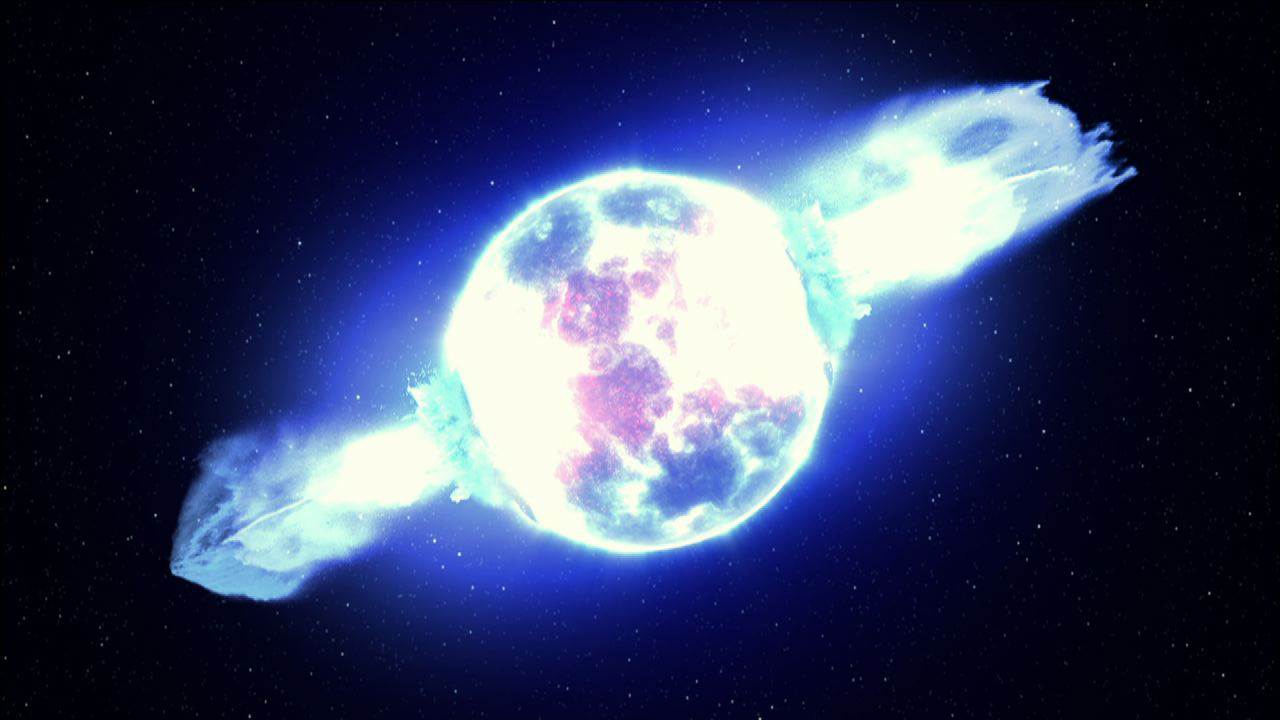
Around 600 years ago a bright new star was spotted by a team of Korean astrologers that laid within the realms of the Scorpius constellation. The star was only seen for a period of two weeks before it faded out of sight. Looking back on these ancient records, modern astronomers claim that what these ancient astrologers claim to have seen was, in fact, a nova explosion. But back then they’d been unable to locate the binary star system that made it happen.
However, a new study published in the journal Nature shows the exacts position of the old nova which now undergoes much smaller dwarf-like eruptions. This research supports the idea that novae have a long term life cycle that continues after they’ve erupted which involves fading for several thousands of years before flaring back up again to become fully-fledged novae once again. It’s an exciting time for the study’s lead author and curator in the American Museum of Natural History’s Department of Astrophysics, Michael Shara. He says, “This is the first nova that’s ever been recovered with certainty based on the Chinese, Korean, and Japanese records of almost 2,500 years.”
Further DASCH plates were used from the 1940’s that helped astronomers realize that it’s now a dwarf nova. This happens after an eruption. First, a Nova becomes “nova-like”, then it transforms into a dwarf nova. Then, after hibernating for a few thousand years it comes back to being nova-like, then a nova, and so on and so forth over billions of years. “We now have strong support for the idea that these binaries are all the same thing seen in different phases of their lives,” said Shara. “The breakthrough was being able to reconcile the 580-year-old Korean recording of this event to the dwarf nova and Nova shell that we see in the sky today.”
Article via American Museum of Natural History
More News to Read
- This New Nanotechnology Helps Killing Cancer Cells Without Harming Healthy Cells
- Processing Biofuels Just Got Cheaper and Greener Thanks to This Catalyst
- Meet the Engineer Who 3D Prints Revolutionary Human-Robotic Arms
- Meteor Shower From Dead Comet Sighted Again
- Will Tesla 3 Pre-orders See the Light of Day and Will This Car Create…
Related Coverage
- Should We Be Preparing for the Explosion of Betelgeuse Supernova?
- Scientists Identify First Ever Supernova by Gravitational Lensing
- Testing Quantum Gravity with Merging Black Holes
- Future of Farming May Live Inside This Container
- Hubble Telescope Reveals Unusual Object in the Asteroid Belt
Don't miss new tech stories on Google
Add TrendinTech once in the Google app and our stories appear in your news suggestions.
Yusuf Demir
Yusuf Demir is the Cloud & Software Reporter at TrendinTech, where he covers cloud infrastructure, enterprise platforms, developer tools and the digital transformation of businesses in the UK and the United States. He previously reported on enterprise technology for The Register in London and covered the cloud and SaaS beat for TechCrunch, following the competition between AWS, Microsoft Azure and Google Cloud, the open source licensing disputes and the rise of Kubernetes. Yusuf holds an MEng in Computing from Imperial College London and speaks regularly at KubeCon and AWS re:Invent, where he moderates conversations with engineers and chief technology officers. He is most interested in the gap between vendor roadmaps and the systems engineers actually run, and in what the cloud bill looks like once the free credits expire.
All stories by Yusuf Demir (294)