Tesla Plaid Tuning Unlocks 1,200 HP Factory Blocks [2026]

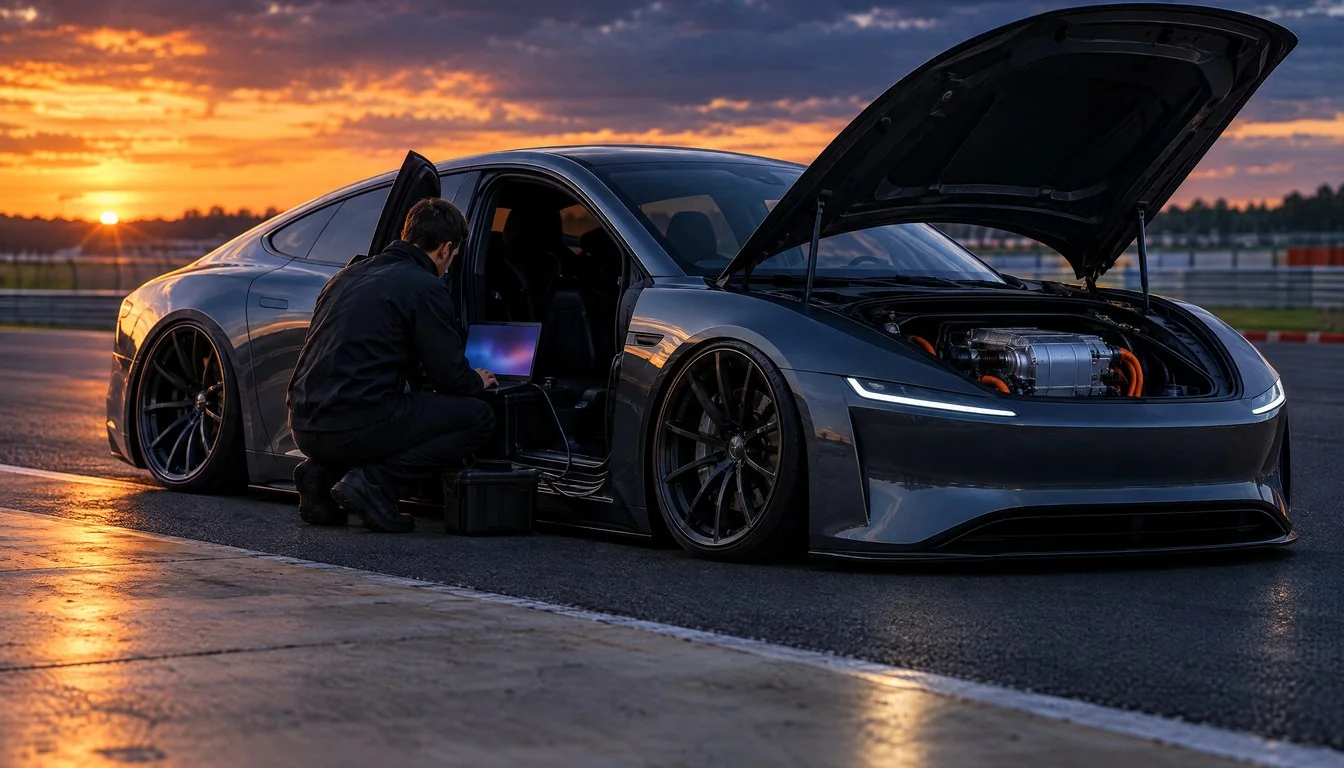
A wave of aftermarket tuning packages for the Tesla Model S Plaid is exposing a gap between what the factory ships and what the hardware can actually do. Reports from Yahoo Autos, Not a Tesla App, and Autoblog describe shops wiring into the Plaid’s software stack to unlock scramble modes, stance-lowering suspension tweaks, and temporary power boosts that Tesla’s own Track Mode never offers, even to owners who paid for the top trim. The story has spread fast across enthusiast forums this week, and it is reigniting a familiar argument in the electric vehicle world: who actually owns the performance envelope of a six-figure car, the person who bought it or the company that built it.
The timing matters. Tesla has spent three years marketing the Model S Plaid as the quickest production sedan sold in the United States, built around a tri-motor layout and a software-gated Track Mode that the company reserves for closed-circuit use only. Independent tuners are now showing that the physical hardware inside the car has headroom the factory firmware refuses to expose on public roads. That gap between hardware capability and software permission is exactly where the current tuning scene lives, and it is why outlets covering the story are treating it as news rather than a niche hobbyist curiosity.
Don't miss new tech stories on Google
Add TrendinTech once in the Google app and our stories appear in your news suggestions.
What Tesla’s Factory Track Mode Actually Does
Tesla’s own owner’s manual spells out the rules plainly: Track Mode is available only on Plaid versions of the Model S, not on the Long Range or standard dual-motor trims. When a driver switches it on, the car recalibrates stability control, traction control, regenerative braking, and the cooling loop specifically for sustained high-performance driving on a closed course. Adaptive suspension damping is tuned automatically, ride height drops to Low, and the suspension stops auto-raising for rough pavement, a setting that would be a liability on a pothole-riddled street but makes sense lap after lap on smooth asphalt.
Tesla’s documentation also notes that certain hardware is required for Plaid cars to exceed roughly 163 mph, meaning the company already gates its own top speed behind specific build configurations before any aftermarket tuner gets involved. Track Mode comes with trade-offs too: Tesla’s manual confirms that Autopilot-style self-driving features and in-car entertainment are disabled while it is active, Auto Shift Beta is turned off, and energy consumption climbs noticeably compared with normal driving. In other words, even Tesla’s most aggressive factory setting is built around a specific use case, closed-circuit lapping, and it deliberately leaves capability on the table for everyday public-road use.
The Tuning Package Making Headlines
AutoEvolution’s report on the modified Plaid is the detail that has pulled this story out of enthusiast circles and into mainstream coverage. The outlet describes a tuning app built by a specialized speed shop that adds a stance mode lowering the car by 10 millimeters, a hidden scramble switch, and a power boost of up to 10 percent that can be held for as long as 60 seconds at a time. According to AutoEvolution, the modified car the shop demonstrated was already producing more than 1,100 horsepower before the tune, with the full package said to push output toward 1,200 horsepower and speeds beyond 200 mph.
What stands out in AutoEvolution’s account is not just the raw numbers but the flexibility the tune reportedly adds to how the power gets delivered. The outlet reports the tuning enabled distinct burnout modes, rear-wheel-drive only, front-wheel-drive only, and full all-wheel-drive, on a car that ships from the factory as a fixed tri-motor all-wheel-drive layout with no owner-facing option to isolate individual axles. That is a software-level rewrite of how the drivetrain behaves, not a simple horsepower dial turned up, and it is the kind of change that would typically require deep access to Tesla’s motor control firmware.
It is worth being precise about what is confirmed here and what is not. AutoEvolution’s report describes the tune and the company behind it, with “SirHarrold” appearing in that coverage as the name attached to the tune itself rather than a clearly verified corporate entity. No on-record statement from Tesla, from the tuning shop, or from a named Plaid owner accompanies the claims in the available coverage, so the performance figures should be read as the tuner’s own demonstration numbers rather than independently certified results. That caveat does not make the story less newsworthy, aftermarket dyno claims have driven automotive headlines for decades, but it does mean the 1,200 horsepower and 200-plus mph figures carry an asterisk until a third party puts the car on a track with timing equipment.
Unplugged Performance and the Legal Side of Plaid Tuning
The scramble-switch tuning package is not happening in isolation. Unplugged Performance, one of the best-known shops building parts specifically for Tesla’s lineup, already sells a full catalog of Model S Plaid upgrades that stay within the usual boundaries of automotive aftermarket work: coilover suspension kits, big-brake packages, lightweight forged wheels, aerodynamic body kits, and interior trim upgrades. Pricing on the shop’s listed parts varies by component, with one current listing showing a part at $7,370, discounted from an original $7,865, giving a sense of where serious Plaid owners are already spending money even before anyone touches the car’s software.
That distinction matters for anyone trying to understand this story. Suspension, brakes, and wheels are physical parts that any owner can bolt on without touching Tesla’s gatekept firmware, and shops like Unplugged Performance and Bulletproof Automotive have built real businesses around exactly that kind of work. Software-level tuning that unlocks hidden drive modes or raises power limits is a different category entirely, since it means getting inside systems Tesla designed specifically to stay closed, the same systems that govern Track Mode, traction control, and motor output limits. Shops offering that kind of access, including regional customization specialists like Signature Customs, are operating in a space Tesla has never explicitly endorsed.
Whether Tesla’s warranty survives that kind of modification is an open question the current coverage does not resolve. Tesla, like most automakers, reserves the right to void warranty coverage tied to a specific component if aftermarket work is shown to have caused damage to it, and performance software that raises output well beyond factory limits is a textbook case for that kind of dispute. None of the outlets covering this story report a confirmed Tesla response on warranty status for cars running the tune, so owners considering it are, by every account available right now, taking that risk without a clear answer from the manufacturer.
Why Software-Gated Performance Keeps Resurfacing
This is not the first time an automaker has drawn a line between what hardware can do and what software allows. Tesla itself popularized the idea of paid software unlocks starting years ago with batteries that shipped with more usable capacity than the advertised trim, a practice that drew regulatory attention in several markets. The Plaid tuning story fits the same pattern in reverse: instead of Tesla selling an unlock, independent shops are building one without Tesla’s involvement, which raises very different questions about liability, safety validation, and whether the company can realistically stop it.
The broader EV industry has leaned hard into software-defined vehicles over the past five years, and Tesla has been the most aggressive at pushing paid features through over-the-air updates rather than hardware swaps. That strategy makes the car cheaper to build in volume, since one production line can serve multiple trims, but it also means the line between “what the car can do” and “what the company lets it do” sits entirely inside code that enthusiast tuners can study and, in some cases, rewrite. Our earlier coverage of Tesla’s Model Y sales dominance in Q3 touched on how central software differentiation has become to Tesla’s margins, and the Plaid tuning scene is the flip side of that same strategy playing out in the performance tier.
It also lands at an interesting moment for Tesla’s broader performance story. The company’s long-delayed next-generation Roadster, which finally had its public reveal this month after nine years of delays, has leaned on claims of extreme acceleration and top speed as part of its pitch, and Tesla has separately shown off SpaceX-derived cold-gas thrusters as a party trick for that car. A Model S Plaid quietly outrunning Tesla’s own factory limits in a tuner’s garage is a smaller story by comparison, but it highlights the same theme: Tesla’s marketing leans on performance numbers that the company controls tightly, and any gap between the advertised ceiling and the real one becomes instant content for the EV press.
How the Model S Plaid Compares on Paper
To put the tuning claims in context, it helps to look at where the factory Plaid already sits relative to its closest rivals and to the tuned numbers AutoEvolution reported. The table below lines up publicly disclosed factory specifications against the tuner’s reported output, with the tuned figures clearly marked as unverified third-party claims rather than factory data.
| Configuration | Reported Horsepower | Top Speed | Source of Figures |
|---|---|---|---|
| Factory Model S Plaid (stock) | Factory tri-motor output, unmodified | Up to approximately 163 mph without special hardware | Tesla owner’s manual |
| Factory Plaid with Track Mode engaged | Same hardware, recalibrated traction and cooling | Governed by Tesla’s closed-course Track Mode settings | Tesla owner’s manual |
| Shop-modified Plaid before tune | Reported above 1,100 hp | Not separately disclosed | AutoEvolution report |
| Shop-modified Plaid with full tune active | Reported up to 1,200 hp claimed | Reported above 200 mph claimed | AutoEvolution report (unverified by independent testing) |
| Unplugged Performance upgrade path | Not power-focused, suspension and braking hardware | Not applicable | Unplugged Performance pricing listing |
The gap between the second row and the fourth row is the entire story. Tesla’s own Track Mode is a conservative, safety-oriented recalibration meant for drivers who already own a closed circuit to test on. The tuned configuration AutoEvolution describes is something else: a direct attempt to push the same physical hardware past every limit Tesla’s engineers chose to set, with none of the validation testing a factory mode would have gone through before reaching customers.
What Owners Are Actually Buying Into
For Plaid owners weighing whether to chase this kind of tune, the decision breaks down into a few concrete trade-offs rather than a single yes-or-no choice. The table below separates what Tesla’s factory Track Mode gives up against what the aftermarket tuning scene is reportedly offering instead, based on the confirmed details in Tesla’s documentation and the AutoEvolution report.
| Factor | Factory Track Mode | Reported Aftermarket Tune |
|---|---|---|
| Where it can legally be used | Closed-circuit courses only, per Tesla’s manual | Not specified by the tuning shop in available reporting |
| Self-driving and entertainment features | Disabled while active | Not addressed in available reporting |
| Suspension behavior | Ride height locked to Low, no auto-raise | Adds a separate 10mm stance-lowering mode |
| Power delivery | Recalibrated traction and cooling, no stated power increase | Up to 10 percent boost for up to 60 seconds, per AutoEvolution |
| Drivetrain configuration | Fixed tri-motor all-wheel-drive | Reported rear-wheel, front-wheel, and all-wheel burnout modes |
| Warranty status | Covered as a factory feature | Not confirmed by Tesla in available reporting |
Laid out this way, the appeal of the aftermarket route is obvious for a certain kind of owner, more power, a lower stance, and drivetrain flexibility the factory never offers at any price. The risk side of the ledger is just as real, and it is the side that gets far less attention in enthusiast videos: no confirmed warranty protection, no public safety validation, and no stated restriction keeping the scramble mode off public roads the way Tesla restricts Track Mode to closed courses.
The Regulatory Question Nobody Has Answered Yet
One thread that keeps surfacing in discussion of this story, but that no outlet has nailed down with an on-record source, is whether software that unlocks a 10 percent power boost on public roads could draw attention from safety regulators the way physical modifications sometimes do. Modified vehicles that significantly alter factory-certified performance characteristics have drawn regulatory scrutiny in the past, particularly when emissions or safety systems are involved, and EVs sidestep the emissions angle entirely while still touching traction control and stability systems that regulators care about deeply.
Tesla’s own vehicles have faced regulatory review on safety grounds before, including the National Highway Traffic Safety Administration’s ongoing look at how Tesla’s robotaxi fleet behaves around school zones, so the company is no stranger to having its software decisions examined from outside. Whether a third-party tune that rewrites motor output and drivetrain behavior on a privately owned Plaid falls under that same kind of scrutiny is an open question, and nothing in the current reporting from Yahoo Autos, Not a Tesla App, or Autoblog suggests regulators have opened any formal inquiry into this specific tuning package. That silence could change quickly if the story keeps gaining traction, especially given how much attention Tesla’s software choices already draw.
How This Fits Tesla’s Broader Performance Narrative in 2026
Tesla has had a busy year on the performance side of its business even without the tuning scene’s help. The company’s energy storage business hit a 601 megawatt virtual power plant record this year, a reminder that Tesla’s engineering reputation increasingly rests on software orchestration as much as raw hardware. On the vehicle side, the company has also had to manage less flattering headlines, including a ruling tied to a Model X fire case that cost the company $162,000, which shows the legal exposure Tesla carries when vehicle behavior ends up disputed in court.
Against that backdrop, a tuning shop demonstrating hidden performance headroom in the Plaid’s existing hardware is a relatively low-stakes story for Tesla directly, since the company did not build or endorse the tune. But it still feeds a narrative that has followed Tesla for years: the company ships cars with more capability locked behind software than it advertises, and enough owners and tuners are curious enough to go looking for it that stories like this one keep resurfacing every time a shop finds a new angle in.
What Happens Next
Based on how this story has unfolded so far, a few things look likely to happen over the coming weeks and months.
- More independent tuning shops will likely publicize their own Plaid power and suspension packages now that the AutoEvolution report has put the tuning scene back in the spotlight, following the same pattern Unplugged Performance and Bulletproof Automotive have already set with their published upgrade catalogs.
- Expect continued silence from Tesla on warranty implications for software-level tunes, consistent with the company’s historical reluctance to comment publicly on individual aftermarket modification cases.
- Third-party dyno or track verification of the 1,200 horsepower and 200-plus mph claims would significantly raise the story’s credibility, and the absence of that verification so far is likely to keep cautious outlets framing the numbers as tuner-reported rather than confirmed.
- Any safety incident tied to a modified Plaid running the scramble mode on public roads would almost certainly draw the regulatory attention that has so far stayed absent from this story, given NHTSA’s existing interest in Tesla’s software-governed vehicle behavior.
- Tesla is likely to keep Track Mode itself unchanged and closed-course-only, since the company has shown no public indication of loosening those restrictions even as aftermarket workarounds draw more coverage.
The Bigger Picture for EV Owners
What makes this story resonate beyond the Tesla fan base is that it touches a question every software-defined vehicle owner will eventually face: when a car’s true performance ceiling lives in code rather than steel, who gets to decide where that ceiling sits. Tesla’s answer, encoded directly in its owner’s manual, is that Track Mode exists for closed-course use, full stop, with real trade-offs in self-driving availability, energy use, and suspension behavior built in as guardrails. The tuning shops profiled by AutoEvolution are offering a different answer, one where an owner who bought the hardware gets to decide how hard to push it, warranty risk and regulatory uncertainty included.
Neither answer is obviously right, and the current reporting does not suggest Tesla has any near-term plan to close the gap by officially licensing more aggressive performance modes. Until that changes, Plaid owners chasing extra horsepower, a scramble switch, and drivetrain modes Tesla never shipped will keep turning to the same specialized shops making headlines this week, fully aware that they are operating in territory the manufacturer has neither approved nor explicitly blocked.
Frequently Asked Questions
What is Tesla Model S Plaid Track Mode?
Track Mode is a factory setting available only on Plaid versions of the Model S. It recalibrates stability control, traction control, regenerative braking, and cooling for closed-circuit driving, sets ride height to Low, and disables self-driving and entertainment features while active.
How much horsepower does a tuned Model S Plaid produce?
According to AutoEvolution, a modified Plaid demonstrated by a specialized tuning shop was already producing more than 1,100 horsepower before the tune, with the full package claimed to push output toward 1,200 horsepower. These figures come from the tuner’s own demonstration and have not been independently verified on a certified dyno.
Does Tesla allow aftermarket performance tuning on the Plaid?
Tesla has not issued a public statement endorsing or banning this specific tuning package. Physical aftermarket parts from shops like Unplugged Performance are sold openly, but software-level tunes that unlock hidden drive modes operate in a space Tesla has not explicitly addressed.
Will tuning the Model S Plaid void its warranty?
No outlet covering this story has reported a confirmed Tesla position on warranty coverage for cars running this tune. Automakers typically reserve the right to deny warranty claims tied to components shown to be damaged by aftermarket modification, so this remains a real risk for owners considering it.
What is the hidden scramble mode mentioned in reports?
AutoEvolution describes it as a hidden switch added by the tuning shop that triggers a temporary power boost of up to 10 percent, held for as long as 60 seconds, alongside a separate stance mode that lowers the car by 10 millimeters.
Can the tuned Plaid switch between drivetrain modes?
AutoEvolution’s report says the tuning enabled distinct rear-wheel-drive, front-wheel-drive, and all-wheel-drive burnout modes, a flexibility the factory Plaid does not offer since it ships as a fixed tri-motor all-wheel-drive configuration.
What top speed does the stock Model S Plaid reach?
Tesla’s owner’s manual states that specific hardware is required for Plaid vehicles to exceed approximately 163 mph, meaning top speed is already gated by build configuration before any aftermarket tuning is involved.
Is this tuning package legal to use on public roads?
Available reporting from Yahoo Autos, Not a Tesla App, and Autoblog does not specify where the tuning shop recommends using the scramble and stance modes, and no regulatory body has publicly addressed this specific package as of this writing.
Related Coverage
Helena Marsh
Helena Marsh is the Editor-in-Chief at TrendinTech, where she leads editorial strategy and oversees coverage across artificial intelligence, cybersecurity and enterprise technology. She believes technology reporting should be rigorous and plainly written, so readers understand what actually changes for them rather than what a company's announcement promises.
All stories by Helena Marsh (251)