
Stem Cells Used to Create Artificial Embryo for the First Time Ever
A team of scientists from the University of Cambridge has made revolutionary news because for the first time ever an artificial mouse embryo has been grown using stem cells. This is fantastic news for the researchers as understanding the beginning stages of embryo formation could…

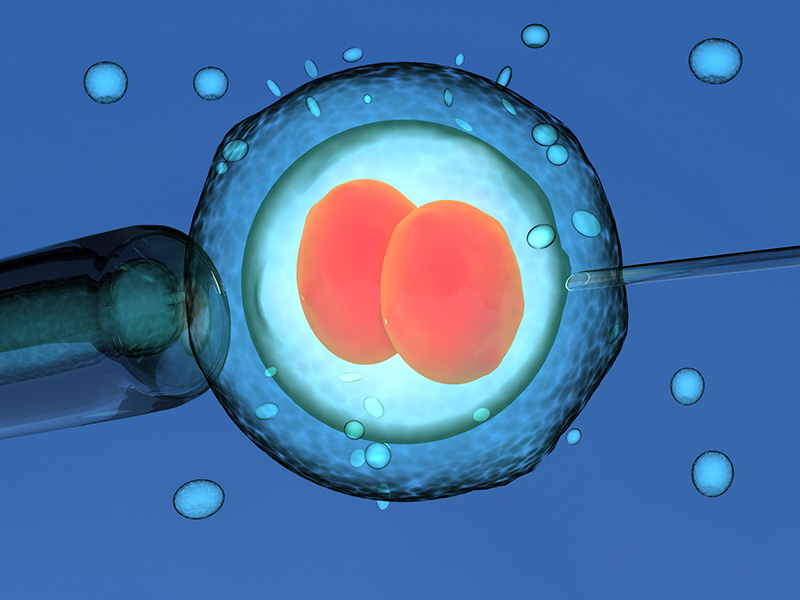
A team of scientists from the University of Cambridge has made revolutionary news because for the first time ever an artificial mouse embryo has been grown using stem cells. This is fantastic news for the researchers as understanding the beginning stages of embryo formation could prove essential in understanding what two thirds of all human pregnancies fail at this time.
While attempting to grow embryo’s is not a new feat, it’s one that’s had very limited success over the years. This is mainly due to the fact that early embryo development needs different cell types to work closely with one another. However, the new study demonstrates how embryos can actually be grown using a combination of genetically-modified mouse ESCs and TSCs along with an extracellular matrix.
“Both the embryonic and extra-embryonic cells start to talk to each other and become organized into a structure that looks like and behaves like an embryo,” said Professor Magdalena Zernicka-Goetz, leader of the research. She continues, “It has anatomically correct regions that develop in the right place and at the right time. We knew that interactions between the different types of stem cell are important for development, but the striking thing that our new work illustrates is that this is a real partnership – these cells truly guide each other. Without this partnership, the correct development of shape and form and the timely activity of key biological mechanisms doesn’t take place properly.”
As part of the research the team was able to show how stem cells are organized, with ESC’s and TSC’s at separate ends, and followed the same pattern of development to that of a human embryo. But, without the third form of stem cell, the one that would allow development of the yolk sac, it’s unlikely the embryo would ever develop into a healthy fetus. Also the actual system itself is not yet designed to be able to develop placenta.
Zernicka-Goetz believes that one of her recently developed techniques will enable researchers to for the first time ever gain a real insight into the first initial stages if human embryo development. She says, “We think that it will be possible to mimic a lot of the developmental events occurring before 14 days using human embryonic and extra-embryonic stem cells using a similar approach to our technique using mouse stem cells. We are very optimistic that this will allow us to study key events of this critical stage of human development without actually having to work on embryos. Knowing how development normally occurs will allow us to understand why it often goes wrong.
More News To Read
- Blue Origin Assemble Long-Awaited BE-4 Rocket Engine
- Could Marijuana Be A Future Treatment for Alzheimer’s?
- Could a Magnetic Shield Be the Answer to Creating a Suitable Atmosphere on Mars?
- Scientists Observe the Most Detailed Black Hole Wind to Date
- The Hubble Shows How Asteroids and Comets are More Alike than We Realized
Related Coverage
- Engineers Use Graphene to Create New Revolutionary Photodetector
- Scientists Discover New Hair Growth Technique Using Stem Cells
- Lab Grown Mini-Brain may hold key to Understanding Neurodevelopmental Disorders
- Breakthrough in Gene Editing Comes as Scientists Correct Disease-Causing Mutation in Human Embryo
- Researchers Continue to Use Graphene to Improve Medical Technology
Don't miss new tech stories on Google
Add TrendinTech once in the Google app and our stories appear in your news suggestions.
Rachel Kowalski
Rachel Kowalski is the Cybersecurity Analyst at TrendinTech, where she covers vulnerabilities, ransomware, supply chain attacks, nation-state operations and the security rules shaping organizations in the United States and Europe. Before moving into journalism she worked as a threat intelligence analyst at a security vendor and later reported for CyberScoop and the security desk at Wired, covering the SolarWinds compromise and the ransomware wave that hit hospitals and pipelines. Rachel holds a Master of Science in Cybersecurity from the Georgia Institute of Technology and attends Black Hat and DEF CON in Las Vegas each year, where she follows research from the security community. She writes to make risks and countermeasures understandable to people who are not specialists.
All stories by Rachel Kowalski (214)