
Self-Evolving Robots Hit the Lab in Norway
Robots are pretty amazing, and now with thanks to experts from Norway, they just got stepped up a notch. The team has created a new batch of self-evolving robots that could change our world as we know it.

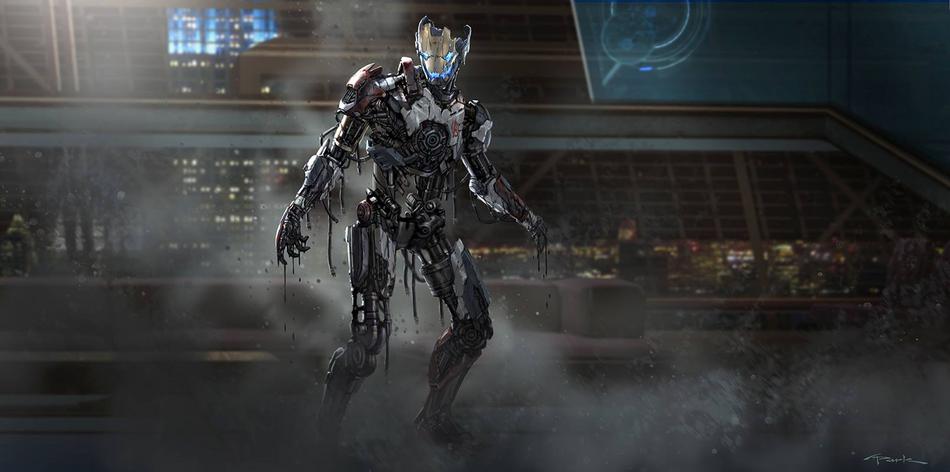
Robots are pretty amazing, and now with thanks to experts from Norway, they just got stepped up a notch. The team has created a new batch of self-evolving robots that could change our world as we know it. Although there is still a small amount of human assembly required, these robots essentially design, evolve and manufacture themselves using what’s known as generative design (where the AI innovates new products).
It may sound a little strange and far-fetched at first, a robot adapting itself to perform more efficiently. But, it is happening, here and now. And, the scary thing is that these robots are evolving at a rate much faster than we are. Kyrre Glette, associate professor at the University of Oslo’s research group for robotics and intelligent systems, says, “It’s now testing variations of its original movement pattern,” as it gets better at its task over time. But, it’s not perfect, and there is still a way to go yet before it’s ready for the general public.
The robot was created using a generative design computer program that works out itself how to best solve a problem or complete a task. Glette says, “It’s artificial evolution. It starts off with very simple combinations of these sausages and simple motors that can move them. Eventually, some solutions manage to move forward just a tiny little bit. Then they are saved, and those solutions are then used for coming generations and modified slightly. Eventually, you get better and better solutions.”
Physicist Stephen Hawking is one of many people that feel strongly about the dangers of runaway AI and last year commented, “Once humans develop artificial intelligence it could take off on its own and redesign itself at an ever increasing rate. Humans, who are limited by slow biological evolution, couldn’t compete and would be superseded.” Another who has warned us to be careful when it comes to AI is Keith Downing, a professor of artificial intelligence at the Norwegian University of Science and Technology. He says, “Once you get artificial general intelligence, you’re going to accelerate into something they call artificial super intelligence quickly. That’s where the computer is thousands of times smarter than us. So, if they’re also smarter than us, they could trick us, and we could be in trouble.”
We already see 4D applications come about where printers can print what they need to and then assemble themselves. Who knows what will come next. Could we see printable body parts being offered in the next ten years? But as good as all these things sound, what about the implications they could bring with them? If robots can evolve to make them even better, could we soon be seeing ourselves in a kind of Terminator situation? While some say yes, others say there’s no need to worry. I guess only time will tell for sure.
More News To Read
- Autism Patients Could Soon Be Prescribed Cancer Drugs for Treatment
- Precision Medicines on the Rise and Give Hope to Kids with Brain Cancer
- Will We Really Be Living on the Moon Within the Next Decade?
- Viruses’ Fight One Another in their Own Biological WarFare
- If We Can’t See Black Holes, How Do We Know They Really Exist?
Related Coverage
- Robots Can Now Talk like Humans with Thanks to Google’s DeepMind Project
- Solar Cells Get Another Efficiency Boost by Up to 18%
- Smart Medical Tattoos That Change Color When a Problem is Detected
- Volvo has something to say about self-driving cars with the new flagship S90
- 3D Printing’s Even More Affordable Now Thanks to SparkMaker
Don't miss new tech stories on Google
Add TrendinTech once in the Google app and our stories appear in your news suggestions.
Daniel Okafor
Daniel Okafor is the Senior AI Reporter at TrendinTech, where he covers large language models, machine learning research and the practical use of artificial intelligence across business and government. He previously reported on artificial intelligence for MIT Technology Review, covering the labs behind the current generation of frontier models and the policy debates in Washington and Brussels. Daniel holds a Master of Science in Machine Learning from Carnegie Mellon University and follows the research community closely, attending NeurIPS and ICML each year to speak with the people behind the papers. He has a particular interest in evaluation: how models are benchmarked, where those benchmarks fail and what that means for the companies betting on them.
All stories by Daniel Okafor (316)