
New 2D Quantum Material Can Conduct Electricity at Nearly the Speed of Light
As useful as graphene has proved to be over the past few years, it may be about to be overtaken by a new 2D quantum material in the race to be the wonder material of the future.

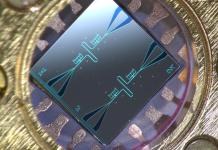
As useful as graphene has proved to be over the past few years, it may be about to be overtaken by a new 2D quantum material in the race to be the wonder material of the future. The new material can conduct electricity close to the speed of light and could completely replace silicon in the few years when it comes to the next generation of hyper-speed computers.
“Finally, we can take exotic, high-end theories in physics and make something useful,” says researcher Jing Xia, from the University of California. “We’re exploring the possibility of making topological quantum computers [which are currently theoretical] for the next 100 years.” These new quantum materials have the potential to revolutionize the quantum computing industry over the next few years.
The materials that scientists were most interested in were those that displayed both electronic and magnetic properties. These are both requirements when talking about computer memory and storage systems. Up until now, graphene has been a very popular choice of material to be used, but the problem is that it’s not magnetic.
So instead, scientist looked further a field and found a two-dimensional cousin called chromium germanium telluride (CGT) that would be perfect for the job. The team measured CGT’s magnetic properties at a temperature of -233 degrees Celsius and found that magnetism could, in fact, survive in materials that had been shrunk down to just two dimensions. Researcher Xiang Zhang from the University of California said, “This is an exciting discovery. This experiment presents smoking-gun evidence for an atomically thin – and atomically flat – magnet, which surprised many people.”
A second new quantum material to enter the limelight just recently is a mixture of bismuth and nickel. When these two were combined at extremely low temperatures researchers discovered “an exotic superconductor that breaks time-reversal symmetry.” This is the first time ever that it’s been observed in 2D materials and notions exciting times to come. “This work is a big step toward developing future quantum computers at nearly room temperature,” says Xia.
Related links;
- UCI’s new 2-D materials conduct electricity near the speed of light / UCI
- Surface-dominated conduction up to 240 K in the Kondo insulator SmB6 under strain
- Discovery of intrinsic ferromagnetism in two-dimensional van der Waals crystals
- Time-reversal symmetry-breaking superconductivity in epitaxial bismuth/nickel bilayers
More News to Read
- CERN’s CAST Experiment Casts Doubt on the Discovery of Dark Matter
- Getting to Grips With Time Crystals. What is That Really?
- Do We Really Stand a Chance at Finding Alien Life?
- 5 Cosmic Questions Scientists Still Can’t Answer Completely
- Researchers Discover New Role of Immune Cells
Related Coverage
- Meet Robo R2 – The High Performance 3D Printer With WiFi
- Say Goodbye to Hair Loss and Hello to Body Regeneration
- Researchers Used Graphene for Converting Electricity Into Light
- New Spintronics Material Could Advance Quantum Computing
- Understanding the Speed of Light, How Much do We Know?
Don't miss new tech stories on Google
Add TrendinTech once in the Google app and our stories appear in your news suggestions.
Helena Marsh
Helena Marsh is the Editor-in-Chief at TrendinTech, where she leads editorial strategy and oversees coverage across artificial intelligence, cybersecurity and enterprise technology. With more than a decade in technology journalism on both sides of the Atlantic, she previously served as a senior editor at Wired UK and covered the technology sector for The Guardian, following the rise of the big platforms, the Cambridge Analytica scandal and the regulatory push from Brussels and Washington. Helena holds an MA in Journalism from City, University of London and is a regular speaker at Web Summit in Lisbon and CES in Las Vegas. She believes technology reporting should be rigorous and plainly written, so readers understand what actually changes for them rather than what a company's announcement promises.
All stories by Helena Marsh (201)