
Google’s Updated Timelapse is the Biggest Time Sink of The Day
Timelapse—a Google project launched in 2013 reveals how the earth has changed in the past 3 decades (give or take a few years). Recently, Timeless was updated to reveal imagery from the past 4 years.

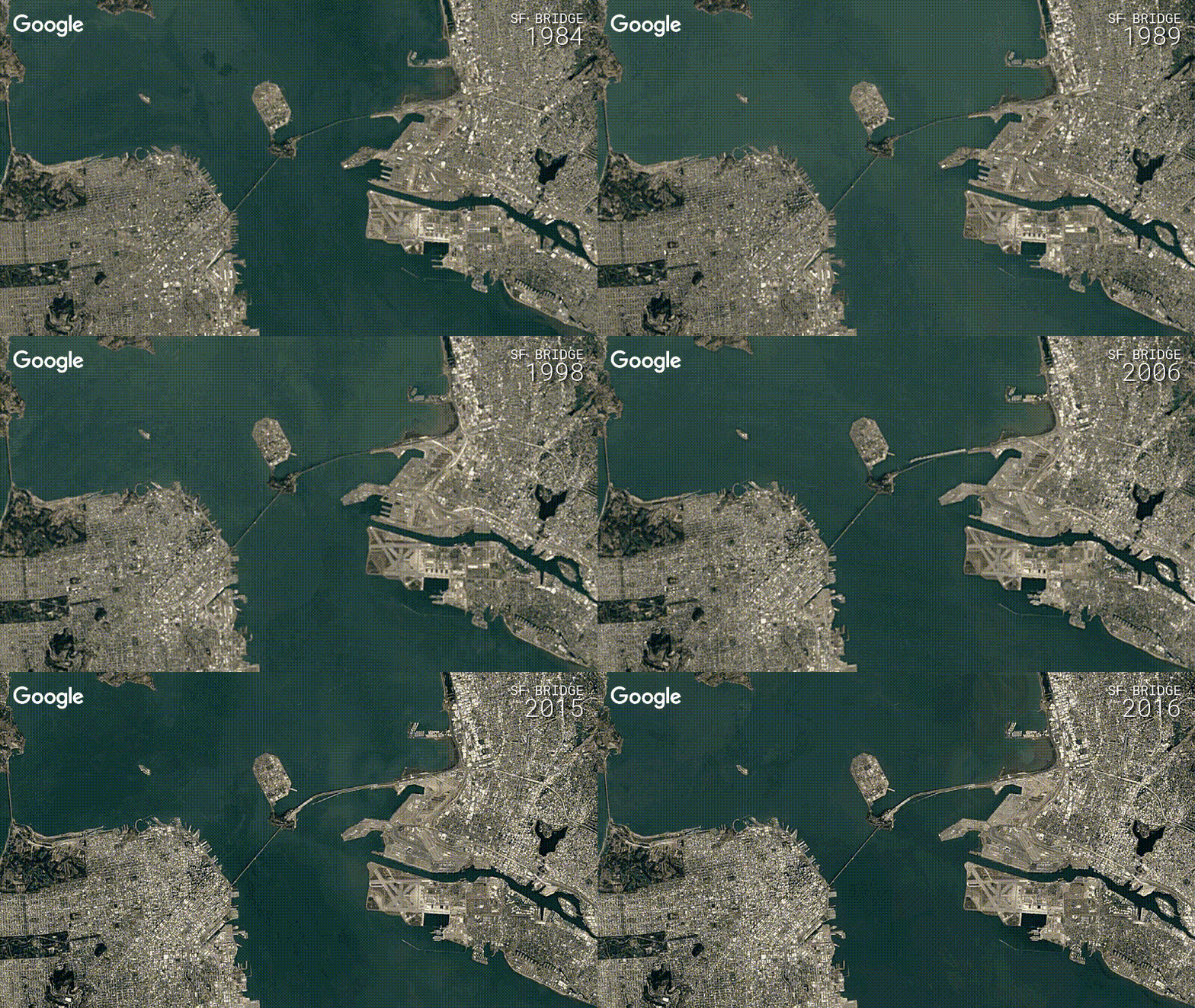
Timelapse—a Google project launched in 2013 reveals how the earth has changed in the past 3 decades (give or take a few years). Recently, Timeless was updated to reveal imagery from the past 4 years. Data is now 1984 – 2016 with ‘petabytes’ of new data including clearer new images.
Images collected through Timelapse draw vivid changes as the earth faces deforestation, global warming, and war among other factors. The program offers curated selection using factors such as location, events etc.
Pointing the map on a particular location reveals changes over time. Chances of varying image quality are high. According to the video shared on Google blog, it took over 5, 000, 000 satellite images and 3 quadrillion pixels to create Timelapse.
More News To Read
- New Study Shows How Human Intelligence Maybe a Product of a Basic Algorithm
- Should We Be Worried About AI Robots? Will They Kill Us?
- Should Tesla Be Worried About the Competition?
- How To Transfer Data From PS4 to PS4 Pro
- World’s Fastest Supercomputer to be Built by Japan
Related Coverage
- Are You Ready for the AI Revolution and the Rise of Superintelligence?
- Google Says; Scary A.I. is still ‘Decades and Decades’ Away
- This Battery Wraps Around Anything and Charges Itself
- Take a Look Inside to the Google’s London Headquarters
- Is Bitcoin Better than Gold? In a Few Years, it Probably Will Be
Don't miss new tech stories on Google
Add TrendinTech once in the Google app and our stories appear in your news suggestions.
Daniel Okafor
Daniel Okafor is the Senior AI Reporter at TrendinTech, where he covers large language models, machine learning research and the practical use of artificial intelligence across business and government. He previously reported on artificial intelligence for MIT Technology Review, covering the labs behind the current generation of frontier models and the policy debates in Washington and Brussels. Daniel holds a Master of Science in Machine Learning from Carnegie Mellon University and follows the research community closely, attending NeurIPS and ICML each year to speak with the people behind the papers. He has a particular interest in evaluation: how models are benchmarked, where those benchmarks fail and what that means for the companies betting on them.
All stories by Daniel Okafor (316)