First Modeling of Plasma Turbulence in Tokamaks Studies Recycled Atoms’ Effect on Fusion
Department of Computer Science at the University of California-Davis. Researchers have long wondered about the full impact of the recycled atoms on plasma

Department of Computer Science at the University of California-Davis.
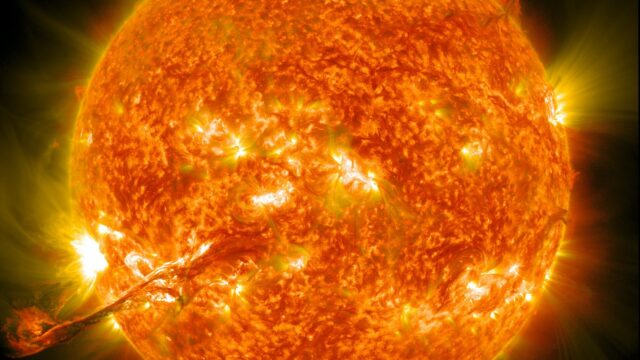
Researchers have long wondered about the full impact of the recycled atoms on plasma turbulence. They are not affected by a *tokamak’s magnetic field or the turbulence itself but experiments have revealed that these neutral particles have their own role in enhancing the turbulence overall.
The U.S. Department of Energy’s Princeton Plasma Physics Laboratory (PPL) researchers have simulated the action of recycled neutrals in the action of plasma moving through a tokamak. As the plasma cycles through the device, it hits the walls creating recycled neutrals and increasing turbulence. In the first test of its kind, researchers watched the ‘ion temperature gradient’ (IGT) which occurs from the cool edge of the plasma to its hot center and that may affect the ability of the plasma to reach the temperature at which fusion takes place.
Using the extreme-scale XGC1 kinetic code for the modeling, researchers found that neutral atoms impact turbulence from IGT in a couple of ways. For one, neutral atoms cool the plasma in the transport barrier or pedestal on the outside edge, increasing ITG. Secondly, neutral atoms decreased the differing rates or rotation which would normally reduce plasma turbulence and level out fusion.
PPL researchers will use the results of this model, and other more complex models, to compare to experiments. They hope these studies will aid scientist in comprehending plasma transitions from low to high, the level at which tokamaks should operate, and find a way to reduce neutrals and recycling. Specifically, the finding could help a fusion facility currently being built in France, ITER, and will be the world’s largest tokamak fusion reactor when completed.
More News to Read
- 3D Printing’s Even More Affordable Now Thanks to SparkMaker
- Is it the End of the Road for Silicon Chips?
- Researches Made a Softer and Smarter Robotic Arm for Endoscopic Surgeries
- Breakthrough for Alzheimer’s Patients Comes in the Form of Enzyme Blockage
- Researchers Use AI Algorithm to Help Those Suffering From Sleep Disorders
Don't miss new tech stories on Google
Add TrendinTech once in the Google app and our stories appear in your news suggestions.
Yusuf Demir
Yusuf Demir is the Cloud & Software Reporter at TrendinTech, where he covers cloud infrastructure, enterprise platforms, developer tools and the digital transformation of businesses in the UK and the United States. He is most interested in the gap between vendor roadmaps and the systems engineers actually run, and in what the cloud bill looks like once the free credits expire.
All stories by Yusuf Demir (349)