

Astronomers Use Quasars to Study Ripples in the Cosmic Web
The cosmic web is essentially the space between galaxies that’s filled with filaments of hydrogen atoms that spans across millions of light years. They’re


The cosmic web is essentially the space between galaxies that’s filled with filaments of hydrogen atoms that spans across millions of light years. They’re much larger than any galaxy we know of and account for nearly all of the ordinary matter in the Universe. A team of astronomers has used the light from distant quasars passing through the cosmic web to measure small-scale ripples that occur in the hydrogen of these intergalactic areas.
Quasars are the bright cores found in distant active galaxies and add light from these pass through the hydrogen it carries with it information regarding the speed, temperature, and composition of the cosmic web. A pair of quasars discovered by the astronomers helped the researchers probe the cosmic web on a much smaller scale than before. “Pairs of quasars are like needles in a haystack,” said Joseph Hennawi from the University of California. “To find them, we combed through images of billions of celestial objects millions of times fainter than what the naked eye can see.”
However, once the quasars had been spotted the researchers were able to compare the newly observed spectra with simulations of the cosmic web forming and evolving over the past 13.8 billion years. “The input to our simulations are the laws of physics, and the, and the output is an artificial universe, which can be directly compared to astronomical data,” Jose Onorbe, a postdoctoral researcher at the Max Planck Institute for Astronomy in Germany commented.
These observations may provide valuable insight into a phase of the universe we know very little about – reionization. They could help us understand better the events that gave rise to the birth of the first galaxies just after the Big Bang. Hennawi said in a statement, “One reason why these small-scale fluctuations are so interesting is that they encode information about the temperature of gas in the cosmic web just a few billion years after the Big Bang.”
Cool Stuff – 18 Mercedes-Benz F 015 Concept




Cool Stuff – 14 Iguana Yachts – Amphibious Boat

Cool Stuff – 13 Audi e-tron Sportback Concept

Cool Stuff – 12 Volkswagen – I.D. Buzz Concept

Cool Stuff – 11 ECOVACS ROBOTICS – WINBOT 850
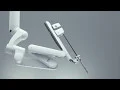
Cool Stuff – 08 Da Vinci Surgical System – Da Vinci Xi

Cool Stuff – 07 KUKA Robotics – KR AGILUS

Cool Stuff – 05 ULTRATECH – Ultra-Ever Dry®
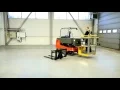
Cool Stuff – 04 MaxTruck AB – MaxTruck2T All Way Forklift

Cool Stuff – 03 Travelmate Robotics – Fully Autonomous Carry On Suitcase

Cool Stuff – 02 Action Mobil – Atacama 7900 Truck

Cool Stuff – 01 Lindsay Transportation Solutions – The Road Zipper System®
More News to Read
- China’s New Type of Quantum Computing Device, Built Inside a Diamond
- Going Back to the Origin of the Cosmic Microwave Background
- Differences Between Bohmian Mechanics and Quantum Mechanics
- Saving the Planet Will Create $12 trillion a year in market opportunities
- Six Mysteries of The Galaxy
Comments
Don't miss new tech stories on Google
Add TrendinTech once in the Google app and our stories appear in your news suggestions.
Rachel Kowalski
Rachel Kowalski is the Cybersecurity Analyst at TrendinTech, where she covers vulnerabilities, ransomware, supply chain attacks, nation-state operations and the security rules shaping organizations in the United States and Europe. She writes to make risks and countermeasures understandable to people who are not specialists.
All stories by Rachel Kowalski (238)![Cursor Cloud Agents Setup: 12 Steps, 60 Min [2026]](https://trendintech.com/wp-content/uploads/2026/10/cursor-cloud-agents-setup-tutorial-2026-gen-640x360.webp)
![Zed vs VS Code vs JetBrains Air: 75.9% Share Gap [2026]](https://trendintech.com/wp-content/uploads/2026/10/zed-vs-vscode-vs-jetbrains-air-2026-gen-640x360.webp)
![Meta’s Muse Code Takes On 4 AI Coding Rivals [2026]](https://trendintech.com/wp-content/uploads/2026/10/meta-muse-code-ai-coding-rivals-2026-gen-640x360.webp)