
Artificial Intelligence Forms Become More Integrated Within Businesses
It’s no use trying to hide from it. The fact is that robots are approaching us at a phenomenal rate, and one area they are becoming more integrated into is within the business industry.

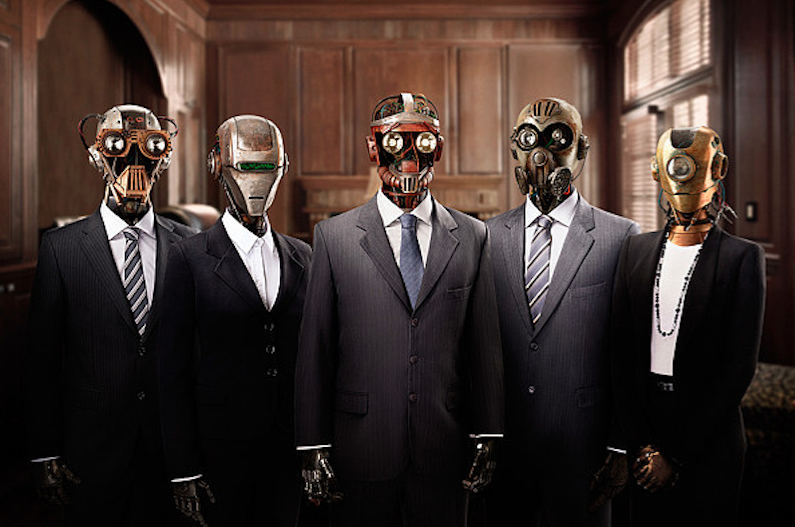
It’s no use trying to hide from it. The fact is that robots are approaching us at a phenomenal rate, and one area they are becoming more integrated into is within the business industry. As Microsoft platforms available for developers around the world to use, more companies are beginning to realize that the chances of their business surviving without adapting the use of artificial intelligence over the next few years are slim to none.
The problem companies are now facing is not the decision of whether to embrace a robot culture, but how to go about doing it. For many companies, the robot culture came a little too quickly, and so these artificial intelligence systems have not been built into their strategic plan, and now executives are scrambling together to try and assess how they can best turn this situation around without impact their business too much.
Robots will be beneficial to businesses in so many ways. The most obvious being that eventually, bots will be saving businesses big money by carrying out tasks that can be automated that isn’t be done at the moment. It will not be too difficult for this type of technology to be created and designed to each companies specifications either as are relatively easy to build and maintain.
But, they are not without their problems, and one major issue that companies are faced with when using robots is that they are hard-coded, and when something falls slightly out of their parameters they become temperamental, to say the least, and this worries businesses. As well as maintaining, the robots would also need to be constantly updated, and this too is a concern for business owners in the potential cost implications this may have.
Before you go replacing all of your staff with artificial intelligence there are a few more things you may want to keep in mind. Robots are timely machines that receive a prompt and return a response. If your business requires a real conversation, then you may want to consider just integrating robots into the workplace for the time being. Also, there is a limit to what robots can do, and multi-tasking skills such as making travel agents should also be left to a human.
Robots will undoubtedly bring us many benefits in our technology-based lives, but there will, of course, be many problems that need to be ironed out along the way. But, once the right balance has been found for integrating robots into businesses you can be assured we will be seeing a lot more of them.
More News To Read
- BMW Electric-car Battery Factory May Soon Be On Its Way To Thailand
- Google Lunar XPRIZE Winners Get One Step Closer to the Moon
- The U.S. Government Will Invest $4.5 Billion to Build Electric-Car Charging Stations For Anxiety-Free Driving
- 10 jobs that A.I. and chatbots Will Take Over
- Is the Oil Industry About to Collapse Altogether After The Coal Industry?
Related Coverage
- Are Chief Artificial Intelligence Officers Really Necessary?
- Are Google Fast Approaching in the Artificial Intelligence Race?
- 5 Ways in Which Artificial Intelligence Will Change an Organization
- AI is Now More Accurate at Diagnosing Skin Cancer than Dermatologists
- China Government Gives the Green Light to Development of Artificial Intelligence
Don't miss new tech stories on Google
Add TrendinTech once in the Google app and our stories appear in your news suggestions.
Daniel Okafor
Daniel Okafor is the Senior AI Reporter at TrendinTech, where he covers large language models, machine learning research and the practical use of artificial intelligence across business and government. He previously reported on artificial intelligence for MIT Technology Review, covering the labs behind the current generation of frontier models and the policy debates in Washington and Brussels. Daniel holds a Master of Science in Machine Learning from Carnegie Mellon University and follows the research community closely, attending NeurIPS and ICML each year to speak with the people behind the papers. He has a particular interest in evaluation: how models are benchmarked, where those benchmarks fail and what that means for the companies betting on them.
All stories by Daniel Okafor (316)