
Algae May Replace Fossil Fuels
Algae, which may surprise you, produces fat, lipids, which can be used as a type of biofuel. If it could be made less expensive than petroleum, the boon for the environment would be terrific.

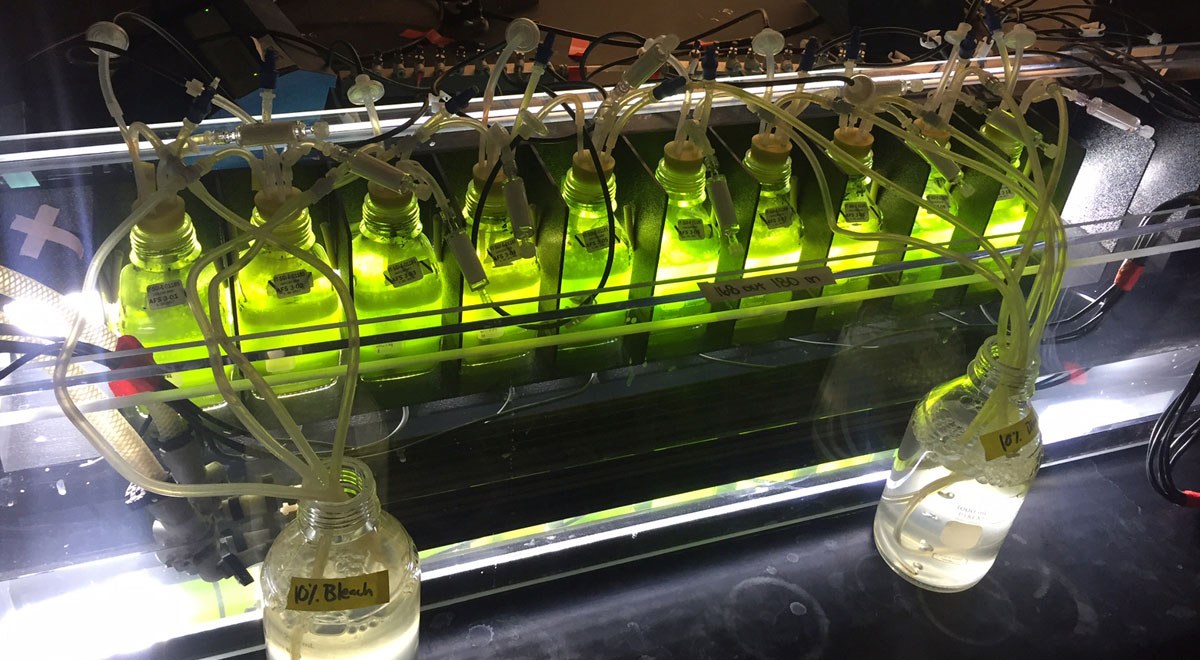
Algae, which may surprise you, produces fat, lipids, which can be used as a type of biofuel. If it could be made less expensive than petroleum, the boon for the environment would be terrific. It may also be a boon for ExxonMobil who is investing $300 million into algae research. The challenge to the whole enterprise is getting the algae to produce enough lipids to be bountiful for harvest. However, tampering with the wrong gene may make the small organism unlikely to thrive or be grown outdoors and therefore not of much use.
Recent research from Synthetic Genomics, published in the journal Nature Biotechnology, shows they’ve successfully developed algae that can create two times the amount of lipid and yet be grown like the average algae. This was done by modifying only one genetic part that influenced the copying of other genes while also controlling lipid production.
“Is it enough to replace oil coming out of the ground? No. But if you had to live off of it, you could,” says Craig Venter, Synthetic Genomics’ chairman, and co-founder. “It has a lot further to go to be commercially viable today.”
ExxonMobil, who has partly funded the project since 2009, has called this a breakthrough but agrees much more work is to be done before algae can replace oil. “We’re still in the research phase of this program,” says Vijay Swarup, a vice president at ExxonMobil. “It’s not just doubling lipid production, but it’s understanding why it doubled and how it doubled.”
Craig Venter, who gained fame after challenging the U.S. government in mapping the human genome, founded Synthetic Genome (SGI) in 2005, after being kicked out of Celera Genomics, which he also founded. In that time the company has made a synthetic genome for bacteria and gone on to add their weight to the algae into biofuel problem. However, the latest technological tools, like CRISPR-Cas9, are widely available for many a research team to alter genetic cells.
On the other hand, Oliver Fetzer, CEO of Synthetic Genomics, argues that it’s not just genetic manipulation that is needed. Know what to alter is also important. SGI achieves this by “using very, very modern genomics tools to solve the fundamental problem that has to date made the whole biofuels industry not particularly successful.” Venter adds: “This took eight years of the slog of figuring out how to move things around.”
While there is much more research and the study need to make lipid-producing algae viable as a complete fossil fuel alternative ExxonMobile and SGI remain optimistic. “We have to be aggressively patient,” adds Swarup. “Because we really think we’re onto something.”
More News to Read
- U.S. On Track for Record High Use of Renewable Energy
- This Artificial Intelligent is Made to Protect Crops Against Diseases
- What Happens to Time and Space When We Fall into a Black Hole?
- Researchers Discover New ” Neuron ” Neighborhood Cell
- So, How is a Star Weighed?
Related Coverage
- Ocean Acidification Could Kill Coral Reefs Around The World
- This Solar Energy Farm Provides Power Even At The Night
- Wind Solar Farms Effect On Local Climate
- Bioenergy Can’t Compete With Our Meat Demand
- China Will build its First Maritime Nuclear Power Platform
Don't miss new tech stories on Google
Add TrendinTech once in the Google app and our stories appear in your news suggestions.
Helena Marsh
Helena Marsh is the Editor-in-Chief at TrendinTech, where she leads editorial strategy and oversees coverage across artificial intelligence, cybersecurity and enterprise technology. With more than a decade in technology journalism on both sides of the Atlantic, she previously served as a senior editor at Wired UK and covered the technology sector for The Guardian, following the rise of the big platforms, the Cambridge Analytica scandal and the regulatory push from Brussels and Washington. Helena holds an MA in Journalism from City, University of London and is a regular speaker at Web Summit in Lisbon and CES in Las Vegas. She believes technology reporting should be rigorous and plainly written, so readers understand what actually changes for them rather than what a company's announcement promises.
All stories by Helena Marsh (201)