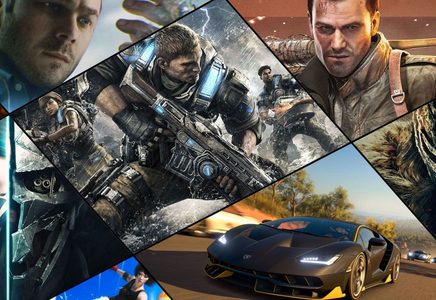
Smartphones turned billions of people into gamers. That raises an obvious question: is mobile gaming overtaking the traditional desktop PC?
Mobile's strengths
The biggest advantage of mobile is reach. Almost everyone carries a phone, so games can be played anywhere, in short sessions, without extra hardware. App stores make discovery and installation easy, and free-to-play models lower the barrier to trying new games.
Desktop's strengths
PCs offer more processing power, larger screens, precise mouse and keyboard controls, and a huge library of games that goes back decades. Competitive esports, complex strategy games and large open worlds are still at their best on desktop. Modding communities add even more depth.
Different audiences, different habits
Mobile players often play casually during commutes or breaks, while PC players tend to have longer, more focused sessions. Many people do both, choosing the platform that fits the moment.
Convergence
The line between the platforms is blurring. Phones are powerful enough for demanding 3D games, controllers connect to them easily, and cloud streaming lets PC-class games run on mobile devices. At the same time, cross-platform games let mobile and PC players compete in the same matches.
Business models
Mobile and PC gaming have grown up with different business models. On mobile, free-to-play games supported by in-app purchases and advertising dominate. On PC, premium games bought once remain common, alongside subscriptions and free-to-play titles. Each model shapes how games are designed: free-to-play games are built around long-term engagement, while premium games often focus on a complete experience delivered up front.
Hardware progress
Flagship phones now include graphics processors capable of console-quality visuals, high-refresh displays and advanced cooling. Gaming-focused phones and clip-on controllers go further, adding shoulder buttons and better thermal management. Meanwhile, PC hardware continues to push the limits with ray tracing, very high frame rates and ultra-wide displays that phones cannot match.
Developers' perspective
For developers, mobile offers enormous reach but also intense competition for attention in app stores. PC platforms offer established storefronts, strong communities and fewer restrictions on game size and complexity. Many studios now use cross-platform engines to build once and release everywhere, adjusting controls and interfaces for each device.
Handheld PCs
A new category of handheld gaming PCs blurs the line even further, bringing full desktop game libraries to a portable device. For players who want PC games on the go, these devices offer a middle ground between phone and desktop.
Frequently asked questions
Can phones replace a gaming PC?
For casual and many mid-range games, yes. For demanding titles, competitive shooters, strategy games and modding, a PC still offers more power, better controls and a larger library. Cloud gaming narrows the gap by streaming PC games to phones, but it depends on a fast, stable connection.
Is mobile gaming bad for battery life?
Graphically intensive games use a lot of power and generate heat. Lowering the frame rate or graphics quality, turning down screen brightness and avoiding charging while playing heavy games can help protect the battery over time.
Which platform is better for beginners?
Mobile is the easiest place to start because most people already own a phone and many games are free to try. Players who discover they love a particular genre can then decide whether a PC or console would give them a better experience.
Key takeaways
- Mobile has the most players, thanks to the reach of smartphones.
- PCs still lead for performance, precision controls and game depth.
- Cloud gaming, controllers and cross-platform games are blurring the line.
- Most players choose the platform that fits the moment rather than one or the other.
The verdict
In terms of player numbers, mobile is already the largest gaming platform. That does not mean desktop gaming is disappearing. The two serve different needs, and the most successful games increasingly support both. For players, that means more choice about where and how to play.