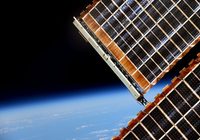
Chinese scientists have teleported a photon from Earth to a satellite in Earth’s orbit. Micius, a Long March 2D rocket, was launched last year and orbits 500 Kilometers up. It possesses an extremely sensitive photon detector that can track quantum states of aimed photons.
Similar teleportation has been done many times in various experiments, but this is the first one at such a great distance. This is the longest, stable entanglement that has ever been established. “Previous teleportation experiments between distant locations were limited to a distance on the order of 100 kilometers, due to photon loss in optical fibers or terrestrial free-space channels,” says the team.
The distance and stability are important because the teleportation utilizes quantum entanglements as part of processes and such a method is essential for furthering quantum technology like a quantum internet and more advanced quantum teleportation. The team explains: “Long-distance teleportation has been recognized as a fundamental element in protocols such as large-scale quantum networks and distributed quantum computation. This work establishes the first ground-to-satellite up-link for faithful and ultra-long-distance quantum teleportation, an essential step toward the global-scale quantum internet.”
Overall the team sent millions of photons over 32 days and had positive results 911 times. The teleportation works by the quantum entanglement connection. One photon ‘uploads’ its associated information to another through the link and the second photon becomes the first. “We report the first quantum teleportation of independent single-photon qubits from a ground observatory to a low Earth orbit satellite—through an uplink channel— with a distance up to 1400 km,” says the Chinese team.
However, this is no easy feat, maintaining the entanglement is very tricky as any resistance can cause it to fall apart. This resistance usually found in fibers of fiber optics as well as any matter in the atmosphere.
With this successful experiment, China now leads the world in a field which was previously dominated by the U.S. and Europe.
More News to Read
- Google Wants to Humanize Artificial Intelligent
- Mapping The Heart of an Exploded Star in 3D
- Are Protons Lighter than Believed?
- New Spintronics Material Could Advance Quantum Computing
- For Physicists, Nothing is Something